
Cisco MS220-24P End-of-Life: Migrate to MS225-24P Guide
The Meraki MS220-24P hit Last Date of Support on July 29, 2024. Here is what each milestone means, why the stackable MS225-24P is the right refresh, and a practical migration plan for federal, healthcare, and enterprise wiring closets.
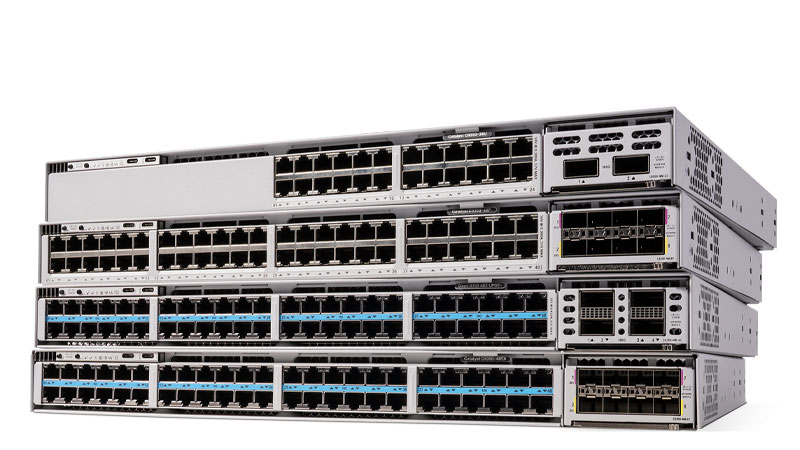
If you still have Cisco Meraki MS220-24P switches in your wiring closets, the clock has already run out. The MS220-24P-HW, a 24-port Gigabit cloud-managed Layer 2 PoE access switch with a 370W power budget, reached its End-of-Sale on July 29, 2017 and its Last Date of Support (LDoS) on July 29, 2024. That second date is the one that matters operationally: as of mid-2024 these switches receive no firmware, no security fixes, and no hardware backstop from Cisco. They may still be quietly forwarding frames in your IDF today, but every day they do, they carry risk that a regulator, an auditor, or a 2 a.m. hardware failure will eventually surface. This guide explains exactly what the milestones mean, why the stackable MS225-24P is the right refresh target, and how to migrate cleanly.
Why the MS220-24P needs to come out now
End of life for a cloud-managed switch is not like end of life for a server you can air-gap and forget. A Meraki access switch sits directly in the user data path and reports to a cloud dashboard, which means an unsupported one is both an availability liability and a security exposure at the same time.
- No more security firmware. After LDoS, the Meraki team stops releasing firmware for the MS220 line, so any newly discovered vulnerability in its switch OS, web stack, or cloud-communication libraries will never be patched on this hardware. There is no PSIRT remediation path left.
- No TAC, no RMA. Past the Last Date of Support, you cannot open a hardware support case and you cannot get an advance-replacement unit. A failed MS220-24P is a same-day outage with no Cisco spare behind it, and the model's original lifetime warranty does not survive LDoS.
- Audit and compliance findings. Running unsupported, unpatchable network gear is a direct finding under FedRAMP, CMMC, HIPAA Security Rule safeguards, PCI-DSS, and most SLED security baselines. Vendor no longer provides security updates is exactly the language assessors flag, and it is hard to compensate around for a device in the user access path.
- Operational fragility. With no firmware roadmap, you also lose dashboard feature parity over time as the rest of your Meraki fleet advances, and edge cases stop getting fixed.
What each milestone date actually means
Cisco Meraki uses a simpler lifecycle than the IOS-XE catalog, but the milestones still carry distinct meaning. End-of-Sale (July 29, 2017) is the last day you could buy the MS220-24P new through authorized channels; everything after that is install base and secondary market. The MS220 line did not publish a separate End of Software Maintenance milestone, so firmware and the full support entitlement effectively ran straight through to the Last Date of Support. LDoS (July 29, 2024) is the hard wall: the final day Cisco delivers any support, updates, or RMA for the product. There is nothing after it. You can confirm these dates and the recommended replacement any time on the MS220-24P-HW end-of-life page.
The replacement: Meraki MS225-24P, and why it is a real upgrade
The drop-in successor is the Cisco Meraki MS225-24P-HW: a 24-port Gigabit, cloud-managed Layer 2 access switch with the same 370W-class PoE/PoE+ budget the MS220-24P delivered. From an end-user and PoE-device perspective it does everything the old switch did. The difference is in the uplink, stacking, and backplane engineering, which is where the MS220 generation was genuinely dated.
- True physical stacking. The MS220 had no stacking interface at all. The MS225 ships with dual dedicated physical stack ports delivering up to 80 Gbps of stacking bandwidth, so you can stack a row of access switches into one logical unit with a redundant ring instead of a pile of independently-managed boxes.
- 10G uplinks on every unit. The MS220-24P offered 1G SFP uplinks. Every MS225 includes four 10G SFP+ uplink interfaces, which matters the moment you put Wi-Fi 6/6E access points, multi-gig clients, or aggregated traffic behind the closet. It removes the 1G uplink bottleneck that quietly throttled MS220 sites.
- Larger non-blocking backplane. The MS225 carries a non-blocking switching fabric rated up to roughly 176 Gbps, with eight QoS queues per port for converged voice, video, and data, so it does not become the constraint as port utilization climbs.
- Power redundancy option. The MS225 supports an external redundant PSU (Cisco RPS-2300) for closets that need power resilience, an option the MS220 did not offer.
- Lifetime hardware warranty. The MS225, while supported, carries Meraki's lifetime hardware warranty with advance replacement, restoring the RMA backstop you just lost on the MS220.
On licensing, Meraki keeps the model you already know: one per-device subscription (Enterprise or the Advanced tier) that bundles cloud management, the dashboard, and support for the term you buy, in 1-, 3-, 5-, 7-, or 10-year increments. Unlike Catalyst, there is no separate DNA/Smart Licensing stack to reconcile, no PAK files, and no on-box license server, the subscription is the entitlement. The one thing to plan for: an MS220 license does not carry over to an MS225, so you purchase new subscriptions and ideally co-terminate them with the rest of your Meraki org so everything renews on one date.
When the MS120-24P is the smarter pick instead
If a given closet is a single non-stacked switch with modest uplink needs, the MS120-24P is a lower-cost, functionally equivalent Layer 2 cloud-managed PoE switch and an entirely valid replacement. Choose the MS225-24P where you want stacking, 10G uplinks, and headroom; choose the MS120-24P where you are simply replacing one isolated 24-port access switch. Both are current and both keep you in the same dashboard. You can compare live configurations and pricing on our switch catalog or in the catalog.
A practical migration plan
Because both old and new switches live in the same Meraki dashboard, an MS220-to-MS225 refresh is one of the cleaner Cisco migrations, but it still rewards a methodical, closet-by-closet approach rather than a big-bang swap.
1. Inventory and assessment
Pull every MS220-24P from the dashboard with its serial, network assignment, port count in use, actual PoE draw, and uplink configuration. Note which closets are single switches versus candidates for an MS225 stack, and capture current uplink media (the MS220's 1G SFP versus the MS225's 10G SFP+, which usually means new transceivers and possibly new fiber or twinax).
2. License transition
Order MS225 (or MS120) subscriptions sized to the right tier and term, and plan co-termination so the new licenses fold into your existing renewal date. Confirm dashboard org capacity and admin roles before hardware arrives.
3. Config and feature parity
Replicate VLANs, access policies, port profiles, voice VLANs, STP settings, QoS, and any access control (802.1X/MAB) from the MS220 onto the MS225 template. Validate that every feature you relied on maps cleanly, then pre-stage configuration so a swapped switch adopts its identity the moment it claims into the network.
4. Physical: rack, power, PoE, uplinks, stacking
Confirm rack depth and mounting, verify the closet's power and PoE budget supports the new load, fit the correct 10G SFP+ optics or DAC for each uplink, and, where you are stacking, cable the MS225 stack ports into a redundant ring before cutover. Order optics and any RPS-2300 redundant supplies as part of the same BOM so nothing blocks install day.
5. Phased cutover and secure decommission
Migrate one closet at a time during a maintenance window: move uplinks, claim the MS225 so it pulls its pre-staged config, move access connections, and validate PoE endpoints (phones, APs, cameras) come up. Run the old and new gear in parallel only as long as needed to confirm parity. Then decommission each MS220 securely: factory reset to clear configuration and cached credentials, remove it from the dashboard org, and dispose through an asset-disposition process that documents data sanitization, which matters for federal and healthcare chain-of-custody requirements.
Procurement notes for regulated buyers
For federal, DoD, and SLED purchasers, confirm TAA status for the specific MS225-24P-HW build against the current country-of-origin list, source through GPC-payable channels, and check the DoDIN APL repository for any historical listing on this model, noting the program sunset on September 30, 2025. As an authorized Cisco partner, we supply documented country-of-origin and warranty status, current lead times (Meraki access switches and the matching optics can carry real lead time, so order ahead of your maintenance window), and license terms that line up with your renewal cycle. The goal is a single, defensible BOM, switches, subscriptions, optics, and any redundant power, rather than a chassis quote that surprises you later.
If your MS220-24P fleet is already past Last Date of Support, the safe move is to scope the refresh now and stage it before a failure forces an unplanned outage. Review the full milestone detail on the MS220-24P-HW EoL page, browse other affected models in our Cisco end-of-life library, and when you are ready, get a TAA-compliant MS225-24P replacement quote and we will confirm stock, lead time, and license terms before you commit.
Frequently asked questions
Is the Cisco Meraki MS220-24P still supported?
No. The MS220-24P-HW reached its Last Date of Support (LDoS) on July 29, 2024. After that date Cisco Meraki no longer issues firmware updates or PSIRT security patches for the model, and it is no longer eligible for TAC support or RMA hardware replacement. The unit may continue to pass traffic and report to the dashboard, but it is unsupported and out of warranty. Any failure becomes a same-day, no-spare emergency, and the lack of security firmware is a documented audit finding for regulated environments.
What is the recommended replacement for the MS220-24P-HW?
The functionally equivalent, current-generation replacement is the Cisco Meraki MS225-24P-HW: a 24-port Gigabit, cloud-managed Layer 2 access switch with the same 370W-class PoE/PoE+ output. The MS225 is a clear upgrade because it adds true physical stacking (dual stack ports, up to 80 Gbps of stack bandwidth), four 10G SFP+ uplinks on every unit instead of 1G SFP, and a larger non-blocking backplane. For smaller, non-stacked closets the MS120-24P is a lower-cost alternative that preserves the same cloud-managed, single-license model.
Do I need new licenses when I move from MS220 to MS225?
Yes. Meraki licensing is per-device and tied to the hardware, so an MS220 Enterprise license does not transfer to an MS225. You purchase a new Enterprise (or Advanced) subscription per MS225, matched to a 1-, 3-, 5-, 7-, or 10-year term. The practical advantage is that co-terminating the new MS225 licenses with your existing MX, MR, and MS subscription cycle keeps the whole org on one renewal date. We size the term and tier with you so nothing lapses mid-deployment.
Can I stack the MS225 with my old MS220 switches during the migration?
No. The MS220 has no physical stacking interface, and MS225 physical stacking is only supported among MS225 (and compatible MS-series) units. You can, however, run MS220 and MS225 switches side by side in the same Meraki org and dashboard network during a phased cutover, using virtual stacking for unified management while you migrate closet by closet. Plan to retire the MS220s as each closet is converted to a physical MS225 stack.
Are MS225-24P switches TAA compliant and payable on a Government Purchase Card?
TAA-compliant configurations of the MS225-24P-HW are available and payable through GPC channels, but TAA status is tracked per PID, so confirm the exact build against the country-of-origin list before you cite it in a contract file. The DoDIN APL program sunset on September 30, 2025, so treat any APL listing for this model as a historical record rather than a current certification. As an authorized Cisco partner, we provide quotes with current lead times, license-term options, and documented country-of-origin and warranty status for federal, DoD, and SLED buyers. Request a quote and we confirm stock and pricing before you commit.
Uniqcli Team
The Uniqcli Team is an authorized Cisco partner specializing in Catalyst wireless, switching, datacenter fabric, licensing, and managed services for U.S. federal, state, local, and education customers. We scope Cisco bills of materials, validate procurement paths (TAA, FIPS, contract vehicles), and deliver design, deployment, and managed operations.
Ready to scope your Cisco build?
Build a quoteRelated reading
View all →GuidesCisco Meraki MS220-48LP EoL: Migrate to the MS225-48LP
The Meraki MS220-48LP passed Last Day of Support on July 29, 2024. Here is what that means for an operating fleet and how to refresh cleanly to the stackable MS225-48LP.
January 3, 2026 · 8 min readGuidesCisco Meraki MS220-48FP EoL: Migrate to MS225-48FP
The Meraki MS220-48FP reached Last Day of Support on July 29, 2024. Here is what each milestone means, why running it now is a compliance and security liability, and exactly how to refresh to the MS225-48FP with physical stacking and 10G uplinks.
March 15, 2026 · 9 min read Guides
Cisco Meraki MR72 EoL: Migrating Outdoor Wi-Fi to the MR76
The Meraki MR72 passed Last Day of Support on April 30, 2024. Here's exactly what that means for your outdoor network and how to migrate cleanly to the Wi-Fi 6 Meraki MR76 without leaving the dashboard.
March 19, 2026 · 7 min readGuidesCisco Meraki MS42 EoL: Migration to the MS125-48
The Meraki MS42 passed Last Day of Support on April 26, 2021, here's why it must come out and how to migrate cleanly to the MS125-48 with 10G uplinks and stacking.
January 8, 2026 · 8 min readGuidesMeraki MS220-8P EoL: Migrate to the MS120-8LP Switch
The compact Meraki MS220-8P PoE switch reached Last Day of Support on September 21, 2025. Here is exactly what that means and how to refresh to the functionally equivalent MS120-8LP without disrupting your edge.
January 5, 2026 · 10 min read Guides
Cisco Nexus 6001-64T EoL: Migrate to Nexus 93180YC-FX3
The Nexus 6001-64T (N6K-C6001-64T) passed Last Day of Support on April 30, 2022. Here is what each milestone means, why the 10GBASE-T top-of-rack switch has to come out, and how to refresh cleanly to the Cloud Scale Nexus 93180YC-FX3.
April 19, 2026 · 7 min read