Spine / leaf
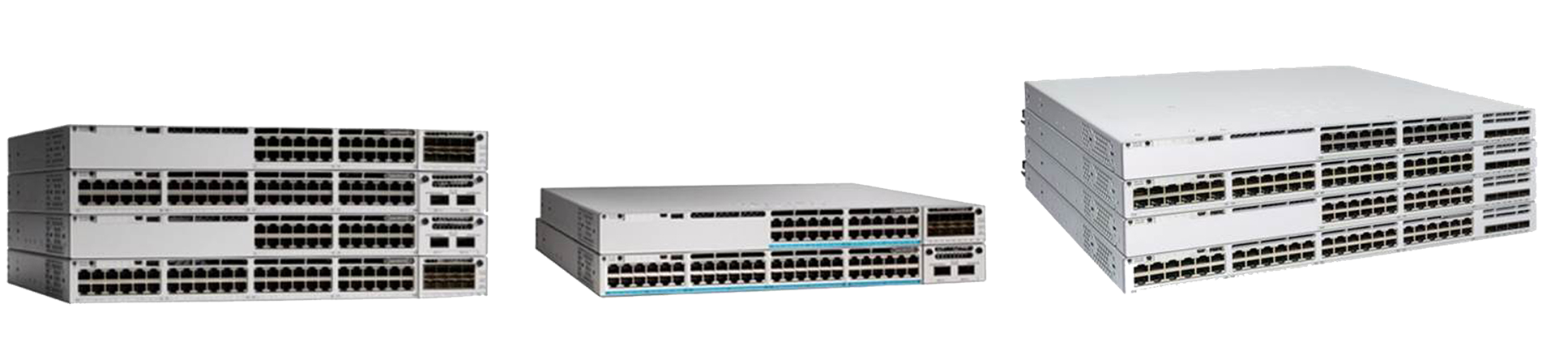
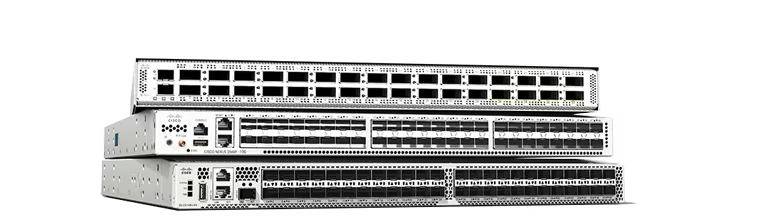
Nexus 9300/9400 leaf and spine sizing with redundant cross-rack runs.

Service provider
Data center & WAN
Security & operations
Spine/leaf and ACI fabric sized by rack count, server ports, uplink speed, fiber runs, optics, software tier, and migration path.
Access-point, port, and rack counts are derived from your facility, not guesswork or a generic template.
We confirm the exact SKUs, licensing tier and term, services, and availability before you sign.
TAA-compliant options, contract vehicle, and CLIN structure so the quote clears your buyer the first time.
Enough detail for IT, procurement, and facilities to move together, then we validate the final BOM.
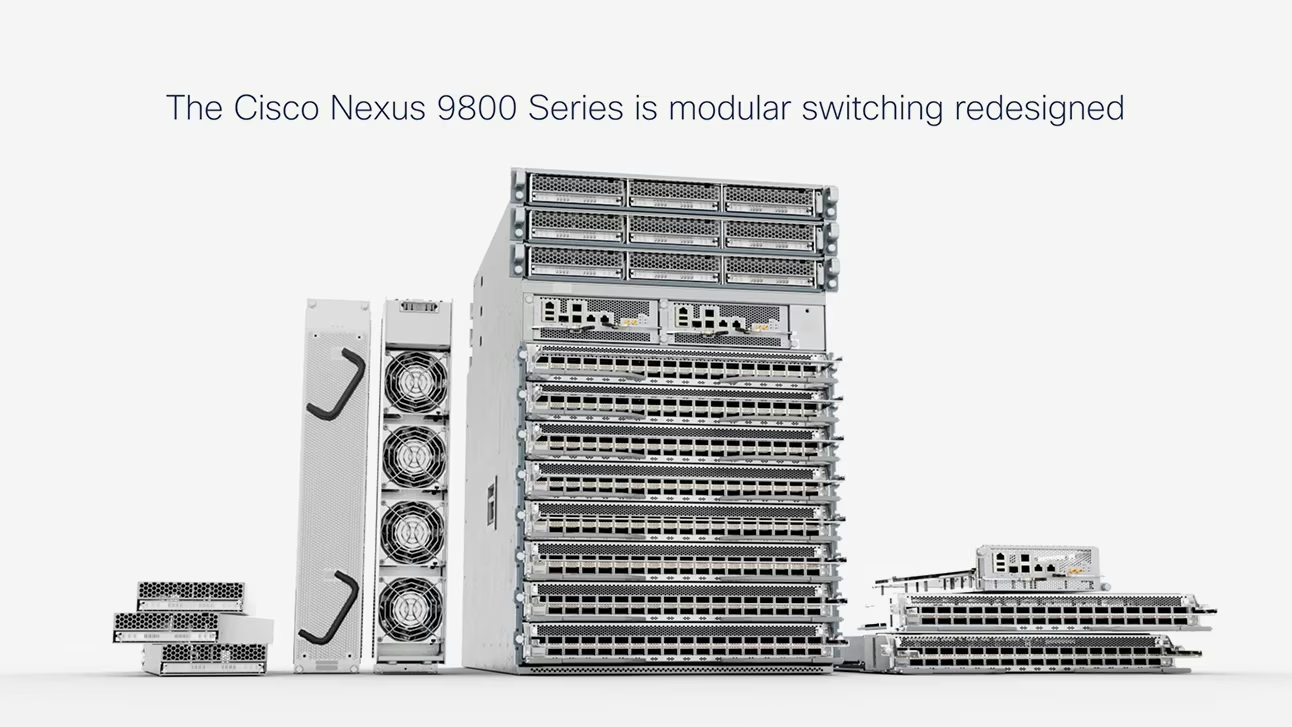
Nexus 9300/9400 leaf and spine sizing with redundant cross-rack runs.
25G / 100G / 400G transceivers and OM4 fiber runs counted per server and uplink.
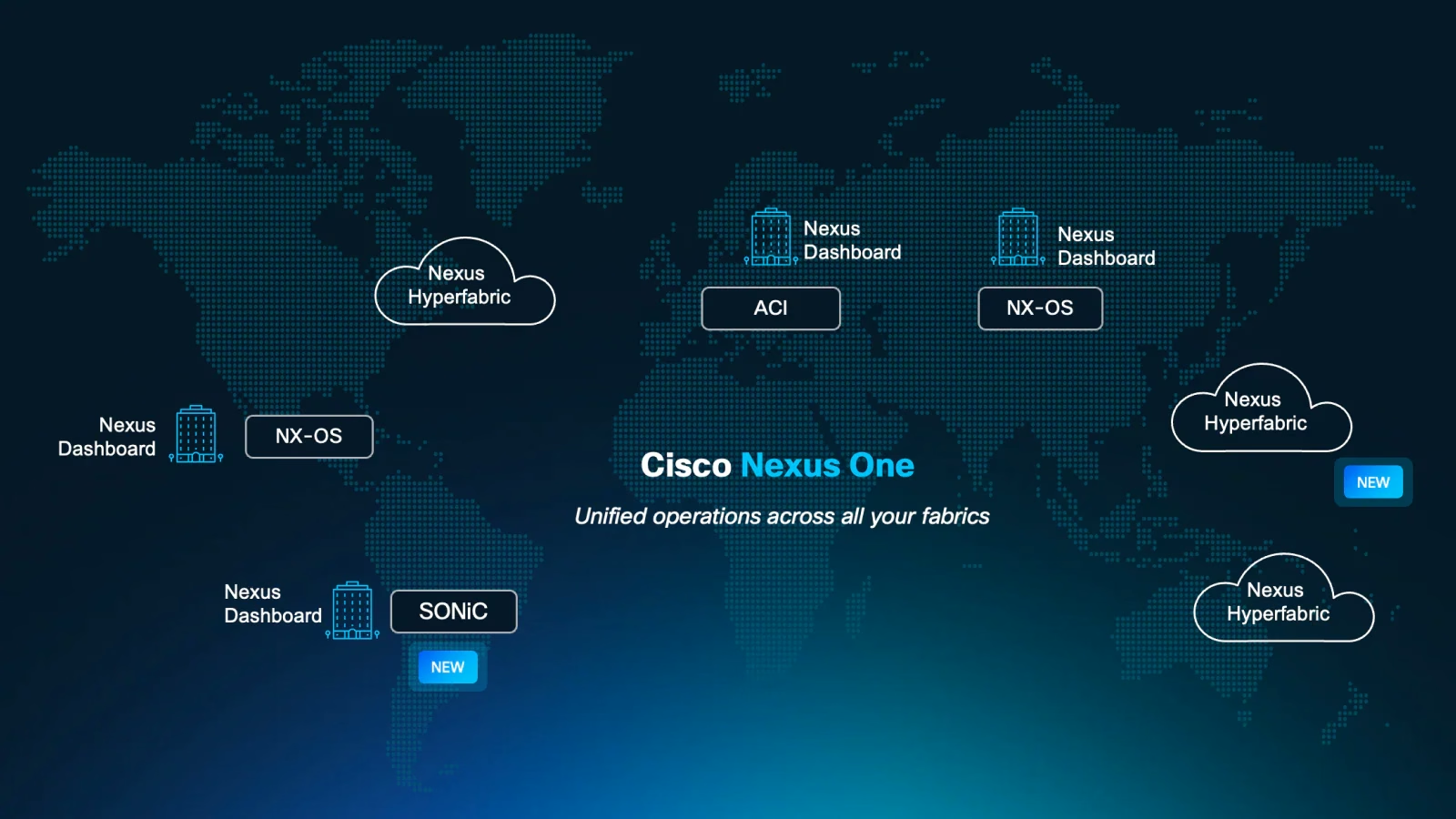
APIC controllers, Nexus Dashboard, and software tier where automation is needed.
Rack elevations, fiber path validation, and phased cutover from legacy fabric.
GPU clusters need non-blocking, lossless Ethernet, not legacy three-tier. We scope the back-end fabric Cisco is building for the AI era.
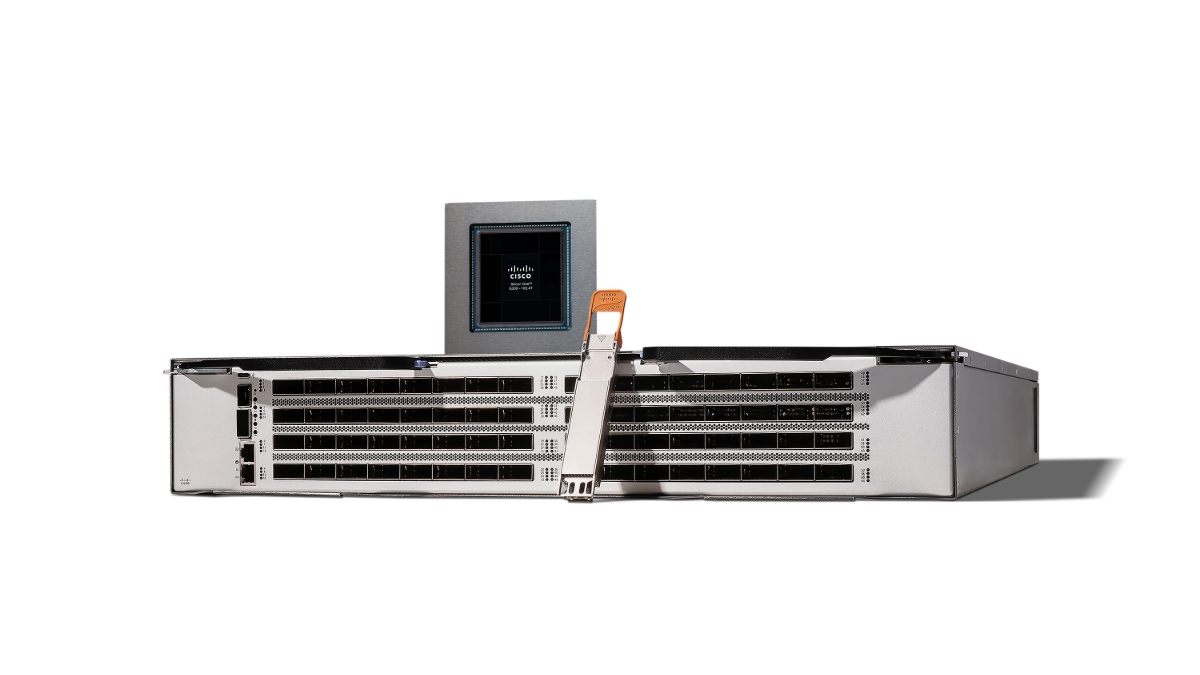
102.4T switching silicon built for energy-efficient AI infrastructure, the backbone of modern GPU networks.
Read the announcement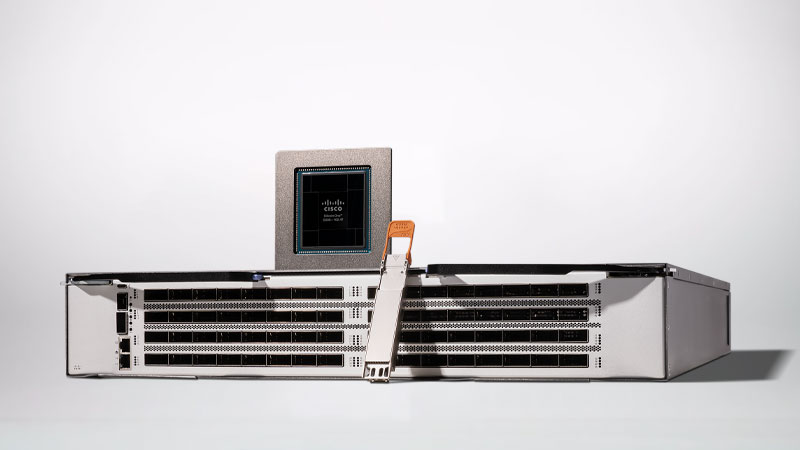
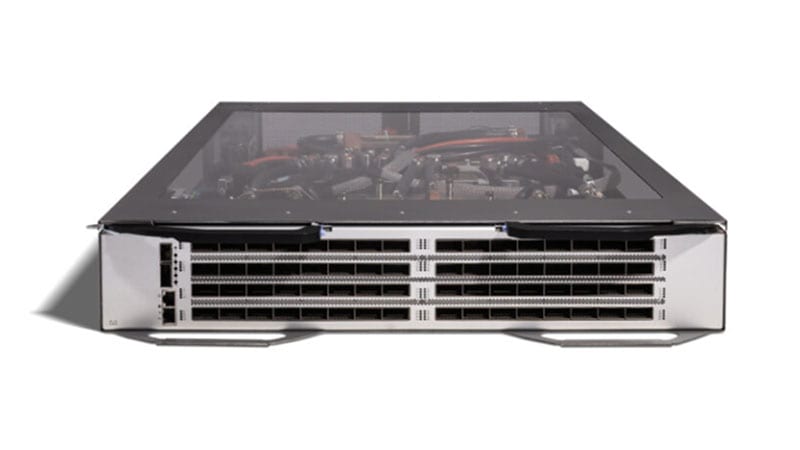
Secure, intelligent Ethernet for front-end and back-end GPU networks that boosts GPU utilization.
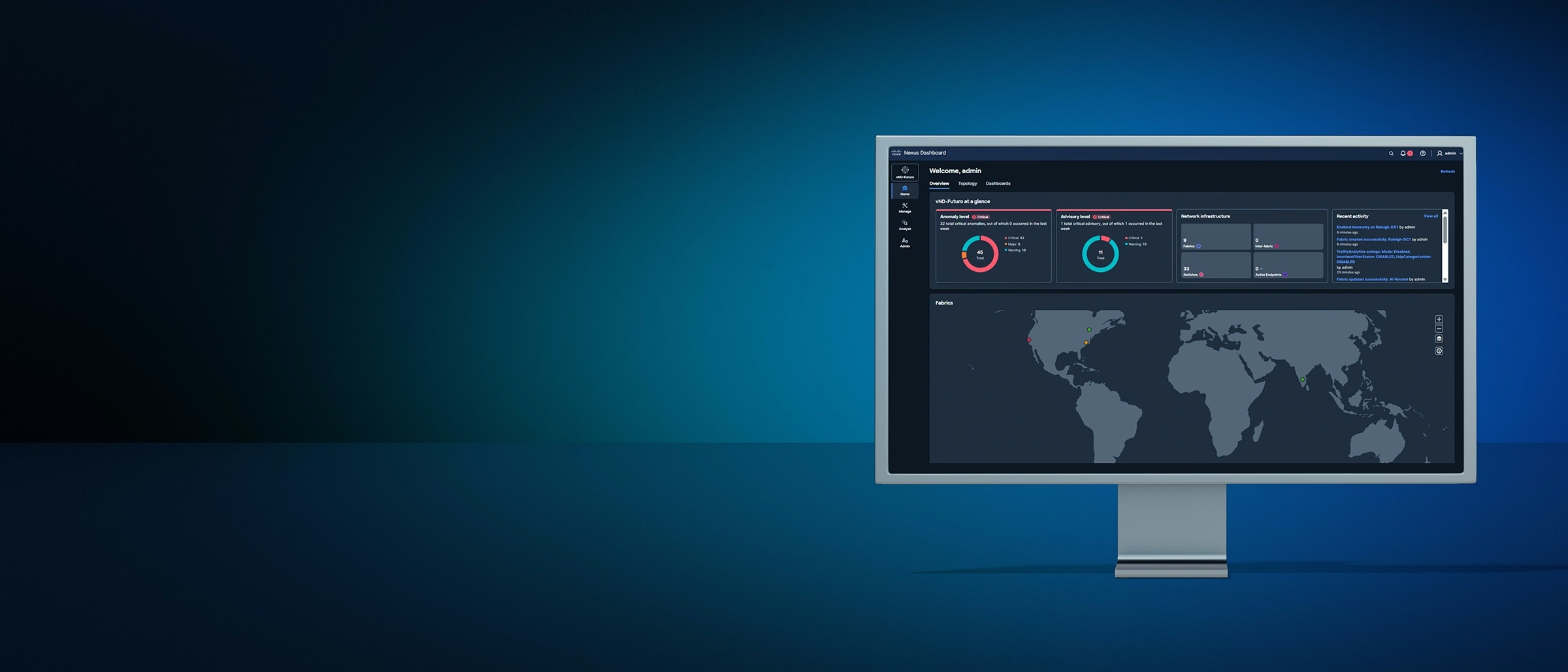
Unified, cloud-native data center networking that simplifies operations across traditional and AI workloads.
Architecture, readiness review, and right-sized BOMs from real facility inputs, not a generic template.
On-site survey for SCIF, multi-floor, outdoor, and datacenter risk before install, so the count holds at turn-up.
TAA-compliant sourcing options, contract vehicle, CLIN structure, and a procurement-ready package that clears review.
Pre-staging, golden configs, labeling, and validation in our lab before anything ships to the site.
Structured cabling, rack-and-stack, optics, and a low-risk cutover with full documentation and handoff.
Monitoring, firmware lifecycle, change windows, Smartnet, and quarterly health reviews after turn-up.
Simplified operations, powered by AgenticOps: automate, defend, and see the whole network end to end.
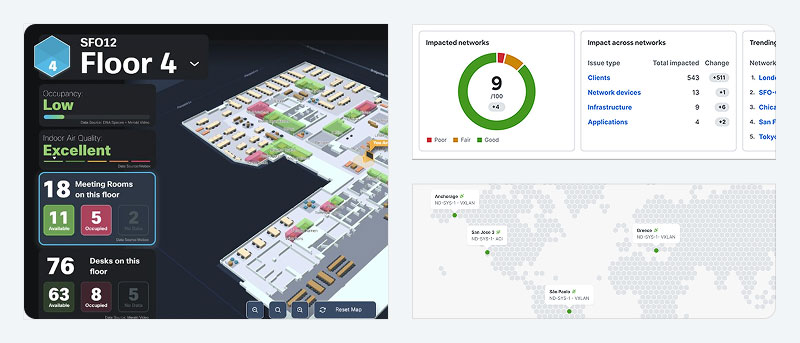
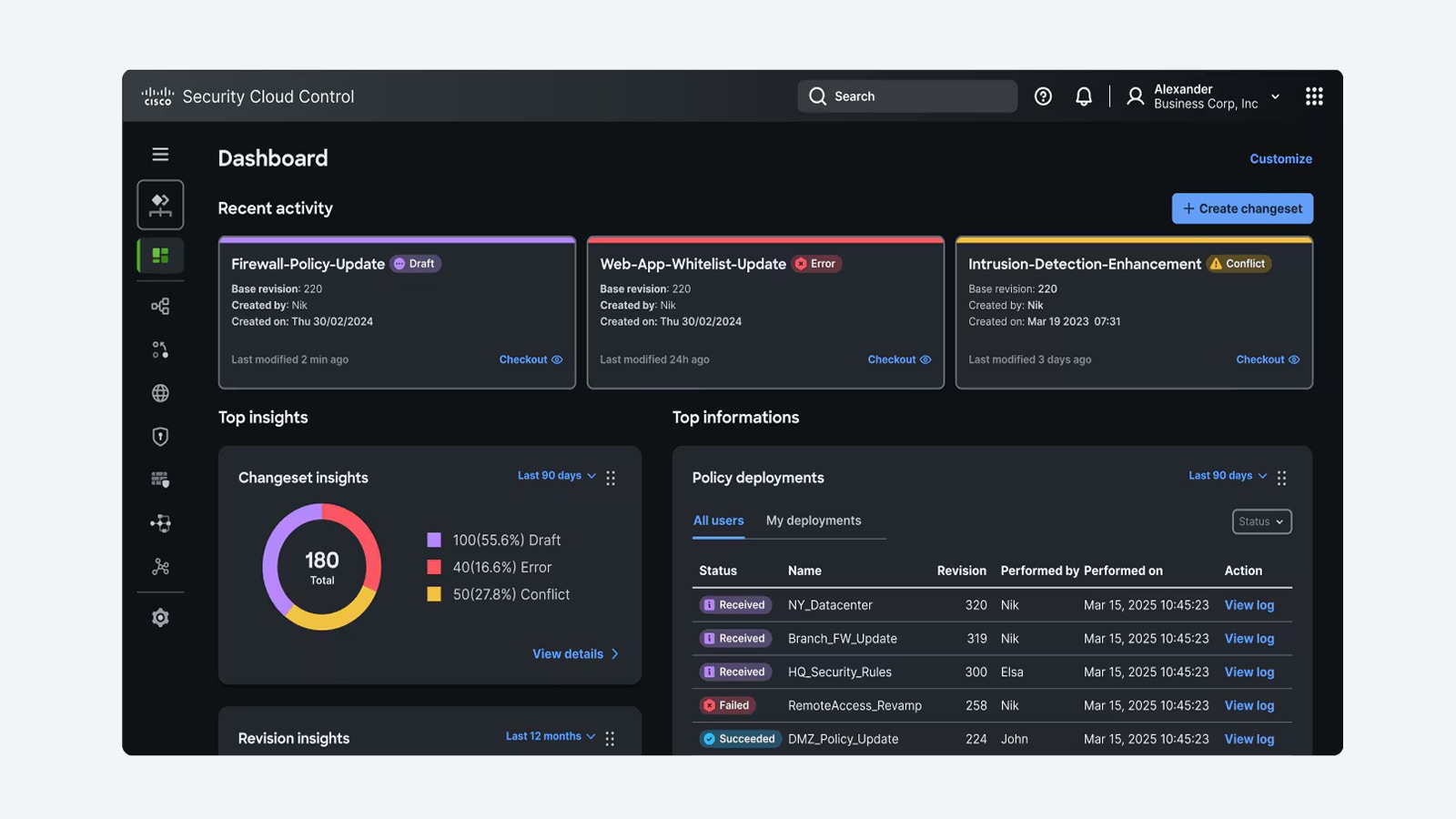
Software to automate, monitor, and secure your network, with cloud-managed dashboards and policy from a single pane.
Explore software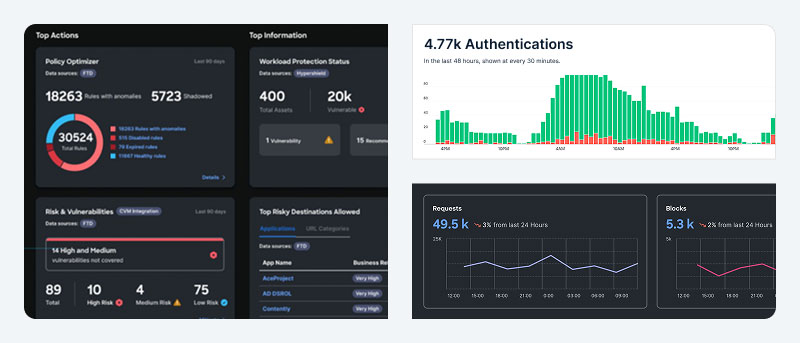
Comprehensive security to protect the network from evolving threats: firewall, identity, segmentation, and SASE.
Explore network security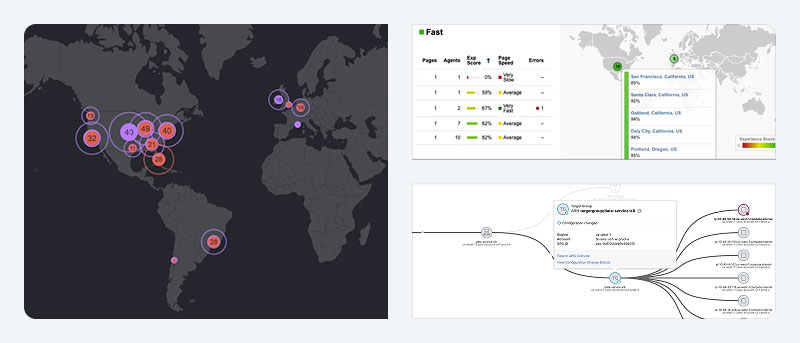
Assure every digital experience across owned and unowned networks, from client to cloud, with proactive insight.
Explore assuranceAverage inquiry to a validated Cisco BOM in the buyer's inbox.
First-pass estimate accuracy versus the validated post-survey BOM.
From approved purchase order to live, supported Cisco network.
Packaged as a Cisco services motion: assess, design, price, deploy, and operate with one validated quote path.
Confirm users, sites, compliance needs, support term, and the business reason for the refresh.
Map the right Catalyst, Nexus, controller, security, and licensing components to the scope.
Staging, cabling, cutover, validation, documentation, and managed handoff.
Generate a planning estimate, then we validate the final Cisco quote.
Common datacenter questions, answered by the Uniqcli Team.
A two-tier, full-mesh topology where every leaf switch connects to every spine over high-speed links (40/100/400G). It delivers predictable, low latency and scales by simply adding leaves or spines.
Nexus 9300 Series typically serve as leaf (and some models as spine); Nexus 9500 Series serve as spine. We pick models by port speed, server count, and whether you run ACI or standalone NX-OS.
ACI adds policy automation through APIC controllers and Nexus Dashboard. It is optional, we quote spine/leaf with or without ACI based on your automation and segmentation needs.
From rack count, servers per rack, uplink speed (25/100/400G), and redundancy. Each server and uplink is counted for transceivers and OM4 fiber runs so nothing is missed at install.
Yes, 400G-capable spine switches and line cards are quoted where bandwidth demands it, with the matching optics and fiber.
Yes. AI clusters need a non-blocking, lossless back-end fabric, typically 400G or 800G per GPU port on Nexus 9000 with RoCEv2, plus a separate front-end network. We size both from the workload, not a template.
Lossless Ethernet (RoCEv2) on Cisco Nexus and Silicon One delivers the low-latency, lossless behavior AI training needs, with the openness, security tooling, and operations of Ethernet, so most enterprise and government AI builds use Ethernet.
Your cart is empty
Browse current Cisco hardware, licenses, and optics, priced below market.
Browse the catalog