
Meraki MS220-8P EoL: Migrate to the MS120-8LP Switch
The compact Meraki MS220-8P PoE switch reached Last Day of Support on September 21, 2025. Here is exactly what that means and how to refresh to the functionally equivalent MS120-8LP without disrupting your edge.
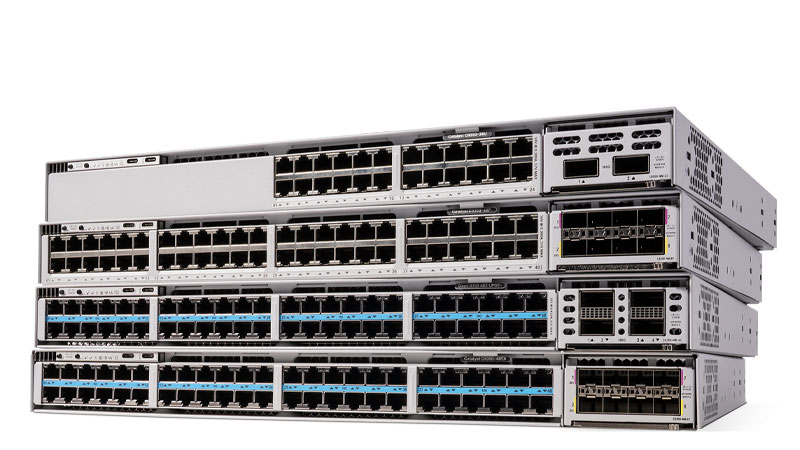
If you still have Cisco Meraki MS220-8P switches (PID MS220-8P-HW) humming under a desk, in a wiring closet, or behind a TV bracket powering a couple of access points and a phone, they are now fully out of the support lifecycle. The MS220-8P went End of Sale on September 21, 2018, and its Last Day of Support (LDoS) passed on September 21, 2025. As of today there is no firmware, no security patching, no TAC, and no RMA for this model. This guide explains what each milestone actually means for an operator, why an unsupported edge switch is a live compliance and uptime risk rather than a someday problem, and how to move cleanly to the recommended successor, the Cisco Meraki MS120-8LP (PID MS120-8LP-HW).
Why an out-of-support MS220-8P is a live risk, not a someday problem
The MS220-8P was a well-built compact access switch for its generation: eight 10/100/1000 RJ45 ports with 802.3at PoE+ on every port, two 1G SFP fiber uplinks, a 124 W PoE power budget, roughly 20.8 Gbps of non-blocking switching capacity, full Layer 2 features (VLANs, QoS, ACLs, RSTP, 802.1X, storm control), and a silent fanless chassis small enough to live anywhere. None of that has gotten worse. What has changed is that the platform no longer receives code.
Once a Meraki switch passes LDoS, Cisco stops shipping firmware to it. Any newly discovered vulnerability in the switching stack, an 802.1X bypass, a management-plane flaw, a TLS issue in the dashboard tunnel, an SNMP or LLDP parsing bug, will never be patched on an MS220-8P. There is no Cisco PSIRT remediation path and no engineering fix coming. For a regulated buyer this is precisely the gap auditors flag: you cannot demonstrate that a device is patched to a supported baseline when the vendor has formally ended support. And because this is the switch sitting between users, IP phones, cameras, and APs and the rest of your network, an unpatched flaw here is not peripheral, it is in the data path.
What each milestone date actually means
End of Sale, September 21, 2018
The date Cisco stopped selling the MS220-8P through normal channels. Anything you can buy now is used, refurbished, or gray-market NOS stock, and a resold unit's Meraki license does not automatically transfer with the hardware. End of Sale also started the formal support countdown that ended seven years later.
End of Software Maintenance, n/a
Meraki's cloud-firmware model does not publish a separate software-maintenance milestone the way Cisco's on-box IOS and IOS XE products do. For the MS220 line, the practical software cutoff is LDoS itself. After that date the switch is frozen on whatever firmware it last received and is no longer carried forward into new firmware trains, so it permanently misses every fix and feature that ships afterward.
Last Day of Support, September 21, 2025
The hard line. After LDoS there is no TAC case support, no advance replacement or RMA, no firmware, and no security patches. The Meraki dashboard will increasingly flag the model as unsupported, and over time end-of-support hardware can be dropped from new firmware compatibility entirely. Every day past this date is operating production infrastructure with no safety net and no patch path.
The recommended replacement: Meraki MS120-8LP (MS120-8LP-HW)
The Cisco-designated successor for the MS220-8P is the Cisco Meraki MS120-8LP, the compact Layer 2 cloud-managed access switch that occupies the same role, form factor, and price tier the MS220-8P did. It is a near drop-in physically and operationally while running a newer hardware platform with a longer support runway. The 'LP' designates Lite PoE: a partial-PoE power budget sized for the realistic load of a small edge closet rather than full per-port maximums.
What you actually gain, and the one spec to watch
- Same physical and uplink envelope. The MS120-8LP keeps eight 10/100/1000 RJ45 access ports and two 1G SFP uplinks, the same fanless silent chassis, and the same compact desktop/wall footprint, so most mounts, cabling, and fiber uplinks carry straight over.
- 802.3at PoE+ on every port, with a 67 W shared budget. This is the key planning number: the MS220-8P offered a 124 W budget, while the MS120-8LP ships a 67 W Lite-PoE budget. That comfortably powers a typical mix (for example two 802.3at APs plus a couple of phones), but if you were loading the MS220-8P near its 124 W ceiling, step up to the full-PoE MS120-8FP (124 W) so you do not under-power your devices.
- Newer switching platform and a fresh support lifecycle. The MS120 series runs current Meraki switch firmware on modern silicon, so it receives ongoing security patches, firmware features, and dashboard capabilities the frozen MS220 never will, restoring you to a supported, patchable baseline.
- Same cloud-managed operating model. Layer 2 features (VLANs, voice VLAN, QoS, ACLs, 802.1X/RADIUS, RSTP, storm control, port scheduling, cable testing) are configured identically in the Meraki dashboard, so your operations team does not learn a new tool.
- Limited lifetime hardware warranty with advance replacement while licensed, restoring the RMA path the MS220-8P lost at LDoS.
A practical migration plan
1. Assessment and inventory
Pull the full MS220-8P list from the Meraki dashboard and export serials, network assignments, and physical locations. For each switch, document what is plugged into every port and its PoE class, APs, IP phones, cameras, badge readers, and total the PoE draw so you can choose between the 8LP (67 W) and 8FP (124 W) per site. Capture the current uplink type (copper or SFP fiber) and speed. Because Meraki config is cloud-resident, your VLANs, ACLs, QoS, and port profiles are already documented in the dashboard, but a per-port export is still the artifact you want before touching anything.
2. License transition
Meraki is subscription-licensed per device. When you add MS120-8LP units you apply new Meraki MS licenses (co-termination or per-device, matching your org's licensing model) for the new serials; MS220-8P licenses do not migrate to the new hardware. Budget for fresh MS120 licenses sized to the term you want, and time the cutover so you are not paying for both for long. An authorized partner can co-term the new licenses to your existing renewal date so the whole estate stays on a single anniversary.
3. Config and feature parity
This is where the cloud model pays off. Because configuration lives in the Meraki network, not on the box, you can clone the MS220-8P's switch profile, VLANs, native/voice VLAN, access policies (802.1X/RADIUS), QoS, storm control, and port scheduling, onto the MS120-8LP before it ever ships to site. Stage the new switch into the same network, pre-apply the per-port config from your inventory export, and confirm any uplink aggregation or RSTP settings match. Treat the refresh as a moment to tighten 802.1X and ACLs rather than carry forward stale rules.
4. Physical, power, uplinks, and optics
The MS120-8LP reuses the same compact fanless form factor, so existing wall mounts and desk placements generally hold. Keep the same Cat5e/Cat6 access drops. For uplinks, the two 1G SFP cages accept the same SFP modules, reuse your existing 1000BASE-SX/LX or 1G copper SFPs (confirm Meraki compatibility), or keep RJ45 copper uplinks as-is. Note that neither the MS220-8P nor the MS120-8LP is a stacking platform, so there is no physical stack cabling to plan; aggregation, where used, is logical (LACP) and carries over in the dashboard. The only genuinely new variable is the PoE budget, verify it against your inventory total.
5. Phased cutover and secure decommission
Cut over one closet at a time during a maintenance window. With the MS120-8LP pre-staged in the dashboard, the swap is: unplug uplinks and PoE devices from the MS220-8P, rack or mount the MS120-8LP, move the cables port-for-port to match the pre-applied profile, and confirm the new switch comes online green in the dashboard with all attached devices powered and reachable. Validate AP adoption, phone registration, and camera streams before leaving. Then decommission the old unit securely: remove it from the dashboard, factory-reset it, and dispose of it through a certified ITAD vendor with a certificate of data destruction, federal and healthcare environments will want that paper trail.
Procurement notes for government and enterprise buyers
- TAA compliance: confirm country-of-origin and TAA status on the MS120-8LP units and licenses for federal and DoD orders before you cut a PO.
- GPC / purchase-card friendly: small-quantity edge-switch refreshes and license renewals can typically be transacted on a government purchase card through an authorized partner.
- Lead times: compact MS120 switches are mainstream stock, but bundle the hardware with the correct PoE variant (8LP vs 8FP) and the right license term up front to avoid an online-but-unlicensed gap or an under-powered closet.
- Source from an authorized partner: buying MS120-8LP-HW and Meraki licensing through an authorized Cisco partner like uniqcli protects warranty, ensures genuine licensing that claims cleanly into your dashboard, and keeps you clear of gray-market units that may not license or update.
For the full lifecycle record on this exact model, see the MS220-8P-HW end-of-life detail page, or browse the broader Cisco EoL hub to check the rest of your fleet against published dates. You can compare and configure the replacement on our catalog as well.
The MS220-8P did its job for the better part of a decade. With support fully ended as of September 21, 2025, the cost of waiting is now measured in unpatched exposure, audit findings, and an unrecoverable failure with no RMA, not just an aging spec sheet. Plan the MS120-8LP refresh now, on your schedule rather than after an outage. Get a refresh quote.
Frequently asked questions
Is the Cisco Meraki MS220-8P still supported in 2026?
No. The MS220-8P (MS220-8P-HW) reached its Last Day of Support on September 21, 2025. There is no longer any firmware, security patching, TAC support, or RMA available for it. Any MS220-8P in production is running unsupported, unpatchable code with no replacement path if it fails.
What is the recommended replacement for the Meraki MS220-8P?
The Cisco Meraki MS120-8LP (MS120-8LP-HW), a compact Layer 2 cloud-managed PoE+ access switch. It is the functionally equivalent successor, matching the MS220-8P's eight GbE ports, two 1G SFP uplinks, and fanless form factor while running a newer platform with a fresh support lifecycle. If your PoE load is heavy, the MS120-8FP offers the full 124 W budget instead.
Will the MS120-8LP power everything my MS220-8P did?
Usually, but check the math. The MS220-8P had a 124 W PoE budget; the MS120-8LP ships a 67 W Lite-PoE budget, which comfortably handles a typical edge mix of a couple of APs and phones. If you were loading the MS220-8P near its 124 W ceiling with high-draw 802.3at devices, choose the full-PoE MS120-8FP (124 W) instead. Tally your attached devices' PoE draw before ordering.
Will my existing cabling, SFP uplinks, and mounts work with the MS120-8LP?
In most cases yes. The MS120-8LP keeps the same eight RJ45 access ports, two 1G SFP uplink cages, and compact fanless form factor, so existing Cat5e/Cat6 drops, 1G SFP modules, and mounts are typically reusable. Confirm Meraki SFP compatibility for any reused optics and verify uplinks negotiate at 1G.
Do my Meraki licenses transfer from the MS220-8P to the MS120-8LP?
No. Meraki licenses are tied to device serials, so you apply new MS120 licenses when you add the replacement switches. An authorized partner can co-terminate the new licenses to your existing renewal date so your whole estate stays on one anniversary and you avoid paying for two devices for long.
Uniqcli Team
The Uniqcli Team is an authorized Cisco partner specializing in Catalyst wireless, switching, datacenter fabric, licensing, and managed services for U.S. federal, state, local, and education customers. We scope Cisco bills of materials, validate procurement paths (TAA, FIPS, contract vehicles), and deliver design, deployment, and managed operations.
Ready to scope your Cisco build?
Build a quoteRelated reading
View all →GuidesCisco Meraki MS220-48LP EoL: Migrate to the MS225-48LP
The Meraki MS220-48LP passed Last Day of Support on July 29, 2024. Here is what that means for an operating fleet and how to refresh cleanly to the stackable MS225-48LP.
January 3, 2026 · 8 min readGuidesCisco Meraki MS220-48FP EoL: Migrate to MS225-48FP
The Meraki MS220-48FP reached Last Day of Support on July 29, 2024. Here is what each milestone means, why running it now is a compliance and security liability, and exactly how to refresh to the MS225-48FP with physical stacking and 10G uplinks.
March 15, 2026 · 9 min readGuidesCisco Meraki MS220-48 EoL: Migrate to the MS120-48
The Meraki MS220-48 passed Last Day of Support on July 29, 2024, no firmware, no security fixes, no RMA. Here's why it must come out and how to migrate cleanly to the cloud-managed MS120-48.
March 13, 2026 · 10 min readGuidesMeraki MS220-24 EoL: Migrate to the MS120-24 Switch
The Meraki MS220-24 hit Last Day of Support on July 29, 2024, no more firmware, security patches, TAC, or RMA. Here is a practical, dashboard-native plan to refresh to the supported MS120-24, including the PoE SKU trap, licensing transition, and secure decommission for regulated buyers.
March 11, 2026 · 8 min readGuidesCisco MS220-24P End-of-Life: Migrate to MS225-24P Guide
The Meraki MS220-24P hit Last Date of Support on July 29, 2024. Here is what each milestone means, why the stackable MS225-24P is the right refresh, and a practical migration plan for federal, healthcare, and enterprise wiring closets.
January 1, 2026 · 8 min read Guides
Cisco Meraki MS22 EoL: Migration to the MS130-24P
The Meraki MS22 passed Last Day of Support on April 30, 2021, no patches, no TAC, no RMA. Here is why it has to come out and how to migrate cleanly to the cloud-managed MS130-24P.
May 20, 2026 · 7 min read