
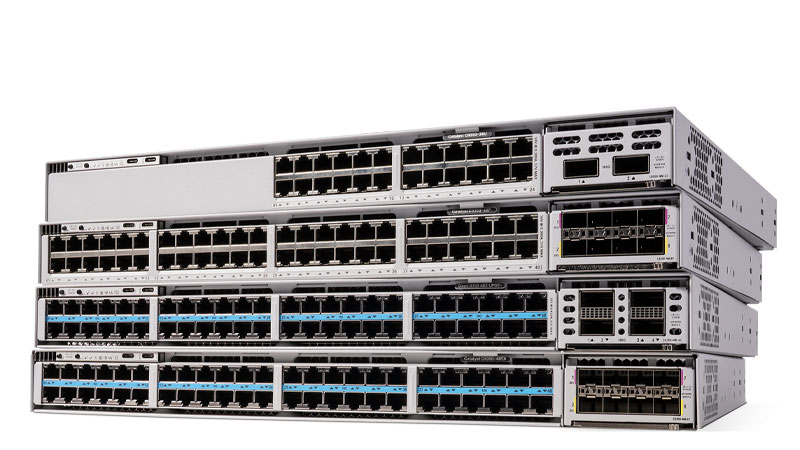
If you still have Cisco Meraki MS42 cloud-managed switches (PID MS42-HW) carrying access traffic, they are past every Meraki lifecycle milestone that matters. The MS42 reached its Last Day of Support on April 26, 2021. From that date forward Cisco Meraki provides no firmware fixes, no security patches, no TAC case handling, and no advance-replacement RMA for this model. A switch keeps forwarding frames long after it stops being supportable, which is exactly why these units quietly persist in wiring closets years after the support floor disappeared. This guide explains what the MS42 end-of-life dates actually mean for a live network, why the recommended MS125-48 is a genuine upgrade rather than a like-for-like swap, and how to plan a clean, low-risk refresh.
What the Meraki MS42 actually was
The MS42 (MS42-HW) was an early-generation Meraki access switch: 48 ports of 1 Gigabit Ethernet (10/100/1000BASE-T) for client connectivity, plus four dedicated 1G SFP uplinks. It was a non-PoE model, the PoE/PoE+ variant in that generation was the MS42P. It is a Layer 2 access switch managed entirely from the Meraki cloud dashboard, with no local CLI for day-to-day operation. Like every Meraki switch, it requires an active per-device license to function; when the license lapses the dashboard eventually stops managing the device. For 2013-era gigabit-to-the-desk that was a clean, easy-to-operate design. By today's standards its 1G-only uplinks and 1G access ports are the constraint, and the hardware itself can no longer receive the firmware that newer dashboard features and security fixes assume.
Why acting now matters
The risk with an end-of-life switch is not that it stops working. It is that it keeps working while the support and security floor erodes beneath it. After LDoS, three concrete exposures stack up:
- No firmware or PSIRT security fixes. When a new switching, dashboard-agent, or networking-stack vulnerability is disclosed, the MS42 will not receive a patched build. Its firmware is frozen at the last release that supported the hardware, so any applicable CVE is permanent on that platform.
- No TAC support or RMA. A failed MS42 cannot be opened as a Meraki support case or swapped under warranty or advance replacement. Your only recovery is a cold spare you already own or a same-dead-end unit from the secondary market, with no guarantee a current dashboard org will even license it.
- Audit and compliance exposure. The frameworks federal, DoD, SLED, and healthcare buyers live under (FedRAMP, CMMC 2.0, the HIPAA Security Rule, PCI DSS, and CISA directives) expect supported, patchable infrastructure. An unsupported access switch that cannot be patched is a finding waiting to happen, and "the vendor no longer ships fixes for this model" is not a defensible remediation plan.
There is also a licensing trap unique to Meraki. The MS42 is cloud-managed, so it depends on continued dashboard support for the hardware class. As Meraki advances the firmware baseline and retires legacy device support, an LDoS switch can be left unable to take new firmware while the rest of your fleet moves forward, co-managed in the same network but stranded on a frozen build.
What each milestone means in practice
- End of Sale (2014-04-26): the last day Cisco accepted new MS42 orders. Everything after this date was consuming the finite support tail.
- End of Software Maintenance: Meraki did not publish a distinct SW-maintenance milestone for this SKU; in practice firmware support tracked the hardware toward LDoS.
- Last Day of Support / LDoS (2021-04-26): the hard wall. No TAC, no RMA, no firmware or security fixes of any kind. The switch is on its own.
The recommended replacement: Meraki MS125-48
Cisco's migration path routes the MS42 to the Meraki MS125-48 (PID MS125-48-HW), the current full-gigabit cloud-managed access switch in the MS125 family. It keeps the operational model you already know, same Meraki dashboard, same zero-touch provisioning, same template and tagging workflows, while modernizing every part of the data path that the MS42 constrained. The meaningful improvements:
- 10G SFP+ uplinks. The MS125-48 ships with four dedicated 1G/10G SFP+ uplink ports, a 10x jump over the MS42's 1G SFP uplinks. That removes the single biggest bottleneck of the old design and gives you real headroom for aggregation, dual-homed distribution, and modern north-south traffic.
- 48 ports of 1GbE access, non-blocking. Same 48-port access density you have today, so desk and edge cabling carries over one-for-one, but on a current ASIC with full line-rate switching and a far larger MAC/forwarding table.
- Physical stacking. The MS125 supports dedicated stacking so multiple switches manage and forward as one logical unit with resilient inter-switch links, something the MS42 generation handled only as virtual/dashboard stacking. This simplifies closet uplink design and improves failover.
- Current Layer 2 feature set and firmware. The MS125-48 is an actively supported platform receiving ongoing firmware and security updates, with present-day dashboard features (adaptive policy support, richer QoS, modern multicast and storm-control handling) that the frozen MS42 build will never see.
- Limited lifetime hardware warranty with advance replacement. As a current model, the MS125-48 restores the TAC and RMA safety net the MS42 lost at LDoS.
Licensing: how the model changed
Meraki switching is subscription-licensed per device, and recent purchases move to Cisco's unified subscription approach. When you stand up MS125-48 hardware you claim each serial into your dashboard organization and bind a term license (typically 1, 3, 5, 7, or 10 years) to it; the switch only stays cloud-managed while that license is active. Plan license terms to match your refresh horizon and your contract vehicle, and confirm whether your organization is on per-device co-termination or the newer subscription model so renewals stay aligned across the fleet. Do not let new switches sit unlicensed in the dashboard, provisioning is gated on an active license.
A practical migration plan
1. Assess and inventory
Pull the MS42 list straight from the dashboard: serials, firmware, port counts, uplink optics, VLANs, and the network/template each switch belongs to. Note PoE draw on any downstream devices so you size the replacement PoE budget correctly. Capture per-port configuration, access VLANs, voice VLANs, trunk allowed-lists, port schedules, storm control, and any ACLs, as your parity baseline.
2. Plan licensing and procurement
Order MS125-48 (or the LP/FP PoE variants) with license terms that match your support horizon, and confirm TAA compliance and your contract vehicle up front for federal and SLED buys. Browse current SKUs and check availability in the catalog, and factor in optics: the MS125-48's uplinks take 1G or 10G SFP+ modules, so order the transceivers and DAC/fiber to match your upstream.
3. Establish config and feature parity
Because both old and new switches live in the same dashboard, parity is largely a matter of cloning. Use switch templates and port tags to replicate VLANs, voice VLAN, trunk/access roles, QoS, and access policies onto the MS125-48 before it ships, or apply them the moment the switch checks in. Validate against your captured baseline rather than assuming the clone is complete.
4. Handle physical: rack, power, uplinks, optics, stacking
Both are 1RU. Confirm rail depth and PDU outlets, then pre-stage stacking cables if you are collapsing several MS42s into a stacked MS125-48 group. Move uplinks deliberately: the MS125-48 can negotiate 10G on the uplinks, so coordinate the upstream distribution/aggregation side to take advantage rather than leaving the new switch capped at 1G.
5. Phase the cutover
Migrate closet by closet, not all at once. Stage and license the MS125-48, apply the parity config, then cut a maintenance window to move uplinks and re-patch access ports. Verify in the dashboard that the new switch is reachable, forwarding, and clean of port errors before you decommission the MS42 it replaces. Keep the old unit cabled-but-disabled briefly as a fast rollback.
6. Decommission securely
Remove the retired MS42 from the dashboard organization, then sanitize and dispose under your data-handling policy. For federal and DoD environments, follow NIST SP 800-88 media-sanitization guidance and retain certificates of destruction or wipe for the audit trail.
Procurement notes for regulated buyers
For federal, DoD, and SLED purchases, confirm TAA compliance and country-of-origin on the specific MS125-48 build, and align the buy to your contract vehicle (GSA, SEWP, or a GPC card buy under the micro-purchase threshold). Cloud-managed switching also tends to carry longer lead times during refresh cycles, so order license terms and optics together and build in slack. Buying through an authorized Cisco partner keeps warranty, licensing, and TAA documentation clean, the kind of paper trail an auditor will ask for.
If you are reconciling an MS42 fleet, start with the milestone record on the MS42 EoL detail page, then browse the broader Cisco end-of-life index to catch any co-located gear aging out alongside it. When you are ready to scope the refresh, request a quote and we will build an MS125-48 migration BOM, hardware, PoE-correct variants, optics, and license terms, matched to your environment and contract vehicle.
Frequently asked questions
Is the Cisco Meraki MS42 still supported?
No. The MS42 (MS42-HW) reached Last Day of Support on April 26, 2021. Since then Cisco Meraki provides no firmware updates, no security/PSIRT fixes, and no TAC support or RMA replacement for the model. It may still forward traffic, but it is unsupported and unpatchable, which creates real audit and security exposure for regulated environments.
What replaces the Meraki MS42?
The recommended migration is the Cisco Meraki MS125-48 (MS125-48-HW). It keeps the same 48-port 1GbE access density and the same Meraki dashboard management, but adds four 1G/10G SFP+ uplinks (versus 1G uplinks on the MS42), physical stacking, a current Layer 2 feature set with ongoing firmware, and a limited lifetime warranty with advance replacement.
Does the MS125-48 provide PoE like the MS42?
The base MS42 was non-PoE (its PoE sibling was the MS42P), and the base MS125-48 is also non-PoE. If your closet powers APs, phones, or cameras, choose a PoE variant instead: the MS125-48LP (PoE+ budget) or MS125-48FP (full PoE+ budget). Audit per-port and total wattage before ordering so the PoE budget matches the load.
How does Meraki licensing work on the new switch?
Meraki switches are subscription-licensed per device. You claim each MS125-48 serial into your dashboard organization and bind a term license (commonly 1, 3, 5, 7, or 10 years); the switch only stays cloud-managed while that license is active. Confirm whether your org is on per-device co-termination or Cisco's newer unified subscription model so renewals stay aligned across the fleet.
How do I migrate MS42 configuration to the MS125-48?
Because both switches live in the same Meraki dashboard, most parity comes from cloning. Use switch templates and port tags to replicate VLANs, voice VLAN, trunk/access roles, QoS, and access policies onto the MS125-48 before or as it checks in, validate against your captured per-port baseline, then cut over closet by closet during a maintenance window with the old switch kept as a brief rollback.
Uniqcli Team
The Uniqcli Team is an authorized Cisco partner specializing in Catalyst wireless, switching, datacenter fabric, licensing, and managed services for U.S. federal, state, local, and education customers. We scope Cisco bills of materials, validate procurement paths (TAA, FIPS, contract vehicles), and deliver design, deployment, and managed operations.
Ready to scope your Cisco build?
Build a quoteRelated reading
View all →GuidesCisco Meraki MS220-48LP EoL: Migrate to the MS225-48LP
The Meraki MS220-48LP passed Last Day of Support on July 29, 2024. Here is what that means for an operating fleet and how to refresh cleanly to the stackable MS225-48LP.
January 3, 2026 · 8 min read Guides
Cisco Meraki MR72 EoL: Migrating Outdoor Wi-Fi to the MR76
The Meraki MR72 passed Last Day of Support on April 30, 2024. Here's exactly what that means for your outdoor network and how to migrate cleanly to the Wi-Fi 6 Meraki MR76 without leaving the dashboard.
March 19, 2026 · 7 min readGuidesCisco MS220-24P End-of-Life: Migrate to MS225-24P Guide
The Meraki MS220-24P hit Last Date of Support on July 29, 2024. Here is what each milestone means, why the stackable MS225-24P is the right refresh, and a practical migration plan for federal, healthcare, and enterprise wiring closets.
January 1, 2026 · 8 min read Guides
Cisco Meraki MS22 EoL: Migration to the MS130-24P
The Meraki MS22 passed Last Day of Support on April 30, 2021, no patches, no TAC, no RMA. Here is why it has to come out and how to migrate cleanly to the cloud-managed MS130-24P.
May 20, 2026 · 7 min read Guides
Cisco Meraki MX60 (MX60-HW) Replacement & MX67 Migration
The Meraki MX60 hit Last Day of Support on 2022-10-24, no firmware, no PSIRT fixes, no RMA. Here is exactly what that means and how to migrate a small branch to the MX67 cleanly.
April 8, 2026 · 7 min readGuidesCisco Meraki MR26 EoL: Migrate to Catalyst CW9164I
The Meraki MR26 passed Last Day of Support on May 9, 2023, it gets no PSIRT fixes, no firmware, and no RMA. Here is what that means for an 802.11n fleet still in your ceilings and how to refresh cleanly to the Wi-Fi 6E Catalyst CW9164I on the Meraki dashboard.
March 30, 2026 · 9 min read