Six telemetry sources
Endpoint, network, firewall, email, identity, and DNS unified and correlated, with the XDR Connector pulling NetFlow, SPAN, and NGFW logs from on-prem and cloud.

Service provider
Data center & WAN
Security & operations
Cisco XDR is cloud-native extended detection and response that correlates endpoint, network, firewall, email, identity, and DNS telemetry into prioritized incidents, so your SOC responds in minutes instead of days. Uniqcli scopes the tier, sizes retention and ingestion, and returns a TAA-compliant, GPC-payable quote.
Access-point, port, and rack counts are derived from your facility, not guesswork or a generic template.
We confirm the exact SKUs, licensing tier and term, services, and availability before you sign.
TAA-compliant options, contract vehicle, and CLIN structure so the quote clears your buyer the first time.
Enough detail for IT, procurement, and facilities to move together, then we validate the final BOM.
Endpoint, network, firewall, email, identity, and DNS unified and correlated, with the XDR Connector pulling NetFlow, SPAN, and NGFW logs from on-prem and cloud.
Every incident scored 1 to 1000 from MITRE ATT&CK TTP risk plus the asset value you assign, so analysts work the most material threats first.
Product-agnostic playbooks, drag-and-drop automation, and Automated Ransomware Recovery that restores from a last-known-good snapshot.
Run it yourself, or have Cisco's SOC monitor and respond around the clock with Talos intelligence and incident-response retainers.
Cisco XDR uses agentic AI to autonomously verify whether an alert is a real attack and assemble the attack storyboard, so a lean team gets professional-grade outcomes without a 24x7 desk.
Agentic AI investigates and confirms genuine attacks automatically, building a timeline and attack graph included in every tier, even Essentials.
SANS-model playbooks, XDR Forensics with 350+ endpoint artifacts, and remote response for fast containment and eradication.
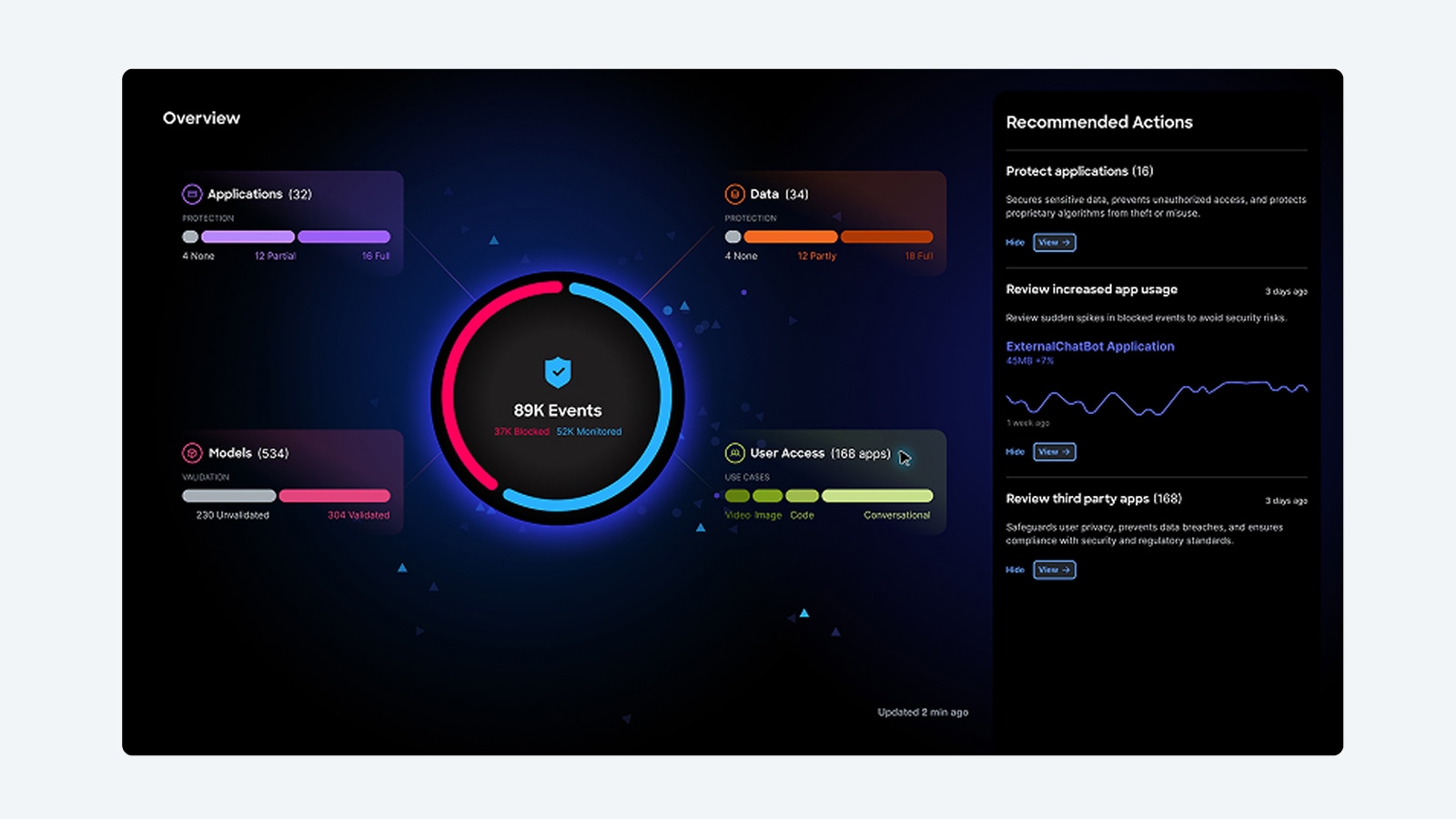
Cisco Talos threat intelligence enriches every incident and underpins the Premier managed-detection service.
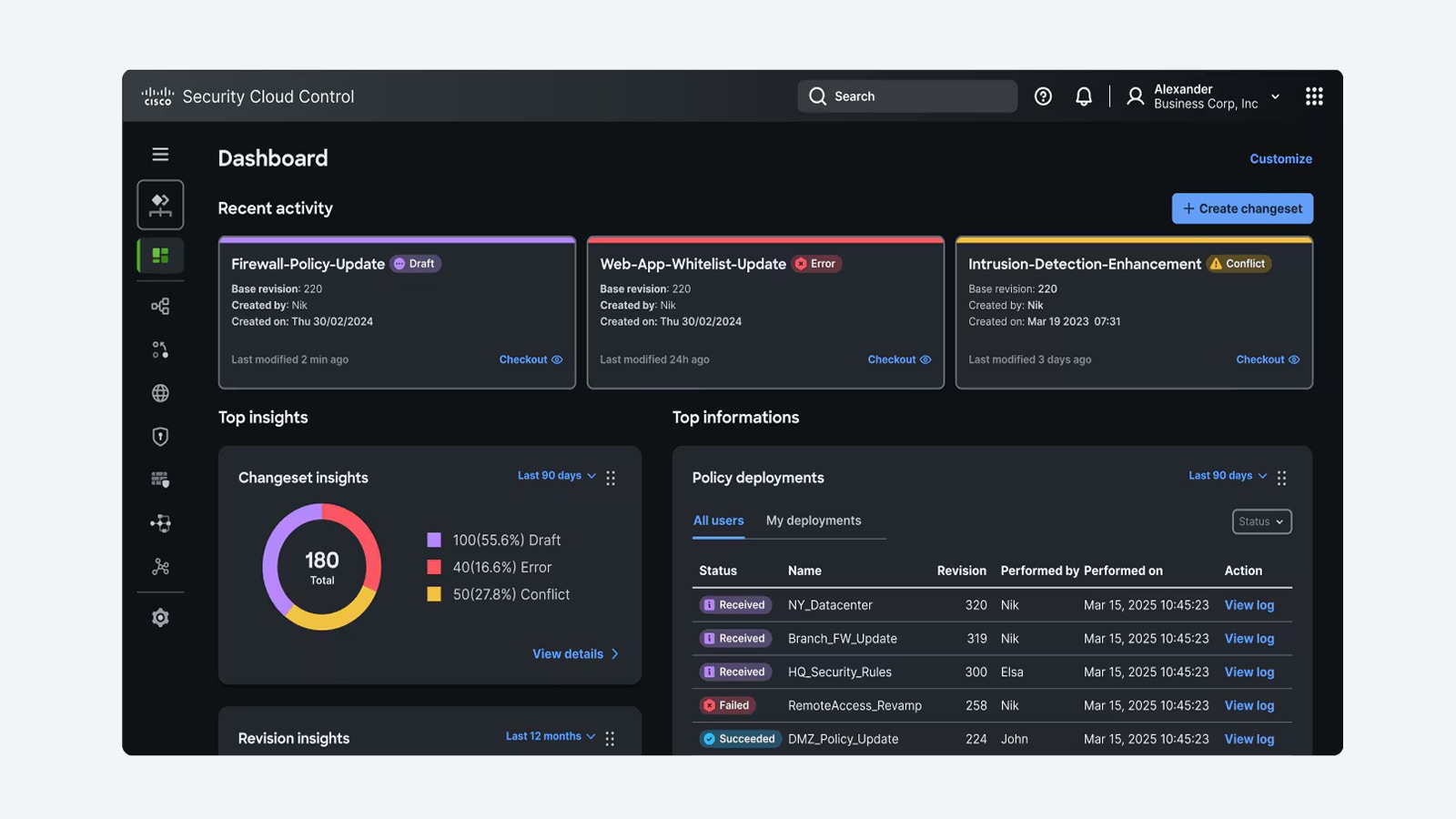
The same telemetry-centric console your SOC works in: correlated incidents, a timeline and attack graph, and guided response, instead of pivoting across five tools.
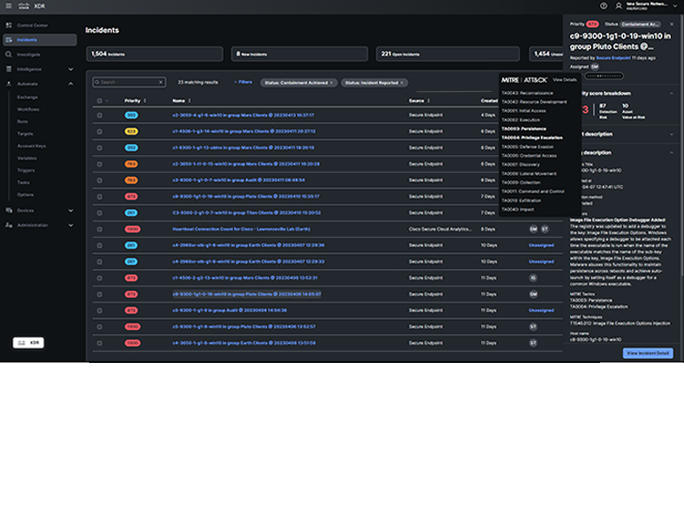
Correlated, risk-scored incidents (1 to 1000) with a timeline and attack graph, so analysts work the most material threat first.
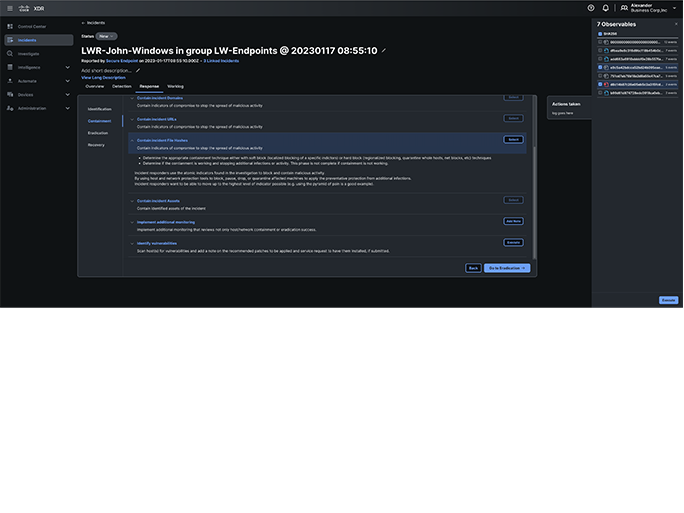
Product-agnostic SANS-model playbooks and low/no-code automation drive containment from the same console.
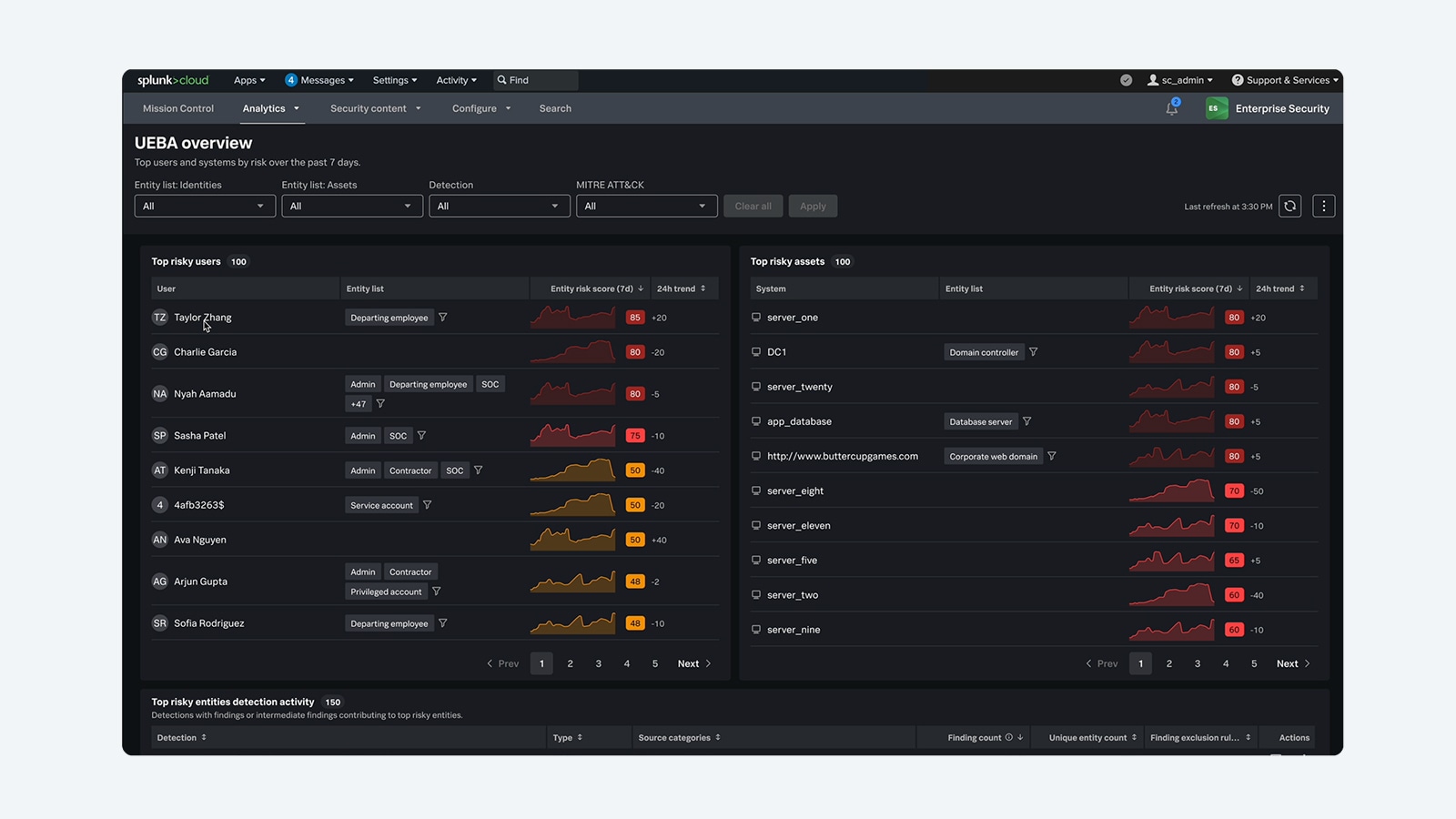
Events and telemetry from Cisco and third-party tools correlated over time into one incident, plotted on a timeline and attack graph.
Native detections mapped to ATT&CK, with coverage modeling and Secure Endpoint Configuration Insights that flag gaps before attackers find them.
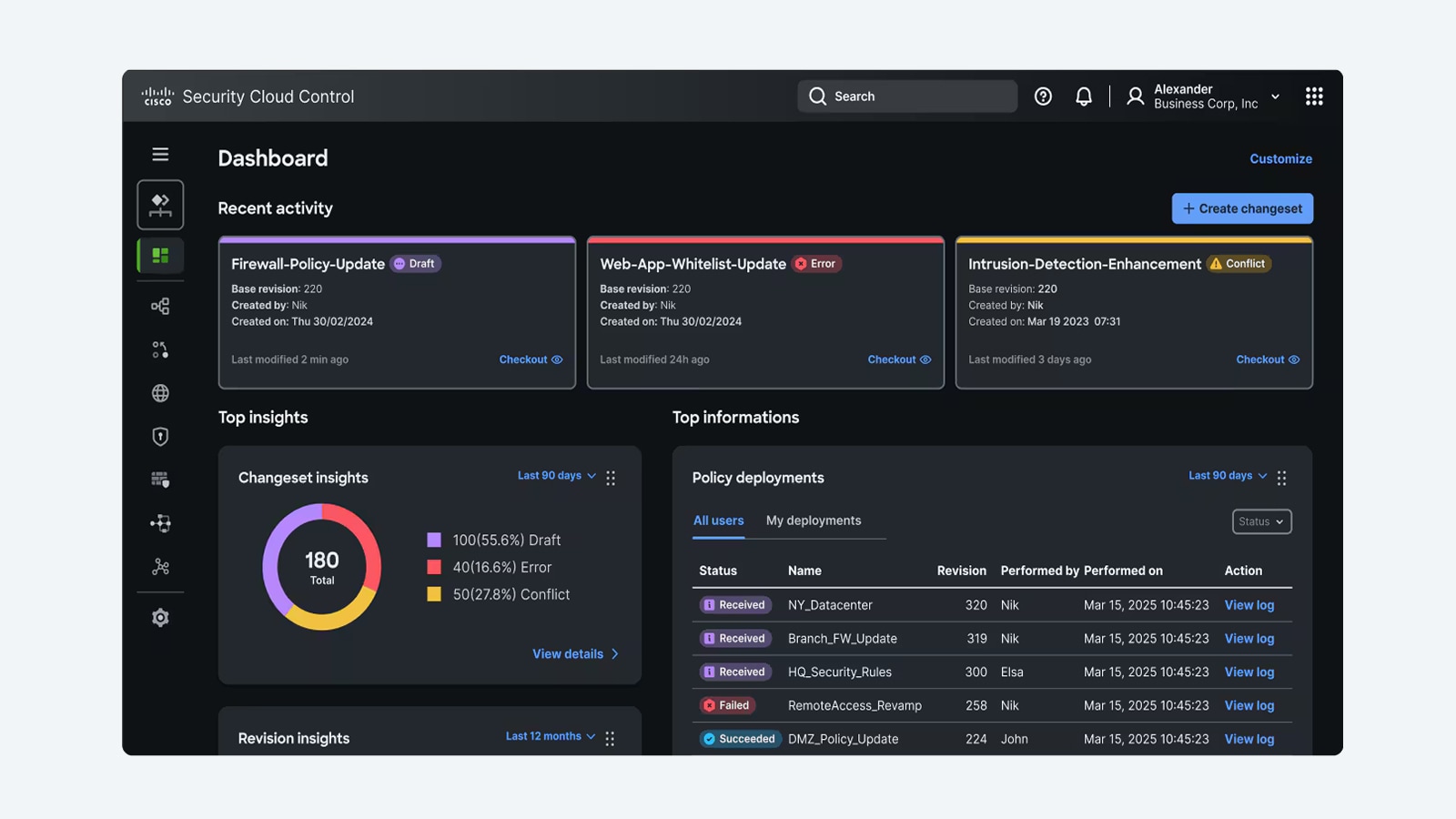
Secure Firewall and Secure Network Analytics feed XDR so lateral movement and encrypted threats surface in the incident view.
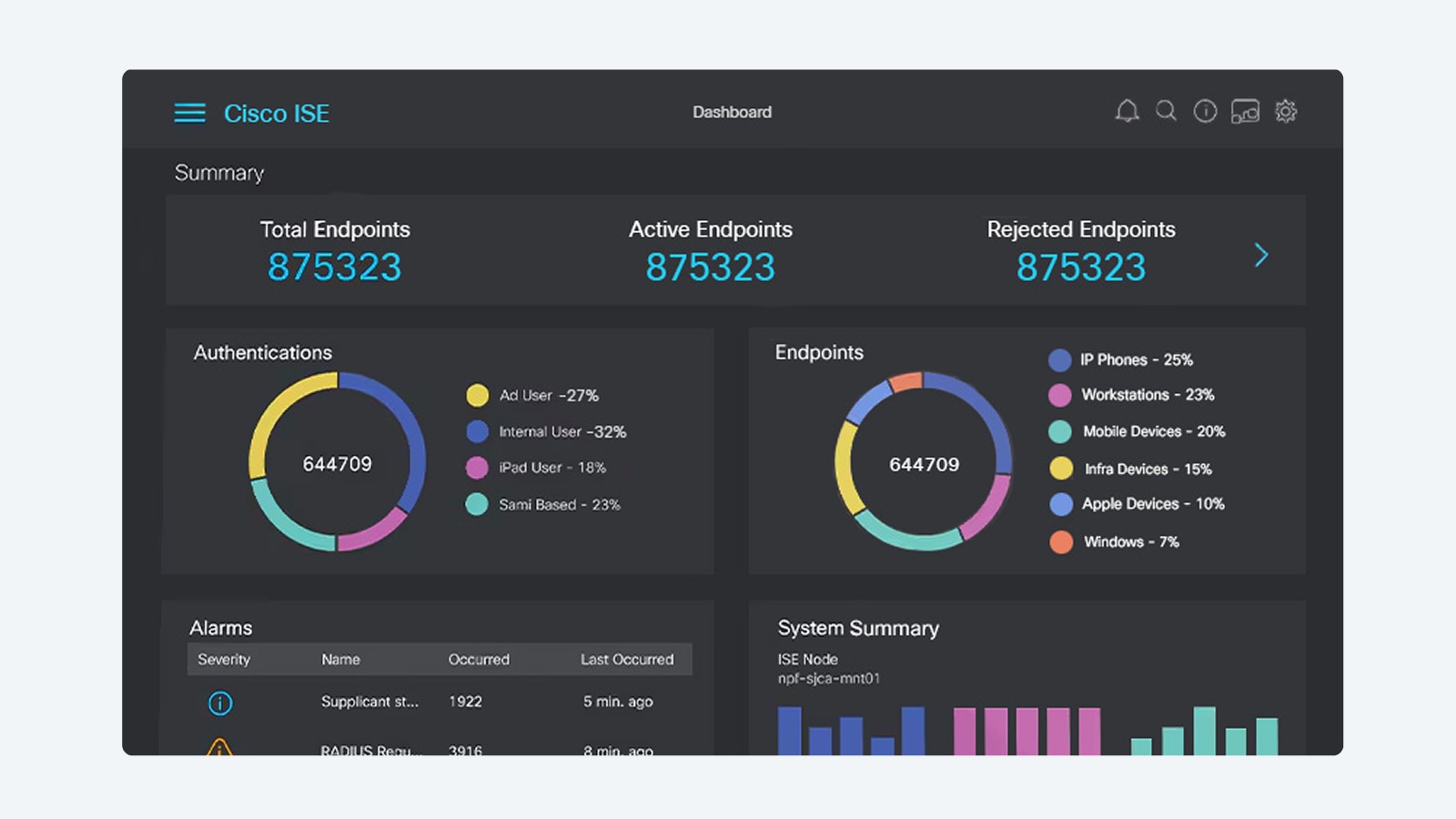
Cisco ISE and Identity Intelligence add user and device context, so incidents carry the identity behind the activity.
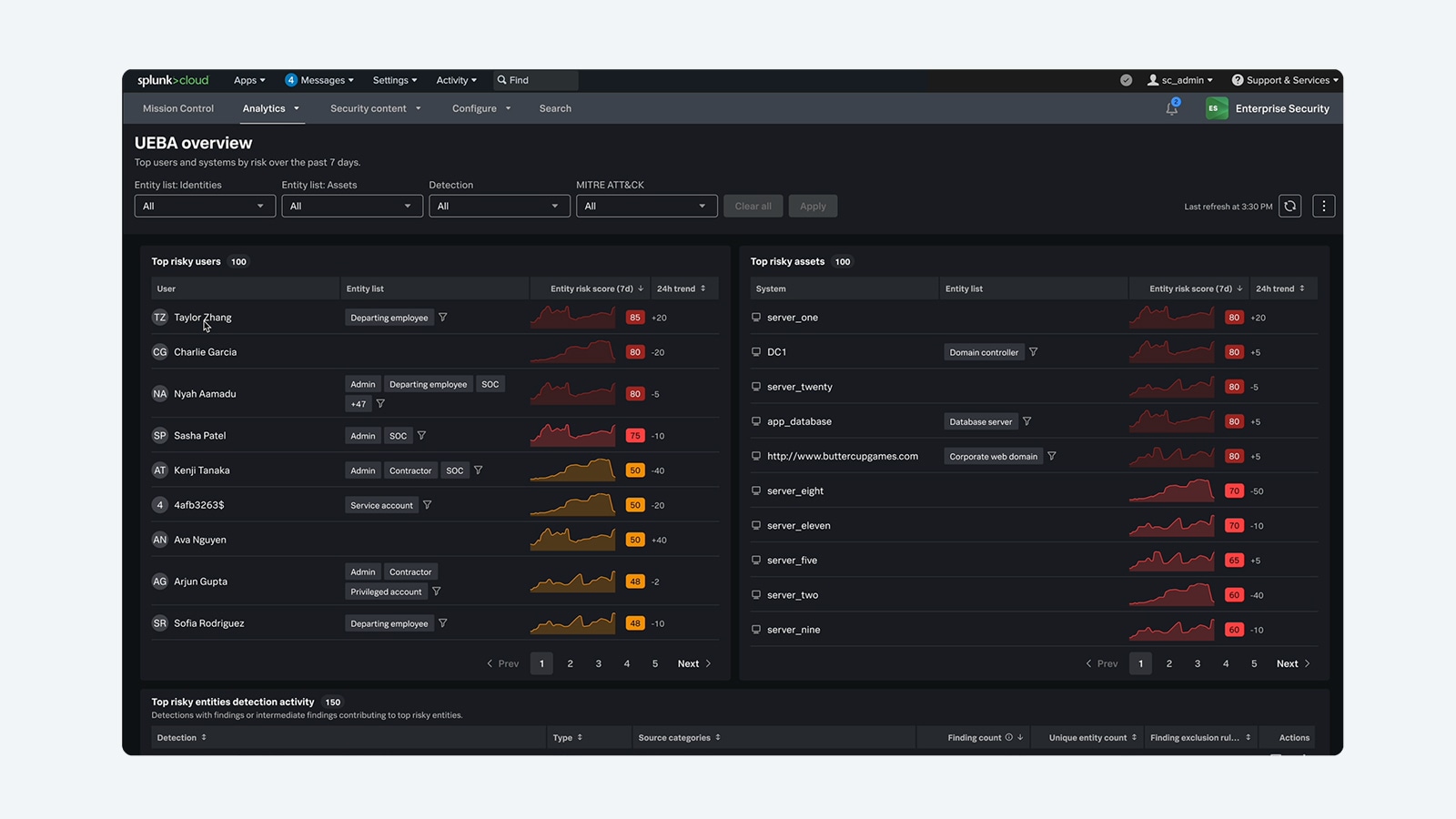
Splunk, Microsoft Sentinel, and Google SecOps integrate so XDR sits above, not instead of, your existing log estate.

Curated integrations with CrowdStrike, SentinelOne, Microsoft Defender, Palo Alto, Fortinet, and more, plus an open API for the rest.
Cisco XDR is licensed per user across three tiers; the right one depends on whether you need third-party integrations and whether you want Cisco to run the SOC for you.
Full XDR with Cisco-portfolio integrations
Adds curated third-party integrations and forensics
Cisco-managed detection and response
Cisco does not publish a flat list price for XDR. Pricing varies by tier, user count, data retention (90/180/365 days), and ingestion volume. Uniqcli returns a TAA-compliant, GPC-payable quote.
Each tool was built for a different job. This is where each one stops, and why teams add XDR as the correlation layer.
| Capability | EDR | SIEM | SOAR | Cisco XDR |
|---|---|---|---|---|
| Primary scope | Endpoint only | All logs, if queried | Playbook actions | Endpoint, network, firewall, email, identity, DNS |
| Correlation across vectors | No | Manual rules | No | Built-in |
| Typical time to outcome | Fast (host) | Often days | n/a | Minutes |
| Automated response | Limited | Add-on | Yes | Built-in playbooks |
| Incident prioritization | Basic | Rule-based | No | Risk score 1 to 1000 |
Splunk (now a Cisco company) integrates as a data source, so Cisco XDR sits above your SIEM rather than replacing the analyst workflow.
Architecture, readiness review, and right-sized BOMs from real facility inputs, not a generic template.
On-site survey for SCIF, multi-floor, outdoor, and datacenter risk before install, so the count holds at turn-up.
TAA-compliant sourcing options, contract vehicle, CLIN structure, and a procurement-ready package that clears review.
Pre-staging, golden configs, labeling, and validation in our lab before anything ships to the site.
Structured cabling, rack-and-stack, optics, and a low-risk cutover with full documentation and handoff.
Monitoring, firmware lifecycle, change windows, Smartnet, and quarterly health reviews after turn-up.
Simplified operations, powered by AgenticOps: automate, defend, and see the whole network end to end.
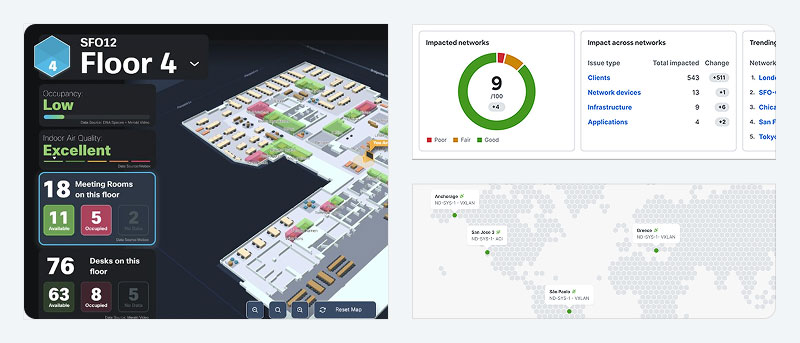
Software to automate, monitor, and secure your network, with cloud-managed dashboards and policy from a single pane.
Explore software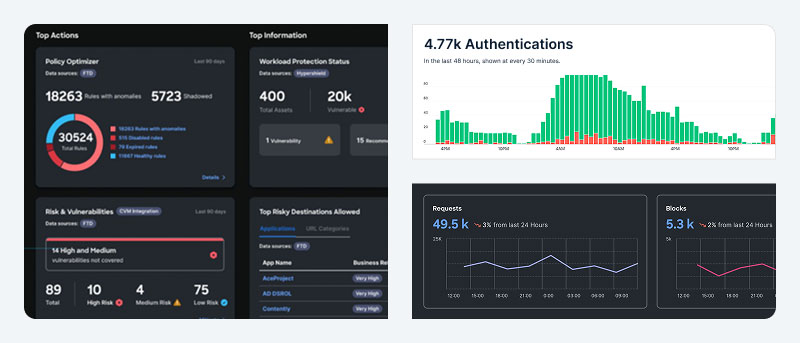
Comprehensive security to protect the network from evolving threats: firewall, identity, segmentation, and SASE.
Explore network security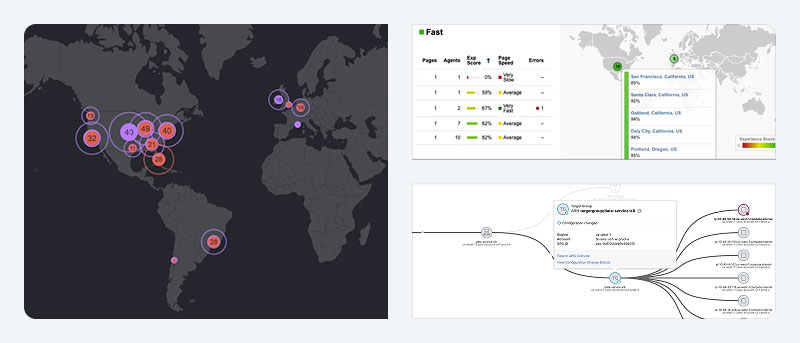
Assure every digital experience across owned and unowned networks, from client to cloud, with proactive insight.
Explore assuranceAverage inquiry to a validated Cisco BOM in the buyer's inbox.
First-pass estimate accuracy versus the validated post-survey BOM.
From approved purchase order to live, supported Cisco network.
Packaged as a Cisco services motion: assess, design, price, deploy, and operate with one validated quote path.
Confirm users, sites, compliance needs, support term, and the business reason for the refresh.
Map the right Catalyst, Nexus, controller, security, and licensing components to the scope.
Staging, cabling, cutover, validation, documentation, and managed handoff.
Generate a planning estimate, then we validate the final Cisco quote.
A deeper reference for security and procurement teams evaluating Cisco XDR.
Cisco XDR is a cloud-native, SaaS-delivered extended detection and response platform. It unifies telemetry from across the security stack, applies machine learning and analytics, and produces correlated, prioritized incidents so a Security Operations Center can move from endless investigation to fast, confident response.
The defining idea is breadth. Where endpoint detection looks at one layer, Cisco XDR natively analyzes the six telemetry sources SOC operators consider critical and adds curated third-party integrations, so an attack that never touches a monitored endpoint is still caught and correlated.
Cisco XDR is network-led and agent-optional, which sets it apart from endpoint-anchored tools. Network telemetry is collected through the XDR Connector and Cisco Telemetry Broker, with endpoint flow data from the Network Visibility Module in Cisco Secure Client.
Every incident is scored from 1 to 1000. The score combines a Detection Risk component (1 to 100, derived from the financial-risk scoring of the relevant MITRE ATT&CK techniques, the number of techniques, and source severity) with an Asset Value (1 to 10) that you assign. Incidents sort by score, so the queue always surfaces the most material threat first.
Cisco XDR supports US Government Community Cloud (GCC) integrations and aligns with the CISA Zero Trust Maturity Model and MITRE ATT&CK. Because XDR relies on adjacent Cisco cloud services whose authorizations evolve, FedRAMP, DoDIN APL, and impact-level requirements should be verified per component at purchase time. Uniqcli confirms TAA compliance, quotes via GPC/SAP/FAR purchasing paths, and accepts the Government Purchase Card (GPC).
Common security · detection & response questions, answered by the Uniqcli Team.
Cisco XDR is a cloud-native extended detection and response platform that ingests and correlates telemetry across endpoint, network, firewall, email, identity, and DNS, then uses analytics and AI to produce prioritized, enriched incidents with guided and automated response. It replaces slow, log-centric SIEM/EDR-only workflows with telemetry-centric detection that delivers outcomes in minutes. As an authorized Cisco partner, Uniqcli can scope and quote the right tier and sizing for your environment.
It natively analyzes the six sources SOC teams consider critical for XDR: endpoint, network, firewall, email, identity, and DNS. Network telemetry comes from the XDR Connector (NetFlow/IPFIX, SPAN, NGFW logs), the Network Visibility Module in Cisco Secure Client, and agentless monitoring of AWS, Azure, and Google Cloud. It can also ingest Cisco and third-party data depending on license tier.
Each incident gets a priority score from 1 to 1000. That score combines a Detection Risk component (1 to 100, derived from the financial-risk scoring of the relevant MITRE ATT&CK TTPs, the number of TTPs, and source severity) and an Asset Value (1 to 10) that you assign. Incidents are sorted by score so analysts always work the most materially impactful threats first.
Essentials delivers the full XDR feature set with built-in Cisco-portfolio integrations. Advantage adds commercially supported, Cisco-curated third-party integrations (EDR, email, NGFW, NDR, SIEM) plus XDR Forensics. Premier delivers Advantage as a fully managed (MXDR) service run by Cisco experts with around-the-clock monitoring, penetration testing, and select Talos Incident Response. Uniqcli can help you compare tiers and right-size data retention and ingestion.
Cisco XDR is licensed per user across the three tiers, and pricing varies by tier, user count, data retention (90/180/365 days), and ingestion volume (a 2 GB per user per month default, with add-on GB available). Cisco does not publish a flat list price for XDR, so the right approach is a scoped quote. As an authorized Cisco reseller, Uniqcli can prepare a TAA-compliant, GPC-payable quote based on your seat count and retention needs.
Yes. Beyond the Cisco portfolio, the Advantage and Premier tiers add curated integrations with tools like CrowdStrike Falcon, SentinelOne, Microsoft Defender, Palo Alto Cortex XDR and NGFW, Fortinet, Proofpoint, Splunk, ServiceNow, Cohesity, and Rubrik. An Open API and Cisco XDR Connect let you build custom integrations for tools that are not on the supported list. Most third-party integrations require Advantage or Premier.
Cisco XDR includes an embedded generative AI Assistant and the Attack Storyboard with Instant Attack Verification, which uses agentic AI to autonomously investigate and verify whether an alert is a genuine attack, compressing hours of manual triage into minutes. These capabilities help prioritize incidents and guide step-by-step response, while the analyst still makes the final call.
Automated Ransomware Recovery integrates with backup partners (such as Rubrik, Cohesity, and Veeam) to trigger snapshots and restore systems to a last-known-good state, reducing data loss and the need to pay ransom. Guided playbooks and XDR Forensics then help contain and eradicate the threat and preserve forensic evidence.
Yes. The Premier tier is Cisco Managed XDR (MXDR), where Cisco security researchers, investigators, and responders monitor and respond around the clock using the XDR platform, Talos threat intelligence, and defined playbooks, with security validation via penetration testing and select Talos Incident Response. It is ideal for organizations without a fully staffed in-house SOC.
Cisco XDR supports US Government Community Cloud (GCC) integrations and aligns with the CISA Zero Trust Maturity Model and MITRE ATT&CK. FedRAMP, DoDIN APL, and impact-level requirements should be verified per component at purchase time, since XDR relies on adjacent Cisco cloud services whose authorizations are evolving. Uniqcli, as an authorized Cisco partner, can confirm TAA compliance, the right purchasing path (GPC, SAP, or FAR-based PO), and the appropriate edition for your agency's posture.
Your cart is empty
Browse current Cisco hardware, licenses, and optics, priced below market.
Browse the catalog