
Cisco Meraki MS220-48FP EoL: Migrate to MS225-48FP
The Meraki MS220-48FP reached Last Day of Support on July 29, 2024. Here is what each milestone means, why running it now is a compliance and security liability, and exactly how to refresh to the MS225-48FP with physical stacking and 10G uplinks.
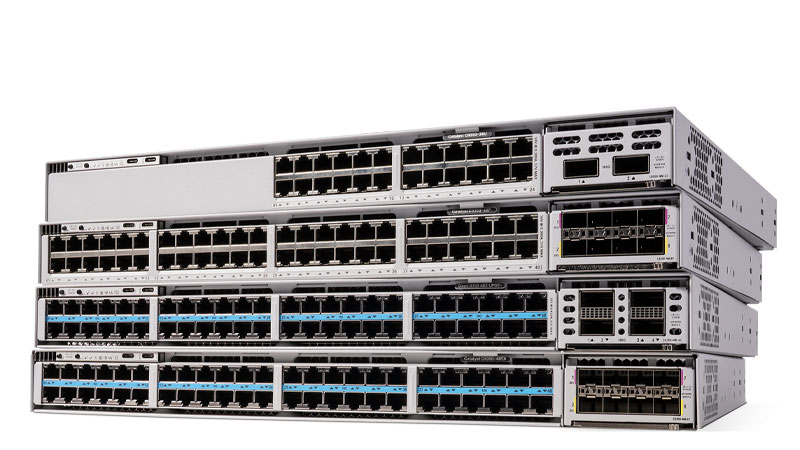
If you still have Cisco Meraki MS220-48FP switches carrying access traffic, they are now past every support milestone Cisco set for the platform. The MS220 family went End-of-Sale on July 29, 2017, and reached its Last Day of Support (LDoS) on July 29, 2024. That second date is the one that matters operationally: as of mid-2024 these switches receive no firmware updates, no security fixes, no TAC engagement, and no RMA replacement. A 48-port full-PoE+ access switch sitting at the network edge with no path to a patch is exactly the kind of asset that turns up in an audit finding. This guide explains what each milestone means for a cloud-managed switch specifically, why the MS225-48FP is the right one-to-one replacement, and how to execute the refresh without a painful cutover.
What the MS220-48FP was built to do
The MS220-48FP (PID MS220-48FP-HW) was a Layer 2 cloud-managed access switch: forty-eight 10/100/1000BASE-T ports, four 1G SFP uplinks, and a 740W PoE budget, the "FP" stands for full PoE+, meaning the switch could deliver the full 30W per port across all 48 ports for dense deployments of IP phones, wireless access points, and cameras. It was managed entirely through the Meraki dashboard with no on-box CLI for day-to-day operations, and it supported "virtual stacking," which is a dashboard-side management abstraction, you could configure many switches at once, but they were not physically stacked into one logical switch with a shared data plane. Uplinks topped out at 1 Gigabit. For 2014-era wiring closets that was plenty. For a fleet that has since added Wi-Fi 6/6E access points and multi-gigabit endpoints, those 1G uplinks and the lack of true stacking are the bottleneck.
What each end-of-life milestone actually means
Cisco's lifecycle dates are not interchangeable, and conflating them is how teams end up running unsupported gear without realizing it. For the MS220-48FP:
- End-of-Sale (July 29, 2017): the last day Cisco accepted new orders for the MS220-48FP-HW. After this date the switch could only be sourced second-hand. This was the early warning, seven years ahead of the cliff.
- End of Software Maintenance: not separately published for the MS220 (listed as n/a) because Meraki firmware is delivered as a unified cloud-pushed stream rather than per-train maintenance releases. In practice, meaningful firmware development for the platform wound down well before LDoS, and the device stopped receiving new feature firmware as it aged out.
- Last Day of Support / LDoS (July 29, 2024): the hard cutoff. After this date Cisco provides no software fixes, no PSIRT security patches, no TAC support cases, and no hardware RMA. The switch keeps forwarding packets, but you are fully on your own for anything that goes wrong.
Why act now and not at the next budget cycle
The risk with a post-LDoS cloud switch is asymmetric. A new vulnerability in the Meraki switching stack, in the dashboard agent, in a protocol handler, in the boot chain, has no remediation path on this hardware, so a single advisory can strand the device in a permanently exposed state. Hardware failure compounds it: when a power supply or a PoE controller dies, there is no RMA, so a failed switch becomes an emergency procurement at full retail with no lead-time cushion. And because the MS220 is dashboard-managed, an end-of-life Meraki license is its own problem: lapsed or non-renewable licensing can drop the switch from the dashboard entirely, taking your visibility and config control with it. Planning the refresh now lets you buy on a normal procurement timeline instead of an outage timeline.
The recommended replacement: Meraki MS225-48FP
Cisco's mapped successor is the Meraki MS225-48FP (PID MS225-48FP-HW), and it is a deliberate like-for-like at the access layer with two upgrades that matter most for an MS220 fleet. It keeps the same form factor and the same workload posture, Layer 2 cloud-managed, forty-eight 1GbE access ports, and the same 740W full PoE+ budget, so your existing endpoint power profile transfers cleanly. What changes is the spine of the closet:
- 10G SFP+ uplinks: the MS225-48FP ships with four 10 Gigabit SFP+ uplink ports, a 10x jump from the MS220's 1G SFP uplinks. This removes the access-to-distribution chokepoint that throttled the MS220 once dense Wi-Fi and multi-gig endpoints arrived.
- True physical stacking: the MS225 adds dedicated rear stacking ports for genuine hardware stacking, multiple switches operate as one logical unit with a high-bandwidth shared backplane and a single management point, not just the dashboard-side virtual stacking the MS220 offered. That means real cross-stack link aggregation and resilient inter-switch forwarding.
- Full PoE+ preserved: the 740W budget carries forward, so a closet full of 802.3at access points, phones, and cameras moves over without re-engineering the power plan.
- Modern cloud feature set: the MS225 runs current Meraki switch firmware, so it stays in the patched, supported lifecycle and gains the dashboard features, templates, and API surface that have shipped since the MS220 froze.
On licensing, both platforms use the Meraki per-device subscription model, so there is no shift to Smart Licensing or Catalyst Center to manage here, but you do need to procure new MS225 licenses (Enterprise or Advanced, on the term that fits your refresh horizon). MS220 licenses do not transfer to MS225 hardware. Budget the subscription alongside the hardware from day one; an unlicensed Meraki switch will not pass traffic in the dashboard. If a site has outgrown 1G access entirely, say, a high-density clinical floor or a lab with multi-gig endpoints, that is the moment to evaluate the MS250 or a multigigabit-capable model instead, but for a straight MS220-48FP refresh the MS225-48FP is the intended target.
A practical migration plan
1. Inventory and assess
Pull every MS220-48FP from the Meraki dashboard with its serial, site, uplink topology, and current PoE draw. Note which ports are actually powered and at what class, so you can confirm the 740W budget is sufficient (it is, one-to-one). Record VLANs, port profiles, ACLs, STP roles, and any link aggregation. Because the MS220 is dashboard-managed, most of this exports cleanly and gives you a config baseline before you touch anything.
2. Procure hardware and licensing together
Order MS225-48FP-HW units, the matching Meraki licenses, stacking cables for any switches you intend to stack, and 10G optics or DAC cables for the new SFP+ uplinks, the MS220's 1G uplink optics will not light the MS225's 10G ports, so size transceivers (or twinax) to the distribution layer you are connecting into. Confirm TAA compliance and GPC payability up front for public-sector orders.
3. Establish feature parity
In the dashboard, build (or clone via a network template) the MS225 configuration to match the MS220 baseline: VLANs, access and trunk port profiles, PoE settings, storm control, DHCP snooping, and any L2 ACLs. The cloud-management model is the same, so the configuration concepts map directly, the main net-new work is defining the physical stack and the 10G uplink LAGs the MS220 never had.
4. Physical, power, and uplinks
The MS225-48FP is a standard 1RU switch and drops into the same rack space. Plan stacking before install: cable the rear stack ports into a ring for resilience, and terminate the 10G SFP+ uplinks into your distribution layer with the correct optics. Verify the closet circuit can sustain full PoE+ draw under load, same 740W budget as before, so no surprises if the MS220 was already fully populated.
5. Phased cutover
Migrate per closet or per stack during a maintenance window rather than flash-cutting the whole site. Stage the MS225 in the dashboard, move uplinks, then move access patches in batches, validating PoE-up and reachability as you go. Keep the MS220 racked and powered-down-but-cabled until the replacement is verified, so rollback is a recable, not a re-procurement.
6. Secure decommission
Once the MS225 is in production, remove the MS220 from the dashboard organization, wipe its configuration, and follow your asset-disposal process. For DoD and federal environments, treat decommissioning as a documented, sanitized event with chain-of-custody records, an audit will ask where the old gear went.
Procurement notes for regulated buyers
Source the MS225-48FP and its licensing through an authorized Cisco partner to guarantee genuine, warranty-eligible hardware and clean license provisioning, second-hand Meraki gear can arrive license-locked to another organization and is a frequent procurement trap. For US public-sector orders, confirm TAA-compliant country of origin and GPC card payability before you commit, and order early: Meraki switching lead times move with demand, and a refresh driven by a failure rather than a schedule rarely lands on a clean timeline. You can review milestone data on the broader Cisco end-of-life lookup to scope sibling models in the same fleet, and price MS225 hardware and optics in our catalog.
The MS220-48FP did its job for a decade, but past LDoS it is a liability rather than an asset. The MS225-48FP keeps everything you relied on, the 48 ports, the full PoE+ budget, the cloud management, and fixes the two things the MS220 could not: 10G uplinks and real stacking. Request a quote and we will turn your inventory into a supported, audit-clean access layer.
Frequently asked questions
Is the Meraki MS220-48FP still supported in 2026?
No. The MS220-48FP reached its Last Day of Support (LDoS) on July 29, 2024. As of that date Cisco provides no firmware updates, no PSIRT security patches, no TAC support, and no hardware RMA. The switch will still forward traffic, but any vulnerability or hardware failure has no remediation path, which makes it a compliance and operational risk.
What is the correct replacement for the MS220-48FP?
Cisco's mapped successor is the Meraki MS225-48FP (PID MS225-48FP-HW). It keeps the same 48 gigabit access ports and the same 740W full PoE+ budget, while upgrading the four uplinks from 1G SFP to 10G SFP+ and adding true physical stacking with dedicated rear stack ports, capabilities the MS220 never had.
Can I move my MS220 Meraki licenses to the new MS225 switches?
No. Meraki licensing is per-device and tied to the hardware model, so MS220 licenses do not transfer to MS225 units. You need to procure new MS225 licenses (Enterprise or Advanced) on the term that fits your refresh. Budget the subscription with the hardware, an unlicensed Meraki switch will not operate in the dashboard.
Will my existing PoE devices and uplink optics work on the MS225-48FP?
Your PoE endpoints transfer cleanly because the MS225-48FP carries the same 740W full PoE+ budget as the MS220. Your uplink optics will not: the MS220 used 1G SFP, while the MS225-48FP uses 10G SFP+ ports, so you will need new 10G optics or DAC cables sized to your distribution layer.
How do I run the migration with minimal downtime?
Refresh per closet or per stack inside a maintenance window rather than cutting over a whole site at once. Clone the MS220 configuration into the dashboard for the MS225 (via a network template), stage the new switch, move uplinks, then migrate access patches in batches while validating PoE and reachability. Keep the MS220 racked and cabled but powered down until the MS225 is verified so rollback is simple.
Uniqcli Team
The Uniqcli Team is an authorized Cisco partner specializing in Catalyst wireless, switching, datacenter fabric, licensing, and managed services for U.S. federal, state, local, and education customers. We scope Cisco bills of materials, validate procurement paths (TAA, FIPS, contract vehicles), and deliver design, deployment, and managed operations.
Ready to scope your Cisco build?
Build a quoteRelated reading
View all →GuidesCisco Meraki MS220-48LP EoL: Migrate to the MS225-48LP
The Meraki MS220-48LP passed Last Day of Support on July 29, 2024. Here is what that means for an operating fleet and how to refresh cleanly to the stackable MS225-48LP.
January 3, 2026 · 8 min readGuidesCisco MS220-24P End-of-Life: Migrate to MS225-24P Guide
The Meraki MS220-24P hit Last Date of Support on July 29, 2024. Here is what each milestone means, why the stackable MS225-24P is the right refresh, and a practical migration plan for federal, healthcare, and enterprise wiring closets.
January 1, 2026 · 8 min readGuidesMeraki MS220-8P EoL: Migrate to the MS120-8LP Switch
The compact Meraki MS220-8P PoE switch reached Last Day of Support on September 21, 2025. Here is exactly what that means and how to refresh to the functionally equivalent MS120-8LP without disrupting your edge.
January 5, 2026 · 10 min readGuidesCisco Meraki MS220-48 EoL: Migrate to the MS120-48
The Meraki MS220-48 passed Last Day of Support on July 29, 2024, no firmware, no security fixes, no RMA. Here's why it must come out and how to migrate cleanly to the cloud-managed MS120-48.
March 13, 2026 · 10 min readGuidesMeraki MS220-24 EoL: Migrate to the MS120-24 Switch
The Meraki MS220-24 hit Last Day of Support on July 29, 2024, no more firmware, security patches, TAC, or RMA. Here is a practical, dashboard-native plan to refresh to the supported MS120-24, including the PoE SKU trap, licensing transition, and secure decommission for regulated buyers.
March 11, 2026 · 8 min read Guides
Cisco Meraki MS22 EoL: Migration to the MS130-24P
The Meraki MS22 passed Last Day of Support on April 30, 2021, no patches, no TAC, no RMA. Here is why it has to come out and how to migrate cleanly to the cloud-managed MS130-24P.
May 20, 2026 · 7 min read