
Cisco Nexus 6001-64T EoL: Migrate to Nexus 93180YC-FX3
The Nexus 6001-64T (N6K-C6001-64T) passed Last Day of Support on April 30, 2022. Here is what each milestone means, why the 10GBASE-T top-of-rack switch has to come out, and how to refresh cleanly to the Cloud Scale Nexus 93180YC-FX3.
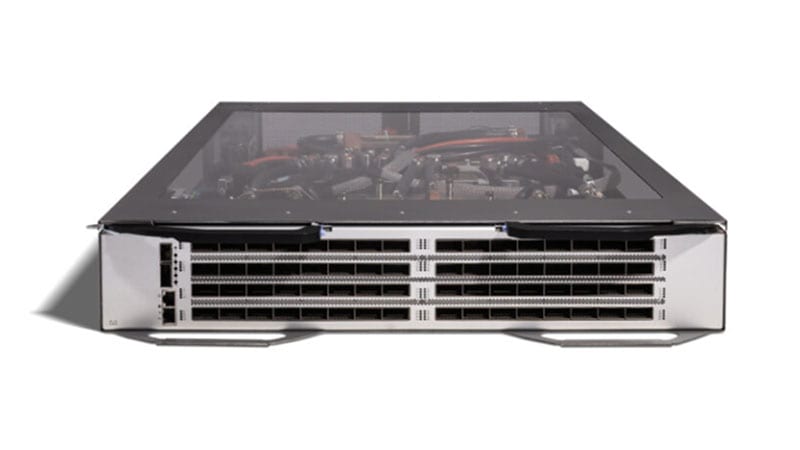
If you are still running a Cisco Nexus 6001-64T (PID N6K-C6001-64T) as a top-of-rack or end-of-row switch, the lifecycle clock did not just start ticking, it ran out years ago. This platform went End-of-Sale on April 30, 2017, and reached its Last Day of Support (LDoS) on April 30, 2022. Everything past that second date is borrowed time: no NX-OS software maintenance, no PSIRT security fixes, and no TAC or RMA hardware replacement. The switch keeps forwarding frames at line rate, which is exactly why it survives in racks long after it should have been decommissioned. This guide explains what each milestone means for a live data center fabric, why Cisco maps the Nexus 6000 line to the Nexus 9300 family, what the 93180YC-FX3 concretely buys you, and how to execute a controlled refresh.
What the Nexus 6001-64T actually was
The Nexus 6001-64T was the copper-oriented sibling in the Nexus 6001 family. In a single rack unit it delivered 48 ports of 1/10GBASE-T over standard RJ45 cabling plus four 40-Gigabit QSFP+ uplinks, each of which could break out into four 10G interfaces. That copper-heavy design is the distinguishing trait: where the C6001-64P used SFP+ optics, the 64T let you reuse existing structured Category 6A copper for 10G server attachment, which made it attractive for general-purpose compute racks rather than fiber-only fabrics. Architecturally it was a low-latency, line-rate Layer 2 and Layer 3 unified-fabric switch, FCoE-capable, supporting Layer 3 routing, vPC, FabricPath, and the Nexus operating model that data center teams standardized on. For its 2013 era it was a strong ToR. Today the silicon, the 40G uplink ceiling, and the absent support contract are all liabilities.
What each lifecycle date means now
Cisco's hardware lifecycle is a sequence of gates, and the 6001-64T is through all of them. Reading them in order tells you precisely what you have lost.
- End-of-Sale (April 30, 2017): the last day Cisco accepted new orders. From this point the install base only shrinks and spares get harder to source through legitimate channels.
- End of Software Maintenance (not separately published for this PID): in practice, NX-OS maintenance for the Nexus 6000 line wound down with the platform. New feature releases and routine bug-fix trains stopped well before LDoS, so any code on these boxes is frozen.
- Last Day of Support (April 30, 2022): the hard wall. After this date Cisco provides no PSIRT security patches for newly disclosed NX-OS vulnerabilities, no TAC case support, and no RMA. A failed switch or a fresh CVE has no vendor remedy.
The recommended replacement: Nexus 93180YC-FX3
Cisco's migration path for the Nexus 6000 line is the Nexus 9300 family, specifically the 93180YC-FX3 (N9K-C93180YC-FX3). It is built on Cisco's Cloud Scale ASIC and is a generationally different machine. In one 1RU box you get 48 downlink ports of 1/10/25-Gigabit SFP28 plus 6 uplink ports of 40/100-Gigabit QSFP28, for 3.6 Tbps of switching capacity. Every downlink can run 25G and every uplink can run 100G, the two speeds the 6001-64T could never reach. The jump from a 40G uplink ceiling to 100G uplinks, and from 10G server ports to 25G, is the headline: you typically increase east-west and north-south capacity by 2.5x on the same rack footprint and the same single rack unit.
What changes beyond raw speed
- Media model: the 64T was fixed RJ45 copper at 10G. The 93180YC-FX3 is SFP28-based, so you gain optical flexibility (10G/25G optics, DAC, or AOC) and a clean path to 25G server NICs. Plan transceivers as a real line item, since copper-to-optical is the one physical change that surprises teams.
- Programmability and telemetry: Cloud Scale silicon brings hardware flow telemetry, streaming model-driven telemetry, NX-OS programmability (NX-API, Python, Ansible), and native support for both standalone NX-OS and ACI, so the same hardware can be a leaf in an ACI fabric if you move that direction later.
- Modern fabric features: VXLAN/EVPN with hardware VTEP, segment routing readiness, and microsecond-class forwarding with hardware PTP and high-resolution timestamping that the Nexus 6000 generation did not offer.
- Smart Licensing: NX-OS now uses Smart Licensing Using Policy with tiered feature licenses (Essentials, Advantage, and add-ons like the DCN Premier tier for advanced automation and telemetry). License entitlements live in your Smart Account and move with you, rather than the older node-locked PAK model. Map the features you actually run on the 6001-64T to the right tier before you order.
A practical migration plan
1. Assess and inventory
Pull the running configuration and a full port map from each 6001-64T. Document VLANs, SVIs and Layer 3 routing, vPC domains and peer-links, any FabricPath or FCoE usage, port-channels, QoS policies, and ACLs. Identify which downlinks are genuinely 10G copper-attached servers versus 1G legacy hosts, because that tells you your optics and cabling plan on the new gear. Confirm every cross-rack uplink speed and the optics on the other end.
2. Establish feature and config parity
Most Nexus 6000 features translate directly to NX-OS on the 93180YC-FX3, but a few warrant attention. FabricPath, if you used it, is best re-platformed onto VXLAN/EVPN rather than carried forward. FCoE designs should be reviewed against current converged-fabric guidance. Rebuild vPC domains on the new pair and validate consistency parameters. Treat the cutover config as a translation, not a copy-paste, and stage it on the bench first.
3. Plan the physical refresh
The biggest physical delta is media. Servers wired with Cat6A copper to the 64T need either 10GBASE-T SFP modules in the new switch or, more commonly, a move to SFP28 DAC and optics with 25G-capable NICs as servers refresh. Size power and cooling for the new switch, confirm rail and airflow direction (port-side intake or exhaust) matches your hot and cold aisle, and order 100G QSFP28 optics or DACs for the uplinks. For high availability, deploy the 93180YC-FX3 in vPC pairs exactly as you ran the 6001-64T.
4. License transition
Set up or confirm your Cisco Smart Account, then size NX-OS Smart Licensing tiers to the feature set you cataloged in step one. Buyers frequently over-buy here; if the rack only does Layer 2/3 ToR with vPC, you do not need the Premier automation tier. Get the license math approved alongside the hardware so nothing blocks turn-up.
5. Phased cutover and secure decommission
Stand the new switches up beside the old, validate uplinks and vPC, then migrate server racks in batches during maintenance windows, keeping the 6001-64T cabled but isolated as an immediate rollback for the first window. Once production is stable, decommission properly: wipe the configuration, remove any stored credentials and crypto keys, and follow your media-sanitization standard. For federal, that means NIST 800-88 sanitization or destruction with a certificate of disposal. Do not let an out-of-support switch with live config land on a resale pallet.
Procurement notes for regulated buyers
Two things drive the timeline more than the engineering. First, lead times: data center switches and 25G/100G optics are not always on the shelf, and a multi-year license and support contract has to be quoted and approved, so start procurement before you schedule windows. Second, supply compliance: federal and SLED buyers should confirm Trade Agreements Act (TAA) compliance and request country-of-origin documentation up front, and align SKUs to your GSA or GPC contract early. As an authorized Cisco partner, uniqcli sources TAA-compliant 93180YC-FX3 hardware, accepts the Government Purchase Card (GPC), and quotes the switch with the right optics and NX-OS licensing so nothing is missing at install.
Start with the live milestone record on the Nexus 6001-64T EoL detail page, scan the broader Cisco end-of-life catalog to catch other aging gear in the same racks, and check current Nexus 9300 availability and pricing. When you are ready to scope the refresh, get a quote and we will map your 6001-64T fleet to TAA-compliant 93180YC-FX3 hardware, optics, and Smart Licensing before the next audit cycle finds the unsupported switch first.
Frequently asked questions
What is the recommended replacement for the Cisco Nexus 6001-64T (N6K-C6001-64T)?
Cisco's recommended migration is the Nexus 9300 family, specifically the 93180YC-FX3 (N9K-C93180YC-FX3). In 1RU it provides 48 ports of 1/10/25G (SFP28) plus 6 ports of 40/100G (QSFP28) for 3.6 Tbps on the Cloud Scale ASIC, moving you from the 64T's 10G copper ceiling and 40G uplinks to native 25G and 100G.
When did the Nexus 6001-64T reach end of life?
It went End-of-Sale on April 30, 2017 and reached Last Day of Support (LDoS) on April 30, 2022. Since that LDoS date, Cisco provides no NX-OS software maintenance, no PSIRT security patches, and no TAC support or RMA hardware replacement for this PID.
Why does running a Nexus 6001-64T past LDoS create a compliance problem?
After LDoS, the switch cannot receive security patches for any newly disclosed NX-OS vulnerability. That makes it impossible to satisfy flaw-remediation controls such as NIST 800-53 SI-2, which RMF, CMMC, and HIPAA security programs depend on. An unpatchable device in production is a documented audit finding, not just an elevated risk.
My servers are wired with copper. Does moving to the 93180YC-FX3 require recabling?
The 64T used fixed 10GBASE-T RJ45 copper; the 93180YC-FX3 is SFP28-based. You can keep existing 10G copper by using 10GBASE-T SFP modules, but most teams move to SFP28 DAC or optics and adopt 25G server NICs over time. Plan optics and any cabling changes as a real line item, since this media shift is the most common surprise in the migration.
Is the Nexus 93180YC-FX3 available TAA-compliant for federal buyers?
Yes. The 93180YC-FX3 is available in TAA-compliant configurations through authorized channels. For federal, DoD, and SLED purchases, request country-of-origin documentation up front and align SKUs and Smart Licensing to your GSA or GPC contract early, since switch and 25G/100G optics lead times can be long.
Uniqcli Team
The Uniqcli Team is an authorized Cisco partner specializing in Catalyst wireless, switching, datacenter fabric, licensing, and managed services for U.S. federal, state, local, and education customers. We scope Cisco bills of materials, validate procurement paths (TAA, FIPS, contract vehicles), and deliver design, deployment, and managed operations.
Ready to scope your Cisco build?
Build a quoteRelated reading
View all →GuidesCisco Nexus 9396PX EoL: Migrate to Nexus 93180YC-FX3
The Nexus 9396PX (N9K-C9396PX) passed Last Day of Support on February 19, 2023, here is why this original 9300 leaf has to come out and how to refresh cleanly to the Cloud Scale 93180YC-FX3.
April 2, 2026 · 10 min readGuidesCisco Nexus 9396TX EoL: Migrate to the 93180YC-FX3
The Nexus 9396TX (N9K-C9396TX) passed its Last Day of Support on April 30, 2023. Here is a practical, spec-driven plan to refresh this 10GBASE-T leaf onto the Nexus 93180YC-FX3, covering the milestone dates, what is concretely better, and a phased migration that keeps your fabric supported and audit-clean.
April 1, 2026 · 8 min read Guides
Cisco Nexus 5548P EoL: Migrate to Nexus 9300 (93180YC-FX3)
The Nexus 5548P passed Last Day of Support on September 30, 2020, no patches, no TAC, no RMA. Here is why it must come out of the rack and how to migrate cleanly to the Nexus 9300 (N9K-C93180YC-FX3).
May 27, 2026 · 8 min readGuidesNexus 5672UP-16G EoL: Migration to Nexus 9300 93180YC-FX
The Nexus 5672UP-16G reaches Last Day of Support on May 31, 2026, here's why it has to come out and how to migrate cleanly to the 25G/100G Nexus 9300 (N9K-C93180YC-FX).
February 5, 2026 · 10 min readGuidesCisco Nexus 56128P EoL: Migrate to Nexus 9300 93360YC-FX2
The Nexus 56128P (N5K-C56128P) hit Last Day of Support on September 30, 2025. Here's what each lifecycle date means and how to refresh cleanly to the Nexus 9300 93360YC-FX2 with 25G/100G and MACsec.
February 3, 2026 · 8 min readGuidesNexus 3064 EoL: Migration to Nexus 9300 (93180YC-FX3)
The Nexus 3064 (N3K-C3064PQ-10GE) passed Last Day of Support on June 30, 2021. Here's why it must come out and how to migrate cleanly to the Nexus 9300 (N9K-C93180YC-FX3), 25G access, 100G uplinks, VXLAN/EVPN, and MACsec.
May 9, 2026 · 8 min read