
What Is Network Access Control (NAC)? A Plain-English Guide to NAC Solutions
Network access control decides who and what gets on your network, checks whether they are safe, and contains them if they are not. This guide explains what is NAC, how a modern NAC solution works, and how Cisco implements it.
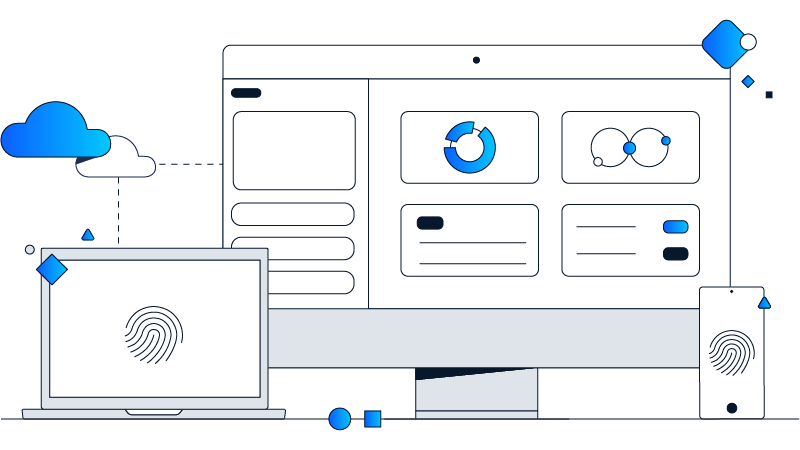
Every laptop, phone, printer, badge reader, infusion pump, and security camera that plugs into a switch port or joins a wireless network is asking the same question: "Let me in." Network access control (NAC) is how the network answers. It is the set of policies and technology that decides who and what is allowed to connect, confirms that they are who they claim to be, checks whether they are safe, and then grants the right level of access (or none at all). If you have ever wondered what is NAC, the short answer is that it turns an open, trusting network into one that verifies before it trusts.
This guide explains network access control in plain English: the problem it solves, the building blocks every NAC solution shares, where it fits in zero trust, and how Cisco implements NAC through the Identity Services Engine. By the end you will understand the vocabulary (802.1X, RADIUS, profiling, posture, and segmentation) well enough to scope a real deployment.
What network access control actually means
At its core, network access control is admission control for the network. Before a device is allowed to send traffic, NAC asks three questions in sequence. First, who or what is this? Second, is it healthy and compliant enough to be trusted? Third, given the answers, what is it allowed to reach? A device that fails any check can be denied outright, dropped into a quarantine segment with no path to sensitive systems, or given a narrow slice of restricted access while it remediates. The decision happens at connection time and can be re-evaluated continuously while the device stays online.
The reason this matters is that the default state of most networks is dangerously permissive. Historically, if you could reach a switch port or a Wi-Fi SSID, you were on the corporate LAN with broad reachability, no matter whether you were a patched corporate laptop, a contractor's personal machine, or an unmanaged IoT sensor shipped with a default password. NAC closes that gap by making access conditional on identity and posture rather than physical or wireless proximity. It keeps insecure or unknown endpoints from quietly joining and, worse, from spreading malware once they are on. For an implementation-focused view of how this works on a Cisco network, our network access control overview walks through the enforcement model end to end.
Why NAC matters now: the visibility and trust problem
Three trends have pushed NAC from a nice-to-have to a foundational control. The first is device sprawl. The number of things on a network that are not traditional managed computers, including IoT sensors, building automation, medical devices, and operational technology (OT), now often outnumbers laptops and servers. Many of these devices cannot run security software, cannot be patched on a normal cycle, and were never designed to be trustworthy. You cannot protect what you cannot see, and NAC is frequently the first tool that gives a team a complete, classified inventory of everything connected.
The second trend is the collapse of the network perimeter. Remote work, cloud applications, and bring-your-own-device (BYOD) mean the old idea of a hard outer wall and a soft trusted interior no longer holds. The third is the threat of lateral movement. Once an attacker compromises one endpoint, a flat network lets them move sideways to far more valuable targets. NAC attacks all three at once by identifying every endpoint, enforcing least-privilege access, and segmenting the network so a single compromised device cannot reach everything. This is why NAC security is treated as a starting point for zero trust rather than an add-on.
NAC in one sentence: Network access control is the network's bouncer. It checks ID at the door (authentication), makes sure the guest is not carrying anything dangerous (posture), and then escorts them only to the rooms they are allowed in (segmentation), with the power to remove anyone at any time (containment).
How a NAC solution works: the core building blocks
Every serious network access control solution is built from the same set of capabilities. Understanding them individually makes it easier to evaluate products, because vendors describe the same ideas with different names. The five building blocks below (authentication, profiling, posture, segmentation, and containment) work together as a pipeline from first connection to ongoing enforcement.
Authentication: 802.1X, RADIUS, and MAB
Authentication is the "who are you" step. The dominant standard is IEEE 802.1X: a device (the supplicant) presents credentials at the switch port or wireless access point (the authenticator), which relays them to a policy server speaking RADIUS. Credentials can be a username and password, but the strongest deployments use certificate-based methods such as EAP-TLS or the newer TEAP, which can validate both the machine and the user in a single session through a technique known as EAP chaining. For devices that cannot run an 802.1X supplicant, such as a printer or a badge reader, NAC falls back to MAC Authentication Bypass (MAB), which identifies the device by its hardware address and then leans on profiling to confirm it is what it claims to be.
Profiling and visibility
Profiling answers "what is this thing" even when it cannot authenticate. A good NAC engine fingerprints every endpoint by manufacturer, model, operating system, and behavior, classifying it as, say, a Windows laptop, an Apple iPhone, a Siemens PLC, or a particular brand of IP camera. Modern systems add machine-learning classification to identify the unknown IoT, medical, and OT devices that defeat simple signature matching. The output is a living inventory with a detailed attribute history, often the single most valuable thing a team gets in the first week of a deployment, well before any enforcement is switched on.
Posture and compliance
Posture assessment is the health check. Before granting full access, NAC can verify that an endpoint meets policy: operating system patch level, antivirus running and current, disk encryption enabled, no jailbreak or root, approved registry settings, and so on. Devices that fail can be sent to a remediation segment that only reaches patch and update servers until they are compliant. In mobile-heavy environments, NAC queries mobile device management (MDM) platforms such as Microsoft Intune or Jamf to make the same determination for phones and tablets. Posture can use a full agent, a temporal (dissolvable) agent, or agentless checks, depending on how managed the endpoint is.
Segmentation and least privilege
Authentication and posture decide whether a device gets on; segmentation decides where it can go. Rather than placing everything on one flat network, NAC assigns devices to logical groups and enforces what each group can reach. Cisco does this with Security Group Tags (SGTs) under the TrustSec model, defining policy by group identity instead of by IP address so that a guest tablet, a clinical workstation, and a payment terminal are isolated from one another even on the same physical switch. Granular controls such as dynamic VLAN assignment, downloadable ACLs, and URL redirects back this up at the port. Tight segmentation is what shrinks the attack surface and contains lateral movement.
Threat containment
Finally, NAC is not just a gate at the door; it can act after a device is already on. When another security tool flags an endpoint as compromised or vulnerable, NAC can automatically quarantine it, force re-authentication, bounce the port, or shut it down entirely. This turns the network itself into an active line of defense rather than a passive transport, and it is where NAC connects into the broader security stack to respond to incidents in seconds rather than hours. Cisco implements this through Rapid Threat Containment and Adaptive Network Control, driven by context shared over pxGrid.
NAC and zero trust: the identity and device pillars
Zero trust is the principle that no user or device should be trusted by default, regardless of where it sits. The CISA Zero Trust Maturity Model organizes this into pillars, and NAC maps directly onto two of the most foundational ones: identity and devices. By authenticating every user and device, continuously assessing device posture, and enforcing segmentation, NAC supplies the network-layer enforcement that zero trust requires. It is the policy decision point that answers, in real time and on every connection, whether access should be granted and at what level.
It is worth drawing a distinction that confuses many buyers. Cloud-delivered zero-trust network access (ZTNA) and security service edge (SSE) products secure a user's access to specific applications, typically for remote work. NAC secures access to the network itself, at the physical switch port and the wireless access point. The two are complementary. NAC enforces who gets on the LAN and WLAN and feeds rich identity and device context to the cloud-delivered services rather than competing with them. Most regulated and hybrid organizations need both, which is why Cisco lets its NAC platform share Security Group Tag context with cloud-delivered access and firewall management.
How Cisco implements NAC: the Identity Services Engine
Cisco delivers network access control primarily through the Identity Services Engine (ISE), the central policy decision point for the entire network. ISE is a full RADIUS authentication, authorization, and accounting (AAA) server, an endpoint profiling engine, a posture assessment service, a guest and BYOD onboarding portal, a TACACS+ device-administration controller, and the segmentation controller for TrustSec, all in one platform. It gathers context from across the security stack and shares it through pxGrid, a framework with a large ecosystem of Cisco and third-party integrations. Our Cisco ISE page covers the architecture, personas, and node sizing in detail.
ISE works hand in hand with Cisco Catalyst and Meraki switches, wireless access points, and routers as the 802.1X enforcement points, with Cisco Catalyst Center and Software-Defined Access for fabric-wide group-based policy, and with Cisco Duo for multi-factor authentication and device trust. It integrates with Microsoft Active Directory and Entra ID as identity stores, with Intune and Jamf for MDM posture, with ServiceNow for asset context, and with Tenable for vulnerability-driven threat containment. That breadth lets a single identity-and-device context follow a user from the campus LAN to the data center to multicloud workloads.
ISE licensing tiers in plain terms
Cisco licenses ISE in three nested, endpoint-count-based subscription tiers, plus a separate device-administration license. Essentials covers core NAC: 802.1X and RADIUS authentication, basic guest access, and base visibility. Advantage adds the higher-value controls most enterprises actually want, including endpoint profiling enforcement, BYOD, TrustSec segmentation, context sharing via pxGrid, and Rapid Threat Containment. Premier sits on top and adds posture enforcement, MDM integration with Jamf and Intune, and Threat-Centric NAC that changes access automatically based on vulnerability and threat scores. Because the tiers are nested, each higher level includes everything below.
- ISE Essentials: 802.1X and RADIUS authentication, guest access, PassiveID, and base visibility.
- ISE Advantage: profiling enforcement, TrustSec and SGT segmentation, BYOD, pxGrid context sharing, and Rapid Threat Containment (plus everything in Essentials).
- ISE Premier: posture enforcement, MDM enforcement (Jamf and Intune), and Threat-Centric NAC (plus everything in Advantage and Essentials).
- Device Administration: a separate TACACS+ license for administering switches, routers, and firewalls, licensed independently of the three subscription tiers.
Deployment options
ISE is flexible about where it runs, which matters for regulated and air-gapped environments. It is available as a physical appliance (the Cisco Secure Network Server family), as a virtual machine on VMware ESXi, Linux KVM, Microsoft Hyper-V, Nutanix AHV, and Red Hat OpenShift, and in the public cloud on AWS, Microsoft Azure, and Google Cloud. Nodes combine into distributed clusters for scale, redundancy, and failover across sites. That on-premises-to-cloud range is a frequent reason buyers choose ISE over cloud-only NAC products that cannot keep policy enforcement local when compliance demands it.
Common NAC use cases
NAC is broadly applicable, but a handful of scenarios drive most deployments. Guest and contractor access lets visitors self-register through branded portals with privileges kept separate from employees. BYOD onboarding lets staff enroll their own laptops and phones through self-service flows, with compliance checked before any personal device touches the network. IoT and OT visibility and segmentation profiles the flood of unmanaged devices in manufacturing, utilities, and logistics and isolates them so an exploited sensor cannot become a beachhead into the rest of the network.
Healthcare deserves special mention. Connected medical devices on a converged clinical network are notoriously hard to patch and extremely sensitive, so identifying every device, segmenting it, and protecting patient records is a core NAC mission that also supports ransomware resilience. Across all of these scenarios, automated threat containment ties NAC into incident response, so that when a tool elsewhere in the stack raises an alarm, the network quarantines the offending endpoint without waiting for a human to intervene.
NAC for US public sector and regulated buyers
For federal, Department of Defense, state, local, and education buyers, NAC is the network-layer enforcement point that agency zero-trust mandates assume. Cisco ISE is widely deployed in these environments and is designed to meet the certifications regulated buyers ask about. Per Cisco documentation, recent ISE releases align with the Network Device Collaborative Protection Profile (NDcPP) for Common Criteria, pursue DoDIN APL (Approved Products List) certification, undergo a FIPS 140-3 cryptographic review, add single-stack IPv6 support with USGv6 and IPv6 Ready alignment, and allow administrator login via DoD Common Access Card (CAC). Certifications vary by release, so the exact certified version should be confirmed at quote time on Cisco's government certifications resources.
Procurement matters as much as capability. Hardware should be Trade Agreements Act (TAA) compliant, sourced through channels eligible for the Government Purchase Card (GPC) and the appropriate contract vehicles. ISE itself is not a FedRAMP-authorized cloud service, so any cloud-hosted deployment should have its authorization posture confirmed before purchase. As an authorized Cisco partner, Uniqcli scopes ISE deployments to these requirements, sizes the right licensing tier and node count, and sources hardware and subscriptions through compliant vehicles.
How NAC compares to simpler alternatives
It helps to know what NAC is not. A bare RADIUS server such as Microsoft Network Policy Server can authenticate 802.1X connections but offers none of the profiling, posture, guest, BYOD, segmentation, or containment that define a real NAC solution. Cloud-only NAC products deliver simplicity as pure SaaS but cannot keep enforcement on-premises for air-gapped or highly regulated sites. Among full platforms, Cisco ISE differentiates with native TrustSec segmentation, deep Catalyst, Meraki, and Software-Defined Access integration, EAP chaining, and the broad pxGrid partner ecosystem, while Aruba ClearPass and Fortinet FortiNAC are strong within their own fabrics. The right choice depends on your existing infrastructure, your segmentation ambitions, and your compliance obligations.
Next steps for your NAC project
Network access control is the practical foundation of a zero-trust network. It sees every device, verifies identity and health, enforces least privilege through segmentation, and contains threats automatically. If you are evaluating a NAC solution, start by reading our network access control pillar to understand the enforcement model, then review the Cisco ISE platform details to map capabilities to your environment. When you want concrete numbers, send your endpoint counts, site list, and compliance requirements, and Uniqcli will scope a TAA-compliant build and return a validated quote.
Frequently asked questions
What is network access control (NAC) in simple terms?
Network access control is the set of policies and technology that decides who and what can connect to a network. It identifies every device, authenticates it, checks whether it is healthy and compliant, and then grants the right level of access or none at all. A NAC system can deny, quarantine, or restrict any endpoint that fails its checks, keeping unknown or insecure devices from joining and spreading threats.
What is the difference between NAC and a firewall?
A firewall controls traffic between networks, typically at the perimeter or between segments, based on addresses, ports, and applications. NAC controls admission to the network itself at the switch port and wireless access point, based on the identity and health of the connecting device. They work together: NAC decides who gets on and into which segment, and the firewall polices the traffic that flows once they are on.
Is NAC the same as zero trust?
No, but NAC is a foundational part of zero trust. Zero trust is the broader principle that nothing is trusted by default and every access is verified. NAC delivers the network-layer enforcement for the identity and device pillars of that model by authenticating every user and device, checking posture continuously, and segmenting access. Zero-trust application access services such as ZTNA complement NAC rather than replace it.
How does Cisco implement NAC?
Cisco delivers NAC primarily through the Identity Services Engine (ISE), which acts as the central policy decision point. ISE provides 802.1X and RADIUS authentication, endpoint profiling, posture assessment, guest and BYOD onboarding, TACACS+ device administration, and TrustSec segmentation, and it shares context across the security stack through pxGrid. It runs as a physical appliance, a virtual machine, or in the public cloud.
What does a NAC solution cost?
Cisco ISE is licensed by endpoint count across three nested subscription tiers (Essentials, Advantage, and Premier), plus a separate device-administration license. The total depends on endpoint counts, the tier you need, the deployment model, and any appliance hardware, so there is no single flat list price. As an authorized Cisco partner, Uniqcli scopes the right tier and node sizing and returns a validated quote for your environment.
Can NAC manage IoT and medical devices that cannot run security software?
Yes, and this is one of NAC's most valuable use cases. Because many IoT, OT, and medical devices cannot run an 802.1X supplicant or security agent, NAC identifies them through MAC Authentication Bypass and machine-learning-based profiling, then isolates them with segmentation so a compromised device cannot reach sensitive systems. This is central to protecting converged clinical and industrial networks.
Uniqcli Team
The Uniqcli Team is an authorized Cisco partner specializing in Catalyst wireless, switching, datacenter fabric, licensing, and managed services for U.S. federal, state, local, and education customers. We scope Cisco bills of materials, validate procurement paths (TAA, FIPS, contract vehicles), and deliver design, deployment, and managed operations.
Ready to scope your Cisco build?
Build a quoteRelated reading
View all →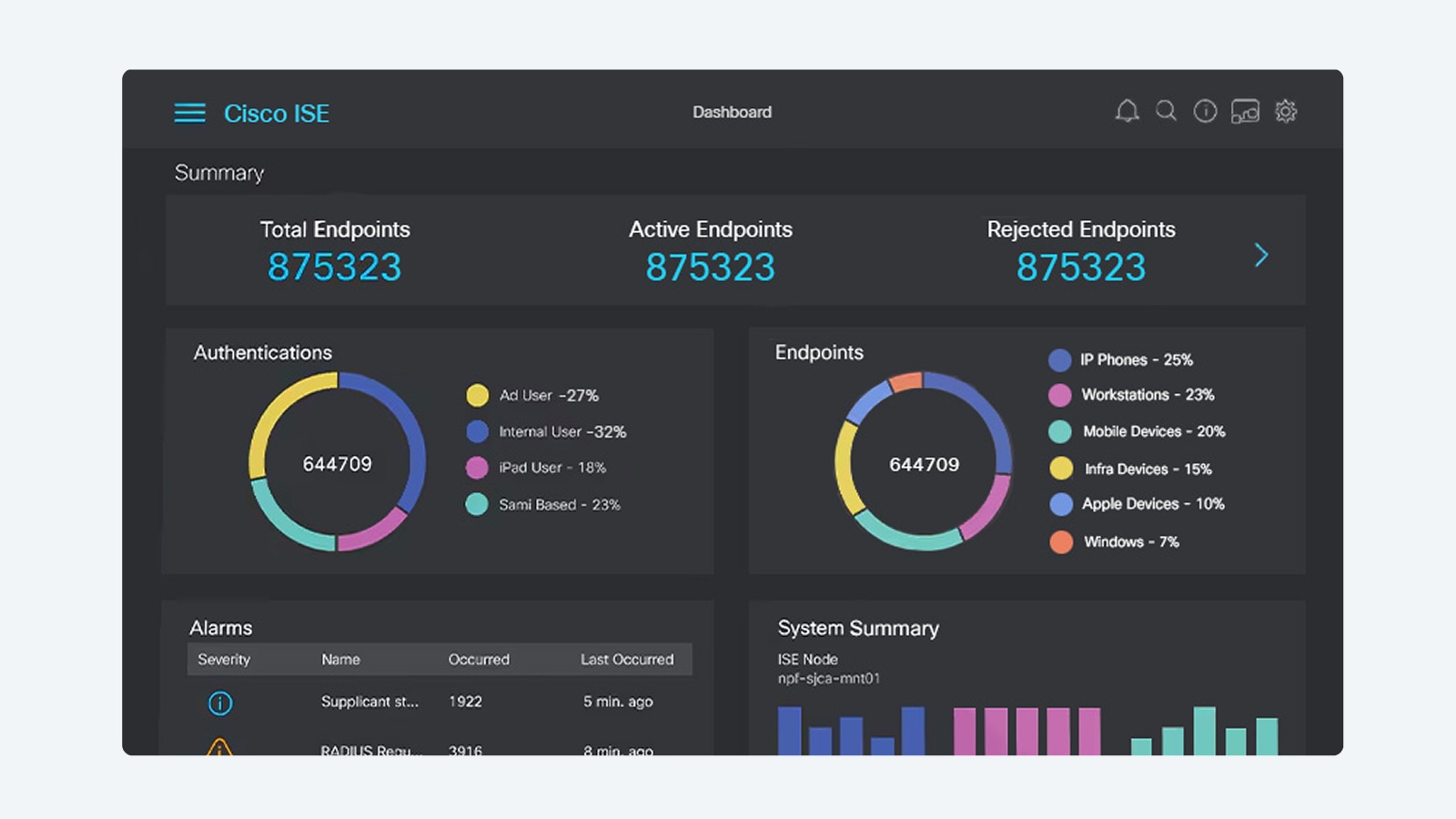 Guides
ISE vs ClearPass vs Forescout: The Three-Way NAC Shootout
Cisco ISE vs Aruba ClearPass vs Forescout is really two questions, ecosystem fit and authentication-first vs visibility-first, not one three-way bake-off. Here's how to tell which applies.
July 11, 2026 · 5 min read Guides
NAC for BYOD, Guest, and IoT: Securing Every Device That Touches the Network
A NAC solution turns BYOD, guest, IoT, and posture into four policies on one platform. Here is how Cisco ISE delivers each scenario, mapped to license tiers and zero-trust outcomes.
June 3, 2026 · 10 min read Compliance
NAC and Network Segmentation for Federal Zero Trust: Meeting CISA and DoD Mandates
How Cisco NAC, TrustSec segmentation, and XDR deliver network access control compliance against the CISA Zero Trust Maturity Model and DoD Zero Trust Strategy, and what federal and SLED buyers should verify before they purchase.
June 2, 2026 · 12 min read Guides
Cisco Umbrella Packages Explained: DNS vs SIG, Essentials vs Advantage
Cisco Umbrella still ships as four packages, DNS Security Essentials, DNS Security Advantage, SIG Essentials, and SIG Advantage, even as new capability lands in Cisco Secure Access. Here's what each tier actually includes and how to license it.
July 3, 2026 · 7 min read Guides
How 802.1X Network Access Control Works: Supplicants, Authenticators, and RADIUS
A practical walkthrough of 802.1x authentication: the handshake, the three roles that make it work, and how Cisco ISE turns port-level access into enforceable zero trust.
June 4, 2026 · 12 min read Guides
Cisco ISE Deployment Checklist: Planning, Personas, 802.1X, Posture, and TrustSec
A field-tested planning sequence for Cisco Identity Services Engine, node personas, 802.1X rollout, posture, and TrustSec segmentation, built for federal, SLED, and healthcare teams who cannot afford a noisy cutover.
June 1, 2026 · 11 min read