
Catalyst 4500E Sup 7L-E EoL: Migrate to C9400-SUP-1
The Catalyst 4500E Supervisor Engine 7L-E (WS-X45-SUP7L-E) passed Last Day of Support on October 31, 2023. Here is why it has to come out and how to migrate cleanly to the Catalyst 9400 with the C9400-SUP-1.
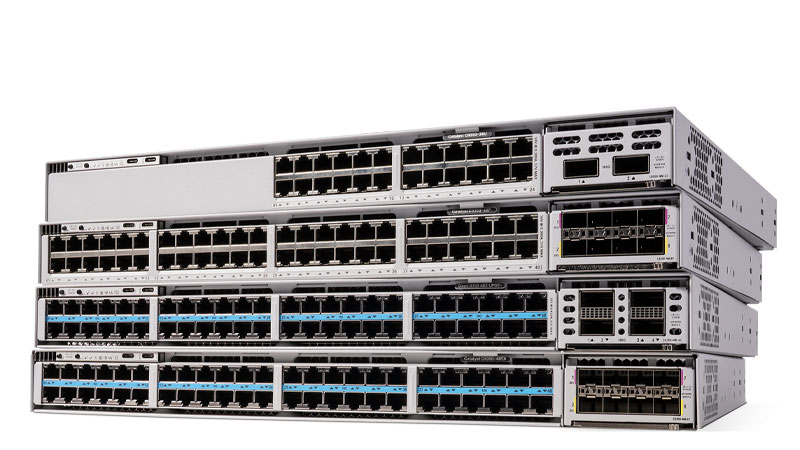
If you still run Cisco Catalyst 4500E chassis with a Supervisor Engine 7L-E (PID WS-X45-SUP7L-E) as the brain, that supervisor is now past every Cisco lifecycle milestone that matters. It went End of Sale on October 31, 2018, and reached Last Day of Support (LDoS) on October 31, 2023. From that date forward there are no software fixes, no PSIRT security patches, and no TAC or RMA replacement for the supervisor. The line cards keep forwarding traffic and the box keeps booting, which is precisely why these supervisors quietly survive in wiring closets years after they should have been retired. This guide explains what the EoL dates actually mean for a production switch, why the recommended Catalyst 9400 with the C9400-SUP-1 is a genuine architectural upgrade rather than a like-for-like swap, and how to plan a clean, low-risk migration.
What the Supervisor Engine 7L-E actually was
The Sup 7L-E (WS-X45-SUP7L-E) was the entry-level member of the Catalyst 4500E Supervisor 7 family. It is a centralized supervisor: unlike a stacked or distributed-forwarding design, all switching for the modular 4500E chassis runs through this single engine. It delivered up to 520 Gbps of total system bandwidth and roughly 250 Mpps of forwarding, with two onboard 10 Gigabit Ethernet SFP+ uplinks (the '7L' is the reduced-bandwidth, lower-cost sibling of the full Sup 7-E, which doubled the per-slot capacity). It supports the 4500E centralized line cards for copper Gigabit access, UPOE/PoE+, and 10G aggregation, and runs classic Cisco IOS (IOS-XE on the 4500E in later trains), managed with RPR/SSO for in-chassis supervisor redundancy when paired. For its era it was a dependable campus distribution and access aggregation engine. By today's standards its forwarding ceiling, its lack of native mGig at the supervisor, and its frozen software base are the problem.
Why acting now matters
The risk of an end-of-support supervisor is not that it stops working. It is that it keeps working while the entire support floor disappears beneath it. After LDoS, three exposures stack up fast on a device that sits at the center of a campus:
- No PSIRT security patches. When a new IOS/IOS-XE vulnerability is disclosed that touches the 7L-E code base, there is no fixed image coming. The software train is frozen at its final pre-LDoS build, so any affected CVE on this hardware is permanent and unpatchable. For a supervisor that terminates management, SSH, SNMP, and control-plane protocols, that is the worst possible place to carry a permanent vulnerability.
- No TAC or RMA. A failed supervisor cannot be opened as a Cisco support case or swapped under a service contract. Recovery depends entirely on a spare you hoarded before LDoS or a gray-market unit of the same dead-end model, with no warranty and no guarantee of a clean software image.
- Audit and compliance exposure. The frameworks federal, DoD, SLED, and healthcare buyers live under, FedRAMP, CMMC 2.0, the HIPAA Security Rule, PCI DSS, and CISA BOD directives, expect supported, patchable infrastructure. An unsupported supervisor that cannot receive fixes is a standing audit finding, and 'the vendor no longer ships patches for this model' is not a defensible remediation plan.
There is also a single-point-of-failure dimension specific to this platform. Because the 4500E is centralized, the supervisor is the whole control and data path. A dual-sup chassis mitigates hardware failure, but it does nothing for the shared software vulnerability or the shared end-of-support status, both supervisors are equally unpatchable. You are not running redundant risk; you are running doubled exposure to the same dead-end code.
What each milestone means in practice
- End of Sale (2018-10-31): the last day Cisco accepted new orders for the 7L-E. Everything since has been drawing down the support tail.
- Last Day of Support / LDoS (2023-10-31): the hard wall. No TAC, no RMA, no software or security fixes of any kind. The supervisor is entirely on its own from this date forward.
The recommended replacement: Catalyst 9400 with the C9400-SUP-1
Cisco's migration path for the 4500E family is the Catalyst 9400 modular platform with the Supervisor Engine-1 (C9400-SUP-1). The 9400 is the direct architectural successor to the 4500E, a modular chassis (4, 7, and 10 slot variants) built for campus access and distribution, but the supervisor is a generational leap, not a refresh. Where the C9400-SUP-1 changes the game versus the Sup 7L-E:
- Far greater capacity. The C9400-SUP-1 drives up to 80 Gbps per line-card slot (versus the bandwidth-limited 7L-E), pushing total system bandwidth into the multi-terabit range on the larger chassis, an order of magnitude beyond the 7L-E's 520 Gbps ceiling. It is built around the Cisco UADP 2.0/3.0 ASIC for programmable, future-proofed forwarding.
- Native multigigabit and modern PoE. Paired with C9400 line cards, you get mGig (2.5/5/10G) access ports and up to 90W UPOE+ per port, essential for Wi-Fi 6/6E/7 access points, 4K cameras, and high-draw IoT that the original Gigabit/PoE+ 4500E cards cannot feed.
- Supervisor uplinks. The SUP-1 provides high-speed uplinks (up to 4x 40G or 8x 10G depending on uplink module), versus the two 10G SFP+ ports on the 7L-E, a real uplink uplift for collapsed-core and distribution roles.
- IOS XE 17.x with full programmability. The 9400 runs modern, actively patched IOS XE with model-driven programmability (NETCONF/RESTCONF, YANG), Cisco DNA Center / Catalyst Center assurance, SD-Access fabric, and StackWise Virtual for dual-chassis high availability, capabilities the 7L-E platform never had.
- Trustworthy hardware and stronger security. Secure Boot, the Trust Anchor module, image signing, MACsec encryption, and Encrypted Traffic Analytics are built in, the kind of supply-chain and data-plane assurances federal and DoD buyers now require and the 7L-E cannot provide.
Licensing changes you must budget for
This is the single biggest planning difference. The 7L-E used the old perpetual IOS feature-license model (IP Base / Enterprise Services as right-to-use). The Catalyst 9400 runs Cisco DNA / Smart Licensing Using Policy. You choose a base license tier, Network Essentials or Network Advantage, sold as a perpetual hardware right, layered with a term DNA subscription (DNA Essentials or DNA Advantage, typically 3, 5, or 7 years) that enables SD-Access, assurance, and advanced telemetry. Licenses are managed in Smart Software Manager (CSSM) or via on-prem Smart Software Manager satellite for air-gapped and disconnected federal environments. Map your existing 7L-E feature set to the right 9400 tier early: most campus access features land in Network Essentials, while SD-Access fabric and full Catalyst Center assurance require Network Advantage plus DNA Advantage.
A practical migration plan
A supervisor migration on a centralized 4500E is more involved than swapping a fixed switch, because the chassis, line cards, optics, and licensing all interact. Run it as a sequenced project, not an emergency rip-and-replace.
1. Assess and inventory
- Capture each 4500E's full state: run show version, show module, show inventory, and show power inline to record the supervisor, every line card, serial numbers, IOS-XE train, and total PoE budget in use.
- Decide chassis strategy. The 4500E chassis and most line cards do NOT transplant into a 9400, the 9400 is a new chassis family. Plan for new C9400 chassis, C9400-SUP-1 supervisors, and C9400 line cards sized to your current and future port, mGig, and PoE counts.
- Right-size PoE. If you are migrating to feed Wi-Fi 6E/7 APs, audit per-port wattage so you specify line cards and C9400 power supplies that deliver UPOE/UPOE+ where needed.
2. License transition
- Establish your Smart Account and Virtual Account in CSSM before hardware arrives; for disconnected DoD sites, stand up on-prem SSM satellite.
- Order base (Network Essentials/Advantage) plus the DNA subscription term that matches your refresh horizon, so coverage does not lapse mid-cycle.
3. Config and feature parity
- Do not blind-paste the old config. IOS-XE on the 9400 is close but not identical to the 4500E syntax, validate VLANs, SVIs, routing (OSPF/EIGRP/BGP), QoS policy-maps, ACLs, 802.1X/MAB, and stack/redundancy settings against 17.x.
- Test the converted config in a lab or on a staged 9400 before touching production. Re-baseline QoS and security ACLs against current IOS-XE behavior.
4. Physical: rack, power, uplinks, optics, HA
- Verify rack space and power. C9400 power supplies and circuit requirements differ from the 4500E, confirm PDU capacity and redundancy.
- Reuse optics carefully. SFP+/QSFP transceivers and fiber may carry over, but validate each transceiver against the 9400 uplink module compatibility matrix.
- Replace in-chassis RPR/SSO supervisor redundancy thinking with StackWise Virtual across two 9400 chassis where you want box-level HA and a single logical switch.
5. Phased cutover and secure decommission
- Cut over closet by closet or building by building during maintenance windows; keep the old 4500E powered and reachable as a same-night rollback until the 9400 is verified.
- On decommission, wipe configuration and credentials, and for federal/DoD sanitize per NIST SP 800-88 before the asset leaves the facility. Capture serials for property and disposal records.
Procurement notes for regulated buyers
For US federal, DoD, and SLED purchases, specify TAA-compliant Catalyst 9400 hardware and confirm country of origin up front. The 9400 and C9400-SUP-1 can be purchased via Government Purchase Card (GPC) for smaller line items or through Simplified Acquisition Procedures; uniqcli does not currently hold a GSA Schedule. Plan for lead times, modular chassis, supervisors, and high-PoE line cards can run weeks, and demand spikes around fiscal year-end, so order the long-pole items first. As an authorized Cisco partner, uniqcli can validate your bill of materials, confirm TAA status and Smart Account setup, and stage and burn-in supervisors before they ship. Browse comparable modular switching in our catalog, confirm the milestone record on the Sup 7L-E EoL page, and see the full list of aging platforms on our Cisco EoL hub.
Frequently asked questions
Is the Catalyst 4500E Supervisor 7L-E (WS-X45-SUP7L-E) still safe to run after Last Day of Support?
No. The 7L-E reached LDoS on October 31, 2023. Cisco no longer issues software fixes, PSIRT security patches, or TAC/RMA support for it. Any vulnerability disclosed after that date that affects its code will never be fixed on this hardware, and because the supervisor terminates management and control-plane services, that is a high-value, permanently exposed target. For regulated environments it is a standing audit finding.
Can I reuse my existing 4500E chassis and line cards with the C9400-SUP-1?
No. The Catalyst 9400 is a new chassis family; the C9400-SUP-1 and 4500E line cards are not cross-compatible. You will need new C9400 chassis, supervisors, and C9400 line cards. Optics (SFP+/QSFP) and fiber can often be reused after validating each transceiver against the 9400 uplink-module compatibility matrix.
How does Catalyst 9400 licensing differ from the old 4500E feature licenses?
The 7L-E used perpetual IOS feature licenses (IP Base / Enterprise Services). The 9400 uses Smart Licensing Using Policy: a perpetual base tier (Network Essentials or Network Advantage) plus a term DNA subscription (DNA Essentials/Advantage, typically 3-7 years), managed in Cisco Smart Software Manager, or on-prem SSM satellite for air-gapped federal sites. SD-Access and full Catalyst Center assurance require Network Advantage and DNA Advantage.
What does the C9400-SUP-1 deliver that the Supervisor 7L-E could not?
Roughly an order-of-magnitude capacity jump (up to 80 Gbps per slot and multi-terabit system bandwidth versus the 7L-E's 520 Gbps), native multigigabit access and up to 90W UPOE+ for Wi-Fi 6E/7 APs and cameras, faster uplinks (up to 4x40G), modern IOS XE 17.x with NETCONF/YANG programmability, SD-Access and StackWise Virtual, plus Secure Boot, Trust Anchor, and MACsec hardware security.
What should US federal and DoD buyers confirm before purchasing Catalyst 9400 hardware?
Confirm TAA compliance and country of origin, set up a Smart Account/Virtual Account (or on-prem SSM satellite for disconnected sites) before hardware arrives, and align the DNA subscription term with your refresh horizon so coverage does not lapse. The 9400 can be purchased via GPC or simplified acquisition; uniqcli does not hold a GSA Schedule. Order chassis, supervisors, and high-PoE line cards early given lead times, especially near fiscal year-end.
Uniqcli Team
The Uniqcli Team is an authorized Cisco partner specializing in Catalyst wireless, switching, datacenter fabric, licensing, and managed services for U.S. federal, state, local, and education customers. We scope Cisco bills of materials, validate procurement paths (TAA, FIPS, contract vehicles), and deliver design, deployment, and managed operations.
Ready to scope your Cisco build?
Build a quoteRelated reading
View all →GuidesCisco WS-C3850-48P-S EoL: Migrate to Catalyst 9300 (C9300-48P-A)
The Catalyst 3850 48-port PoE IP Base reached last day of support on October 31, 2025, here is a concrete plan to refresh to the Catalyst 9300 C9300-48P-A.
November 14, 2025 · 8 min readGuidesWS-C2960XR-24PD-I EoL: Migrate to Catalyst 9200 (C9200-24P)
A senior architect's guide to migrating the end-of-life Cisco Catalyst 2960-XR 24-port PoE switch (WS-C2960XR-24PD-I) to the recommended Catalyst 9200 24-port PoE+ (C9200-24P).
October 24, 2025 · 8 min readGuidesWS-C4500X-32SFP+ EOL & Catalyst 9500-48Y4C Migration
The Catalyst 4500-X 32-Port 10G (WS-C4500X-32SFP+) hit Last Day of Support on October 31, 2025, here is a concrete plan to migrate to the higher-density, 25G/100G Catalyst 9500-48Y4C.
November 20, 2025 · 8 min readGuidesWS-C4500X-16SFP+ End of Life: Migrate to Catalyst 9500-16X
With Cisco's last day of support for the Catalyst 4500-X 16-port 10G switch arriving October 31, 2025, here is a practical, partner-vetted plan to refresh onto the Catalyst 9500-16X (C9500-16X).
November 18, 2025 · 7 min read Guides
Cisco 2960-24TC-L EoL: Migrate to Catalyst 9200L Guide
The original Catalyst 2960-24TC-L (WS-C2960-24TC-L) passed Last Day of Support on October 31, 2019. Here's why this Fast Ethernet LAN Base switch must come out, and how to refresh cleanly to the Gigabit, PoE+ Catalyst 9200L-24P-4X.
June 7, 2026 · 7 min readGuidesCatalyst 6509-E EoL: Migrate to the Catalyst 9600
The WS-C6509-E passed Last Day of Support on April 26, 2021. Here is what each milestone means, why an unsupported core is a real risk, and how to migrate cleanly to the Catalyst 9600 (C9606R).
May 22, 2026 · 8 min read