
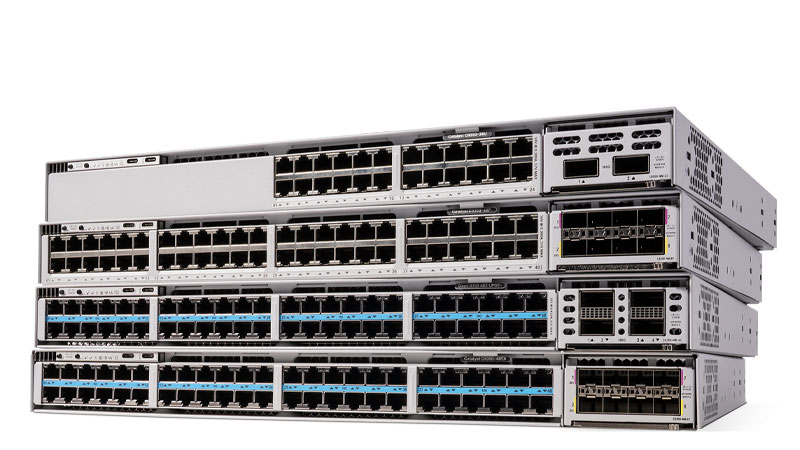
If you still have a Cisco Catalyst 4500-X 32-Port 10G IP Base (PID WS-C4500X-32SFP+) carrying an aggregation or collapsed-core role, the clock has already run out. This fixed 1RU switch reached Last Day of Support on October 31, 2025. As of today it is fully outside Cisco's support lifecycle: no new software, no security fixes, and no contractual hardware replacement. For US federal, DoD, SLED, and healthcare operators in particular, continuing to run it is now a documented audit and risk-acceptance decision, not a deferral. This guide explains exactly what each milestone means for this box, why the recommended Catalyst 9500-48Y4C is the right successor, and how to migrate cleanly.
What the WS-C4500X-32SFP+ actually is
The 4500-X 32SFP+ is a fixed (non-modular) Layer 3 aggregation switch: 32 fixed 1/10G SFP+ ports in a single rack unit, with an optional eight-port uplink module on the 16-port base, but the 32-port SKU ships fully populated. It delivers roughly 800 Gbps of switching capacity and pairs into a single logical node via Virtual Switching System (VSS). Critically, it is an all-fiber SFP+ box with no PoE and no copper Multigigabit, it was built to aggregate access stacks and uplink to the core, not to power endpoints. The IP Base feature set gives you full Layer 3 routing (static, OSPF, EIGRP stubs) but not the BGP/advanced routing of Enterprise Services. Front-to-back airflow on this PID matches hot-aisle/cold-aisle data-center and MDF layouts. Software ran on IOS XE 3.x and later 16.x trains, both off maintenance.
The EoL timeline, and what each date really means
Cisco published this platform's end-of-life with three dates that have very different operational weight. Treat them as gates, not suggestions.
- End of Sale, October 30, 2020: the last day Cisco took new orders. Every unit in service has been field-deployed for over five years; many are well past their original depreciation schedule and warranty.
- End of Software Maintenance, October 30, 2021: the last day Cisco released maintenance or bug-fix software. Any IOS XE image you can load today is frozen at a 2021-era code base.
- Last Day of Support (LDoS), October 31, 2025: the end of all Cisco support. No TAC cases, no RMA/hardware replacement, no PSIRT security patches, and no entitlement under SmartNet or any service contract. A failed unit cannot be replaced through Cisco, and a newly disclosed vulnerability will never be fixed on this platform.
There is also a hard spare-parts reality: as LDoS-era units are decommissioned across the install base, the gray-market supply of working 4500-X chassis and SFP+ optics tightens and quality drops. Sourcing a genuine, TAA-compliant replacement now is cheaper and more defensible than scrambling after a failure.
The recommended replacement: Catalyst 9500-48Y4C
Cisco maps the 4500-X family forward to the Catalyst 9500 high-performance series, and for this 32x10G aggregation role the C9500-48Y4C is the direct successor. It is a generational leap, not a like-for-like swap, and the math favors consolidation.
- Port density and speed: 48x 1/10/25G SFP28 ports plus 4x 40/100G QSFP28 uplinks in 1RU. You replace 32 ports of 10G with 48 ports that each run up to 25G, and gain native 100G uplinks the 4500-X never had.
- Throughput: ~3.2 Tbps switching capacity and up to ~1 Bpps forwarding on Cisco's UADP 3.0 ASIC, roughly a 4x capacity jump from the 4500-X's ~800 Gbps, all at line rate.
- High availability: StackWise Virtual replaces VSS, presenting two physical 9500s as one logical switch with sub-second failover and dual-homed access. Dual hot-swap power supplies and FRU fans carry over.
- Fabric and automation: SD-Access fabric capable, with VXLAN BGP EVPN for modern leaf/spine or campus fabric designs, capabilities entirely absent on the 4500-X.
- Security: line-rate hardware MACsec (up to 256-bit) on high-speed links, plus current IOS XE 17.x with an active PSIRT patch stream.
- Airflow parity: front-to-back and back-to-front options are both available, so it drops into the same thermal layout as your front-to-back 4500-X.
The licensing change you must budget for
This is the single biggest planning difference. The 4500-X used a perpetual feature-set model (IP Base / Enterprise Services baked into the image). The Catalyst 9500 runs Cisco's tiered subscription model under Smart Licensing: a perpetual Network Essentials or Network Advantage base tier plus a term DNA Essentials or DNA Advantage subscription (typically 3, 5, or 7 years) managed in Cisco Smart Software Manager (CSSM) or on-prem Smart Software Manager satellite. To match the routing and fabric breadth most aggregation roles need, and to use SD-Access, EVPN, or StackWise Virtual at full capability, specify Network Advantage with DNA Advantage. Plan the recurring subscription cost and a renewal owner into the refresh, and stand up CSSM (or a satellite for air-gapped/classified networks) before cutover so devices register cleanly.
A practical migration plan
1. Assess and inventory
Pull the running config, show inventory, show interfaces status, and show cdp/lldp neighbors from each 4500-X. Record the VSS domain, every connected access stack and uplink, VLAN/SVI inventory, routing protocols and adjacencies, ACLs, QoS policies, and the exact SFP+ optics and fiber types in use (SR, LR, ER, or DAC). This map is your parity checklist and your decommission scope.
2. License transition
Create or confirm your Smart Account and Virtual Account, choose Network Advantage + DNA Advantage term lengths, and pre-stage device registration tokens. Verify whether existing Cisco DNA/Catalyst Center entitlements can be co-termed. Do this first, license posture drives the order and the lead time.
3. Config and feature parity
IOS XE 17.x syntax is close to the 4500-X's later trains, but do not blind-paste. Re-validate QoS (the 9500's MQC and queue model differs), rebuild ACLs against UADP 3.0 TCAM, and decide up front whether you are lifting-and-shifting traditional VLANs/SVIs or redesigning into SD-Access fabric. Convert VSS constructs to StackWise Virtual (StackWise Virtual Link over the 100G/25G ports). Stage and lab-test the full config on the new pair before touching production.
4. Physical: rack, power, uplinks, optics
Both platforms are 1RU with matching airflow, so rack space is a wash. Confirm PSU input (the 9500 high-performance PSUs may differ in wattage and connector) and PDU capacity. Plan optics carefully: 10G SFP+ optics can carry forward, but to realize 25G access and 100G uplinks you need SFP28 and QSFP28 optics or DAC/AOC, order these with the switch. Build the StackWise Virtual Link across the QSFP28 uplinks for the cleanest HA topology.
5. Phased cutover
Deploy the 9500 pair in parallel with the live 4500-X VSS. Mirror VLANs and routing, bring up StackWise Virtual, then migrate access uplinks in maintenance windows, typically lowest-risk closet first, with a tested rollback (re-home the uplink to the 4500-X) at each step. Validate routing convergence, multicast, QoS marking, and MACsec on links between cutovers. Decommission the 4500-X only after a full clean window.
6. Secure decommission
On retirement, wipe configuration and credentials (factory reset plus key zeroization), and follow NIST SP 800-88 media sanitization for the boot flash before the unit leaves your control. For DoD/federal property, document disposition through your property-management process. Reputable ITAD with certificates of destruction is the defensible path; do not resell a chassis that ever held classified or sensitive configs without verified sanitization.
Procurement notes for government and enterprise
Buy the replacement through an authorized Cisco partner so the hardware arrives with valid Cisco warranty, genuine optics, and a clean Smart Licensing handoff, gray-market 9500s frequently fail license registration and void support. For US public sector, confirm TAA compliance (country of origin matters for FAR/DFARS and GSA Schedule purchases), and that the line items are GPC/purchase-card payable for sub-threshold buys. Lead times on 9500 high-performance SKUs and 25G/100G optics fluctuate, so quote and reserve allocation early; bundling the switch, optics, and DNA subscription on one order avoids partial-shipment licensing gaps.
For full milestone detail on this exact PID, see the WS-C4500X-32SFP+ end-of-life page, and browse the broader Cisco EoL hub to scope your wider refresh. You can configure and price the replacement on our Catalyst 9500 catalog pages.
Frequently asked questions
Is the Cisco WS-C4500X-32SFP+ still supported?
No. The Catalyst 4500-X 32-Port 10G IP Base reached Last Day of Support on October 31, 2025. Cisco no longer provides TAC cases, RMA/hardware replacement, or PSIRT security patches for it, and SmartNet contracts on it can no longer be renewed. Any unit in production is now unsupported and unpatchable.
What is the recommended replacement for the WS-C4500X-32SFP+?
Cisco maps the 4500-X family to the Catalyst 9500 high-performance series, and for this 32x10G aggregation role the direct successor is the C9500-48Y4C. It moves you from 32x 10G SFP+ to 48x 25G SFP28 plus 4x 100G QSFP28 uplinks, with ~3.2 Tbps capacity on the UADP 3.0 ASIC versus the 4500-X's ~800 Gbps.
How does licensing change moving from the 4500-X to the Catalyst 9500-48Y4C?
The 4500-X used a perpetual feature-set model (IP Base / Enterprise Services). The 9500 uses Cisco Smart Licensing: a perpetual Network Essentials or Network Advantage base tier plus a term DNA Essentials or DNA Advantage subscription managed in Cisco Smart Software Manager. For SD-Access, EVPN, and full StackWise Virtual capability, specify Network Advantage with DNA Advantage and budget the recurring subscription.
Can I reuse my existing 10G SFP+ optics on the C9500-48Y4C?
Genuine 10G SFP+ optics generally carry forward into the 9500's 1/10/25G SFP28 cages, so a like-for-like 10G migration can reuse much of your optic inventory. But to gain the 25G access and 100G uplink benefits, you need SFP28 and QSFP28 optics or DAC/AOC cabling, which should be ordered alongside the switch.
Does the Catalyst 9500-48Y4C replace VSS used on the 4500-X?
Yes. The 4500-X used Virtual Switching System (VSS) for dual-chassis redundancy; the 9500 uses StackWise Virtual to present two physical switches as one logical node with sub-second failover. You build the StackWise Virtual Link across the 100G/25G ports during migration.
Uniqcli Team
The Uniqcli Team is an authorized Cisco partner specializing in Catalyst wireless, switching, datacenter fabric, licensing, and managed services for U.S. federal, state, local, and education customers. We scope Cisco bills of materials, validate procurement paths (TAA, FIPS, contract vehicles), and deliver design, deployment, and managed operations.
Ready to scope your Cisco build?
Build a quoteRelated reading
View all →GuidesWS-C4500X-16SFP+ End of Life: Migrate to Catalyst 9500-16X
With Cisco's last day of support for the Catalyst 4500-X 16-port 10G switch arriving October 31, 2025, here is a practical, partner-vetted plan to refresh onto the Catalyst 9500-16X (C9500-16X).
November 18, 2025 · 7 min read Guides
Cisco 1941W EoL: Migrate to Catalyst 8200 C8200-1N-4T
The Cisco 1941W reached Last Day of Support on December 31, 2021, no patches, no TAC, no RMA. Here is what the EoL milestones mean and how to migrate cleanly to the Catalyst 8200 Edge Platform (C8200-1N-4T), including the licensing and wireless changes that catch teams off guard.
April 22, 2026 · 6 min readGuidesWS-C2960X-24PS-L EoL: Migrate to Catalyst 9200L Guide
A practical, partner-built plan for replacing the end-of-sale Catalyst 2960-X 24-port PoE switch (WS-C2960X-24PS-L) with the Catalyst 9200L-24P-4G before the October 2027 last day of support.
October 20, 2025 · 7 min read Guides
Cisco Nexus 5548P EoL: Migrate to Nexus 9300 (93180YC-FX3)
The Nexus 5548P passed Last Day of Support on September 30, 2020, no patches, no TAC, no RMA. Here is why it must come out of the rack and how to migrate cleanly to the Nexus 9300 (N9K-C93180YC-FX3).
May 27, 2026 · 8 min read Guides
Cisco Catalyst 3560V2 (WS-C3560V2-48PS-S) to Catalyst 9200 Migration Guide
The WS-C3560V2-48PS-S reached Last Day of Support on May 31, 2021, no PSIRT patches, no TAC, no RMA. Here is a practical, specs-driven plan to migrate from the Fast Ethernet 3560V2 to the gigabit, IOS-XE Catalyst 9200 (C9200-48P-A).
May 13, 2026 · 7 min read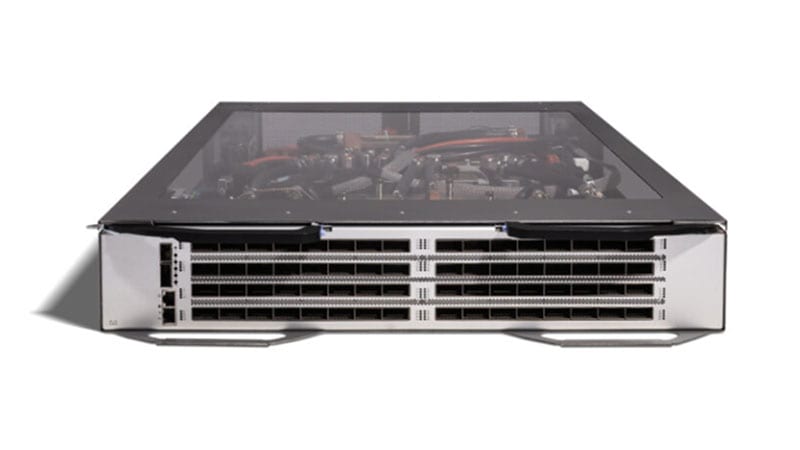 Guides
Nexus 93128TX EoL: Migration to the Nexus 93108TC-FX3
The Nexus 93128TX (N9K-C93128TX) passed Last Day of Support on October 31, 2022. Here is what each milestone means, why the 93108TC-FX3 is the right copper-leaf successor, and a concrete, low-risk migration plan for federal, healthcare, and enterprise data centers.
April 4, 2026 · 9 min read