
Cisco 2960-24TC-L EoL: Migrate to Catalyst 9200L Guide
The original Catalyst 2960-24TC-L (WS-C2960-24TC-L) passed Last Day of Support on October 31, 2019. Here's why this Fast Ethernet LAN Base switch must come out, and how to refresh cleanly to the Gigabit, PoE+ Catalyst 9200L-24P-4X.
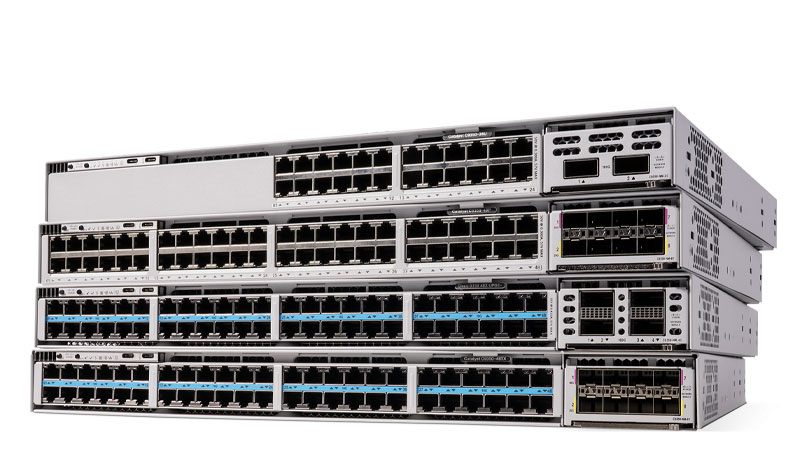
If you still have original Cisco Catalyst 2960-24TC-L switches in service, they are among the oldest pieces of access-layer hardware you can possibly still be running. The WS-C2960-24TC-L went end-of-sale on November 6, 2014, and reached its Last Day of Support on October 31, 2019. Every Cisco lifecycle milestone for this PID is more than six years in the past. The switch still forwards frames, which is precisely why these units linger in branch closets and small-office racks long after they should have been retired. This guide explains what the end-of-life dates mean for a switch that is still in production, why the recommended Catalyst 9200L is a genuine generational upgrade rather than a one-for-one swap, and how to plan a clean, defensible refresh.
WS-C2960-24TC-L lifecycle at a glance: End of Sale: November 6, 2014. Last Day of Support (LDoS): October 31, 2019. Both dates have long passed. Cisco provides no software updates, no PSIRT security fixes, no TAC support, and no RMA for this hardware. The full milestone record lives on the EoL detail page for this PID.
What the Catalyst 2960-24TC-L actually was
The 2960-24TC-L (WS-C2960-24TC-L) is a fixed-configuration Layer 2 access switch from the original Catalyst 2960 line. Its 24 access ports are Fast Ethernet - 10/100 Mbps only, not Gigabit - which is the single most important fact to internalize before you scope a replacement. It adds two dual-purpose Gigabit uplinks (each a 10/100/1000 copper port or an SFP slot, used one at a time) for backbone connectivity. It has no Power over Ethernet on any port, so it never fed an IP phone, access point, or camera directly. It shipped with the LAN Base feature set on IOS, giving you basic Layer 2 switching, VLANs, 802.1Q, spanning tree, basic QoS, and limited static routing - a CLI-only operating model on fixed-function silicon. For desktop connectivity in its era it was a reliable workhorse. Against today's Gigabit endpoints, PoE access points, and 10G aggregation, it is both a performance bottleneck and a security liability.
Why acting now matters
The danger of an end-of-life switch is not that it stops working. It is that it keeps working while every layer of vendor safety net has already disappeared beneath it. Since the October 31, 2019 LDoS, three concrete exposures have been stacking up:
- No PSIRT security patches. When a new IOS or switching-plane vulnerability is disclosed, the 2960-24TC-L will not receive a fixed image. Its software is frozen at the pre-2019 maintenance cutoff. Any CVE affecting that code path on this hardware is permanent and unremediable except by removing the device.
- No TAC or RMA. A failing unit cannot be opened as a Cisco support case or swapped under contract. Your only recovery is a spare you bought years ago or a gray-market replacement of the same dead-end model - itself a supply-chain and counterfeit risk.
- Audit and compliance exposure. The frameworks federal, DoD, SLED, and healthcare buyers operate under - NIST 800-53 (notably SI-2 flaw remediation), CMMC, the HIPAA Security Rule, PCI-DSS 6.x, FedRAMP, and CISA directives - all assume infrastructure that can receive vendor patches. An unsupported, unpatchable access switch is a finding waiting to be written up, and there is no remediation path short of replacement.
For regulated buyers this is the part that turns a quiet legacy switch into an active liability. You can browse the Cisco EoL hub to scope every aging PID across your fleet in one pass.
The recommended replacement: Catalyst 9200L-24P-4X-A
Cisco positions the Catalyst 9200 and 9200L family as the successor to the fixed Catalyst 2960 LAN Base switches. For a 24-port branch or small-office site, the C9200L-24P-4X-A is the right target. Because the original 2960-24TC-L was a Fast Ethernet, no-PoE design, this is not a like-for-like swap - almost every dimension steps up a full generation.
Ports, speed, and PoE
The 2960-24TC-L offered 24 ports at 10/100 Mbps and zero PoE. The C9200L-24P-4X-A delivers 24 ports at full 10/100/1000 Mbps Gigabit, with 370W of PoE+ across the chassis and up to 30W (802.3at) per port. That single change enables everything modern access expects to power: Wi-Fi 6/6E access points, IP phones, PTZ and multi-sensor cameras, badge readers, and IoT endpoints - none of which the FE, non-PoE 2960 could ever feed. You go from a switch that could not power a single device to one that can run a closet full of them over the same cabling.
Uplinks, stacking, and throughput
The original 2960 had only two dual-purpose 1G uplinks and no true stacking. The C9200L-24P-4X-A provides four fixed 10G SFP+ uplinks - a large jump in usable uplink capacity to the distribution layer - and StackWise-80 stacking over dedicated rear ports, supporting up to 8 members managed as a single logical switch with stack-power resilience. Where the 2960 was an island, the 9200L becomes a building block you can grow horizontally without re-architecting the closet.
Silicon, software, and licensing
This is the real modernization. The 2960-24TC-L ran fixed-function ASICs and classic IOS with a CLI-only operating model and no programmability. The 9200L runs the Cisco UADP 2.0 mini ASIC on an x86-based control plane under IOS XE - a modular, patchable operating system with model-driven programmability (NETCONF/YANG), streaming telemetry, SSD-backed application hosting and logging, and native management through Cisco Catalyst Center (formerly DNA Center) or Meraki cloud monitoring. Licensing also changes: the old perpetual LAN Base feature set is replaced by Cisco's term-based Smart Licensing tiers. The '-A' in C9200L-24P-4X-A denotes Network Advantage, which adds capabilities such as SD-Access fabric edge, advanced routing, and richer assurance over the entry Network Essentials tier. Plan to register the switch to a Smart Account so entitlement and reporting are clean from day one.
Compliance, not just speed: Beyond performance, the move from frozen classic IOS to actively-maintained IOS XE is what restores patchability. After this refresh, newly disclosed CVEs have a fixed-release path again - which is the difference between a switch that is an audit finding and one that satisfies SI-2 flaw remediation.
A practical migration plan
A clean access-switch refresh is a repeatable sequence. The same plan works whether you are replacing one branch switch or a hundred.
1. Assess and inventory
Confirm every WS-C2960-24TC-L in the estate by serial and location. Capture each running configuration (show running-config), the port-to-device map, VLAN and trunk layout, and the uplink topology. Note where Fast Ethernet was actually a constraint - most desktop and AP edges have long since needed Gigabit - and flag any device that now wants PoE so you size the 370W budget correctly.
2. License and feature parity
Map the old LAN Base feature set onto IOS XE. Most 2960-24TC-L deployments used only Layer 2 features that Network Essentials covers, but if you are consolidating routing, SD-Access, or richer telemetry into the access layer, the Network Advantage tier on the C9200L-24P-4X-A is the right call. Stand up a Smart Account and the matching subscription term before cutover so licensing is not a day-of surprise.
3. Config translation and feature validation
Do not paste old IOS configs blind. IOS XE syntax differs in places (interface ranges, QoS policy maps, AAA, and the management plane). Rebuild a golden template per site role, validate it on a lab unit, and confirm spanning-tree, VLAN, DHCP snooping, port security, and 802.1X behavior match expectations. Re-baseline QoS rather than porting the 2960's legacy queuing.
4. Physical: rack, power, optics, stacking
The 9200L is a 1RU switch like the 2960, so rack space is rarely an issue. Three things do change: budget for PoE+ load and confirm your closet power and circuits can carry it; the uplinks move to 10G SFP+, so order SFP-10G-SR or SFP-10G-LR optics to match your distribution-layer fiber rather than reusing 1G modules; and if you are stacking, order StackWise-80 cables, which are new and do not exist in a legacy 2960 deployment.
5. Phased cutover
Stage and pre-configure switches on the bench, then cut over per closet or per site during a maintenance window. Move uplinks first, validate the stack and management reachability, then migrate access ports in batches with rollback ready. For multi-site branches, pilot one location end-to-end before scaling the rollout.
6. Secure decommission
Do not let retired 2960 units walk out with live configs. Erase startup-config and the VLAN database, wipe credentials and certificates, and follow NIST 800-88 media sanitization for any audited environment. Record asset disposition (serial, date, method) so the decommission itself is documentable for compliance.
Procurement notes for regulated buyers
For federal and SLED purchases, confirm TAA compliance and country-of-origin on every C9200L-24P-4X-A line item, and route the buy through an authorized Cisco partner so warranty, Smart Licensing entitlement, and support contracts attach cleanly to your Smart Account. GPC and contract-vehicle eligibility vary by agency, and Catalyst 9200L lead times move with demand cycles - so quote early and reserve stock rather than assuming next-day availability. As an authorized partner, uniqcli can validate the exact SKU, optics, and licensing tier against your environment. Browse current switching options in the Cisco catalog, or get a quote for a 2960-24TC-L-to-9200L refresh scoped to your sites, PoE load, and compliance requirements.
Frequently asked questions
When did the Cisco Catalyst 2960-24TC-L reach end of life?
The WS-C2960-24TC-L went end-of-sale on November 6, 2014, and reached its Last Day of Support (LDoS) on October 31, 2019. Every lifecycle milestone has now passed by more than six years. Cisco provides no software updates, no PSIRT security fixes, and no TAC support or RMA hardware replacement for this PID. Any unit still in a rack is running on permanently frozen code with no recovery path if it fails.
What is the direct replacement for the WS-C2960-24TC-L?
Cisco positions the Catalyst 9200/9200L access family as the successor to the fixed Catalyst 2960 LAN Base switches. For a 24-port branch or small-office deployment, the C9200L-24P-4X-A is the recommended fit: 24 Gigabit PoE+ ports, four 10G SFP+ uplinks, StackWise-80 stacking, and Network Advantage licensing on IOS XE. It is a generational leap rather than a like-for-like swap, because the original 2960-24TC-L was a Fast Ethernet, non-PoE switch.
How is the Catalyst 9200L different from the original 2960-24TC-L?
The differences are substantial. The 2960-24TC-L gave you 24 Fast Ethernet (10/100 Mbps) access ports, no PoE, two dual-purpose Gigabit uplinks, and fixed-function silicon running classic IOS with a CLI-only model. The C9200L-24P-4X-A delivers 24 Gigabit (10/100/1000) ports with 370W of PoE+ (30W per port), four 10G SFP+ uplinks, the UADP 2.0 mini ASIC, and IOS XE with NETCONF/YANG, streaming telemetry, and Catalyst Center or Meraki cloud management. You go from 100 Mbps and no powered ports to full Gigabit and PoE+ for APs, cameras, and phones.
Will my existing optics, cables, and stack hardware transfer?
Mostly no, by design. The 2960-24TC-L had no dedicated stacking system and only two 1G dual-purpose uplinks, so there is little to carry forward. The 9200L uses StackWise-80 over rear stack ports, which needs new StackWise cables. The uplinks move from 1G to 10G SFP+, so 1G SFP optics will negotiate down but you will want SFP-10G-SR or SFP-10G-LR modules to use the new capacity. Plan a clean optics and cabling refresh rather than reuse.
Why migrate now if the switch still passes traffic?
Because the support floor is already gone. After LDoS there are no PSIRT patches for newly disclosed CVEs, no TAC cases, and no RMA. For federal, DoD, SLED, and healthcare buyers, an unpatchable, unsupported switch is a documented audit finding under NIST 800-53 SI-2, CMMC, PCI-DSS 6.x, and CIS benchmarks, and 'the vendor no longer ships fixes' is not a defensible remediation plan. The hardware still working is exactly why these units quietly persist past every safe retirement date.
Uniqcli Team
The Uniqcli Team is an authorized Cisco partner specializing in Catalyst wireless, switching, datacenter fabric, licensing, and managed services for U.S. federal, state, local, and education customers. We scope Cisco bills of materials, validate procurement paths (TAA, FIPS, contract vehicles), and deliver design, deployment, and managed operations.
Ready to scope your Cisco build?
Build a quoteRelated reading
View all →GuidesCisco 2960-48TC-L EoL: Migrate to Catalyst 9200L 48-Port
The Catalyst 2960-48TC-L (WS-C2960-48TC-L) passed Last Day of Support on October 31, 2019. Here is why this Fast Ethernet LAN Base switch has to come out of the wiring closet, and how to refresh cleanly to the Catalyst 9200L 48-port C9200L-48T-4X-A.
June 9, 2026 · 8 min read Guides
WS-C2960X-24PS-L EoL: Migrate to Catalyst 9200L Guide
A practical, partner-built plan for replacing the end-of-sale Catalyst 2960-X 24-port PoE switch (WS-C2960X-24PS-L) with the Catalyst 9200L-24P-4G before the October 2027 last day of support.
October 20, 2025 · 7 min readGuidesWS-C2960XR-24PD-I EoL: Migrate to Catalyst 9200 (C9200-24P)
A senior architect's guide to migrating the end-of-life Cisco Catalyst 2960-XR 24-port PoE switch (WS-C2960XR-24PD-I) to the recommended Catalyst 9200 24-port PoE+ (C9200-24P).
October 24, 2025 · 8 min readGuidesWS-C2960XR-48FPD-I End of Life: Migrate to Catalyst 9200
The Catalyst 2960-XR 48-port PoE+ switch is past end of sale with support ending October 31, 2027; here is a concrete plan to refresh it to the Catalyst 9200 C9200-48P.
October 25, 2025 · 8 min readGuidesCisco WS-C2960X-48FPD-L EoL: Migrating to Catalyst 9200L
The Cisco Catalyst 2960-X 48-port full-PoE switch (WS-C2960X-48FPD-L) is end-of-sale with support ending October 31, 2027, here is a concrete plan to migrate to the Catalyst 9200L (C9200L-48P-4X).
October 22, 2025 · 9 min readGuidesWS-C2960L-16PS-LL EoL: Migrate to Catalyst 1000 C1000-16P-2G-L
A practical refresh guide for replacing the end-of-life Catalyst 2960-L 16-port PoE LAN Lite switch (WS-C2960L-16PS-LL) with the Catalyst 1000 C1000-16P-2G-L before support ends 31 October 2026.
October 13, 2025 · 8 min read