
Cisco WS-C2960X-48FPD-L EoL: Migrating to Catalyst 9200L
The Cisco Catalyst 2960-X 48-port full-PoE switch (WS-C2960X-48FPD-L) is end-of-sale with support ending October 31, 2027, here is a concrete plan to migrate to the Catalyst 9200L (C9200L-48P-4X).
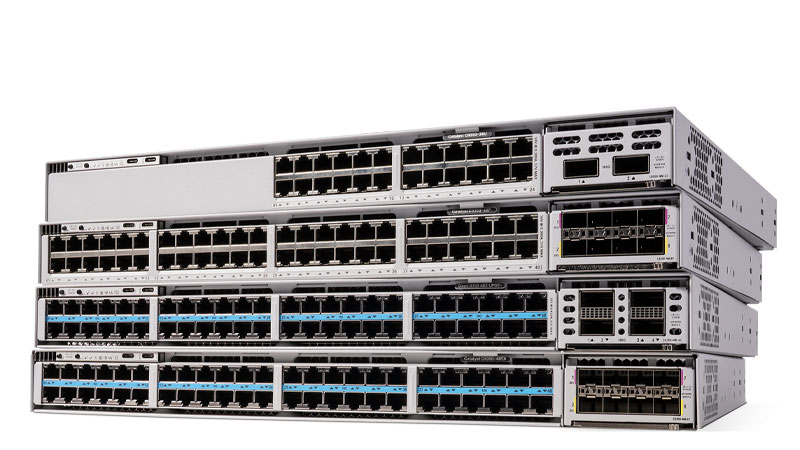
If you still have Cisco Catalyst 2960-X 48-port full-PoE switches in production, the WS-C2960X-48FPD-L, with 48 Gigabit RJ-45 ports, a 740W PoE+ budget, and two 10G SFP+ uplinks running LAN Base, the lifecycle clock has already moved well past the point where standing pat is a defensible decision. This switch went end-of-sale on October 31, 2022, software maintenance ended on October 31, 2023, and the final milestone, Last Day of Support, lands on October 31, 2027. Cisco's own migration path moves this platform to the fixed-uplink Catalyst 9200L, specifically the C9200L-48P-4X. This guide explains what each date actually means for your operations, why the 9200L is a genuine upgrade rather than a like-for-like swap, and how to plan a clean refresh for a government, healthcare, or enterprise access layer.
Why this is urgent now, not in 2027
The instinct with a switch that still passes traffic is to run it until it dies. With the 2960-X that instinct is expensive in ways that do not show up until something breaks. The most important date has already passed: end of software maintenance on October 31, 2023. Since that day, Cisco has not produced new IOS 15.2 maintenance releases for this platform. In practice that means no new bug fixes and, the part that should worry every security and compliance owner, no new PSIRT security patches. When the next remotely exploitable vulnerability in the IOS web UI, SNMP stack, or a protocol daemon is disclosed, there will be no fixed release for the WS-C2960X-48FPD-L. The documented remedy becomes a hardware refresh, not a patch.
That gap is an audit and compliance problem before it is an outage problem. Frameworks that federal, DoD, SLED, and healthcare buyers live under, FISMA/NIST 800-53, CMMC, HIPAA Security Rule, PCI-DSS, all expect that systems run vendor-supported software with a viable patch path. A switch carrying an open, unpatchable CVE is a finding waiting to be written up, and "the vendor no longer issues fixes" is the worst possible answer to give an assessor. Acting before LDoS lets you refresh on a planned budget cycle instead of an emergency one.
What each milestone means in practice
- End-of-Sale (Oct 31, 2022): Cisco stopped selling the WS-C2960X-48FPD-L new. Any unit you buy now is used, refurbished, or NOS channel stock, fine as a short-term spare, not a basis for a multi-year deployment.
- End of Software Maintenance (Oct 31, 2023): no further IOS releases, including security fixes. This is the milestone that converts new vulnerabilities into permanent exposure.
- Last Day of Support / LDoS (Oct 31, 2027): the hard cliff. After this date there is no Cisco TAC case support and no RMA hardware replacement, even with an active SmartNet contract. A failed power supply or stack member becomes a scramble for gray-market parts.
The replacement: Catalyst 9200L C9200L-48P-4X
Cisco maps the WS-C2960X-48FPD-L to the C9200L-48P-4X, and the pairing is deliberate: same 48 PoE-capable copper ports, same class of access-layer role, but a generational jump in silicon, uplink capacity, stacking, and software. The 9200L keeps the 48 x 10/100/1000 RJ-45 PoE+ ports and a 740W PoE budget that matches the 2960-X port-for-port, so your existing IP phones, APs, and cameras draw the same power as before. What changes underneath is substantial.
Uplinks, stacking, and throughput
- Uplinks: the 2960-X gives you two 10G SFP+ ports. The C9200L-48P-4X gives you four fixed 10G SFP+ ports, double the uplink bandwidth, which matters as access-layer oversubscription tightens with denser endpoints. The '4X' in the PID denotes the 4 x 10G SFP+ uplink module.
- Stacking: the 2960-X uses FlexStack-Plus, with up to 8 members and 80 Gbps of stack bandwidth over dedicated stack modules. The 9200L uses StackWise-160, up to 8 members at 160 Gbps of stack bandwidth, double the backplane interconnect, with no separate stack module to order on the L-series.
- Silicon and forwarding: the 9200L runs on Cisco's UADP 2.0 mini ASIC with a multicore x86 CPU, versus the older fixed-function APM86392 platform in the 2960-X. The practical result is higher switching capacity, larger and more flexible TCAM, and headroom for features the 2960-X simply cannot run.
From IOS 15 right-to-use to IOS XE and Smart Licensing
This is the single biggest operational change, and the one most likely to trip up a team that treats the refresh as a hardware swap. The 2960-X runs classic IOS 15.2 with the old right-to-use (RTU) licensing model, LAN Base versus IP Lite was a feature set baked into the image, with no portal, no entitlement to track. The Catalyst 9200L runs IOS XE and uses Cisco Smart Licensing. You now choose a software tier, Network Essentials or Network Advantage, and pair it with the Cisco DNA / Catalyst (Cisco Networking) subscription term, typically 3, 5, or 7 years. Network Essentials is the closer functional match to LAN Base; Network Advantage unlocks SD-Access fabric edge, advanced telemetry, and richer routing.
Two things follow from this. First, IOS XE brings a modern toolchain the 2960-X never had: model-driven programmability (NETCONF/RESTCONF, YANG), guest shell, patchable SMUs, and native telemetry that feeds Catalyst Center (formerly DNA Center) and ThousandEyes. Second, you must size and budget the subscription, because the DNA term is a real line item, not an afterthought, let it lapse and you keep the switch but lose the entitlement to new software and the cloud/management features. Plan the license term to align with your expected refresh horizon.
A practical migration plan
1. Inventory and assessment
Pull a real inventory from the live network, not a spreadsheet from memory. On each 2960-X run show version, show inventory, and show power inline to capture the IOS train, serial numbers, stack membership, and, critically, actual PoE draw per closet. The 740W budget on both platforms is identical, so if a 2960-X stack is running near its PoE ceiling today, that constraint carries forward and may push specific closets toward a 9300 with a larger budget. Capture uplink utilization too, because the move from 2 to 4 x 10G uplinks is only valuable if your distribution/core can terminate them.
2. License transition
- Decide Network Essentials vs. Network Advantage per site based on whether you need SD-Access, advanced routing, or richer assurance.
- Choose a Cisco DNA/Networking subscription term and set up a Smart Account and Virtual Accounts so entitlements land in the right organizational buckets, essential for federal and multi-agency tracking.
- There is no license transfer from RTU IOS to Smart Licensing; budget the subscription as net-new and align its term to your refresh cycle.
3. Config and feature parity
Do not paste a 2960-X config into a 9200L. The bulk of access-layer config, VLANs, access ports, voice VLAN, port-security, DHCP snooping, 802.1X/MAB, QoS trust boundaries, translates closely, but IOS XE differs in syntax and defaults (notably the QoS model and the licensing/boot configuration). Build a clean golden template per port profile, validate it on one switch, and standardize. This is also the moment to retire technical debt: stale ACLs, orphaned VLANs, and any IP Lite-style static routing that should now live on a proper distribution layer.
4. Physical: rack, power, PoE, uplinks, optics, stacking
- Both are 1RU; rack footprint is a wash, but confirm power feeds, the 9200L draws from the same single internal supply class, with field-replaceable PSU/fan options on the L-series being more limited than the modular 9200/9300.
- Reuse your existing SFP-10G-SR/LR or 10G DAC optics where supported, but verify each transceiver against the 9200L compatibility matrix; Cisco-coded optics that worked on the 2960-X generally carry over.
- FlexStack cables do NOT work on StackWise. Order StackWise-160 stacking cables and confirm cable-length needs for your rack layout before cutover day.
5. Phased cutover and secure decommission
Migrate closet by closet during a maintenance window: stage and pre-load the IOS XE image and golden config, register the switch to your Smart Account, then physically re-patch and validate one stack at a time with rollback ready. Once a 2960-X is retired, treat decommission as a security task, wipe the configuration (the running and startup config can hold credentials, SNMP strings, and 802.1X secrets), record the serial against your asset register, and for federal/DoD environments follow your media-sanitization and property-disposal policy (NIST 800-88) before the unit leaves the facility. Verify lifecycle details for this exact unit on the WS-C2960X-48FPD-L EoL page, and cross-check the rest of your fleet against the Cisco End-of-Life hub.
Procurement notes for government and enterprise buyers
Because the WS-C2960X-48FPD-L is past end-of-sale, any "new" 2960-X is channel or secondary-market stock, appropriate only as a stopgap spare, never as the foundation of a multi-year deployment. The C9200L-48P-4X is current, actively manufactured, and TAA-compliant, the qualities buyers look for on GSA, SEWP, and other federal contract vehicles. A few practical points: confirm TAA country-of-origin documentation up front for DoD/federal orders; the 9200L and its DNA subscription are commonly Government Purchase Card (GPC) payable at micro-purchase thresholds, which can shorten the path for smaller closet refreshes; and plan for lead times, switch and optics availability still fluctuates, so order optics and StackWise cables alongside the chassis rather than after. Sourcing from an authorized Cisco partner protects your warranty, Smart Licensing entitlement, and TAA paper trail in a way the gray market cannot.
You can browse the Catalyst 9200L and matching optics in our catalog, and when you are ready to scope the refresh, get a quote, send us your closet inventory and PoE budgets and we will return a TAA-compliant, GPC-payable bill of materials with the right Network Essentials or Advantage tier, DNA term, optics, and StackWise cabling, aligned to your 2027 LDoS deadline.
Frequently asked questions
When does the Cisco WS-C2960X-48FPD-L reach end of support?
Last Day of Support (LDoS) is October 31, 2027. After that date Cisco provides no TAC case support and no RMA hardware replacement, even on an active SmartNet contract. Just as important, software maintenance already ended on October 31, 2023, so this switch has received no new IOS security patches since then.
What is the recommended replacement for the WS-C2960X-48FPD-L?
Cisco maps it to the Catalyst 9200L C9200L-48P-4X: 48 Gigabit PoE+ ports with the same 740W PoE budget, but with four 10G SFP+ uplinks instead of two, StackWise-160 (160 Gbps) instead of FlexStack-Plus, UADP 2.0 silicon, and IOS XE with Smart Licensing. If you need UPOE/90W, modular uplinks, or collapsed-core capacity, step up to the Catalyst 9300.
Will my licenses transfer from the 2960-X to the Catalyst 9200L?
No. The 2960-X uses the old right-to-use (RTU) model with LAN Base or IP Lite baked into the IOS 15.2 image. The 9200L runs IOS XE with Cisco Smart Licensing, where you pick Network Essentials or Network Advantage plus a Cisco DNA/Networking subscription term. There is no transfer path, budget the subscription as net-new and align its term to your refresh horizon.
Can I reuse my 10G optics and stacking cables on the Catalyst 9200L?
10G SFP+ optics (SR/LR) and DACs generally carry over, verify each against the 9200L compatibility matrix. Stacking cables do not: FlexStack-Plus cables from the 2960-X are not compatible with StackWise-160, so you must order new StackWise cables for the 9200L.
Is the Catalyst 9200L TAA-compliant and GPC-payable for federal buyers?
Yes. The C9200L-48P-4X is current, TAA-compliant hardware, the kind of product federal buyers look for on GSA, SEWP, and other vehicles, and it is commonly Government Purchase Card payable under the micro-purchase threshold. Confirm country-of-origin documentation up front and source from an authorized Cisco partner to protect warranty, Smart Licensing entitlement, and the TAA paper trail.
Uniqcli Team
The Uniqcli Team is an authorized Cisco partner specializing in Catalyst wireless, switching, datacenter fabric, licensing, and managed services for U.S. federal, state, local, and education customers. We scope Cisco bills of materials, validate procurement paths (TAA, FIPS, contract vehicles), and deliver design, deployment, and managed operations.
Ready to scope your Cisco build?
Build a quoteRelated reading
View all →GuidesWS-C2960X-24PS-L EoL: Migrate to Catalyst 9200L Guide
A practical, partner-built plan for replacing the end-of-sale Catalyst 2960-X 24-port PoE switch (WS-C2960X-24PS-L) with the Catalyst 9200L-24P-4G before the October 2027 last day of support.
October 20, 2025 · 7 min read Guides
Cisco 2960-24TC-L EoL: Migrate to Catalyst 9200L Guide
The original Catalyst 2960-24TC-L (WS-C2960-24TC-L) passed Last Day of Support on October 31, 2019. Here's why this Fast Ethernet LAN Base switch must come out, and how to refresh cleanly to the Gigabit, PoE+ Catalyst 9200L-24P-4X.
June 7, 2026 · 7 min readGuidesWS-C2960XR-48FPD-I End of Life: Migrate to Catalyst 9200
The Catalyst 2960-XR 48-port PoE+ switch is past end of sale with support ending October 31, 2027; here is a concrete plan to refresh it to the Catalyst 9200 C9200-48P.
October 25, 2025 · 8 min readGuidesCisco 2960-48TC-L EoL: Migrate to Catalyst 9200L 48-Port
The Catalyst 2960-48TC-L (WS-C2960-48TC-L) passed Last Day of Support on October 31, 2019. Here is why this Fast Ethernet LAN Base switch has to come out of the wiring closet, and how to refresh cleanly to the Catalyst 9200L 48-port C9200L-48T-4X-A.
June 9, 2026 · 8 min readGuidesWS-C2960XR-24PD-I EoL: Migrate to Catalyst 9200 (C9200-24P)
A senior architect's guide to migrating the end-of-life Cisco Catalyst 2960-XR 24-port PoE switch (WS-C2960XR-24PD-I) to the recommended Catalyst 9200 24-port PoE+ (C9200-24P).
October 24, 2025 · 8 min readGuidesWS-C2960S-24PS-L End of Life: Migration to the 2960-X
The Catalyst 2960-S 24-port PoE switch (WS-C2960S-24PS-L) hit last-day-of-support in November 2020, here is exactly what that means and how to migrate cleanly to its successor.
October 16, 2025 · 8 min read