
Cisco 2960-48TC-L EoL: Migrate to Catalyst 9200L 48-Port
The Catalyst 2960-48TC-L (WS-C2960-48TC-L) passed Last Day of Support on October 31, 2019. Here is why this Fast Ethernet LAN Base switch has to come out of the wiring closet, and how to refresh cleanly to the Catalyst 9200L 48-port C9200L-48T-4X-A.
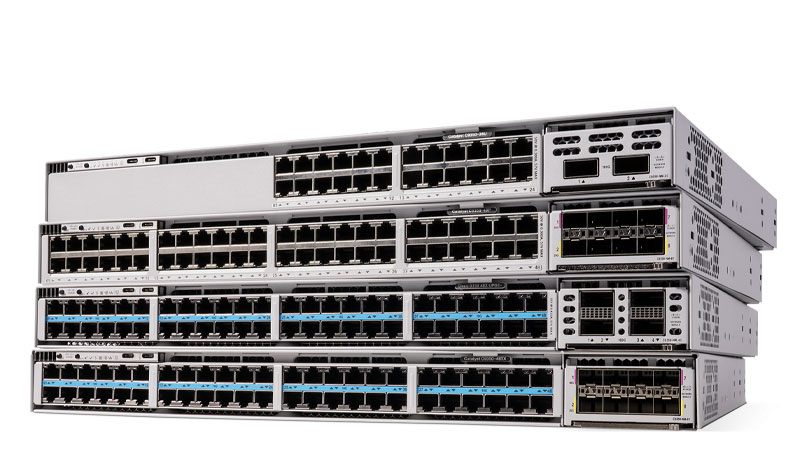
If you still have Cisco Catalyst 2960-48TC-L switches (PID WS-C2960-48TC-L) humming away in a wiring closet, they are well past every Cisco lifecycle milestone that matters. This switch went End-of-Sale on November 6, 2014 and reached its Last Day of Support on October 31, 2019. From that date Cisco provides no software fixes, no PSIRT security patches, and no TAC or RMA hardware replacement for the platform. The switch keeps forwarding frames, which is precisely why these units survive in closets a decade after they should have been retired. This guide covers what the dates actually mean for a live access layer, why the recommended Catalyst 9200L is a genuine generational upgrade rather than a like-for-like swap, and how to plan a low-risk refresh.
WS-C2960-48TC-L lifecycle at a glance: End of Sale: November 6, 2014. Last Day of Support (LDoS): October 31, 2019. Both dates have long passed. This switch is unsupported and unpatchable today. The full milestone record lives on the EoL detail page for this PID.
What the Catalyst 2960-48TC-L actually was
The WS-C2960-48TC-L is a fixed-configuration, Layer 2 access switch from Cisco's classic 2960 (non-S, non-X) line. It provides 48 ports of 10/100 Fast Ethernet for end devices, plus two dual-purpose uplinks. Each uplink is a shared pair: one 10/100/1000 copper port OR one SFP slot, and you use one or the other per uplink, not both. The 'L' denotes the LAN Base feature set, the entry image that supports VLANs, 802.1Q trunking, spanning tree (RPVST+/MSTP), basic QoS, and a limited number of static routes, but no full dynamic routing. It is fanless, runs traditional Cisco IOS (the 12.2/15.0 LANBASEK9 trains), and was never a stacking member; FlexStack was a 2960-S/2960-X capability, so a closet full of these is a closet full of independent, individually managed boxes.
For 2009-era networks where desktops negotiated 100 Mbps and the closet uplink was a single gigabit, this was the workhorse access switch. The problem in 2026 is structural: 100 Mbps to the edge is now a bottleneck for ordinary endpoints, the 2x1G uplink ceiling chokes aggregate closet traffic, and there is no PoE to power the phones, APs, and cameras that have since appeared on those same ports.
Why acting now matters
The danger of an end-of-life access switch is not that it stops working. It is that it keeps working while the support floor disappears beneath it. Three concrete exposures stack up after LDoS:
- No PSIRT security patches. When a new IOS or switching vulnerability is disclosed, the 2960-48TC-L will not receive a fixed image. Its software is frozen at the pre-LDoS build. Any CVE affecting that code path on this hardware is permanent, including issues in management planes like SNMP, SSH, the web UI, or Smart Install that have repeatedly bitten older Catalyst gear.
- No TAC or RMA. A failed unit cannot be opened as a Cisco support case or swapped under contract. Your only recovery is a spare you stockpiled before LDoS or a gray-market unit of the same dead-end model, which inherits the same unsupported status.
- Audit and compliance exposure. The frameworks federal, DoD, SLED, and healthcare buyers operate under (FedRAMP, CMMC, the HIPAA Security Rule, PCI DSS, and CISA directives) expect supported, patchable infrastructure. An access switch that cannot be patched is a finding waiting to be written, and 'the vendor stopped shipping fixes seven years ago' is not a defensible remediation plan.
What each milestone date means in practice
- End of Sale (2014-11-06): the last day Cisco accepted new orders for the WS-C2960-48TC-L. Everything after this date has been consuming the support tail.
- Last Day of Support / LDoS (2019-10-31): the hard wall. After this date Cisco delivers no TAC, no RMA, no software maintenance, and no security fixes. The hardware is entirely on its own. This product line predates the separate End-of-Software-Maintenance milestone Cisco now publishes, so LDoS is the operative cutoff.
The recommended replacement: Catalyst 9200L 48-port (C9200L-48T-4X-A)
Cisco's modernization path for the 2960 family is the Catalyst 9200/9200L line, built on IOS-XE and the same UADP-based fixed-access architecture as the rest of the Catalyst 9000 family. For a direct 48-port data-access replacement, the C9200L-48T-4X-A is the right anchor: 48 ports of 10/100/1000 Gigabit access (the '-T' = data, non-PoE), four fixed 10G SFP+ uplinks, and a Network Advantage license tier (the '-A'). The jump from the 2960-48TC-L is generational, not incremental:
- Gigabit to the edge, not Fast Ethernet. Every access port moves from 100 Mbps to 1 Gbps, a 10x per-port ceiling increase for ordinary endpoints with zero recabling on Cat5e/Cat6.
- 10G uplinks replace 1G. Four 10G SFP+ uplinks replace the 2960's two shared 1G uplinks, lifting the closet-to-core path from roughly 2 Gbps to 40 Gbps of uplink capacity and removing the historic aggregation bottleneck.
- True stacking with StackWise-160. The 9200L supports StackWise-160 (160 Gbps stack bandwidth on the 9200L; the full 9200 uses StackWise-320), so up to eight switches manage as one logical unit with one IP, one config, and one image. That collapses a closet of independently administered 2960s into a single stack, which is the single biggest operational win of the refresh.
- Modern silicon and software. The 9200L runs a UADP 2.0 mini ASIC on a multicore x86 control plane under IOS-XE 17.x, versus the fixed-function ASIC and monolithic IOS of the 2960. That brings patchable, modular software, programmability (NETCONF/YANG, RESTCONF), model-driven telemetry, and a real PSIRT patch stream you can actually apply.
- Layer 3 access and richer features. Network Advantage on the 9200L adds OSPF/EIGRP routed access, VXLAN/SD-Access fabric edge participation, larger routing and ACL scale, and full QoS, all far beyond what the 2960 LAN Base image ever offered.
- DNA / Smart Licensing and DNA Center management. The platform uses Smart Licensing and integrates with Cisco DNA Center / Catalyst Center for assurance, automated provisioning, software image management, and compliance reporting, replacing the box-by-box CLI management the 2960 required.
Match the variant to your real load: The 2960-48TC-L and the C9200L-48T-4X-A are both data-only (no PoE). If devices on those ports now need power (IP phones, Wi-Fi 6/6E APs, cameras), specify the PoE+ sibling C9200L-48P-4X-A, which provides 802.3at on all 48 ports. If your uplinks are still copper or 1G fiber today, the 9200L's SFP+ cages are backward-compatible with 1G SFPs, so you can reuse existing optics during transition and step to 10G when ready.
A practical migration plan
1. Assess and inventory
Pull a per-closet inventory: how many WS-C2960-48TC-L units, their current IOS versions, and what is actually plugged in. Capture port utilization, VLAN assignments, trunk uplinks, and any device that needs more than 100 Mbps or needs power. The data-only 2960 means anything currently powered is being fed by an injector or a separate PoE switch; document that so you right-size to a -T or -P 9200L. Map how many independent 2960s can be consolidated into each stack of 9200Ls (up to eight per stack).
2. Plan the license transition
The 2960 had no subscription model; the 9200L uses Smart Licensing. Decide on Network Essentials versus Network Advantage (the C9200L-48T-4X-A ships Advantage) and choose a DNA term (typically 3, 5, or 7 years) sized to the refresh horizon. Set up or confirm your Smart Account and Virtual Account before delivery so units register cleanly and you avoid the trial-license countdown in production.
3. Establish config and feature parity
IOS-XE syntax is close to classic IOS but not identical, so do not blind-paste a 2960 config. Rebuild VLANs, trunks, voice VLANs, port-security, spanning-tree (the 9200L defaults to RPVST+), DHCP snooping, and any ACLs against the IOS-XE 17.x command set. Validate features the 2960 lacked but you may now want (routed access, model-driven telemetry). Standardize a golden template per closet role and push it via DNA Center / Catalyst Center where possible.
4. Sort the physical layer
Both switches are 1RU, so rack space is a wash, but confirm power and airflow: the 9200L draws more than the fanless 2960 and uses front-to-back airflow, so verify closet cooling and outlet capacity, especially if you choose a PoE+ model with its larger supply. Order StackWise stacking cables and stack-power cabling for any multi-unit stacks. Plan uplink optics: reuse 1G SFPs short-term in the SFP+ cages, or specify 10G SFP+ (SR/LR) and the matching fiber for the upgrade to 10G uplinks.
5. Cut over in phases
Pilot one closet first. Stage and burn-in the 9200L stack, register licenses, apply the golden config, then cut over during a maintenance window: move uplinks, then roll access ports closet by closet. Keep the old 2960 racked and powered-off as an immediate rollback for the first window, then proceed to the rest of the building once the pilot is stable. Phased cutover keeps blast radius to one closet at a time.
6. Decommission securely
Do not just unrack the 2960 and resell it with its config intact. Erase the startup-config and any stored credentials, VLAN/VTP data, and certificates; for federal and healthcare environments follow your media-sanitization standard (for example NIST 800-88) before disposal. Then retire the units through a documented, certified disposal or trade-in channel and update your CMDB so the unsupported assets stop appearing as live in audits.
Procurement notes
For government and regulated buyers, source the Catalyst 9200L in TAA-compliant configurations and check the current DoDIN APL repository status if your program still requires it; the DoDIN APL program itself sunset on September 30, 2025, with DISA maintaining the existing repository through FY2026. The 9200L is a current, high-volume platform, so lead times are generally favorable versus end-of-life gear, but optics, stacking cables, and DNA license terms should be quoted together so nothing blocks the cutover. Buy through an authorized Cisco partner to guarantee genuine hardware, valid Smart Licensing entitlement, and full warranty and support, not a gray-market unit that inherits the same support problem you are trying to escape.
Uniqcli is an authorized Cisco partner. We scope a like-for-like-or-better replacement for your WS-C2960-48TC-L fleet, confirm TAA compliance, accept the Government Purchase Card (GPC), and plan the cutover with you. Browse current Catalyst 9200/9200L options in our shop and catalog, or check other affected models in our Cisco end-of-life lookup. When you are ready for pricing and availability, get a TAA-compliant, GPC-payable quote and we will turn your closet inventory into a phased refresh plan.
Frequently asked questions
When did the Cisco WS-C2960-48TC-L reach end of life?
The Catalyst 2960-48TC-L went End-of-Sale on November 6, 2014 and reached its Last Day of Support (LDoS) on October 31, 2019. Both milestones are years in the past. As of today there is no Cisco TAC support, no RMA hardware replacement, and no security patching available for this switch. See the full milestone record on the EoL detail page for this PID.
What is the direct Cisco replacement for the 2960-48TC-L?
Cisco's stated upgrade path is the Catalyst 9200/9200L family. For a 48-port access switch, the closest fit is the C9200L-48T-4X-A: 48 Gigabit (10/100/1000) data ports, four 10G SFP+ uplinks, StackWise-160 stacking, and a Network Advantage / DNA Advantage subscription. It replaces the 2960's Fast Ethernet ports with full Gigabit access and the 1G uplinks with 10G fiber.
My 2960-48TC-L still works fine. Why replace it instead of leaving it?
It works because switching hardware rarely just dies, not because it is safe. Past LDoS it receives no PSIRT security fixes, so any new vulnerability in its frozen IOS image is permanent. There is no TAC case and no RMA if it fails, and an unsupported, unpatchable device is a documented finding under FedRAMP, CMMC, HIPAA, and PCI DSS audits. The risk compounds quietly the longer it stays racked.
Does the 2960-48TC-L do PoE, and does the 9200L replacement add it?
No. The WS-C2960-48TC-L is a data-only switch with no PoE on any port, and the matching C9200L-48T-4X-A (-T = data) is also non-PoE. If you have since added IP phones, wireless APs, or cameras and now need power, step up to the PoE+ variant C9200L-48P-4X-A, which delivers 802.3at on all 48 ports from a larger supply.
Is the Catalyst 9200L TAA compliant and payable on a Government Purchase Card?
Yes. The Catalyst 9200L family ships in TAA-compliant configurations suitable for federal, DoD, and SLED procurement. As an authorized Cisco partner, Uniqcli quotes TAA-compliant units and accepts the Government Purchase Card (GPC) for micro-purchases; larger buys can be structured as a Simplified Acquisition or a FAR-based purchase order, since Uniqcli does not currently hold a GSA Schedule or other contract vehicle.
Uniqcli Team
The Uniqcli Team is an authorized Cisco partner specializing in Catalyst wireless, switching, datacenter fabric, licensing, and managed services for U.S. federal, state, local, and education customers. We scope Cisco bills of materials, validate procurement paths (TAA, FIPS, contract vehicles), and deliver design, deployment, and managed operations.
Ready to scope your Cisco build?
Build a quoteRelated reading
View all →GuidesCisco 2960-24TC-L EoL: Migrate to Catalyst 9200L Guide
The original Catalyst 2960-24TC-L (WS-C2960-24TC-L) passed Last Day of Support on October 31, 2019. Here's why this Fast Ethernet LAN Base switch must come out, and how to refresh cleanly to the Gigabit, PoE+ Catalyst 9200L-24P-4X.
June 7, 2026 · 7 min read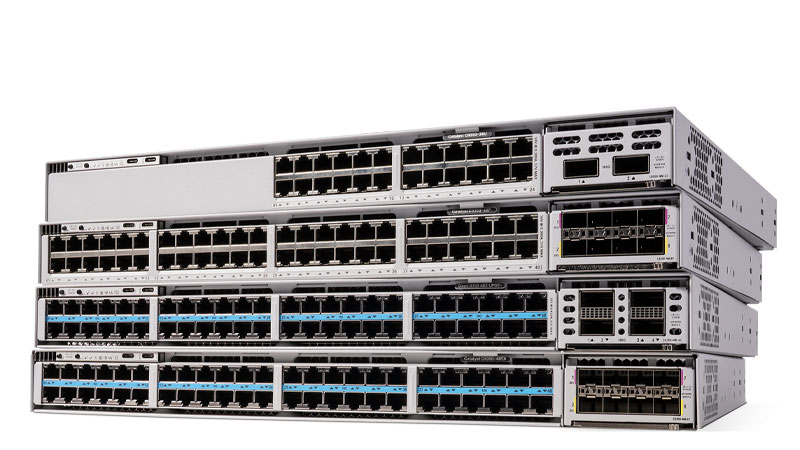 Guides
WS-C2960X-24PS-L EoL: Migrate to Catalyst 9200L Guide
A practical, partner-built plan for replacing the end-of-sale Catalyst 2960-X 24-port PoE switch (WS-C2960X-24PS-L) with the Catalyst 9200L-24P-4G before the October 2027 last day of support.
October 20, 2025 · 7 min readGuidesWS-C2960S-48TS-L End of Life: Migration Guide to the 2960-X
The Catalyst 2960-S 48-port LAN Base hit Last Day of Support in November 2020, here is exactly why to refresh now and how to migrate cleanly to its successor.
October 18, 2025 · 9 min readGuidesWS-C2960L-16PS-LL EoL: Migrate to Catalyst 1000 C1000-16P-2G-L
A practical refresh guide for replacing the end-of-life Catalyst 2960-L 16-port PoE LAN Lite switch (WS-C2960L-16PS-LL) with the Catalyst 1000 C1000-16P-2G-L before support ends 31 October 2026.
October 13, 2025 · 8 min readGuidesCisco Catalyst 4948 (WS-C4948-S) EoL: Migrate to Catalyst 9300
The WS-C4948-S passed Last Day of Support on Jan 31, 2020. Here is why this top-of-rack workhorse has to come out and how to refresh cleanly to a stackable Catalyst 9300 (C9300-48T-A).
June 5, 2026 · 8 min read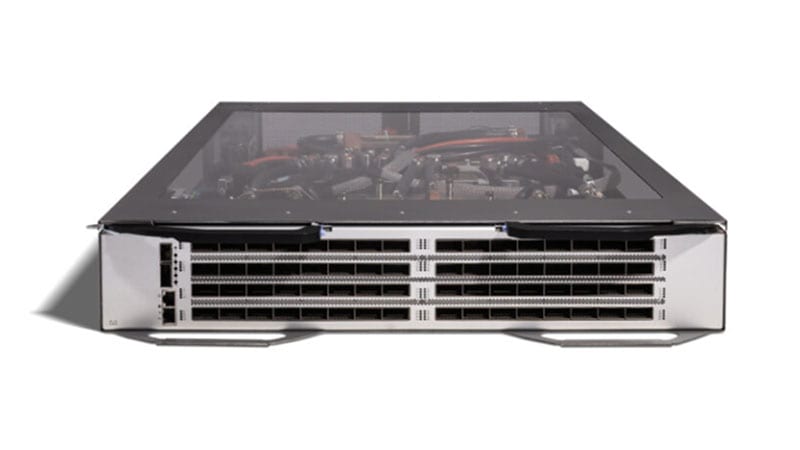 Guides
Cisco Nexus 6001-64T EoL: Migrate to Nexus 93180YC-FX3
The Nexus 6001-64T (N6K-C6001-64T) passed Last Day of Support on April 30, 2022. Here is what each milestone means, why the 10GBASE-T top-of-rack switch has to come out, and how to refresh cleanly to the Cloud Scale Nexus 93180YC-FX3.
April 19, 2026 · 7 min read