
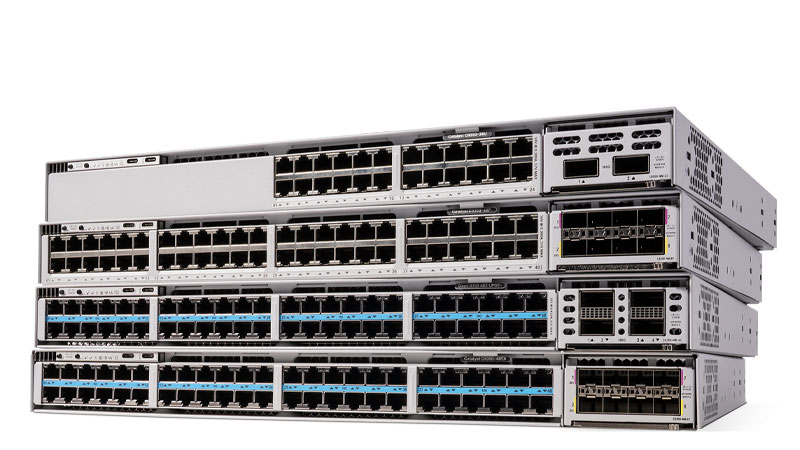
If you still run the Cisco Catalyst 2960-XR 48 GigE PoE 740W switch (PID WS-C2960XR-48FPD-I), the clock is no longer abstract. This was the IP Lite, full-routing, dual-power-supply member of the 2960-XR line: forty-eight 10/100/1000 access ports, two 10G SFP+ uplinks, a 740W PoE+ budget, and an FRU redundant power slot for an RPS or second PSU. It earned its place in wiring closets that needed inter-VLAN routing and static or limited dynamic routing at the edge without stepping up to a 3650 or 3850. But Cisco published the end-of-life notice years ago, and the only remaining milestone that matters now is the last day of support.
This guide explains, in practical terms, what each EoL date means for an operator, why the Catalyst 9200 C9200-48P is the right successor for this specific model, and how to execute the refresh without breaking config parity, PoE budgets, or your compliance posture. You can confirm the exact dates for your unit on the WS-C2960XR-48FPD-I end-of-life detail page.
The EoL situation for the WS-C2960XR-48FPD-I
Cisco moved this switch through its standard end-of-life sequence. End of Sale was October 31, 2022, so you can no longer buy it new through Cisco. End of Software Maintenance was October 31, 2023, which is the date that should worry security and compliance teams the most. The Last Day of Support (LDoS) is October 31, 2027. After that date the platform is fully retired by Cisco.
The software maintenance cutoff already passed. In practice that means Cisco no longer ships maintenance IOS releases or bug fixes for the 15.2(7)Ex train this platform runs, and critically, no longer produces PSIRT security patches for it. When a new vulnerability lands that affects the 2960-XR code base, there will be no fixed release to deploy. Your only mitigations become workarounds, ACLs, and segmentation, which auditors increasingly treat as compensating controls rather than remediation.
What LDoS actually removes
The last day of support is not a soft deadline. After October 31, 2027 you lose entitlement to open Cisco TAC service requests, you lose hardware RMA under SmartNet or any service contract, and you lose access to current software downloads tied to that platform. A failed power supply or a dead unit in a closet becomes a scramble for gray-market spares with no warranty. For federal, DoD, and SLED operators bound to supportable, vendor-maintained hardware, running past LDoS is often a contractual and accreditation problem, not just an operational risk.
The recommended replacement: Catalyst 9200 C9200-48P
Cisco's migration path for this switch is the Catalyst 9200 48-port PoE+ Base switch, PID C9200-48P. It is the closest functional and form-factor match in the current Catalyst 9000 family, and it modernizes three things the 2960-XR could not: silicon, licensing, and serviceability.
What is concretely better
- Switching capacity and CPU: the C9200-48P runs Cisco IOS XE on the UADP 2.0 mini ASIC with a multi-core x86 control plane, versus the fixed IOS 15.2 control plane and ASIC of the 2960-XR. That brings programmability, model-driven telemetry, and a far larger feature roadmap.
- PoE+ budget headroom: the 2960-XR-48FPD delivered 740W of PoE across 48 ports. The C9200-48P provides every port as PoE+ (802.3at, up to 30W) with a roughly 740W default budget that scales higher with dual power supplies, so you keep full PoE+ density for phones, APs, and cameras.
- StackWise-160 stacking: the 2960-XR used FlexStack-Plus at 40 Gbps. The C9200 stacks with StackWise-160 (up to 160 Gbps) across up to eight members, giving you a real stack backplane and single management plane for the closet.
- Uplinks via modular network module: instead of the 2960-XR's two fixed 10G SFP+ ports, the C9200-48P takes a pluggable uplink module. You can choose 4x 1G, 4x 10G SFP+, or other options, so you size uplinks to the closet rather than being locked to two SFP+ ports.
- Routing and scale: both do IP routing, but the 9200 on IOS XE supports a deeper, current routing and security feature set and integrates with Cisco DNA Center / Catalyst Center for assurance and automation that the 2960-XR never had.
The licensing change you must plan for
This is the biggest conceptual shift in the migration. The 2960-XR used a permanent, baked-in feature set, and the FPD-I SKU shipped with IP Lite as a right-to-use license that never expired and never phoned home. The Catalyst 9200 uses Cisco Smart Licensing with two tiers: Network Essentials and Network Advantage, layered with optional DNA term subscriptions (DNA Essentials or DNA Advantage). The C9200-48P base SKU pairs with Network Essentials, which is the right tier to match the routing and edge features most 2960-XR IP Lite deployments actually used.
Practically, that means budgeting for a subscription term (typically 3, 5, or 7 years) and registering switches to a Smart Account through Cisco Smart Software Manager (CSSM) or an on-prem satellite for air-gapped environments. Federal and DoD buyers should confirm Smart Account ownership and CSSM-On-Prem availability up front, because the licensing model is the part of this refresh teams most often underestimate.
A practical migration plan
1. Assessment and inventory
Pull show version and show inventory from every 2960-XR-48FPD in the fleet to capture serials, IOS train, and stack membership. Export the running config and record per-port PoE draw with show power inline so you size the 9200 PoE budget against real load, not nameplate. Note which ports are routed, which SVIs and routing protocols are in use under IP Lite, and any FlexStack groupings.
2. License transition
Stand up or confirm a Smart Account, decide on Network Essentials versus Network Advantage per switch, and choose a DNA term that matches your refresh cycle. Order licenses with the hardware so units arrive pre-assigned. For disconnected sites, plan CSSM-On-Prem or Specific License Reservation (SLR) before deployment day.
3. Config and feature parity
IOS 15.2 configs do not paste cleanly into IOS XE. Most interface, VLAN, and SVI syntax carries over, but verify QoS (MQC differs), AAA, port-security, and any IP Lite routing config against IOS XE equivalents. Convert FlexStack stacking intent to StackWise-160 cabling, and confirm DHCP snooping, dynamic ARP inspection, and 802.1X policies are re-expressed. Build and lab-test a golden config per closet role before touching production.
4. Physical: rack, power, PoE, uplinks, optics, stacking
Both are 1RU. Confirm PSU choices match your PoE budget and that you replicate any redundant-power posture the 2960-XR had with its second PSU or RPS. Order the correct uplink network module and reuse your existing 10G SFP+ optics where supported, or budget new TAA-compliant optics. Procure StackWise-160 stacking cables and the data stack module if you are stacking. Validate that your upstream optics and fiber match the new uplink module form factor.
5. Phased cutover
Refresh by closet, not by floor, during a maintenance window. Pre-stage the 9200 with the golden config, label and migrate cabling rack-unit by rack-unit, bring up uplinks first, validate PoE devices register, then confirm routing and reachability before declaring the closet done. Keep the 2960-XR powered and patched into a rollback state for one window in case of surprises.
6. Secure decommission
After cutover, wipe each retired switch: erase startup-config, delete vlan.dat, and clear any stored credentials and certificates. For federal and regulated environments, follow your NIST SP 800-88 media sanitization process and document chain of custody. Decide whether retired units are scrapped, returned under a trade-in, or held as cold spares for any remaining in-support sites.
Procurement notes for government and enterprise
Buy the C9200-48P and its licenses through an authorized Cisco partner so the units carry valid serials, warranty, and a clean entitlement trail. For TAA-sensitive contracts, confirm country of origin and request TAA-compliant SKUs and optics in writing; gray-market 2960-XR spares almost never satisfy TAA or Cisco brand-protection requirements. Government Purchase Card (GPC) orders are supported for in-threshold quantities, and larger refreshes typically run through Simplified Acquisition (FAR Part 13) or a FAR-based purchase order. Plan for lead times on the 9200 and on uplink modules and stacking cables, which can lag the chassis. You can browse current Catalyst 9000 switching options in our catalog.
When you are ready to size the refresh, our team can map your exact 2960-XR-48FPD inventory and PoE load to the right C9200-48P configuration, licensing tier, and optics, with TAA documentation for government buyers. See the full Cisco end-of-life hub for related milestones, then request a refresh quote to lock pricing and lead times before the October 2027 LDoS deadline.
Frequently asked questions
When does the Cisco WS-C2960XR-48FPD-I reach end of support?
The Last Day of Support (LDoS) is October 31, 2027. End of Sale was October 31, 2022 and End of Software Maintenance was October 31, 2023, so the switch already no longer receives security patches or bug-fix releases. After LDoS, Cisco TAC support and hardware RMA also end.
What is the recommended replacement for the WS-C2960XR-48FPD-I?
Cisco's migration path is the Catalyst 9200 48-port PoE+ Base switch, PID C9200-48P. It matches the 1RU form factor and PoE+ density, adds StackWise-160 stacking and modular uplinks, runs IOS XE instead of IOS 15.2, and integrates with Catalyst Center for assurance and automation.
Does the Catalyst 9200 keep the same PoE budget as the 2960-XR-48FPD?
Yes. The 2960-XR-48FPD provided 740W of PoE across 48 ports. The C9200-48P delivers PoE+ (802.3at, up to 30W) on all 48 ports with a comparable default budget that scales with dual power supplies, so phones, APs, and cameras keep full power. Verify actual PoE draw before sizing the PSU.
How does licensing change when moving from 2960-XR IP Lite to the C9200?
The 2960-XR IP Lite was a permanent right-to-use license. The Catalyst 9200 uses Cisco Smart Licensing with Network Essentials or Network Advantage tiers plus optional DNA term subscriptions, registered to a Smart Account via CSSM or CSSM-On-Prem. Most IP Lite deployments map to Network Essentials. Budget for a subscription term.
Can I reuse my existing 10G SFP+ optics and stacking cables on the C9200-48P?
The 2960-XR had two fixed 10G SFP+ uplinks; the C9200-48P uses a pluggable uplink network module, so you must order the correct module (for example 4x 10G SFP+) and confirm optic compatibility. FlexStack-Plus cables do not work; the C9200 needs StackWise-160 stacking cables and a stack module.
Is it safe to keep running the 2960-XR-48FPD past 2027 if it still works?
It is operational but not advisable. Past End of Software Maintenance there are no security patches, and past LDoS there is no TAC support or RMA. For FedRAMP, CMMC, HIPAA, or PCI environments, an unpatchable, unsupported switch is typically an audit finding. Plan the refresh before October 31, 2027.
Uniqcli Team
The Uniqcli Team is an authorized Cisco partner specializing in Catalyst wireless, switching, datacenter fabric, licensing, and managed services for U.S. federal, state, local, and education customers. We scope Cisco bills of materials, validate procurement paths (TAA, FIPS, contract vehicles), and deliver design, deployment, and managed operations.
Ready to scope your Cisco build?
Build a quoteRelated reading
View all →GuidesWS-C2960XR-24PD-I EoL: Migrate to Catalyst 9200 (C9200-24P)
A senior architect's guide to migrating the end-of-life Cisco Catalyst 2960-XR 24-port PoE switch (WS-C2960XR-24PD-I) to the recommended Catalyst 9200 24-port PoE+ (C9200-24P).
October 24, 2025 · 8 min read Guides
Cisco 2960-24TC-L EoL: Migrate to Catalyst 9200L Guide
The original Catalyst 2960-24TC-L (WS-C2960-24TC-L) passed Last Day of Support on October 31, 2019. Here's why this Fast Ethernet LAN Base switch must come out, and how to refresh cleanly to the Gigabit, PoE+ Catalyst 9200L-24P-4X.
June 7, 2026 · 7 min readGuidesCisco WS-C2960X-48FPD-L EoL: Migrating to Catalyst 9200L
The Cisco Catalyst 2960-X 48-port full-PoE switch (WS-C2960X-48FPD-L) is end-of-sale with support ending October 31, 2027, here is a concrete plan to migrate to the Catalyst 9200L (C9200L-48P-4X).
October 22, 2025 · 9 min readGuidesWS-C2960X-24PS-L EoL: Migrate to Catalyst 9200L Guide
A practical, partner-built plan for replacing the end-of-sale Catalyst 2960-X 24-port PoE switch (WS-C2960X-24PS-L) with the Catalyst 9200L-24P-4G before the October 2027 last day of support.
October 20, 2025 · 7 min readGuidesCisco Catalyst 3560V2 (WS-C3560V2-48PS-S) to Catalyst 9200 Migration Guide
The WS-C3560V2-48PS-S reached Last Day of Support on May 31, 2021, no PSIRT patches, no TAC, no RMA. Here is a practical, specs-driven plan to migrate from the Fast Ethernet 3560V2 to the gigabit, IOS-XE Catalyst 9200 (C9200-48P-A).
May 13, 2026 · 7 min readGuidesCisco 2960-48TC-L EoL: Migrate to Catalyst 9200L 48-Port
The Catalyst 2960-48TC-L (WS-C2960-48TC-L) passed Last Day of Support on October 31, 2019. Here is why this Fast Ethernet LAN Base switch has to come out of the wiring closet, and how to refresh cleanly to the Catalyst 9200L 48-port C9200L-48T-4X-A.
June 9, 2026 · 8 min read