
WS-C2960L-16PS-LL EoL: Migrate to Catalyst 1000 C1000-16P-2G-L
A practical refresh guide for replacing the end-of-life Catalyst 2960-L 16-port PoE LAN Lite switch (WS-C2960L-16PS-LL) with the Catalyst 1000 C1000-16P-2G-L before support ends 31 October 2026.
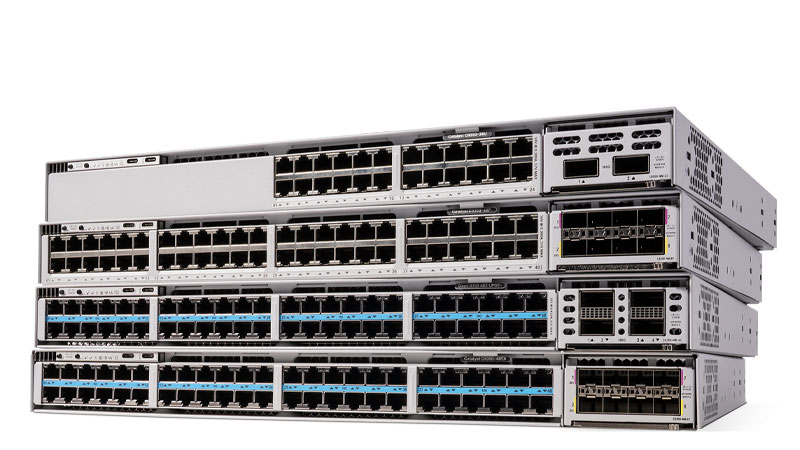
The Cisco Catalyst 2960-L 16-port Gigabit PoE switch (PID WS-C2960L-16PS-LL) was the compact, fanless, LAN Lite workhorse that quietly powered IP phones, badge readers, wireless access points, and wiring-closet edge ports in tens of thousands of small sites. It is also now firmly inside the end-of-life runway: Cisco stopped selling it on 31 October 2021, ended software maintenance on 31 October 2022, and the Last Day of Support (LDoS) is 31 October 2026. If you still have these switches racked, the practical question is no longer whether to replace them, but how to do it cleanly before that final date and with the least disruption to a production access layer.
What this specific switch is and why its EoL matters
The WS-C2960L-16PS-LL is a fixed-configuration Layer 2 access switch: 16 x 10/100/1000 PoE/PoE+ downlinks, 2 x 1G SFP uplinks, a 36 Gbps switching fabric, and roughly 27 Mpps forwarding. It carries a 124 W PoE power budget, which in real terms means it can deliver full 802.3at PoE+ (30 W) to about four ports, or 802.3af (15.4 W) class power to roughly eight, before the budget runs dry. It runs the LAN Lite feature set on IOS (not IOS-XE), so it is deliberately limited: no routing beyond a single SVI for management, no stacking, no SNMPv3 on some trains, and a constrained ACL and QoS feature set compared with LAN Base. Fanless and silent, it was designed for offices, classrooms, clinics, and retail back rooms rather than the data center.
After LDoS on 31 October 2026, three things stop. First, Cisco PSIRT will no longer issue security fixes for this platform, so any new vulnerability disclosed against its IOS train stays permanently open on your network. Second, TAC will not take support cases, and hardware RMA ends, so a dead unit becomes scrap rather than a four-hour replacement. Third, and most consequential for our federal, DoD, SLED, and healthcare customers, an unsupported switch that can no longer receive patches becomes a documented audit finding. Frameworks such as FISMA/NIST 800-53 (SI-2, flaw remediation), CMMC, HIPAA Security Rule, and PCI DSS all expect vendor-supported, patchable infrastructure. An EoL switch on a CISA-scrutinized network is exactly the kind of item that turns up in an assessment and stalls an ATO.
What each milestone date means in practice
- End of Sale (31 Oct 2021): Cisco stopped taking new orders. Any unit you can still buy is used, refurbished, or new-old-stock, fine for a stopgap, but not a long-term answer.
- End of Software Maintenance (31 Oct 2022): the last maintenance IOS release shipped. Every CVE published against this platform since then is unpatched and will stay that way.
- Last Day of Support / LDoS (31 Oct 2026): the end of the line. SmartNet/contract coverage cannot be renewed past it, TAC closes the door, and RMA stops. Plan your cutover to complete before this date with margin.
The recommended replacement: Catalyst 1000 C1000-16P-2G-L
Cisco's direct successor for this entry-class slot is the Catalyst 1000 series, specifically the C1000-16P-2G-L: 16 x 1G PoE+ ports, 2 x 1G SFP uplinks, the LAN Base (the '-L' suffix) feature set. It is the closest like-for-like, but it is a meaningful upgrade in the ways that count for an edge switch. The PoE budget jumps to 120 W on this model's standard configuration, and the broader Catalyst 1000 line offers higher-budget SKUs if you have grown your PoE load, important if your closet has added Wi-Fi 6 access points, multi-cell phones, or PTZ cameras since the 2960-L was installed. The C1000 is also fanless in the lower-port-count models, preserving the silent-operation property that made the 2960-L closet-friendly.
Concrete upgrades over the 2960-L LAN Lite
- Feature set: LAN Base on the C1000-16P-2G-L unlocks capabilities LAN Lite never had, static and connected routing with multiple SVIs, richer ACLs and QoS, IGMP/MLD snooping enhancements, and more capable SNMPv3 and security tooling. This alone resolves many of the workarounds teams built around LAN Lite limits.
- Stacking: the 2960-L LAN Lite had no stacking at all. Catalyst 1000 supports Cisco StackWise (up to 8 units / 80 Gbps on supported models) so you can collapse a closet of standalone switches into one managed logical unit, fewer management IPs, single config, faster failover.
- Power: a higher and more flexible PoE+ budget, with Perpetual PoE and Fast PoE on the line so powered devices stay up or come back instantly through a switch reload, valuable for phones and door controllers.
- Security and lifecycle: the C1000 runs a current, actively patched software train, restoring your ability to remediate CVEs and stay inside SI-2 / continuous-monitoring obligations.
- Uplinks: still 2 x 1G SFP here, so your existing 1G fiber or copper SFP optics and patching are reused as-is. If you need more headroom at the closet uplink, the broader Catalyst 1000 family includes SKUs with 10G SFP+ uplinks worth specifying during design.
A practical migration plan
1. Assessment and inventory
Pull an accurate count first. Use 'show inventory' and 'show version' across the fleet (or your NMS/Catalyst Center export) to find every WS-C2960L-16PS-LL, its IOS train, serial, and SmartNet status. For each, record actual PoE draw ('show power inline'), VLAN assignments, and uplink optics. The key sizing question: does any closet now exceed the 2960-L's old 124 W budget? If so, that closet should move to a higher-PoE Catalyst 1000 SKU rather than the 120 W 16P model.
2. Config and feature parity
The 2960-L runs IOS; the Catalyst 1000 runs IOS, so most CLI translates closely, VLANs, trunks, voice VLANs, port-security, BPDU guard, and storm control port over with minor syntax cleanup. Because you are moving from LAN Lite to LAN Base, audit for features you previously could not run and decide whether to adopt them now (e.g., a routed SVI to offload an inter-VLAN hairpin). Build the new configs offline, diff them against the running configs, and stage them so each switch is a drop-in.
3. License transition
There is no DNA subscription to migrate for this tier, LAN Base ships with the C1000-16P-2G-L. Confirm at PO time that the device registers to your Smart Account (CSSM) for entitlement and warranty tracking, and that any organization-wide Smart Licensing reservation or on-prem SSM satellite (common in air-gapped DoD environments) is accounted for in the order.
4. Physical: rack, power, PoE, uplinks, optics, stacking
- Rack: both are compact 1RU-class fixed switches; reuse the same rack space and mounting. Verify rail/bracket kits, as the C1000 ships its own.
- Power: confirm the closet circuit and UPS can carry the higher PoE budget if you are loading more powered devices.
- Optics: the 2 x 1G SFP cages accept your existing Cisco-coded 1G SFPs (GLC-SX-MMD, GLC-LH-SMD, GLC-TE, etc.), no optic refresh needed for a 1G uplink design.
- Stacking: if consolidating, order StackWise cables and plan the stack member order and priorities before install.
5. Phased cutover
Pilot one non-critical closet first. Pre-stage the C1000 with its config, label uplinks, then swing fiber and access ports during a maintenance window. Validate PoE comes up on phones/APs ('show power inline'), spanning-tree converges, voice VLAN and DHCP work, and the uplink trunk passes the right VLANs. Once the pilot is clean, roll site by site so you always have a known-good rollback.
6. Secure decommission
Do not let a retired switch leave the building with its config intact. Erase startup-config and VLAN database ('write erase', 'delete flash:vlan.dat', reload), then for federal/DoD assets follow your media-sanitization policy (NIST 800-88) and capture certificates of destruction or sanitization. Update CMDB and asset records so the EoL units drop out of your monitoring and audit scope.
Procurement notes for government and enterprise buyers
For TAA-sensitive contracts, confirm country-of-origin on the C1000-16P-2G-L at quote time, Catalyst 1000 country of origin is confirmed per part number at quote time, and we provide the country-of-origin documentation your contracting office needs for the specific SKU you order. Government Purchase Card (GPC/micro-purchase) orders are straightforward at this price tier. Entry switches generally carry shorter lead times than high-end Catalyst 9000 gear, but plan a buffer ahead of the October 2026 LDoS surge, when demand for these refreshes spikes. Source only from an authorized Cisco partner so units arrive new, in-warranty, registered to your Smart Account, and eligible for support, gray-market hardware fails both the warranty and the compliance test.
Check your exact units and dates on the WS-C2960L-16PS-LL end-of-life detail page, browse the broader timeline on our Cisco EoL hub, and see the replacement specs and availability in the catalog. When you are ready to size and price the refresh, get a quote and we will build a TAA-compliant bill of materials mapped one-for-one to your installed base.
Frequently asked questions
When does the Cisco WS-C2960L-16PS-LL reach end of support?
The Last Day of Support (LDoS) is 31 October 2026. End of Sale was 31 October 2021 and end of software maintenance was 31 October 2022, so the platform has already received its final firmware. After LDoS there are no security patches, no TAC cases, and no hardware RMA.
What is the direct replacement for the WS-C2960L-16PS-LL?
Cisco's recommended successor is the Catalyst 1000 C1000-16P-2G-L: 16 x 1G PoE+ ports, 2 x 1G SFP uplinks, and the LAN Base feature set. It is a like-for-like form factor with a larger PoE budget, stacking support, and a current, patchable software train.
Will my existing 1G SFP optics and fiber work in the Catalyst 1000?
Yes. The C1000-16P-2G-L keeps the same 2 x 1G SFP uplink design, so Cisco-coded 1G optics such as GLC-SX-MMD, GLC-LH-SMD, and GLC-TE carry over and you reuse your existing fiber and patching. If you want 10G uplinks, a different Catalyst 1000 SKU with SFP+ cages can be specified instead.
Do I need a DNA or Smart Licensing subscription for the Catalyst 1000?
No. Unlike the Catalyst 9000 family, the Catalyst 1000 LAN Base feature set is included with the hardware, there is no separate DNA subscription to purchase or renew for this entry tier. You should still register the device to your Smart Account for warranty and entitlement tracking.
Why does an EoL switch matter for compliance and audits?
After LDoS, the switch can no longer receive PSIRT security fixes, so any newly disclosed vulnerability stays open permanently. Frameworks like NIST 800-53 (SI-2), CMMC, HIPAA, and PCI DSS expect vendor-supported, patchable infrastructure, so an unsupported switch becomes a documented audit finding that can stall an ATO or fail an assessment.
Can the Catalyst 1000 power the same devices as my old 2960-L?
Yes, and usually more. The C1000-16P-2G-L provides a 120 W PoE+ budget (versus 124 W on the 2960-L) plus Perpetual PoE and Fast PoE so powered devices ride through reloads. If your closet has grown with Wi-Fi 6 APs or PTZ cameras, a higher-budget Catalyst 1000 SKU may be the better fit, confirm your actual PoE draw during assessment.
Uniqcli Team
The Uniqcli Team is an authorized Cisco partner specializing in Catalyst wireless, switching, datacenter fabric, licensing, and managed services for U.S. federal, state, local, and education customers. We scope Cisco bills of materials, validate procurement paths (TAA, FIPS, contract vehicles), and deliver design, deployment, and managed operations.
Ready to scope your Cisco build?
Build a quoteRelated reading
View all →GuidesWS-C2960L-24PS-LL to Catalyst 1000 Migration Guide
Cisco WS-C2960L-24PS-LL hits Last Day of Support on Oct 31, 2026, here is a concrete plan to migrate to the Catalyst 1000 C1000-24P-4G-L before the patch and RMA window closes.
October 14, 2025 · 7 min read Guides
Cisco 2960-48TC-L EoL: Migrate to Catalyst 9200L 48-Port
The Catalyst 2960-48TC-L (WS-C2960-48TC-L) passed Last Day of Support on October 31, 2019. Here is why this Fast Ethernet LAN Base switch has to come out of the wiring closet, and how to refresh cleanly to the Catalyst 9200L 48-port C9200L-48T-4X-A.
June 9, 2026 · 8 min readGuidesCisco 2960-24TC-L EoL: Migrate to Catalyst 9200L Guide
The original Catalyst 2960-24TC-L (WS-C2960-24TC-L) passed Last Day of Support on October 31, 2019. Here's why this Fast Ethernet LAN Base switch must come out, and how to refresh cleanly to the Gigabit, PoE+ Catalyst 9200L-24P-4X.
June 7, 2026 · 7 min readGuidesWS-C2960X-24PS-L EoL: Migrate to Catalyst 9200L Guide
A practical, partner-built plan for replacing the end-of-sale Catalyst 2960-X 24-port PoE switch (WS-C2960X-24PS-L) with the Catalyst 9200L-24P-4G before the October 2027 last day of support.
October 20, 2025 · 7 min readGuidesCisco Meraki MS220-48LP EoL: Migrate to the MS225-48LP
The Meraki MS220-48LP passed Last Day of Support on July 29, 2024. Here is what that means for an operating fleet and how to refresh cleanly to the stackable MS225-48LP.
January 3, 2026 · 8 min read Guides
Cisco Nexus 5548P EoL: Migrate to Nexus 9300 (93180YC-FX3)
The Nexus 5548P passed Last Day of Support on September 30, 2020, no patches, no TAC, no RMA. Here is why it must come out of the rack and how to migrate cleanly to the Nexus 9300 (N9K-C93180YC-FX3).
May 27, 2026 · 8 min read