
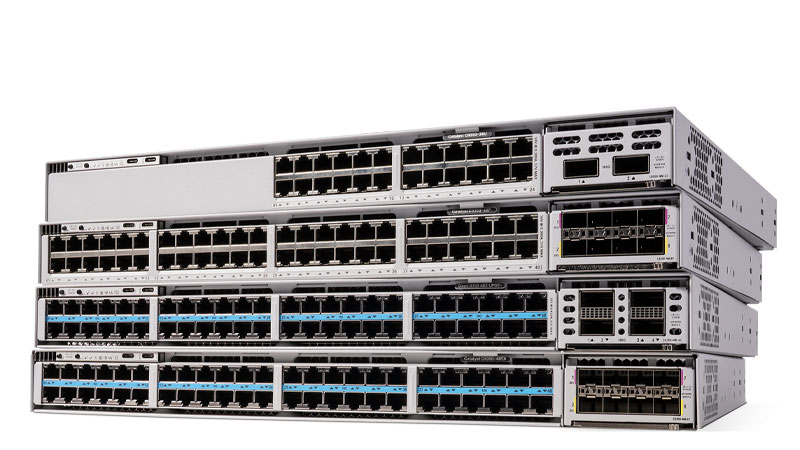
The Cisco Catalyst 2960-L 24-port GigE PoE switch (PID WS-C2960L-24PS-LL) was Cisco's entry-class fixed-configuration access switch for branch offices, retail closets, and small campus IDFs. It is now deep into its end-of-life cycle. Cisco stopped selling it on October 31, 2021, ended software maintenance on October 31, 2022, and will deliver the Last Day of Support on October 31, 2026. If this switch is still in your wiring closet, the window to refresh it on your own schedule is closing fast, and the replacement Cisco itself names is the Catalyst 1000 24-port GE PoE switch (C1000-24P-4G-L).
Why the WS-C2960L-24PS-LL end-of-life matters now
End-of-life is not an abstract calendar event. It changes what protection you can actually buy. Once a platform passes its software-maintenance milestone, Cisco PSIRT stops shipping fixes for newly disclosed vulnerabilities on that train. The 2960-L runs a Lite-feature IOS image (the LAN Lite license, hence the -LL suffix) that already froze its last patched maintenance release in 2022. Every CVE published against that code base since then is, for practical purposes, permanent on these boxes.
After the Last Day of Support on October 31, 2026, three things disappear at once: Cisco TAC will no longer open cases on the hardware, RMA hardware replacement under SmartNet ends, and there is no path to a security patch. For a switch that aggregates user ports, IP phones, and PoE endpoints, that combination is an audit liability. Frameworks that gate funding and accreditation, including FISMA, FedRAMP-adjacent control sets, CMMC for the defense industrial base, HIPAA Security Rule technical safeguards, and PCI-DSS requirement 6, all expect that network infrastructure can receive vendor security updates. An unsupported access switch is a finding waiting to be written up.
What each milestone date actually means
End of Sale, October 31, 2021
Cisco stopped taking new orders for the WS-C2960L-24PS-LL through normal channels on this date. You can still source units through authorized partners with remaining stock or certified inventory, but the clock on every downstream milestone started here.
End of Software Maintenance, October 31, 2022
This is the milestone most teams underestimate. After this date Cisco no longer produced scheduled maintenance rebuilds for the 2960-L IOS train. The final patched image is the ceiling. Any vulnerability disclosed afterward has no fixed release to upgrade into on this hardware.
Last Day of Support (LDoS), October 31, 2026
The terminal milestone. All Cisco-delivered support ends: TAC, RMA, and any remaining contract entitlement. SmartNet contracts cannot be renewed past LDoS. Plan to have replacements racked and cut over before this date, not on it.
The replacement: Catalyst 1000 C1000-24P-4G-L
Cisco positions the Catalyst 1000 series, not the Catalyst 9200, as the successor for entry-class LAN Lite switches like the 2960-L. That choice keeps you in the right price and feature tier rather than over-buying. The C1000-24P-4G-L is a near-perfect physical and functional match: 24 x 10/100/1000 (GigE) downlink ports, 4 x 1G SFP fixed uplinks, and PoE+ support, in the same compact fanless-class 1RU form factor that lets it drop straight into the existing rack space and uplink pattern.
What is concretely better
- PoE+ budget headroom: the C1000-24P-4G-L delivers a 195W PoE/PoE+ power budget across its 24 ports, comfortably driving IEEE 802.3at (PoE+, up to 30W/port) devices such as 802.11ac/Wi-Fi 6 access points, video phones, and PTZ cameras that the older 2960-L PoE class strained to support.
- Larger forwarding tables and buffers: a deeper switching fabric, larger MAC address table, and more packet buffering than the entry 2960-L silicon, which matters as branch endpoint density and IoT counts climb.
- A real feature step-up at the same tier: the Catalyst 1000 LAN Base-class image adds capabilities the 2960-L LAN Lite never had, including richer Layer 2 security (DHCP snooping, Dynamic ARP Inspection, IP Source Guard), more capable QoS, IPv6 first-hop security, and basic static/RIP IPv4 routing for small inter-VLAN needs.
- Modern, perpetual licensing: licensing is simplified and embedded rather than the rigid LAN Lite SKU model of the 2960-L. There is no DNA/subscription add-on required for base operation; you buy the switch and the feature set is included, which keeps procurement and renewals clean.
- Longer support runway: a current-generation platform resets your lifecycle clock, restoring TAC, RMA, and an active PSIRT patch stream for years instead of zero.
A practical migration plan
1. Assess and inventory
Pull a precise count of every WS-C2960L-24PS-LL in service: location, IDF, current IOS version, uplink optics in use (1G SFP type), actual PoE draw, and which downstream endpoints are PoE+ versus PoE. Confirm whether any port relies on features the LAN Lite image lacked so you can plan to enable the C1000 equivalents. Use our Cisco EoL hub to cross-check related gear in the same closet that may be aging out on a similar timeline.
2. License and config parity
Because the Catalyst 1000 includes its feature set perpetually, there is no license to transfer or activate for base operation. Export the running config from each 2960-L and map it to IOS-XE-style equivalents: VLANs, trunking, voice VLAN, port security, spanning-tree, and SNMP/management. The C1000 syntax is close to classic IOS, so most access-layer configs translate with minimal change. Validate the few areas where the 2960-L was limited (it could not do DHCP snooping or DAI; build those in deliberately as a security upgrade).
3. Physical fit
The C1000-24P-4G-L matches the 2960-L's 1RU footprint and 4 x 1G SFP uplink layout, so rack rails, PDU outlets, and fiber runs typically carry over. Confirm your existing 1G SFP optics are on the Catalyst 1000 compatibility matrix before reusing them, and verify the 195W PoE+ budget covers your endpoint load with margin. No stacking cabling is required for these standalone access units.
4. Phased cutover
Stage and pre-configure each replacement on the bench, then cut over IDF by IDF during a maintenance window. Move uplinks and verify routing/STP convergence, then migrate access ports in batches, watching PoE negotiation and phone/AP registration. Keep the old switch powered and reversible until the new one is verified, then retire it.
5. Secure decommission
Wipe each retired 2960-L (erase startup-config and VLAN database, clear any stored credentials and certificates) before it leaves the rack. For federal and DoD environments, follow your organization's media-sanitization policy (NIST SP 800-88 guidance) and document chain of custody for asset disposal.
Procurement notes for government and enterprise buyers
Source the C1000-24P-4G-L through an authorized Cisco partner to guarantee genuine, warrantied hardware and a clean support entitlement, not gray-market stock. As an authorized partner, uniqcli supplies TAA-compliant product for federal contract use, accepts the Government Purchase Card (GPC) for micro-purchases, and can confirm current lead times so you are not caught short against the October 2026 LDoS. Build in buffer: entry-class switches move quickly and refresh demand spikes as LDoS approaches. You can review the replacement and check availability in our catalog, and see the full lifecycle detail for this exact unit on the WS-C2960L-24PS-LL EoL page.
Ready to scope the refresh? Get a replacement quote and we will size the right Catalyst 1000 count, confirm TAA compliance and GPC eligibility, and lay out a low-risk cutover before support ends.
Frequently asked questions
When is the Cisco WS-C2960L-24PS-LL end of life and end of support?
End of Sale was October 31, 2021, End of Software Maintenance was October 31, 2022, and the Last Day of Support (LDoS) is October 31, 2026. After LDoS there are no Cisco TAC cases, no RMA replacements, and no new security patches for this LAN Lite switch.
What is the recommended replacement for the WS-C2960L-24PS-LL?
Cisco names the Catalyst 1000 24-port GE PoE switch, PID C1000-24P-4G-L, as the successor. It matches the original 24 GigE downlinks and 4 x 1G SFP uplinks, adds a 195W PoE+ budget, includes a richer feature set perpetually, and resets your support lifecycle. Cisco migrates this entry-class switch to the Catalyst 1000 rather than the Catalyst 9200.
Do I need a DNA or Smart Licensing subscription for the Catalyst 1000 replacement?
No. The C1000-24P-4G-L ships with its feature set embedded and perpetual, so there is no recurring DNA Center subscription required for base switching. This differs from the older 2960-L LAN Lite fixed-license model and keeps procurement simple. Smart Licensing and DNA tiers only apply if you move to the Catalyst 9000 family.
Can I reuse my existing 1G SFP optics and rack space when migrating?
Usually yes. The C1000-24P-4G-L keeps the same 1RU footprint and 4 x 1G SFP uplink layout as the 2960-L, so rack rails, power, and fiber runs typically carry over. Confirm your specific SFP modules are on the Catalyst 1000 optics compatibility matrix before reusing them, and verify the 195W PoE+ budget covers your endpoint load.
What are the compliance risks of running the 2960-L past its Last Day of Support?
After October 31, 2026 the switch can no longer receive Cisco security patches, which conflicts with control sets in FISMA, CMMC, HIPAA, and PCI-DSS that expect vendor-supported, patchable infrastructure. An unsupported access switch is a likely audit finding, and a hardware failure means no RMA path. Refreshing to a supported Catalyst 1000 removes that exposure.
Uniqcli Team
The Uniqcli Team is an authorized Cisco partner specializing in Catalyst wireless, switching, datacenter fabric, licensing, and managed services for U.S. federal, state, local, and education customers. We scope Cisco bills of materials, validate procurement paths (TAA, FIPS, contract vehicles), and deliver design, deployment, and managed operations.
Ready to scope your Cisco build?
Build a quoteRelated reading
View all →GuidesWS-C2960L-16PS-LL EoL: Migrate to Catalyst 1000 C1000-16P-2G-L
A practical refresh guide for replacing the end-of-life Catalyst 2960-L 16-port PoE LAN Lite switch (WS-C2960L-16PS-LL) with the Catalyst 1000 C1000-16P-2G-L before support ends 31 October 2026.
October 13, 2025 · 8 min readGuidesWS-C2960S-48TS-L End of Life: Migration Guide to the 2960-X
The Catalyst 2960-S 48-port LAN Base hit Last Day of Support in November 2020, here is exactly why to refresh now and how to migrate cleanly to its successor.
October 18, 2025 · 9 min readGuidesCisco Meraki MS220-48LP EoL: Migrate to the MS225-48LP
The Meraki MS220-48LP passed Last Day of Support on July 29, 2024. Here is what that means for an operating fleet and how to refresh cleanly to the stackable MS225-48LP.
January 3, 2026 · 8 min read Guides
Cisco 2960-48TC-L EoL: Migrate to Catalyst 9200L 48-Port
The Catalyst 2960-48TC-L (WS-C2960-48TC-L) passed Last Day of Support on October 31, 2019. Here is why this Fast Ethernet LAN Base switch has to come out of the wiring closet, and how to refresh cleanly to the Catalyst 9200L 48-port C9200L-48T-4X-A.
June 9, 2026 · 8 min readGuidesWS-C2960X-24PS-L EoL: Migrate to Catalyst 9200L Guide
A practical, partner-built plan for replacing the end-of-sale Catalyst 2960-X 24-port PoE switch (WS-C2960X-24PS-L) with the Catalyst 9200L-24P-4G before the October 2027 last day of support.
October 20, 2025 · 7 min read Guides
Cisco Meraki MR26 EoL: Migrate to Catalyst CW9164I
The Meraki MR26 passed Last Day of Support on May 9, 2023, it gets no PSIRT fixes, no firmware, and no RMA. Here is what that means for an 802.11n fleet still in your ceilings and how to refresh cleanly to the Wi-Fi 6E Catalyst CW9164I on the Meraki dashboard.
March 30, 2026 · 9 min read