
Cisco Nexus 56128P EoL: Migrate to Nexus 9300 93360YC-FX2
The Nexus 56128P (N5K-C56128P) hit Last Day of Support on September 30, 2025. Here's what each lifecycle date means and how to refresh cleanly to the Nexus 9300 93360YC-FX2 with 25G/100G and MACsec.
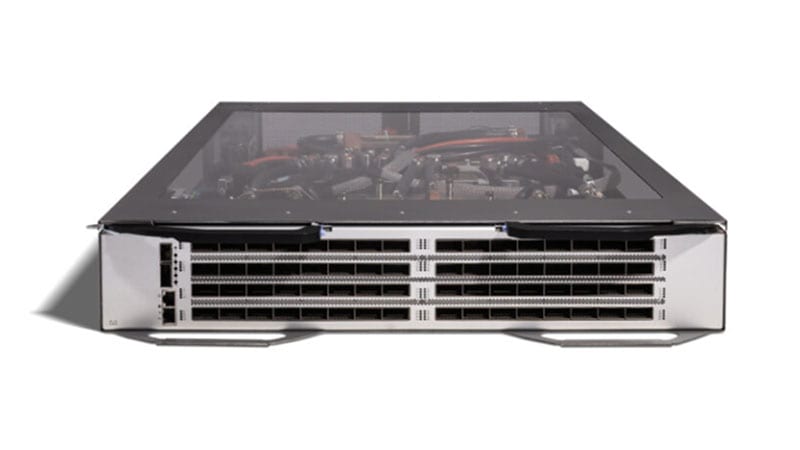
If you still have Cisco Nexus 56128P switches (PID N5K-C56128P) carrying production traffic in a data center or top-of-rack aggregation role, you are now operating past every Cisco lifecycle milestone that matters. The 56128P reached its Last Day of Support on September 30, 2025. From that date forward Cisco provides no software maintenance, no PSIRT security fixes, and no TAC or RMA hardware replacement for this platform. The boxes still forward frames at line rate, which is precisely why they tend to linger in racks long after the support floor has dropped out from under them. This guide explains what the end-of-life dates mean for a switch that is still in service, why the Nexus 9300 N9K-C93360YC-FX2 is a genuine generational upgrade rather than a like-for-like swap, and how to plan a controlled refresh.
What the Nexus 56128P actually was
The Nexus 56128P (N5K-C56128P) was a 2RU member of the Nexus 5600 family built around unified ports. The base chassis shipped with 48 fixed 1/10G SFP+ ports plus four fixed 40G QSFP+ uplinks, and it accepted two expansion modules (GEMs) to scale toward 128 ports of 10G in a dense leaf or unified fabric aggregation design. Its defining feature was the unified port: every front-panel port could be provisioned as Ethernet/FCoE or native Fibre Channel, which made it a natural fit for converged storage and LAN fabrics in the 5600 era. It ran NX-OS, supported FEX fan-out (Nexus 2000 fabric extenders), Layer 3 routing via an installed L3 module, and line-rate Layer 2/Layer 3 with sub-microsecond latency. For 2015-era 10G server access and FCoE convergence it was a strong box. Against today's 25G servers and 100G spines, it is a 10G/40G ceiling and a fixed-function ASIC that newer telemetry, segmentation, and encryption features have moved past.
Why acting now matters
The risk with an end-of-life data-center switch is not that it stops working. It is that it keeps working while everything that makes it safe to run quietly disappears. After LDoS, three exposures stack up fast on a platform that sits at the aggregation point of a fabric:
- No PSIRT security patches. When a new NX-OS vulnerability is disclosed, the 56128P will not receive a fixed image. Its software is frozen at the September 2021 maintenance cutoff, so any CVE touching that code path on this hardware is permanent and unremediable by patching. For an aggregation switch that sees most of a fabric's traffic, that is a high-value, unpatchable target.
- No TAC or RMA. A failed supervisor, fan, or PSU cannot be opened as a Cisco support case or swapped under contract. Recovery depends entirely on cold spares you bought before LDoS or a secondary-market unit of the same dead-end platform.
- Audit and compliance exposure. The frameworks federal, DoD, SLED, and healthcare buyers operate under (FedRAMP, CMMC 2.0, NIST 800-53, the HIPAA Security Rule, PCI DSS, and CISA BOD directives) expect supported, patchable infrastructure. An unsupported core switch that cannot be patched is an assessment finding, and "the vendor no longer ships fixes" is not a defensible remediation.
There is also a fabric-aging trap. As you modernize spines to 100G and servers to 25G, a 10G/40G unified-port leaf becomes the constraint that holds the whole design back. The 56128P ages out together with the FEX fabric and the converged-FCoE pattern it was built to serve.
What each milestone means in practice
- End of Sale (2020-09-09): the last day Cisco accepted new orders for the 56128P. Everything after this date is consuming the support tail.
- End of Software Maintenance (2021-09-09): the last day Cisco released maintenance and bug-fix NX-OS images for the platform. After this, even non-security defects go unfixed.
- Last Day of Support / LDoS (2025-09-30): the hard wall. No TAC, no RMA, no software of any kind. The hardware is fully on its own.
The recommended replacement: Nexus 9300 N9K-C93360YC-FX2
Cisco's bulletin directs 56128P customers to the Nexus 9300, specifically the N9K-C93360YC-FX2. This is a Cloud Scale ASIC fixed switch and the jump from the 5600 generation is substantial. The 93360YC-FX2 delivers 96 ports of 1/10/25G SFP28 plus 12 ports of 40/100G QSFP28 in a 2RU footprint, roughly 7.2 Tbps of switching capacity, and it runs either standalone NX-OS or as an ACI leaf. Concretely, where it beats the 56128P:
- 25G to the server, 100G to the spine. The 56128P topped out at 10G access and 40G uplinks. The 93360YC-FX2 makes 25G the access default and gives you native 100G uplinks, so a single leaf supports modern NIC speeds and a 100G spine without an architecture rework.
- Line-rate MACsec encryption. The FX2 supports 256-bit MACsec on its ports, giving you wire-speed link encryption for data-in-motion. That maps directly onto the encryption-in-transit controls federal, DoD, and healthcare buyers must satisfy, and it is something the 56128P simply could not do.
- Modern telemetry and segmentation. The Cloud Scale ASIC enables streaming telemetry, flow analytics (via Nexus Dashboard / Tetration-class tooling), and VXLAN/EVPN fabrics at scale, replacing the FabricPath/FCoE patterns the 5600 was designed around.
- Density and power. Getting 96x25G + 12x100G in 2RU collapses what previously took a 56128P plus FEX fan-out, reducing rack units, cabling, and power draw per usable port.
Licensing: the model has changed
The 56128P era used feature-based NX-OS licenses (LAN Enterprise, Storage/FCoE, Layer 3) installed per chassis. The Nexus 9300 uses Cisco Smart Licensing tracked through your Smart Account, with NX-OS tiers (Essentials, Advantage) and an optional Day-2 Operations add-on, or ACI licensing if you deploy under an APIC fabric. Budget for the subscription term and confirm the Smart Account is provisioned before deployment so switches register and license cleanly. This is a procurement line item that did not exist on the 56128P, and it is the most commonly missed item in a Nexus refresh.
A practical migration plan
1. Assessment and inventory
Pull an exact count of N5K-C56128P chassis and document each one: installed GEM modules and L3 capability, attached FEX (Nexus 2000) units, port roles (10G access vs 40G uplink vs FC/FCoE), VLAN/VRF and VPC peer relationships, optics and breakout cabling, and current NX-OS version. Flag any 56128P co-located with other EoL Nexus 5600 gear so you size one combined refresh, not several. Confirm whether native FC/FCoE is in use on any port.
2. Design and feature parity
Map every 56128P feature onto the 9300 target. VPC, L3 routing, and FEX aggregation carry forward, but FabricPath and unified-port FC do not map one-to-one. Decide the operating model (standalone NX-OS with VXLAN/EVPN, or ACI under APIC), redesign uplinks for 100G, and convert 10G access designs to 25G where servers support it. Build the new running-config against NX-OS 10.x conventions rather than porting the old config verbatim.
3. Physical: rack, power, optics, cabling
The 93360YC-FX2 is 2RU like the 56128P, but the optics change: SFP28 (25G), QSFP28 (100G), and breakout cables replace the older SFP+ and 40G QSFP+ inventory. Re-spec optics and DACs to the new port speeds, verify per-rack power and airflow direction (port-side intake vs exhaust) match your hot/cold aisle, and stage structured cabling for 100G uplinks ahead of cutover.
4. Phased cutover
Stand the new 9300 pair up in parallel as a VPC domain, bring up uplinks to the spine, then migrate access connections rack by rack or pod by pod during maintenance windows rather than in a single flag day. Validate VPC consistency, routing adjacency, and MACsec on encrypted links before shifting production load. Keep the 56128P in place as a rollback path until each migrated segment is proven stable.
5. Secure decommission
Once traffic is fully migrated, erase NX-OS configuration and any stored credentials or keys from the 56128P, record serials for asset and audit closure, and dispose through a process appropriate to your data classification. For federal and DoD environments follow your sanitization standard (for example NIST 800-88) before the hardware leaves the facility.
Procurement notes for regulated buyers
Replacement Nexus 9300 hardware for federal, DoD, and SLED programs should be sourced TAA-compliant and GPC-payable through an authorized Cisco partner. Lead times on 9300 platforms and the matching SFP28/QSFP28 optics can stretch during demand spikes, so place orders against your migration timeline rather than at cutover. As an authorized partner, uniqcli can quote the N9K-C93360YC-FX2, the correct Smart Licensing tier, and the optics and DAC bill of materials as one package, and confirm TAA compliance and contract vehicle eligibility up front. You can browse current data-center switching options in our catalog, review every milestone on the 56128P EoL detail page, or see the full lifecycle index at Cisco EoL. When you're ready to scope the refresh, get a quote and we'll build a parity-checked replacement BOM with licensing and optics included.
Frequently asked questions
When does the Cisco Nexus 56128P reach end of support?
The Nexus 56128P (N5K-C56128P) reached its Last Day of Support (LDoS) on September 30, 2025. End of Sale was September 9, 2020 and End of Software Maintenance was September 9, 2021. After LDoS, Cisco provides no TAC support, no RMA hardware replacement, and no software or security fixes for the platform.
What is the recommended replacement for the Nexus 56128P?
Cisco's bulletin directs 56128P customers to the Nexus 9300, specifically the N9K-C93360YC-FX2. It provides 96 ports of 1/10/25G SFP28 and 12 ports of 40/100G QSFP28 in 2RU, with line-rate MACsec encryption, Cloud Scale telemetry, and a choice of standalone NX-OS or ACI operation.
How is the Nexus 9300 93360YC-FX2 better than the 56128P?
It moves access from 10G to 25G and uplinks from 40G to 100G, adds 256-bit MACsec link encryption the 56128P could not do, supports VXLAN/EVPN fabrics and streaming telemetry via the Cloud Scale ASIC, and delivers roughly 7.2 Tbps in the same 2RU footprint while collapsing the FEX fan-out the 5600 design relied on.
What happens to FCoE and Fibre Channel when migrating off the 56128P?
The 56128P used unified ports that could run native FC/FCoE; the Nexus 9300 is an Ethernet/IP-storage platform. You should plan to move storage to NVMe/TCP or iSCSI over the new Ethernet fabric, or keep dedicated SAN on Cisco MDS. Decide this before cutover, because it is the most significant design change in a 56128P refresh.
Is the Nexus 9300 replacement TAA-compliant for federal and DoD buyers?
TAA status is determined per part number and lot, so confirm it on the specific N9K-C93360YC-FX2 units and optics before ordering. As an authorized Cisco partner, uniqcli can verify TAA compliance and country of origin, and source GPC-payable hardware with the correct Smart Licensing tier and SFP28/QSFP28 optics quoted as one package. Order against your migration timeline, since 9300 hardware and 25G/100G optics can carry extended lead times.
Uniqcli Team
The Uniqcli Team is an authorized Cisco partner specializing in Catalyst wireless, switching, datacenter fabric, licensing, and managed services for U.S. federal, state, local, and education customers. We scope Cisco bills of materials, validate procurement paths (TAA, FIPS, contract vehicles), and deliver design, deployment, and managed operations.
Ready to scope your Cisco build?
Build a quoteRelated reading
View all →GuidesCisco Nexus 5696Q EoL: Migrate to Nexus 93360YC-FX2
The Nexus 5696Q (N5K-C5696Q) hits Last Day of Support on May 31, 2026. Here is why the 4RU chassis must come out and how to migrate cleanly to the fixed 2RU Nexus 93360YC-FX2 with 25/100G and MACsec.
February 7, 2026 · 9 min readGuidesCisco Nexus 6001-64T EoL: Migrate to Nexus 93180YC-FX3
The Nexus 6001-64T (N6K-C6001-64T) passed Last Day of Support on April 30, 2022. Here is what each milestone means, why the 10GBASE-T top-of-rack switch has to come out, and how to refresh cleanly to the Cloud Scale Nexus 93180YC-FX3.
April 19, 2026 · 7 min read Guides
Cisco Nexus 5548P EoL: Migrate to Nexus 9300 (93180YC-FX3)
The Nexus 5548P passed Last Day of Support on September 30, 2020, no patches, no TAC, no RMA. Here is why it must come out of the rack and how to migrate cleanly to the Nexus 9300 (N9K-C93180YC-FX3).
May 27, 2026 · 8 min readGuidesCisco Nexus 9396TX EoL: Migrate to the 93180YC-FX3
The Nexus 9396TX (N9K-C9396TX) passed its Last Day of Support on April 30, 2023. Here is a practical, spec-driven plan to refresh this 10GBASE-T leaf onto the Nexus 93180YC-FX3, covering the milestone dates, what is concretely better, and a phased migration that keeps your fabric supported and audit-clean.
April 1, 2026 · 8 min readGuidesNexus 5672UP-16G EoL: Migration to Nexus 9300 93180YC-FX
The Nexus 5672UP-16G reaches Last Day of Support on May 31, 2026, here's why it has to come out and how to migrate cleanly to the 25G/100G Nexus 9300 (N9K-C93180YC-FX).
February 5, 2026 · 10 min readGuidesNexus 5596UP (N5K-C5596UP) EoL: Migrate to Nexus 9300
The Nexus 5596UP hit Last Day of Support on May 31, 2024, no PSIRT patches, no TAC, no RMA. Here is what each EoL milestone means and how to migrate this 10GbE/FCoE aggregation switch to the Nexus 9300 series cleanly.
February 1, 2026 · 8 min read