
Cisco Meraki MS420-48 EoL: Migrate to the MS425-32
The MS420-48 passed Last Day of Support on October 31, 2023. Here is why this 48-port 10G aggregation switch has to come out, and how to migrate cleanly to the Meraki MS425-32 with no loss of capacity or visibility.
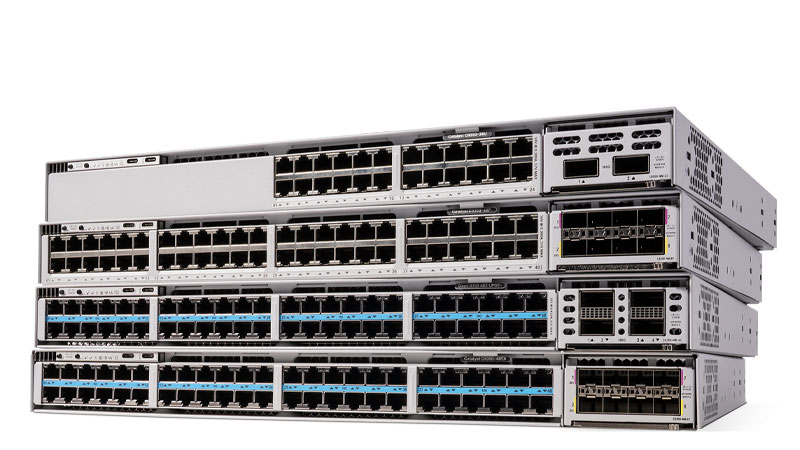
If a Cisco Meraki MS420-48 (PID MS420-48-HW) is still anchoring an aggregation layer or collapsed core anywhere in your network, it is now past every Cisco lifecycle milestone that matters. The MS420-48 reached its Last Day of Support on October 31, 2023. From that date forward Cisco provides no firmware updates, no PSIRT security fixes, and no TAC or RMA hardware replacement for this model. The switch still forwards packets at line rate, which is exactly why these units quietly persist in production long after they should have been retired. This guide explains what the end-of-life dates actually mean for a switch sitting in the data path, why the recommended Meraki MS425-32 is the right successor for this specific switch class, and how to plan a clean cutover that does not strand your distribution or access layer.
What the MS420-48 actually was
The MS420-48 was Meraki's high-density Layer 3 aggregation switch: 48 ports of 10 Gigabit SFP+, fully cloud-managed through the Meraki dashboard, with hardware Layer 3 routing (static routes, OSPF, ACLs, DHCP relay, and warm-spare gateway redundancy). It was a fiber-first box, every port is SFP+, so it took 10G fiber and DAC links from distribution switches, hypervisor hosts, and storage, with no built-in copper or multigigabit access ports. Power was modular with field-replaceable supplies and fans, and it provided non-blocking switching across its 48 ports. In 2014–2016 it was a sensible way to collapse a 10G aggregation tier under single-pane cloud management instead of a CLI-driven chassis. What it never had, by design, were 40G/100G uplinks or physical stacking, every uplink was just another 10G SFP+ port, and resiliency was built from warm-spare pairs rather than a stacked virtual chassis.
Why acting now matters
The dangerous part of an end-of-life aggregation switch is not that it stops working. It is that it keeps forwarding traffic while the support floor disappears beneath it, and an aggregation switch sits in the path of everything below it, so its blast radius is the whole closet or pod. Three concrete exposures stack up after LDoS:
- No PSIRT security fixes. When a new vulnerability is disclosed in the switching firmware, dashboard agent, or a protocol stack the MS420-48 runs, it will not receive a fixed image. Its firmware is frozen at the end-of-support cutoff, so any applicable CVE on that code is permanent and unpatchable.
- No TAC or RMA. A failed MS420-48 cannot be opened as a support case or swapped under contract. Your only recovery is a spare you bought before LDoS or a gray-market unit of the same dead-end model, and a hard failure at the aggregation layer takes everything downstream of it with it.
- Audit and compliance exposure. The frameworks that federal, DoD, SLED, and healthcare buyers operate under, FedRAMP, CMMC, the HIPAA Security Rule, PCI DSS, and CISA directives, assume supported, patchable infrastructure. NIST 800-53 SI-2 (flaw remediation) and its equivalents presume the vendor still ships fixes. An unsupported core/aggregation switch that cannot be patched is a finding waiting to happen, and 'the vendor no longer issues updates' is not a defensible remediation plan for an Authority to Operate or a PCI attestation.
There is also a dashboard trap unique to cloud-managed Meraki gear. Past LDoS, an EoL switch can lose the ability to claim a current license SKU, can be excluded from new firmware trains your other switches are moving to, and can eventually fall out of dashboard manageability entirely. As you modernize the rest of the network the MS420-48 becomes the one device holding the whole org back on an old firmware baseline.
What each milestone means in practice
- End of Sale (2016-10-31): the last day Cisco/Meraki accepted new orders for the MS420-48. Everything after this date has been running on the support tail.
- End of Software Maintenance: Meraki does not publish a separate per-model maintenance-release date the way IOS-XE platforms do, because firmware is pushed centrally from the cloud. In practice, maintenance for this hardware was wound down on the path to LDoS.
- Last Day of Support / LDoS (2023-10-31): the hard wall. No TAC, no RMA, no firmware or security fixes, and no guaranteed dashboard support. The hardware is on its own from this date.
The recommended replacement: Meraki MS425-32
Cisco's migration guidance routes the MS420 line to the MS425 aggregation family, the MS425-16 for smaller aggregation needs and the MS425-32 (PID MS425-32-HW) as the direct successor to the 48-port MS420-48. The MS425-32 keeps the model you already operate (cloud-managed, Layer 3, fiber SFP+ aggregation) and modernizes the parts that matter for a switch in this role:
- 32 x 10G SFP+ plus real 40G uplinks. Rather than burning 10G ports for uplinks, the MS425-32 provides dedicated 40G QSFP+ uplink ports. You aggregate distribution/access at 10G and connect northbound to the core at 40G, a four-fold uplink jump the all-10G MS420-48 simply could not provide.
- Physical stacking over 40G. The MS425 uses its 40G QSFP+ ports for high-bandwidth physical stacking, so two units form a resilient, single-managed logical aggregation pair with cross-stack link aggregation. The MS420-48 had no physical stack at all; it relied on warm-spare pairing only. This is the single biggest architectural upgrade for an aggregation tier.
- Carrier-class redundancy. The MS425-32 ships with dual hot-swappable, load-sharing power supplies and redundant hot-swappable fan trays, so a PSU or fan failure does not drop the aggregation switch, a meaningful step up for a device the whole pod depends on.
- Same operating model, longer runway. It is managed in the same Meraki dashboard, supports the same Layer 3 feature set (OSPF, static routing, ACLs, DHCP, warm spare/VRRP-style gateway redundancy), and lands you on current, supported, actively-patched firmware with years of support ahead instead of a frozen baseline.
Licensing: per-switch Meraki, plan the term
Meraki licensing is subscription-based and tied to the device for the life of the license. The MS425 is licensed per switch under the Meraki MS license model (Enterprise or, where you want the richer routing and analytics feature set, Advanced), co-terminated against your existing dashboard organization. Budget for the subscription term, not just the hardware, and decide up front whether you co-terminate the new MS425 licenses to your existing org expiry date or start fresh. Confirm your Meraki dashboard organization and license entitlement are provisioned before the switch arrives so it claims and comes online cleanly, this is the most common thing teams forget on a Meraki refresh.
A practical migration plan
1. Assessment and inventory
Pull an exact count of MS420-48-HW units and their role (aggregation, collapsed core, or distribution). For each, export from the dashboard the full port map: which SFP+ ports are in use, the optics/DAC type per port (10GBASE-SR/LR, SFP+ DAC), VLAN and trunk configuration, Layer 3 interfaces and routes (OSPF areas, static routes, SVIs/gateway IPs), ACLs, DHCP relay, and any warm-spare pairing. Capture the physical layer too: rack location, redundant power feeds, and the fiber plant feeding each port.
2. License and dashboard transition
Claim the new MS425-32 (or stacked pair) into the same dashboard organization and network. Reconcile licensing, co-terminate or renew, so the new switch is fully entitled before cutover. Because both old and new switches live in one dashboard, you can stage the MS425 configuration alongside the live MS420-48 without touching production.
3. Config and feature parity
Recreate VLANs, trunks, Layer 3 interfaces, OSPF/static routing, ACLs, DHCP relay, and QoS on the MS425 from the inventory you exported. Confirm parity on every Layer 3 feature the MS420-48 was carrying, gateway/warm-spare IPs especially, since the aggregation switch is often the default gateway for downstream subnets. Decide your resiliency model now: if you are moving from a warm-spare MS420 pair, the MS425 stack gives you a stronger single-logical-switch option, but cabling and gateway design change accordingly.
4. Physical, optics, and stacking
Inventory optics carefully, the MS420-48 is all SFP+, and most 10G SFP+ optics and DACs carry straight over to the MS425's SFP+ ports, but verify compatibility and quantities. The new piece is the 40G layer: budget QSFP+ optics or 40G stacking/DAC cables for the MS425 uplinks and stack links, which did not exist on the MS420-48. Plan rack space for redundant PSUs and ensure both power feeds are available. If you are stacking a pair, cable the 40G stack links before bringing the access ports live.
5. Phased cutover
Stage the MS425 fully configured and uplinked in parallel with the live MS420-48. Cut over during a maintenance window by moving downstream links and the northbound uplink in a planned sequence, typically uplink first to verify Layer 3 reachability and routing convergence, then access/distribution links in batches with verification between each. Keep the MS420-48 physically in place and powered (but offloaded) until you have soaked the new switch through a full business cycle, so rollback is a cable move rather than a re-rack.
6. Secure decommission
A decommissioned MS420-48 still holds configuration, routing details, and dashboard association. Remove it from the dashboard organization and your asset/NMS records, factory-reset the hardware, and for federal and healthcare environments follow your media-sanitization and asset-disposal policy (NIST SP 800-88 style handling) with documented chain of custody before the unit leaves the building.
Procurement notes for government and enterprise buyers
Source the MS425-32 and its optics through an authorized Cisco/Meraki partner. For US federal, DoD, and SLED buyers, confirm TAA compliance and country-of-origin documentation up front, validate that units carry genuine Meraki serials with clean license entitlement, and plan for current lead times on aggregation switches and 40G optics rather than assuming stock. Government Purchase Card (GPC) orders and quote-to-PO timelines benefit from engaging the partner early, and if you are buying under your own contract vehicle we will align licensing, TAA paperwork, optics, and delivery with it and your fiscal calendar. Buying gray-market or used MS420-48 units to extend a dead platform only deepens the audit and support problem.
Ready to scope the swap? Review the full milestone detail for this model on the MS420-48-HW EoL page, browse current aggregation switches in our catalog, and see the broader migration picture on the Cisco EoL hub. When you are ready, get a refresh quote and we will size the MS425-16 or MS425-32, single or stacked, along with licensing, optics, and 40G uplinks to match your existing MS420-48 footprint.
Frequently asked questions
Is the Cisco Meraki MS420-48 (MS420-48-HW) still supported?
No. The MS420-48 reached its Last Day of Support on October 31, 2023. Cisco/Meraki no longer provides firmware updates, security fixes, TAC support, or RMA hardware replacement for this model. The switch still forwards traffic, but it is frozen on old firmware, unpatchable, and unsupported, which creates real audit and compliance exposure for a device sitting in the data path.
What is the direct replacement for the Meraki MS420-48?
Cisco routes the MS420 aggregation line to the Meraki MS425 family. The MS425-32 (MS425-32-HW) is the successor to the 48-port MS420-48, with the MS425-16 available for smaller aggregation needs. The MS425-32 keeps the same cloud-managed, Layer 3, SFP+ aggregation model and adds 40G QSFP+ uplinks, physical stacking, and dual redundant power.
Why does the MS425-32 have 32 ports when the MS420-48 had 48?
The MS425-32 trades raw 10G port count for capabilities the MS420-48 never had: dedicated 40G QSFP+ uplinks, high-bandwidth physical stacking, and redundant hot-swappable power and fans. Where you genuinely need more than 32 10G ports at one aggregation point, the correct design is a stacked pair of MS425s, which also delivers the chassis-level redundancy the single MS420-48 lacked.
Can I reuse my existing 10G optics and DACs on the MS425-32?
Generally yes, both switches use SFP+ ports, so most 10GBASE-SR/LR optics and SFP+ DACs carry straight over after verifying compatibility and quantities. The new requirement is the 40G layer: you will need QSFP+ optics or 40G DAC/stack cables for the MS425's uplink and stacking ports, which the all-10G MS420-48 did not use.
How does Meraki licensing change when I move to the MS425?
Licensing stays subscription-based and per-switch under the Meraki MS model (Enterprise or Advanced), tied to the device and co-terminated against your dashboard organization. Budget for the subscription term, not just the hardware, decide whether to co-terminate to your existing org expiry, and provision the license before the switch arrives so it claims and comes online cleanly.
Uniqcli Team
The Uniqcli Team is an authorized Cisco partner specializing in Catalyst wireless, switching, datacenter fabric, licensing, and managed services for U.S. federal, state, local, and education customers. We scope Cisco bills of materials, validate procurement paths (TAA, FIPS, contract vehicles), and deliver design, deployment, and managed operations.
Ready to scope your Cisco build?
Build a quoteRelated reading
View all →GuidesCisco Meraki MS220-48FP EoL: Migrate to MS225-48FP
The Meraki MS220-48FP reached Last Day of Support on July 29, 2024. Here is what each milestone means, why running it now is a compliance and security liability, and exactly how to refresh to the MS225-48FP with physical stacking and 10G uplinks.
March 15, 2026 · 9 min readGuidesMeraki MS220-8P EoL: Migrate to the MS120-8LP Switch
The compact Meraki MS220-8P PoE switch reached Last Day of Support on September 21, 2025. Here is exactly what that means and how to refresh to the functionally equivalent MS120-8LP without disrupting your edge.
January 5, 2026 · 10 min readGuidesCisco Meraki MS220-48LP EoL: Migrate to the MS225-48LP
The Meraki MS220-48LP passed Last Day of Support on July 29, 2024. Here is what that means for an operating fleet and how to refresh cleanly to the stackable MS225-48LP.
January 3, 2026 · 8 min read Guides
Cisco Meraki MS22 EoL: Migration to the MS130-24P
The Meraki MS22 passed Last Day of Support on April 30, 2021, no patches, no TAC, no RMA. Here is why it has to come out and how to migrate cleanly to the cloud-managed MS130-24P.
May 20, 2026 · 7 min read Guides
Cisco Meraki MV21 EoL: Migrate to the MV13 Indoor Camera
The Meraki MV21 (MV21-HW) reaches Last Day of Support on June 19, 2026. Here is what each milestone means, why an unsupported camera is an audit liability, and how to refresh cleanly to the MV13.
March 6, 2026 · 8 min readGuidesCisco Meraki MS42 EoL: Migration to the MS125-48
The Meraki MS42 passed Last Day of Support on April 26, 2021, here's why it must come out and how to migrate cleanly to the MS125-48 with 10G uplinks and stacking.
January 8, 2026 · 8 min read