
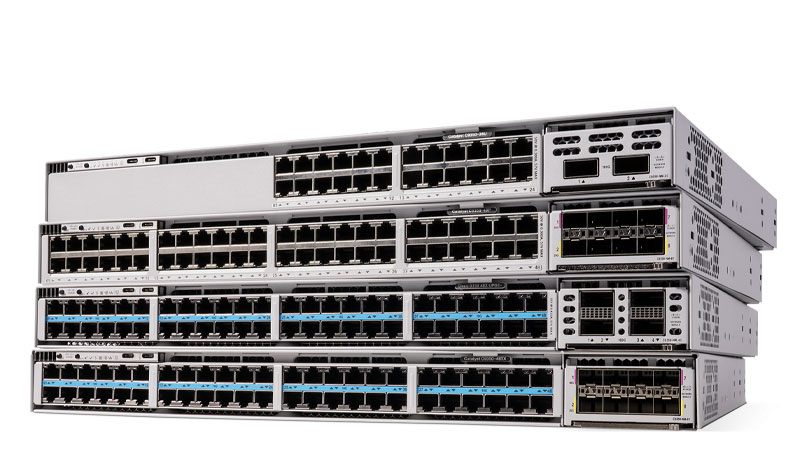
If you still have Cisco Meraki MS22 switches (PID MS22-HW) carrying traffic in a wiring closet, they are well past every Cisco lifecycle milestone that matters. The MS22 reached its Last Day of Support on April 30, 2021. From that date Cisco provides no firmware fixes, no security patches, no TAC cases, and no RMA hardware replacement for this model. The switch keeps forwarding frames, which is precisely why these units quietly outlive their support window, a dead-end platform hiding in plain sight under the dashboard. This guide explains what the end-of-life dates mean for a switch still in production, why the recommended Meraki MS130-24P is a genuine generational upgrade rather than a like-for-like swap, and how to plan a clean, low-risk refresh.
MS22 lifecycle at a glance: End of Sale: April 30, 2016. End of Software Maintenance: not separately published for this generation. Last Day of Support (LDoS): April 30, 2021. Every date has now passed by years. The full milestone record lives on the EoL detail page for this PID.
What the Meraki MS22 actually was
The MS22 (MS22-HW) was a 24-port Layer 2 cloud-managed access switch from the original Meraki MS line. It offered 24 ports of 10/100/1000 Gigabit Ethernet for desktops, phones, APs, and cameras, with SFP uplinks for fiber or copper to the distribution layer, and a PoE-capable variant for powering attached devices. There was no on-box CLI in the traditional sense, the switch was provisioned, monitored, and upgraded entirely through the Meraki dashboard, which was the whole point of the platform. For 2013-era access density it was a clean, manageable switch. By today's standards its uplinks, PoE budget, and on-box silicon are all generations behind.
Why acting now matters
The risk with an EoL access switch is not that it fails on the LDoS date. It is that it keeps working while the support floor disappears beneath it. After April 30, 2021, three exposures compound:
- No PSIRT security patches. When a switching, dashboard-agent, or firmware vulnerability is disclosed, the MS22 will not receive a fixed build. Its firmware is frozen, and any CVE touching that code path on this hardware is permanent and unremediable.
- No TAC or RMA. A failed MS22 cannot be opened as a Meraki support case or swapped under contract. Your only recovery is a spare you already own or a secondary-market unit of the same dead-end model, and one with an expired license cannot even be re-added to the dashboard.
- Audit and compliance exposure. The frameworks federal, DoD, SLED, and healthcare buyers operate under, FedRAMP, CMMC 2.0, the HIPAA Security Rule, PCI DSS, and CISA directives, expect supported, patchable infrastructure. An access switch that cannot be patched is an audit finding waiting to happen, and 'the vendor no longer ships fixes' is not a defensible remediation plan.
There is also a licensing trap unique to Meraki. The MS22 only operates while it holds a valid dashboard license; the hardware is inert without it. As licenses lapse on a platform Cisco no longer sells, you are renewing a co-term against equipment that can never be supported again, paying to keep an unsupported switch online instead of putting that spend toward current hardware.
What each milestone means in practice
- End of Sale (2016-04-30): the last day Cisco accepted new MS22 orders. Everything after this date consumes the support tail.
- End of Software Maintenance: Meraki firmware is delivered as a single cloud-managed train, so once a platform exits support it simply stops receiving new builds rather than following a separate IOS-style maintenance schedule.
- Last Day of Support / LDoS (2021-04-30): the hard wall. No TAC, no RMA, no firmware, no security fixes. The hardware is entirely on its own from this point forward.
The recommended replacement: Meraki MS130-24P
The current-generation successor for the MS22 is the Cisco Meraki MS130-24P (MS130-24P-HW). It keeps the zero-touch, single-pane dashboard model that made the original switch easy to run, but the underlying platform is a full generation ahead. Where it improves on the MS22:
- Modern uplinks instead of legacy SFP. The MS130-24P ships with dedicated SFP+ uplink ports supporting 1G and 10G optics, so the switch can feed an aggregated, non-blocking path to distribution rather than being capped by aging 1G fiber uplinks. Access throughput is no longer choked at the egress.
- IEEE 802.3bt PoE on a real power budget. The MS130-24P delivers up to 30W (PoE+) per port from a substantially larger system power budget than the MS22 could offer. That headroom is what powers today's Wi-Fi 6/6E access points, multi-stream PTZ cameras, and badge readers, loads the original MS22 PoE variant was never sized for.
- Built for Wi-Fi 6/6E access. As branch and campus Wi-Fi moves to Catalyst/Meraki Wi-Fi 6 and 6E APs that can each saturate a gigabit, the MS130's mGig-capable models and 10G uplinks remove the wired bottleneck the MS22 would impose on any modern AP behind it.
- Current silicon and security posture. The MS130 is an actively supported platform receiving ongoing firmware and PSIRT fixes through the dashboard, restoring the patchable, auditable footing that LDoS took away from the MS22.
- Same operational model, modern licensing. Management stays in the Meraki dashboard with cloud-managed, per-switch licensing (Enterprise or Advanced tiers, on the co-termination or per-device model). Your operations team keeps the workflow it already knows while the hardware and license term reset to a supported baseline.
In short, the MS130-24P is a one-for-one physical replacement, 24 access ports in a 1U fixed form factor, but a generational leap in PoE, uplink capacity, and supportability.
A practical migration plan
1. Assess and inventory
Pull every MS22 from the dashboard org and record serial, license expiry, port count, PoE variant, uplink media, and the downstream load on each switch (phones, APs, cameras). Note total PoE draw per switch so the MS130's larger budget is sized correctly, and flag any closet where the current uplink is a 1G fiber pair that should become 10G.
2. License transition
Meraki licensing follows the hardware, not the chassis you are retiring. Order MS130-24P units with their own Enterprise or Advanced licenses and plan the co-term so the new switches align with the rest of your org's renewal date. Do not renew MS22 licenses to bridge the gap, that money belongs in the new platform.
3. Config and feature parity
Because both platforms are dashboard-managed, most configuration, VLANs, port profiles, access policies, STP settings, and switch templates, can be rebuilt or cloned in the dashboard before the hardware ships. Use a network template so the MS130s inherit a known-good config the moment they come online, rather than hand-configuring each closet.
4. Physical: rack, power, PoE, uplinks, optics
The MS130-24P is a standard 1U swap. Confirm the closet circuit can carry the larger PoE budget if you are powering more or higher-wattage devices than the MS22 did. Reuse 1G optics where appropriate, but order 10G SFP+ optics for any uplink you intend to upgrade, and verify fiber type before cutover. Source TAA-compliant optics alongside the switch from your authorized partner catalog to keep the whole BOM contract-clean.
5. Phased cutover
Migrate closet by closet during a maintenance window. Stage each MS130 with its template, claim it into the org, then move uplinks and access drops over and verify PoE, link, and dashboard adoption before decommissioning the MS22 in that rack. A phased approach keeps blast radius to one closet at a time.
6. Secure decommission
Remove each retired MS22 from the dashboard org, wipe its configuration, and dispose through an asset-disposition process that fits your compliance regime, sanitized, documented, and certified for federal and healthcare environments. Do not resell or redeploy LDoS hardware into another production segment.
Procurement notes
For federal, DoD, and SLED buyers, confirm TAA compliance on both the MS130-24P and its optics, and align the purchase to your GPC/contract vehicle up front. Cloud-managed switches and their licenses are best sourced together so the hardware and dashboard entitlement arrive co-termed and ready to claim. Lead times on current Meraki access switches move with demand, so place the order ahead of the closet schedule rather than after it.
As a Cisco authorized partner, uniqcli scopes MS22-to-MS130 refreshes end to end, license co-term, optics, PoE sizing, and phased cutover. Review the full milestone record on the MS22-HW EoL detail page, browse other affected platforms in the Cisco end-of-life library, and when you are ready to size the refresh, get a quote and we will turn your MS22 inventory into a clean, supported MS130 build.
Frequently asked questions
Is the Cisco Meraki MS22 still safe to keep in production?
No. The MS22 reached Last Day of Support on April 30, 2021. Since then it receives no firmware updates and no PSIRT security patches, cannot be opened as a Meraki TAC case, and is not eligible for RMA. It also depends on a valid dashboard license to operate at all. Any vulnerability affecting its firmware is permanent, which makes it an audit and compliance liability in federal, healthcare, and regulated enterprise environments.
What is the recommended replacement for the MS22?
The current-generation successor is the Cisco Meraki MS130-24P (MS130-24P-HW). It keeps the same 24-port access form factor and cloud-managed dashboard model but adds 802.3bt PoE on a much larger power budget, SFP+ 1G/10G uplinks, mGig-capable options for Wi-Fi 6/6E access, current silicon, and an actively supported, patchable firmware train.
Can I move my MS22 configuration to the MS130 automatically?
Largely, yes. Both switches are managed entirely from the Meraki dashboard, so VLANs, port profiles, access policies, and switch settings can be rebuilt or cloned before hardware arrives. The most efficient path is a network template the MS130-24P inherits the moment it is claimed into your org, rather than hand-configuring each switch in each closet.
Do my existing Meraki licenses transfer to the new switches?
No. Meraki licensing is tied to the hardware, so MS130-24P units require their own Enterprise or Advanced licenses. Plan the co-termination date to align with the rest of your org, and avoid renewing MS22 licenses to bridge the gap, that spend should go toward the supported platform instead of keeping EoL hardware online.
Will my current uplinks and PoE devices still work after the refresh?
In most cases yes, with headroom to grow. The MS130-24P accepts 1G and 10G SFP+ optics, so you can reuse existing 1G uplinks or upgrade to 10G where the closet needs it. Its 802.3bt PoE budget comfortably exceeds what the MS22 offered, so phones, cameras, and modern Wi-Fi 6/6E access points are well supported. Confirm closet circuit capacity if you plan to power more or higher-wattage devices than before.
Uniqcli Team
The Uniqcli Team is an authorized Cisco partner specializing in Catalyst wireless, switching, datacenter fabric, licensing, and managed services for U.S. federal, state, local, and education customers. We scope Cisco bills of materials, validate procurement paths (TAA, FIPS, contract vehicles), and deliver design, deployment, and managed operations.
Ready to scope your Cisco build?
Build a quoteRelated reading
View all → Guides
Cisco Meraki MR34 (MR34-HW) EoL: Migration to the MR44
The Meraki MR34 hit Last Day of Support in October 2023 and now runs unpatchable firmware. Here is what the milestones mean, how the Wi-Fi 6 MR44 improves on it, and how to migrate cleanly in a regulated environment.
March 24, 2026 · 9 min readGuidesCisco Meraki MR72 EoL: Migrating Outdoor Wi-Fi to the MR76
The Meraki MR72 passed Last Day of Support on April 30, 2024. Here's exactly what that means for your outdoor network and how to migrate cleanly to the Wi-Fi 6 Meraki MR76 without leaving the dashboard.
March 19, 2026 · 7 min read Guides
Cisco Meraki MS220-48FP EoL: Migrate to MS225-48FP
The Meraki MS220-48FP reached Last Day of Support on July 29, 2024. Here is what each milestone means, why running it now is a compliance and security liability, and exactly how to refresh to the MS225-48FP with physical stacking and 10G uplinks.
March 15, 2026 · 9 min readGuidesCisco Meraki MS42 EoL: Migration to the MS125-48
The Meraki MS42 passed Last Day of Support on April 26, 2021, here's why it must come out and how to migrate cleanly to the MS125-48 with 10G uplinks and stacking.
January 8, 2026 · 8 min readGuidesMeraki MS220-8P EoL: Migrate to the MS120-8LP Switch
The compact Meraki MS220-8P PoE switch reached Last Day of Support on September 21, 2025. Here is exactly what that means and how to refresh to the functionally equivalent MS120-8LP without disrupting your edge.
January 5, 2026 · 10 min readGuidesCisco Meraki MS220-48LP EoL: Migrate to the MS225-48LP
The Meraki MS220-48LP passed Last Day of Support on July 29, 2024. Here is what that means for an operating fleet and how to refresh cleanly to the stackable MS225-48LP.
January 3, 2026 · 8 min read