
Meraki MS320-48 EoL: Migration to the MS250-48
The Meraki MS320-48 reached Last Day of Support on March 31, 2024, no firmware, no security fixes, no TAC or RMA. Here's why it has to come out and how to migrate cleanly to the stackable MS250-48 with 10G uplinks and PoE+.
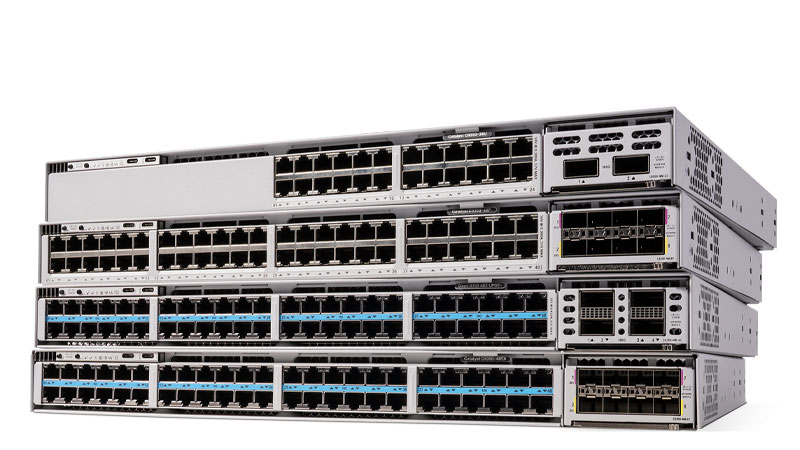
If a Cisco Meraki MS320-48 (PID MS320-48-HW) is still racked in a wiring closet or distribution layer, it is now operating with no safety net. This Layer 3 cloud-managed 48-port Gigabit switch passed its Last Day of Support on March 31, 2024. From that date forward Cisco delivers no firmware updates, no PSIRT security fixes, no TAC engineering, and no RMA hardware replacement for this model. The switch keeps forwarding packets, which is exactly the trap: an unsupported aggregation switch quietly carrying production traffic is a single hardware fault away from an outage with no path to a same-day replacement, and a single audit cycle away from a finding. This guide explains what the MS320-48 actually was, what each end-of-life milestone means for a switch you are still running, and how to migrate cleanly to its stackable successor, the Meraki MS250-48 (MS250-48-HW).
What the MS320-48 actually was
The MS320-48 was Meraki's enterprise-class Layer 3 access and aggregation switch: 48 ports of 10/100/1000BASE-T plus four 1G SFP uplinks, physical stacking via dedicated rear stack ports, and dual hot-swappable power supplies and fans for closet resilience. It ran full Layer 3 in hardware (static routing and OSPF, inter-VLAN routing, DHCP services, ACLs, QoS) and was managed entirely through the Meraki cloud dashboard with a per-switch annual Enterprise license. There was no on-box CLI in the traditional sense; configuration, monitoring, firmware, and topology all lived in the dashboard. For its era it was a clean way to run a routed access layer or a small aggregation tier without a controller appliance. What dates it is the silicon and the uplink ceiling: 1G fixed uplinks and 1G access ports, no multigigabit, and a stacking architecture that newer switches outpace.
Why acting now matters
The risk of an end-of-life switch is not that it dies on the LDoS date. It is that the support floor disappears while the hardware keeps running, and three exposures stack up the longer it stays in service:
- No security patches. When a vulnerability is disclosed in Meraki switch firmware, the MS320-48 will not receive a fixed build. Its firmware train is frozen. Any CVE that touches that code path on this platform is permanent and unremediable except by removing the device.
- No TAC or RMA. A failed unit cannot be opened as a support case or swapped under contract. Recovery depends on a cold spare you bought before LDoS or a gray-market unit of the same dead-end model, with no warranty behind it.
- Audit and compliance exposure. FedRAMP, CMMC, the HIPAA Security Rule, PCI DSS, and CISA directives all expect supported, patchable infrastructure. An unsupported, unpatchable switch in the data path is a documented finding, and 'the vendor no longer ships fixes' is not an accepted remediation.
There is a Meraki-specific wrinkle on top of the usual EoL logic: licensing. Meraki switches only function while covered by an active dashboard license. An MS320-48 that is unsupported by hardware is also a switch you are still paying to license, with no firmware roadmap behind that spend. Continuing to renew a license on a dead-end platform is money committed to a switch you cannot patch.
What each milestone means in practice
- End of Sale (2017-03-31): the last day Cisco accepted new orders for the MS320-48. Everything after this consumed the support tail.
- End of Software Maintenance: Meraki delivers firmware as a unified cloud train rather than per-model maintenance builds, so a separate SW maintenance date was not published for this PID. In practice, feature and fix delivery to this hardware wound down ahead of LDoS as the platform aged off the supported firmware matrix.
- Last Day of Support / LDoS (2024-03-31): the hard wall. No firmware, no security fixes, no TAC, no RMA. The hardware is on its own.
The recommended replacement: Meraki MS250-48
Cisco's successor for the MS320-48 is the Meraki MS250-48 (MS250-48-HW), a Layer 3 stackable cloud-managed switch in the same 48-port Gigabit access/aggregation class. It is the functional equivalent with a modern stacking and uplink architecture, and it keeps the exact operating model your team already knows: same Meraki dashboard, same cloud management, same per-switch annual license. The migration is a generational refresh, not a platform retraining exercise.
What is concretely better
- Modern physical stacking. The MS250 stacks over dedicated 40G stacking interfaces (160 Gbps aggregate bidirectional stack bandwidth), and a stack is managed as a single logical switch in the dashboard. This is a real step up from the MS320's stacking generation for both throughput and resilience.
- Faster uplinks. The MS250-48 ships with four 10G SFP+ uplinks instead of the MS320's four 1G SFP ports. That is a 10x jump in uplink capacity, which matters precisely where a 48-port switch lives: feeding aggregation or a core. Wire-speed Layer 3 switching with deep buffering keeps it non-blocking under load.
- PoE done right for the access layer. The MS250-48 family is offered in PoE variants (MS250-48LP for partial PoE+ budget and MS250-48FP for full 802.3at PoE+ on every port), so you can size power to the endpoints you actually run: phones, APs, cameras. The base MS250-48-HW is the non-PoE data variant; pick the SKU that matches your closet load rather than overbuying power.
- Stronger resilience. Dual redundant, hot-swappable power supplies and field-replaceable fans, plus physical stacking, give you both supply and switch redundancy in the same footprint the MS320 occupied.
- Same Layer 3 feature set, current firmware. Static routing, OSPF, DHCP services, warm spare (VRRP-style) Layer 3 failover, ACLs, and QoS carry over, now on a supported firmware train that receives security fixes. Built-in tools the MS320 era lacked or limited, such as live tools (cable test, throughput, packet capture) and Layer 7 application visibility, are included.
A practical migration plan
1. Assessment and inventory
Export your switch list from the Meraki dashboard and confirm exactly how many MS320-48 units are in service, their roles (routed access vs. aggregation), current PoE draw per closet, uplink media in use, and stack memberships. Pull the running configuration the dashboard already holds: VLANs, Layer 3 interfaces and routes (static and OSPF), DHCP scopes, ACLs, QoS, and port profiles. This inventory drives both the right MS250 SKU mix and the license count.
2. License transition
Because the MS250 stays inside the same dashboard organization, license transition is straightforward: net-new MS250 licenses are added to the org and claimed against the new serials. Decide co-termination vs. per-device up front, and align the new term with your refresh horizon. We handle the license-term math against your renewal date so you are not double-paying on a retiring MS320 license while standing up the MS250.
3. Configuration and feature parity
The cloud model makes parity unusually clean. Because both generations live in the same dashboard, you replicate VLANs, routing, DHCP, ACL, and QoS settings onto the new switch via configuration templates or by cloning the existing config to the new serial. Verify Layer 3 specifics that matter at aggregation: OSPF area and adjacency settings, static route next-hops, and warm-spare Layer 3 failover pairing if you run redundant routed switches.
4. Physical: rack, power, PoE, uplinks, optics, stacking
- Rack and power: the MS250-48 fits the same 1U footprint with dual hot-swap PSUs. Confirm the PSU wattage matches your chosen PoE variant and closet load.
- Uplinks and optics: the MS250 uses SFP+ cages. Your existing 1G SFP uplink optics may be reusable at 1G, but to capture the 10G benefit, plan SFP+ optics or DAC/AOC cabling and matching ports on the upstream device.
- Stacking: MS250 stacking cables are not the same generation as MS320; order the correct MS250 stacking cables and plan stack member order before cutover.
- PoE: if endpoints draw power, choose MS250-48LP or MS250-48FP rather than the data-only MS250-48-HW, and validate the per-port and total PoE budget against your phone/AP/camera count.
5. Phased cutover
Stage each MS250 in the dashboard before it ships to the closet so it claims its config on first connect. Migrate one closet or stack at a time during a maintenance window: move uplinks, then access ports, validate Layer 3 reachability and DHCP, confirm PoE-powered endpoints come up, and watch dashboard event logs before moving to the next. A switch-by-switch rollout keeps blast radius to a single closet.
6. Secure decommission
After cutover, remove the MS320-48 from the dashboard org to free its license slot and stop billing, wipe its configuration, and dispose of it through a process that meets your data-handling policy. For federal and DoD environments, follow your media sanitization and asset-disposal requirements and retain the chain-of-custody record for audit.
Procurement notes for regulated buyers
For federal, DoD, SLED, and healthcare buyers, how you buy the MS250 matters as much as the spec. Confirm TAA compliance and country of origin for the units and optics, and order through an authorized Cisco partner so warranty and licensing are intact; the DoDIN APL program sunset on September 30, 2025, so treat any APL history for this model as archival, not a current certification. Meraki lead times move with demand and license-term selection, so size the buy and the license term together and place orders with runway. Government purchase card (GPC) buys and bundled multi-year licensing are easier to land, and if you are ordering under your own contract vehicle, when the SKU mix (data vs. LP vs. FP), optics, and stacking cables are specified before the PO. You can browse current Meraki switching on our catalog, see milestone detail on the MS320-48 EoL page, and check other affected products on our Cisco end-of-life hub.
Frequently asked questions
Is the Meraki MS320-48 still supported in 2026?
No. The MS320-48 (MS320-48-HW) reached its Last Day of Support on March 31, 2024. Cisco no longer provides firmware updates, security fixes, TAC engineering, or RMA hardware replacement for this switch. Units still in production are unsupported and unpatchable, which is both an operational risk and an audit finding for regulated environments.
What is the direct replacement for the MS320-48?
The Meraki MS250-48 (MS250-48-HW) is the recommended successor. It is the same class of Layer 3 stackable, cloud-managed 48-port Gigabit switch and runs in the same Meraki dashboard, but with modern 40G stacking (160 Gbps stack bandwidth), four 10G SFP+ uplinks instead of 1G, current firmware, and built-in live tools and Layer 7 visibility. PoE+ is available via the MS250-48LP and MS250-48FP variants.
How does Meraki licensing change when I move from the MS320 to the MS250?
The model is the same: a per-switch annual Enterprise subscription license, available in 1-, 3-, 5-, 7-, or 10-year terms under co-termination or per-device licensing. There is no separate DNA or Smart Licensing tier as on Catalyst. Because the MS250 lives in the same dashboard organization, you add new MS250 licenses and claim them against the new serials; align the term with your refresh horizon to avoid double-paying on a retiring MS320 license.
Can I reuse my MS320 uplink optics and stacking cables on the MS250?
Partly. The MS250 uses SFP+ cages, so existing 1G SFP optics can run at 1G, but to gain the 10G uplink benefit you should plan SFP+ optics or DAC/AOC. Stacking cables are a different generation between the MS320 and MS250, so order the correct MS250 stacking cables. Confirm the PoE variant (data-only MS250-48-HW, partial-budget LP, or full PoE+ FP) matches your endpoint power load.
How disruptive is the migration since there's no traditional CLI?
Less than a typical Catalyst refresh. Because both switches live in the same Meraki dashboard, you replicate VLANs, Layer 3 routing, DHCP, ACLs, and QoS by cloning configuration to the new serial or using templates, and stage each MS250 before it ships so it claims its config on first connect. A switch-by-switch or closet-by-closet cutover during maintenance windows keeps the blast radius small and the rollback simple.
Uniqcli Team
The Uniqcli Team is an authorized Cisco partner specializing in Catalyst wireless, switching, datacenter fabric, licensing, and managed services for U.S. federal, state, local, and education customers. We scope Cisco bills of materials, validate procurement paths (TAA, FIPS, contract vehicles), and deliver design, deployment, and managed operations.
Ready to scope your Cisco build?
Build a quoteRelated reading
View all → Guides
Cisco Meraki MS22 EoL: Migration to the MS130-24P
The Meraki MS22 passed Last Day of Support on April 30, 2021, no patches, no TAC, no RMA. Here is why it has to come out and how to migrate cleanly to the cloud-managed MS130-24P.
May 20, 2026 · 7 min readGuidesCisco Meraki MS220-48FP EoL: Migrate to MS225-48FP
The Meraki MS220-48FP reached Last Day of Support on July 29, 2024. Here is what each milestone means, why running it now is a compliance and security liability, and exactly how to refresh to the MS225-48FP with physical stacking and 10G uplinks.
March 15, 2026 · 9 min readGuidesCisco Meraki MS42 EoL: Migration to the MS125-48
The Meraki MS42 passed Last Day of Support on April 26, 2021, here's why it must come out and how to migrate cleanly to the MS125-48 with 10G uplinks and stacking.
January 8, 2026 · 8 min readGuidesCisco Meraki MS220-48LP EoL: Migrate to the MS225-48LP
The Meraki MS220-48LP passed Last Day of Support on July 29, 2024. Here is what that means for an operating fleet and how to refresh cleanly to the stackable MS225-48LP.
January 3, 2026 · 8 min readGuidesCisco MS220-24P End-of-Life: Migrate to MS225-24P Guide
The Meraki MS220-24P hit Last Date of Support on July 29, 2024. Here is what each milestone means, why the stackable MS225-24P is the right refresh, and a practical migration plan for federal, healthcare, and enterprise wiring closets.
January 1, 2026 · 8 min read Guides
Cisco Meraki MR34 (MR34-HW) EoL: Migration to the MR44
The Meraki MR34 hit Last Day of Support in October 2023 and now runs unpatchable firmware. Here is what the milestones mean, how the Wi-Fi 6 MR44 improves on it, and how to migrate cleanly in a regulated environment.
March 24, 2026 · 9 min read