
Meraki MS220-24 EoL: Migrate to the MS120-24 Switch
The Meraki MS220-24 hit Last Day of Support on July 29, 2024, no more firmware, security patches, TAC, or RMA. Here is a practical, dashboard-native plan to refresh to the supported MS120-24, including the PoE SKU trap, licensing transition, and secure decommission for regulated buyers.
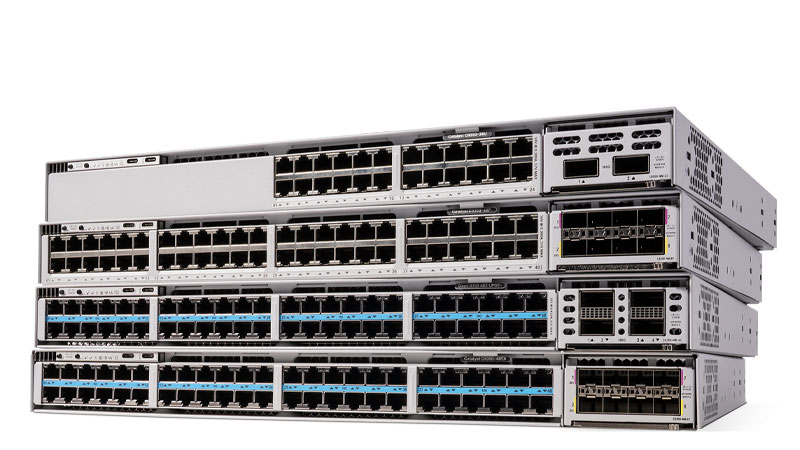
The Cisco Meraki MS220-24 (PID MS220-24-HW) reached its Last Day of Support on July 29, 2024. That date is the hard line, not the End of Sale that preceded it years earlier. As of mid-2024, this 24-port Layer 2 access switch no longer receives firmware updates, no longer gets PSIRT security fixes, and is no longer eligible for TAC support or RMA hardware replacement. If you still have MS220-24 units carrying production VLANs in a wiring closet, they are now running frozen code on hardware Cisco will not touch. This guide explains exactly what that means, why the recommended move is the Meraki MS120-24 (PID MS120-24-HW), and how to execute the refresh cleanly inside the Meraki dashboard.
The MS220-24 end-of-life timeline, decoded
Cisco publishes several milestone dates for every product, and each carries a different operational consequence. For the MS220-24, the milestones that matter are straightforward, and the one you are now past is the one that bites.
End of Sale: July 29, 2017
After this date you could no longer buy the MS220-24 new through Cisco or authorized channels. Any unit in your network today was either purchased before mid-2017 or acquired on the secondary market. That alone means the youngest MS220-24 in service is well past seven years old, and the oldest is approaching a decade. Switching power supplies, fans, and flash storage do not last forever, and field failure rates climb steeply in this age band.
Last Day of Support (LDoS): July 29, 2024
This is the milestone that changes your risk posture. After LDoS, Cisco provides no software maintenance, no bug fixes, no new firmware, and critically no security patches through PSIRT. There is no TAC case, no advance hardware replacement, and no warranty path. A failed MS220-24 after this date is a cold swap with whatever spare you happen to have on a shelf, and that spare is equally unsupported. The Meraki licensing model adds a wrinkle: these switches are cloud-managed, so an expired or unrenewable license can eventually take a device out of the dashboard entirely, and Meraki no longer sells license SKUs for end-of-life hardware.
The replacement: Meraki MS120-24 (MS120-24-HW)
The MS120-24 is the current, fully supported non-PoE Layer 2 successor to the MS220-24, and it is a direct one-for-one fit for the same job: cloud-managed gigabit access at the edge. It preserves everything that made the MS220 deployment simple, the zero-touch Meraki dashboard provisioning, the same VLAN and ACL feature set at Layer 2, and the same fixed-config form factor, while modernizing the hardware and the support runway.
What you actually gain
- Supported, patched firmware. The MS120 family is on current Meraki MS firmware with active PSIRT coverage, so you are back inside the patch lifecycle that compliance frameworks require.
- 24 x 1GbE RJ45 access ports, matching the MS220-24 port count and copper density exactly, so existing patch panels and cable runs map straight across with no re-cabling.
- Four dedicated 1G SFP uplinks on the MS120-24, versus the MS220-24's two SFP uplinks. Double the fiber uplink capacity gives you cleaner redundant uplink designs and easier link aggregation to the distribution layer.
- Non-blocking 56 Gbps switching capacity with line-rate forwarding across all ports, so a fully populated 24-port switch never oversubscribes its own backplane.
- Lower power draw and a quieter, more efficient platform than the seven-plus-year-old MS220 silicon, which matters in dense closets and on UPS-backed circuits.
- Layer 2 feature parity plus modern dashboard capabilities: 802.1X with RADIUS, dynamic and voice VLANs, MAC allowlisting, storm control, ACLs, port mirroring, LLDP/CDP, and full topology and packet-capture tooling in the Meraki dashboard.
A note on Layer 3 and stacking
The MS120 series, like the MS220-24 before it, is a pure Layer 2 access switch with no inter-VLAN routing and no physical stacking. That is the correct successor for a Layer 2 MS220-24. If your MS220-24 was doing more than access, or if you want to consolidate routing into the closet, the MS125 (10G SFP+ uplinks) or the Layer 3 MS210/MS225 with physical stacking are the step-up paths worth pricing during the same refresh cycle. You can compare current Meraki switching options in our catalog.
A practical migration plan
Because both switches live in the Meraki dashboard, this refresh is far simpler than a typical IOS-to-IOS-XE migration. There is no CLI config to port and no licensing platform to relearn. The work is mostly inventory, licensing, and physical swap discipline.
1. Assessment and inventory
- Export every MS220-24 from the dashboard with serial, network, port count in use, and uplink configuration.
- Flag any switch carrying PoE loads downstream so you order the correct MS120-24P/FP variant rather than the non-PoE unit.
- Record per-port config: VLAN assignments, access vs trunk, voice VLAN, 802.1X policy, port aggregation groups, and any ACLs.
- Note SFP optics in use on the uplinks; verify the same modules are on the Meraki compatibility list for the MS120, and budget replacements where they are not.
2. License transition
- MS120 hardware requires its own Meraki Enterprise (or Advanced) license, sized to the same term as your existing org. You cannot transfer an MS220 license onto an MS120.
- Decide between per-device and co-termination licensing to match how the rest of your Meraki org is licensed, and align expiration dates so renewals land together.
- Claim the new switches into the org and apply licenses before the cutover window so the devices come online green the moment they are cabled.
3. Config and feature parity
Use the dashboard to clone configuration. Build a switch profile or template that mirrors the MS220-24 port-by-port, then bind the new MS120-24s to it. Verify the four SFP uplinks are configured for your aggregation and spanning-tree design before you touch the physical network. Confirm 802.1X RADIUS settings, native VLANs, and any access policies replicate exactly.
4. Physical: rack, power, uplinks, optics
- The MS120-24 is a standard 1RU fixed unit, so it drops into the same rack space the MS220-24 vacated.
- Both are non-stacking, so plan resilient uplinks rather than stack cables. The MS120-24's four SFP uplinks make a dual-homed design straightforward.
- Move copper patches port-for-port using your inventory map. Seat and verify uplink optics, then confirm link and the device reporting healthy in the dashboard before declaring the swap done.
5. Phased cutover
Refresh one closet at a time during a maintenance window. Pre-stage and license each MS120-24, then perform the physical swap, confirm all ports come up with correct VLANs, validate a test endpoint and a voice/AP device if applicable, and monitor for one business day before moving to the next closet. Keep one old MS220-24 cabled-but-cold as a fallback only until the new unit proves stable, then pull it.
6. Secure decommission
- Remove each retired MS220-24 from the Meraki dashboard and unclaim its serial so it no longer counts against your org or appears in audits.
- Wipe configuration to factory defaults before the unit leaves your control.
- For DoD and federal environments, follow NIST SP 800-88 media sanitization and retain a certificate of destruction or wipe for the asset record.
Procurement notes for regulated buyers
Source the MS120-24 and its licensing through an authorized Cisco partner so the hardware arrives with valid warranty and the licenses are legitimately claimable in your org. Gray-market Meraki gear frequently cannot be claimed or licensed, which defeats the entire purpose of the refresh. For federal and SLED buyers, confirm TAA compliance and country of origin for the line items, and use GPC, Simplified Acquisition (FAR Part 13), or FAR-based PO paths where appropriate. Lead times on current Meraki switching are generally healthy, but PoE variants and specific optics can extend, so order to the project schedule, not the day of the cutover. See the MS220-24 end-of-life detail page for the exact dates, browse the broader Cisco EoL list to catch other expiring gear in the same closet, and when you are ready to size the refresh, get a quote and we will spec the right MS120 variant, licensing term, and optics for your environment.
Frequently asked questions
Is the Cisco Meraki MS220-24 still supported in 2026?
No. The MS220-24 (MS220-24-HW) reached its Last Day of Support on July 29, 2024. It receives no firmware updates, no PSIRT security patches, and is not eligible for TAC support or RMA replacement. Running it in production is now an unpatchable, audit-flagged risk, which is why Cisco recommends refreshing to the MS120-24.
Is the MS120-24 a direct replacement for the MS220-24?
Yes. The MS120-24 (MS120-24-HW) is the current non-PoE Layer 2 cloud-managed successor with the same 24 x 1GbE access ports. It actually improves on the MS220-24 with four SFP uplinks instead of two, 56 Gbps non-blocking switching, supported firmware, and lower power draw, all managed in the same Meraki dashboard.
Will my old MS220-24 Meraki license transfer to the MS120-24?
No. Meraki licensing is per device by SKU, and there is no SKU available to license end-of-life MS220 hardware going forward. The MS120-24 needs its own Enterprise or Advanced license, sized to your org's term. Align it with your co-termination date so renewals stay consolidated, and claim and license the new units before cutover.
What if my MS220-24 switches power phones, APs, or cameras?
Then the non-PoE MS120-24 is the wrong SKU. Choose the MS120-24P (370W PoE+) or MS120-24FP (740W full PoE+) instead. Audit your downstream PoE load before ordering, because mismatching PoE budget is the most common and most disruptive mistake in this refresh.
How do I securely decommission the retired MS220-24 switches?
Remove each unit from the Meraki dashboard and unclaim its serial so it no longer counts against your org or appears in audits, then factory-reset to wipe configuration. For DoD and federal environments, follow NIST SP 800-88 media sanitization and retain a wipe or destruction certificate for the asset record.
Uniqcli Team
The Uniqcli Team is an authorized Cisco partner specializing in Catalyst wireless, switching, datacenter fabric, licensing, and managed services for U.S. federal, state, local, and education customers. We scope Cisco bills of materials, validate procurement paths (TAA, FIPS, contract vehicles), and deliver design, deployment, and managed operations.
Ready to scope your Cisco build?
Build a quoteRelated reading
View all →GuidesCisco Meraki MS220-48 EoL: Migrate to the MS120-48
The Meraki MS220-48 passed Last Day of Support on July 29, 2024, no firmware, no security fixes, no RMA. Here's why it must come out and how to migrate cleanly to the cloud-managed MS120-48.
March 13, 2026 · 10 min readGuidesMeraki MS220-8P EoL: Migrate to the MS120-8LP Switch
The compact Meraki MS220-8P PoE switch reached Last Day of Support on September 21, 2025. Here is exactly what that means and how to refresh to the functionally equivalent MS120-8LP without disrupting your edge.
January 5, 2026 · 10 min readGuidesCisco Meraki MS220-48FP EoL: Migrate to MS225-48FP
The Meraki MS220-48FP reached Last Day of Support on July 29, 2024. Here is what each milestone means, why running it now is a compliance and security liability, and exactly how to refresh to the MS225-48FP with physical stacking and 10G uplinks.
March 15, 2026 · 9 min readGuidesCisco Meraki MS220-48LP EoL: Migrate to the MS225-48LP
The Meraki MS220-48LP passed Last Day of Support on July 29, 2024. Here is what that means for an operating fleet and how to refresh cleanly to the stackable MS225-48LP.
January 3, 2026 · 8 min readGuidesCisco MS220-24P End-of-Life: Migrate to MS225-24P Guide
The Meraki MS220-24P hit Last Date of Support on July 29, 2024. Here is what each milestone means, why the stackable MS225-24P is the right refresh, and a practical migration plan for federal, healthcare, and enterprise wiring closets.
January 1, 2026 · 8 min read Guides
Cisco Meraki MS22 EoL: Migration to the MS130-24P
The Meraki MS22 passed Last Day of Support on April 30, 2021, no patches, no TAC, no RMA. Here is why it has to come out and how to migrate cleanly to the cloud-managed MS130-24P.
May 20, 2026 · 7 min read