
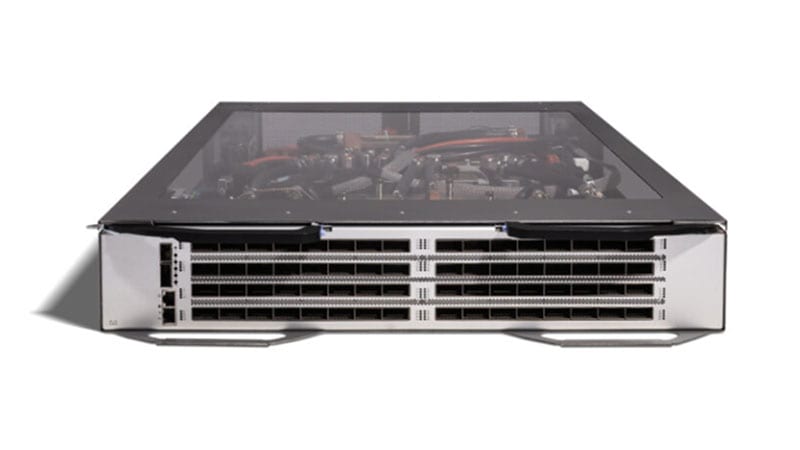
If a Cisco MDS 9506 Multilayer Director (PID DS-C9506) is still anchoring your storage fabric, it is running well past every Cisco lifecycle date that matters. Cisco stopped selling the MDS 9506 on October 31, 2016, and the platform reached its Last Day of Support (LDoS) on April 30, 2022. Past that wall there are no software fixes, no PSIRT security patches, and no TAC case or RMA hardware replacement for the chassis, supervisors, or fabric. The director still moves Fibre Channel frames, which is exactly why these six-slot chassis quietly outlive their support contracts in data center cores. This guide explains what each milestone means for a SAN that is still in production, why the recommended MDS 9706 (DS-C9706) is a genuine generational jump and not a like-for-like reseat, and how to plan a clean, low-risk fabric migration.
What the MDS 9506 actually was
The MDS 9506 (DS-C9506) was the mid-size chassis in Cisco's MDS 9500 director family: a 7RU, six-slot modular Fibre Channel director with two slots reserved for redundant Supervisor-2 modules and four payload slots for switching modules. It was a core SAN building block for enterprise, federal, and healthcare data centers, supporting both open-systems Fibre Channel and IBM FICON for mainframe-attached storage. Native line cards delivered 1/2/4-Gbps Fibre Channel, and the platform was later extended with 8-Gbps Advanced Fibre Channel modules. It ran NX-OS (the SAN-OS lineage), used a passive backplane with crossbar switching on the supervisors, and provided the high-availability staples a director is bought for: dual supervisors with stateful failover, redundant power, and In-Service Software Upgrade (ISSU). For its era it was a workhorse. By today's standards, a 4-Gbps or 8-Gbps fabric is the bottleneck in front of all-flash and NVMe storage arrays.
Why acting now matters
The risk of an end-of-life director is not that it stops working. It is that it keeps switching frames while the support floor disappears beneath it. After LDoS, three exposures compound:
- No PSIRT security patches. When a new NX-OS or Fibre Channel vulnerability is disclosed, the MDS 9506 will never receive a fixed image. Its last supported NX-OS train is frozen, so any CVE that touches that code path on this hardware is permanent. A storage fabric is the data path for every mission-critical workload behind it, which makes an unpatchable director a high-value, unmovable risk.
- No TAC or RMA. A failed supervisor, fabric, or chassis component cannot be opened as a support case or swapped under contract. Recovery depends on cold spares you bought before LDoS or secondary-market parts for the same dead-end platform. In a director that is supposed to be the most reliable thing in the room, that is the wrong place to gamble.
- Audit and compliance exposure. The frameworks federal, DoD, SLED, and healthcare buyers operate under (FedRAMP, CMMC, NIST 800-53, the HIPAA Security Rule, PCI DSS, and CISA directives) expect supported, patchable infrastructure. An unsupported core SAN director that cannot be patched is a finding waiting to happen, and 'the vendor no longer ships fixes for it' is not a defensible remediation plan during an assessment.
There is also a software dead end. Current NX-OS releases for the MDS 9700 family do not run on MDS 9500 hardware, so the longer the 9506 stays in place, the further it drifts from the feature set, telemetry, and security baseline your newer fabric expects. The chassis and its supervisors age out together.
What each milestone means in practice
- End of Sale (2016-10-31): the last day Cisco accepted new orders for the DS-C9506 chassis. Everything after this date is consuming the support tail.
- Last Day of Support / LDoS (2022-04-30): the hard wall. No TAC, no RMA, no software or security fixes of any kind. From this date the hardware is entirely on its own, regardless of whether a third party will still sell you a maintenance contract on it.
The recommended replacement: MDS 9706 Multilayer Director
Cisco's migration path off the MDS 9500 is the MDS 9700 family, and the direct successor to the six-slot 9506 is the MDS 9706 (DS-C9706). It is a 9RU director that, like the 9506, reserves slots for redundant supervisors and dedicates the remaining slots to switching modules, but the architecture underneath is a full generation ahead. The headline differences are not incremental:
- Native 16/32/64-Gbps Fibre Channel. Where the 9506 topped out at 4-Gbps native (8-Gbps with later cards), the 9706 runs current MDS 9700 switching modules at 16, 32, and 64-Gbps FC, plus 10/40-Gbps FCoE. That is the difference between throttling an all-flash or NVMe-over-Fibre-Channel array and actually feeding it. A single 48-port 64-Gbps module alone outclasses an entire fully loaded 9506.
- Far higher capacity and per-slot bandwidth. The 9706 delivers up to roughly 1.5 Tbps of Fibre Channel performance per slot and supports up to 192 line-rate ports in the chassis, with no oversubscription on the switching modules. The crossbar moves to dedicated, hot-swappable fabric (crossbar) modules running N+1 redundant, separating switching capacity from the supervisors instead of binding it to them as the 9506 did.
- Better high availability. Dual supervisors with stateful failover and ISSU carry forward, but the 9706 adds N+1 fabric-module redundancy and a forward-looking design intended to ride multiple speed generations on the same chassis, so a future 32-to-64-Gbps step is a line-card swap rather than a chassis swap.
- Modern NX-OS, telemetry, and analytics. The 9706 runs current NX-OS with SAN Analytics and streaming telemetry, integrating with Cisco Nexus Dashboard / Data Center Network Manager (NDFC) for flow-level visibility, latency analysis, and congestion detection that the SAN-OS-era 9506 simply never offered. FICON and open-systems FC coexist on the same fabric, preserving mainframe attachment for shops that need it.
- Investment protection by design. The MDS 9700 chassis was built to absorb several FC speed generations, so a 9706 bought today is the platform you keep while only the switching modules and optics change as speeds advance.
A practical migration plan
1. Assess and inventory
Start with what the fabric actually carries, not the chassis. Pull the active zoneset, device-alias database, VSAN layout, and the full port map (initiators, targets, ISLs/port-channels, and any FICON ports). Capture per-port utilization and oversubscription so you size the 9706's 16/32/64-Gbps modules to real demand, not to the legacy port count. Record optics, cable types (OM3/OM4), patch panels, and the speed every connected array and host HBA actually negotiates. This inventory becomes the bill of materials and the cutover runbook.
2. License and software transition
MDS licensing is feature-based (Enterprise Package, and add-ons such as SAN Analytics and SAN Telemetry, plus FICON where applicable) and is now delivered through Smart Licensing on the MDS 9700. Map every feature the 9506 uses today to its 9706 equivalent so nothing the production fabric depends on lands unlicensed mid-cutover. Standardize the new director on a current, recommended NX-OS release validated against your array and HBA firmware matrix.
3. Configuration and feature parity
NX-OS config from the 9506 does not paste cleanly into a current 9706 release. Re-create VSANs, zoning, port-channels, FSPF, QoS, and any FICON configuration on the new platform in a staging window and validate it. Confirm interop mode and zoning behavior against connected fabrics, verify trunking and ISL port-channels, and rebuild device-aliases rather than carrying forward stale entries. Treat this as a clean rebuild informed by the old config, not a copy-paste.
4. Physical: rack, power, and optics
The 9706 is 9RU versus the 9506's 7RU, and it draws and dissipates more power and heat under a high-speed load, so confirm rack space, PDU capacity, circuit redundancy, and airflow before delivery. Critically, 4/8-Gbps SFP+ optics from the 9506 do not carry forward to 16/32/64-Gbps ports; budget new 32G or 64G SFPs and confirm the OM3/OM4 fiber plant supports the target speed and distance. Stage the 9706 alongside the running 9506 so the migration is fabric-to-fabric, not an in-place rip.
5. Phased cutover
Because hosts and arrays are typically dual-fabric (A/B SAN), migrate one fabric at a time. Bring up the 9706 as the new A (or B) fabric, move ISLs and a pilot set of hosts and targets, validate multipathing and zoning end to end, then drain and migrate the remaining devices. Repeat for the second fabric only after the first is stable. This preserves redundancy throughout and gives you a clean rollback at every step. Schedule the steps that touch FICON or single-attached devices into explicit maintenance windows.
6. Secure decommission
Once both fabrics are on the 9706 and verified, decommission the 9506 deliberately. Export and archive the final configuration, wipe stored configs and credentials from supervisors, and remove the chassis from monitoring and inventory. For federal, DoD, and healthcare environments, follow your media-sanitization and asset-disposal policy (NIST 800-88 lineage) and use a disposition path that produces a certificate of data destruction and recycling.
Procurement notes
A director refresh is a capital purchase with real lead times, so start procurement in parallel with the assessment, not after it. For public-sector buyers, specify TAA-compliant, country-of-origin-documented hardware, and source through an authorized Cisco partner so warranty, Smart Licensing entitlement, and Cisco support contracts attach cleanly to the new chassis. Confirm Government Purchase Card (GPC) thresholds or contract vehicle eligibility early, and size SmartNet/Solution Support and the NX-OS subscription into the total cost of ownership from the start. As an authorized partner serving federal, DoD, SLED, healthcare, and enterprise buyers, uniqcli can scope the 9706 chassis, switching modules, optics, and licensing as one bill of materials and stage the migration around your maintenance windows. Browse current data center hardware in the catalog, review the full lifecycle record for this platform on the MDS 9506 EoL page or the broader Cisco end-of-life hub, and when you are ready to price a like-for-better fabric refresh, get a quote and we will build the BOM and migration plan around your fabric.
Frequently asked questions
Is the Cisco MDS 9506 still supported?
No. The MDS 9506 (DS-C9506) reached its Last Day of Support on April 30, 2022. After that date Cisco provides no software or security patches, and no TAC support or RMA hardware replacement for the chassis, supervisors, or modules. Any third-party maintenance contract does not restore Cisco PSIRT fixes or RMA coverage.
What is the recommended replacement for the MDS 9506?
Cisco's migration path is the MDS 9700 family, with the MDS 9706 (DS-C9706) as the direct successor to the six-slot 9506. The 9706 is a 9RU director supporting current 16/32/64-Gbps Fibre Channel and 10/40-Gbps FCoE switching modules, up to roughly 1.5 Tbps per slot and 192 line-rate ports, with N+1 redundant fabric modules and dual supervisors.
Can I reuse my MDS 9506 line cards, optics, or config on the 9706?
No to the hardware. MDS 9500 switching modules and 4/8-Gbps optics are not compatible with the MDS 9700 chassis, which uses 16/32/64-Gbps modules and matching SFPs. The NX-OS configuration also does not paste cleanly into a current 9706 release; you rebuild VSANs, zoning, port-channels, and any FICON config on the new platform, informed by the old configuration.
How do I migrate without taking down storage?
Use the dual-fabric (A/B SAN) design that most hosts and arrays already have. Stage the 9706 alongside the running 9506, cut over one fabric at a time, validate multipathing and zoning on a pilot set of devices, then drain and migrate the rest before repeating on the second fabric. Redundancy is preserved throughout and you keep a clean rollback at every step.
How is the MDS 9706 licensed?
The 9706 uses Cisco Smart Licensing with feature packages such as the Enterprise Package plus add-ons like SAN Analytics and SAN Telemetry, and FICON where required. Map every feature your 9506 uses today to its 9706 equivalent before cutover so nothing the production fabric depends on lands unlicensed, and size the NX-OS subscription and support contract into the total cost of ownership.
Uniqcli Team
The Uniqcli Team is an authorized Cisco partner specializing in Catalyst wireless, switching, datacenter fabric, licensing, and managed services for U.S. federal, state, local, and education customers. We scope Cisco bills of materials, validate procurement paths (TAA, FIPS, contract vehicles), and deliver design, deployment, and managed operations.
Ready to scope your Cisco build?
Build a quoteRelated reading
View all →GuidesCisco MDS 9513 EoL: Migration to the MDS 9718 Director
The MDS 9513 (DS-C9513) passed Last Day of Support on April 30, 2022, no patches, no TAC, no RMA. Here is why the SAN core has to move and how to refresh cleanly to the 18-slot MDS 9718.
April 17, 2026 · 9 min read Guides
Cisco MDS 9124 End of Life: Migrating to the MDS 9148T 32G
The Cisco MDS 9124 (DS-C9124-K9) hit Last Day of Support in 2019, no TAC, RMA, or security patches. Here is what its lifecycle dates mean and how to migrate your Fibre Channel fabric to the 32G MDS 9148T with zero downtime.
June 15, 2026 · 6 min readGuidesCisco MDS 9222i (DS-C9222I-K9) to MDS 9250i Migration Guide
The MDS 9222i is years past last day of support. Here is why an unsupported FCIP switch is a real risk and how to refresh cleanly to the MDS 9250i Multiservice Fabric Switch.
May 29, 2026 · 9 min readGuidesCisco MDS 9148 (DS-C9148-K9) Replacement & Migration Guide
The MDS 9148 8G fabric switch is past last day of support, here is why moving to the 16G MDS 9148S now protects your SAN, your TAC coverage, and your audit posture.
December 17, 2025 · 8 min readGuidesCisco ACE Module EoL: Migrating Off ACE10-6500-K9
The ACE Application Control Engine Module (ACE10-6500-K9) passed Last Day of Support on January 31, 2019. Here is what that means, why it is now a compliance liability, and how to move data center application delivery onto the Catalyst 8500 edge platform and modern load-balancing tiers.
June 13, 2026 · 8 min read Guides
Cisco 7606-S EoL: Migrating to the Catalyst 8500 (C8500-12X)
The Cisco 7606-S (CISCO7606-S) passed Last Day of Support on July 31, 2021. Here is why the chassis must come out and how to migrate its WAN-edge roles cleanly to the IOS XE-based Catalyst 8500 (C8500-12X).
May 7, 2026 · 7 min read