
Cisco 7606-S EoL: Migrating to the Catalyst 8500 (C8500-12X)
The Cisco 7606-S (CISCO7606-S) passed Last Day of Support on July 31, 2021. Here is why the chassis must come out and how to migrate its WAN-edge roles cleanly to the IOS XE-based Catalyst 8500 (C8500-12X).
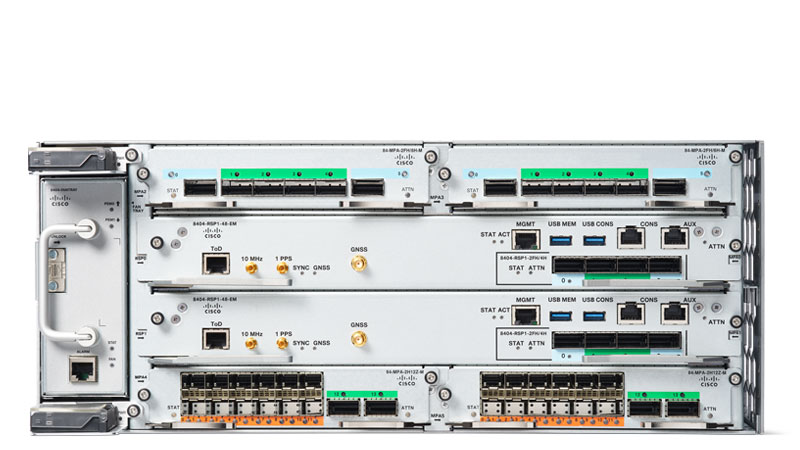
If you are still running a Cisco 7606-S (PID CISCO7606-S), the most important fact is the calendar. This six-slot member of the 7600 Series went End of Sale on July 29, 2016 and reached its Last Day of Support, the true end of life, on July 31, 2021. Every form of vendor backing ended on that date: no TAC cases, no hardware RMA, and critically, no software or security fixes of any kind. The chassis is well into a fifth year of running without a safety net. This guide explains exactly what that means for a WAN-edge or service-provider aggregation role, why a 2026 refresh is overdue, and how to migrate cleanly to the IOS XE-based Catalyst 8500 (C8500-12X).
7606-S lifecycle at a glance: End of Sale: July 29, 2016. End of SW Maintenance Releases: passed. Last Day of Support (LDoS): July 31, 2021. After LDoS there are no PSIRT patches, no TAC, and no RMA for the CISCO7606-S, the platform is fully unsupported.
Why acting now is not optional
The 7600 Series was a workhorse: a modular carrier and enterprise edge router built around the 7600-S chassis, RSP720 route switch processors, SIP-400/600 carriers, and SPA-based interfaces, used for high-density WAN aggregation, broadband BNG, MPLS PE, and SP edge. That flexibility is exactly why so many are still racked. But a platform past LDoS is a liability that compounds every month.
- No security patches, ever. Cisco PSIRT will not publish a fix for any new vulnerability affecting the 7606-S, its supervisors, or its line cards. The platform's exposure can only grow.
- No TAC, no RMA. A failed RSP720, fan tray, or power supply cannot be replaced through Cisco. You are dependent on dwindling gray-market spares of unknown provenance and age.
- Audit and compliance exposure. Unsupported infrastructure is a documented finding under NIST 800-53 (notably SI-2 flaw remediation), FISMA/RMF, CMMC, and the HIPAA Security Rule. For DoD, federal, SLED, and healthcare buyers, an unpatchable edge router is increasingly hard to defend in an assessment.
- Operational risk. The 7600 software trains are frozen; you cannot adopt modern crypto, telemetry, or automation, and aging Sup/RSP hardware draws more power and rack space than a modern fixed appliance delivering far more throughput.
What each milestone date actually means
End of Sale, July 29, 2016
The last date Cisco would take a new order for the CISCO7606-S. Everything after this point is a wind-down clock. If you acquired units after this date, they came from channel inventory or the secondary market, not net-new Cisco production.
End of Software Maintenance
The point at which Cisco stopped producing maintenance and bug-fix releases for the platform's software trains. After this milestone, even known defects went unaddressed; the code base you are running is the code base you keep.
Last Day of Support, July 31, 2021
The decisive date. After LDoS, the contract you may still be paying for buys you nothing on this hardware: no engineer will open a case, no replacement part will ship, and no security advisory will result in a patch. This is the line that turns a router from supported infrastructure into unmanaged risk.
The recommended replacement: Catalyst 8500 (C8500-12X)
Cisco's guidance is to migrate 7600 edge and aggregation roles onto the modern IOS XE edge portfolio, the ASR 1000 for single-box branch and regional edge, and the Catalyst 8500 for high-performance aggregation and SD-WAN headends. The C8500-12X is the natural successor for a 7606-S doing dense 1/10GbE aggregation. It is a compact fixed appliance that replaces an entire multi-slot chassis, and it is purpose-built for the WAN edge in a way the 7600 never could be.
Concretely better, role for role
- Interfaces and density: the C8500-12X provides 12 x 1GbE/10GbE SFP+ ports in a fixed rack-optimized appliance, collapsing what often took multiple SIP/SPA line cards in a 7606-S into a single supported box with no blade sparing to manage.
- Forwarding performance: built on Cisco's QuantumFlow-class / x86-assisted data plane, the platform delivers roughly 100+ Gbps of throughput with hardware-assisted IPsec crypto at scale, well beyond what an RSP720-based 7606-S could sustain, especially once encryption is in the path.
- Software and features: IOS XE replaces the frozen 7600 trains, bringing a modular, patchable OS with model-driven telemetry (NETCONF/YANG, gNMI), modern routing (BGP/MP-BGP, MPLS, SR/SRv6 on capable images), zone-based firewall, and current IPsec/TLS crypto suites the 7600 cannot run.
- SD-WAN and automation: the Catalyst 8500 runs as a controller-managed Cisco SD-WAN (Catalyst SD-WAN / vManage) edge or as a traditional autonomous IOS XE router. That lets you modernize a static MPLS edge into a policy-driven, observable transport-independent fabric.
- Licensing model: instead of perpetual image-locked feature sets, the C8500-12X uses Cisco DNA / Networking subscription tiers (Network Essentials or Network Advantage, plus DNA/Networking and optional SD-WAN entitlements) under Smart Licensing Using Policy, lower-friction, portable, and auditable.
Right-size the target: Not every 7606-S maps to a C8500-12X. Lighter branch or regional edge roles may land better on an ASR1001-HX/ASR1002-HX or a Catalyst 8300/8200. Size by real throughput, interface count, crypto load, and feature set, not by chassis-for-chassis habit. We model this against your traffic before quoting.
A practical migration plan
1. Assessment and inventory
Document every 7606-S: chassis serial, RSP/Sup type, installed SIP/SPA cards and interface mix, optics, current IOS version, and the role each box plays (PE, BNG, aggregation, internet edge). Export running configs and capture peak throughput, encryption load, and feature usage (MPLS, BGP, NAT, QoS, multicast). This inventory drives platform sizing and licensing. Our per-product 7606-S end-of-life page summarizes the lifecycle data your team can drop straight into a risk register.
2. License transition
Map the perpetual 7600 feature sets you actually use to the equivalent Catalyst 8500 subscription tier. Most aggregation/PE roles need Network Advantage plus a DNA/Networking tier; SD-WAN edges add the SD-WAN entitlement. Stand up a Smart Account and Cisco DNA Center or vManage before cutover so SLUP registration and entitlement are ready on day one.
3. Config and feature parity
IOS XE syntax differs from the 7600's classic IOS in places, translate, do not copy. Validate BGP/MP-BGP, MPLS/VRF, QoS policy maps, ACLs, NAT, and IPsec proposals against IOS XE equivalents in a lab. Re-implement any 7600 hardware-specific constructs (SPA-level features, PFC/EARL behaviors) as native IOS XE features. Build the candidate config and test it against captured traffic profiles before touching production.
4. Physical, power, optics, and cabling
The Catalyst 8500 is a fixed appliance, so plan rack-and-stack accordingly: confirm rack units, redundant AC/DC power and circuit draw (modern silicon typically reduces both footprint and power versus a fully loaded 7606-S), and inventory the SFP/SFP+ optics and breakout cabling you need. The 7600's line cards and SPAs do not transfer, budget new Cisco-coded optics and verify fiber types and patch runs against the C8500-12X's 12 x SFP+ layout.
5. Phased cutover
Avoid a flag-day. Deploy the Catalyst 8500 alongside the 7606-S, bring up routing adjacencies in parallel, and migrate one peering/VRF/service at a time using maintenance windows and route preference (local-preference, MED, or metric) to steer traffic. Validate each move, keep rollback to the 7600 available until the new edge is proven, then drain and retire.
6. Secure decommission
Once traffic is fully off, wipe configurations and any stored credentials/keys from the 7606-S, remove it from monitoring and asset systems, and dispose of or recycle the hardware through a documented, audit-friendly process. For regulated environments, retain certificates of data sanitization and disposal.
Procurement notes for regulated buyers
Source the replacement through an authorized Cisco partner. For US federal, DoD, and SLED programs, confirm TAA compliance and country-of-origin documentation up front, validate genuine Cisco serials and clean Smart Licensing entitlement, and plan around current Catalyst 8500 lead times rather than assuming stock. Government Purchase Card (GPC) orders, contract vehicles, and quote-to-PO cycles all benefit from engaging the partner early so licensing, TAA paperwork, and delivery align with your fiscal calendar. You can browse current edge and aggregation platforms in our catalog, and see related lifecycle guides across the portfolio on the Cisco EoL hub.
Ready to size your Catalyst 8500 (C8500-12X) refresh, validate TAA and licensing, and lock in lead times? Get a quote and our team will turn your 7606-S inventory into a costed, supportable migration plan.
Frequently asked questions
When did the Cisco 7606-S reach end of life?
The CISCO7606-S reached End of Sale on July 29, 2016 and its Last Day of Support (LDoS) on July 31, 2021. As of that LDoS date Cisco no longer provides TAC support, hardware RMA, or software fixes of any kind, including security patches, for the chassis, supervisors, or line cards. Any 7606-S still in production today is running fully unsupported.
Is the Catalyst 8500 (C8500-12X) the only replacement for a 7606-S?
It is the recommended high-performance aggregation successor, but the right target depends on the role. The C8500-12X suits high-density 1/10GbE WAN aggregation and SD-WAN headends with up to ~100+ Gbps of forwarding. For single-box branch or smaller edge roles the ASR 1000 (e.g., ASR1001-HX/ASR1002-HX) or Catalyst 8300/8200 may be a better fit. We size the platform to your actual throughput, interface count, and licensing model rather than swapping like-for-like.
Can I keep my existing line cards and SPAs when moving to the Catalyst 8500?
No. The 7600's SIP/SPA and 67xx/76xx line-card ecosystem does not carry forward. The Catalyst 8500 is a fixed-configuration appliance with built-in interfaces (the C8500-12X provides 12 x 1/10GbE SFP+ ports). Plan to re-home services onto native IOS XE features and budget for new SFP/SFP+ optics, bring your fiber and breakout plan to the design session.
How does licensing change from IOS on the 7600 to the Catalyst 8500?
The 7600 used perpetual feature-set licensing tied to the image. The Catalyst 8500 runs IOS XE under Cisco DNA / Cisco Networking subscription licensing with Smart Licensing Using Policy (SLUP), typically Network Essentials or Network Advantage plus a DNA/Networking tier, and an SD-WAN entitlement if you deploy it as a controller-managed edge. We map your required features (MPLS, BGP/MP-BGP, QoS, NAT, IPsec) to the correct tier so you are not over- or under-licensed.
What are the compliance risks of running a 7606-S past LDoS in a government environment?
Running hardware past LDoS means no PSIRT security fixes will ever be issued for newly discovered vulnerabilities, which conflicts with NIST 800-53 flaw-remediation (SI-2) and supported-component expectations, FISMA/RMF authorization conditions, CMMC, and HIPAA Security Rule safeguards. Auditors increasingly flag unsupported network infrastructure as a finding. Replacing the platform with a supported, TAA-compliant Catalyst 8500 removes that exposure.
Uniqcli Team
The Uniqcli Team is an authorized Cisco partner specializing in Catalyst wireless, switching, datacenter fabric, licensing, and managed services for U.S. federal, state, local, and education customers. We scope Cisco bills of materials, validate procurement paths (TAA, FIPS, contract vehicles), and deliver design, deployment, and managed operations.
Ready to scope your Cisco build?
Build a quoteRelated reading
View all →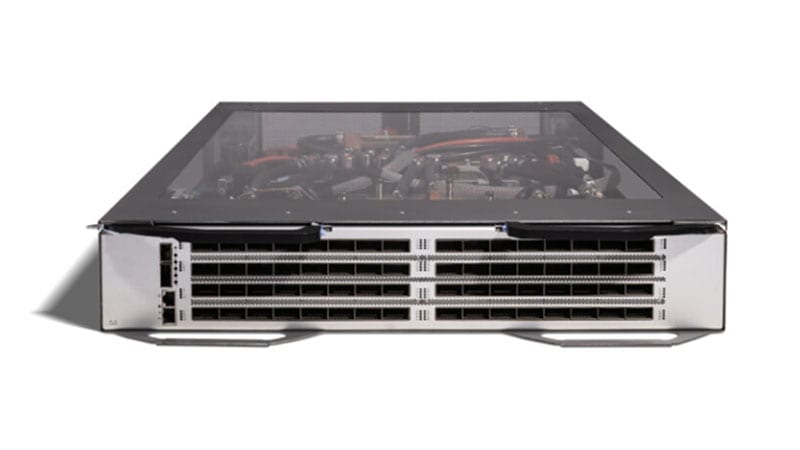 Guides
Cisco ACE Module EoL: Migrating Off ACE10-6500-K9
The ACE Application Control Engine Module (ACE10-6500-K9) passed Last Day of Support on January 31, 2019. Here is what that means, why it is now a compliance liability, and how to move data center application delivery onto the Catalyst 8500 edge platform and modern load-balancing tiers.
June 13, 2026 · 8 min readGuidesCisco RV042 (RV042-G5) End-of-Life: Migrate to the RV340
The RV042 Dual WAN VPN Router passed its Last Day of Support on June 30, 2019. Here is a practical, partner-vetted plan to refresh to the gigabit RV340 without breaking your dual-WAN VPN branch.
June 11, 2026 · 6 min read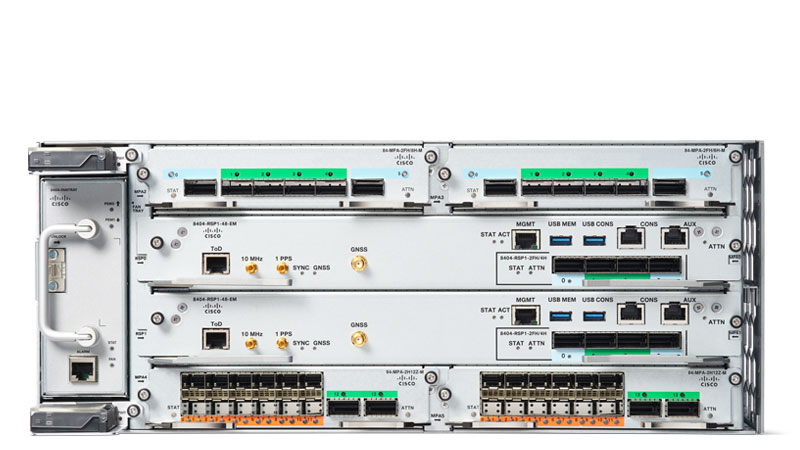 Guides
Cisco 1921 (CISCO1921/K9) EoL: Migrate to the ISR 4221
The Cisco 1921 ISR hit Last Day of Support on September 30, 2023, here is a concrete, branch-tested plan to migrate to the supported ISR 4221.
December 5, 2025 · 7 min readGuidesASR 1002-X End of Life: Catalyst 8500-12X Migration Guide
The ASR1002-X reaches Last Day of Support on July 31, 2027, here is exactly what to migrate to the Catalyst 8500-12X and how to do it cleanly.
October 11, 2025 · 8 min readGuidesASR1001-X End of Life: Migrate to Catalyst 8500L
The ASR1001-X is past End of Software Maintenance with Last Day of Support in July 2027, here is how to migrate cleanly to the Catalyst 8500L (C8500L-8S4X).
October 7, 2025 · 7 min read Guides
Meraki MR24 (MR24-HW) End of Life: Migrate to Catalyst CW9164I
The Meraki MR24 reached Last Day of Support in May 2021, which means no PSIRT patches, firmware, or TAC. Here is what the milestone dates mean and a practical plan to refresh to the Wi-Fi 6E Catalyst CW9164I (CW9164I-MR) under the same Meraki dashboard.
May 18, 2026 · 7 min read