
Cisco ACE Module EoL: Migrating Off ACE10-6500-K9
The ACE Application Control Engine Module (ACE10-6500-K9) passed Last Day of Support on January 31, 2019. Here is what that means, why it is now a compliance liability, and how to move data center application delivery onto the Catalyst 8500 edge platform and modern load-balancing tiers.
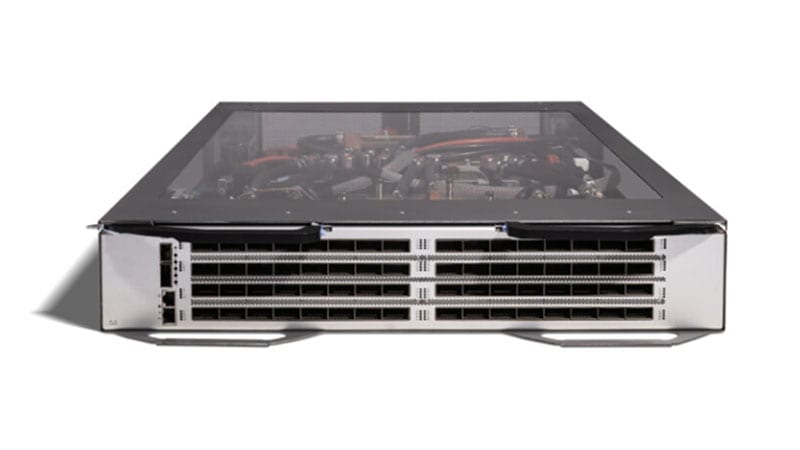
If a Cisco ACE Application Control Engine Module (PID ACE10-6500-K9) is still seated in a Catalyst 6500 or 7600 chassis in your data center, it is running on borrowed time in the most literal sense. The module passed its Last Day of Support on January 31, 2019. From that date forward Cisco provides no software maintenance, no PSIRT security fixes, no TAC support, and no RMA replacement for this part. The blade still load-balances traffic, terminates SSL, and switches content, which is precisely why it tends to survive quietly in production long after the support floor has dropped out from under it. This guide explains what each lifecycle date means for a live ACE deployment, why the absence of a direct successor is actually a planning advantage, and how to migrate application delivery onto the recommended Catalyst 8500 (C8500-12X) and a modern load-balancing tier.
ACE10-6500-K9 lifecycle at a glance: End of Sale: March 1, 2012. Last Day of Support (LDoS): January 31, 2019. Both milestones have long passed. The full milestone record and replacement detail live on the Cisco EoL hub.
What the ACE Module actually did
The ACE10-6500-K9 was a Layer 4-7 services blade, not a switching line card. Installed in a Catalyst 6500 Series switch or a Cisco 7600 Series router, it offloaded application delivery work from the network: server load balancing (SLB), SSL/TLS termination and offload, TCP connection management, content switching, and basic application security and traffic optimization. The base module forwarded application traffic at 4 Gbps, with paid throughput upgrade licenses enabling 8 Gbps and 16 Gbps tiers. Hardware-accelerated SSL handled roughly 3.3 Gbps of bulk crypto and on the order of 1,000 SSL transactions per second. Its signature feature was virtualization: a single physical ACE could be carved into multiple virtual contexts, each with its own administrators, policies, and resource allocation, so one blade served many application teams or tenants.
For mid-2000s data centers this was a powerful, consolidated design. The problem is everything underneath it. The ACE depends on the Catalyst 6500/7600 platform, which is itself end-of-life, and on a Supervisor and bus architecture that modern Cisco roadmaps have left behind. You are not maintaining one obsolete part; you are maintaining an obsolete platform to host an obsolete part.
Why acting now matters
An end-of-life services blade is dangerous not because it fails, but because it keeps working while every safety mechanism around it disappears. After LDoS, three exposures compound on a module that sits directly in the application data path:
- No PSIRT security patches. When a vulnerability is disclosed in the ACE software stack, in its SSL/TLS implementation, or in the supervisor it rides on, there is no fixed image. Modern TLS posture has moved on entirely, the ACE era predates broad TLS 1.2 hardening and has no path to current cipher and protocol requirements. Any weakness on this hardware is permanent.
- No TAC or RMA. A failing module cannot be opened as a support case or swapped under contract. Recovery depends on a pre-LDoS spare or a gray-market unit of the same dead-end part, with no firmware assurance.
- Audit and compliance exposure. Unsupported, unpatchable infrastructure in the application path is a direct finding against FISMA, FedRAMP, CMMC, HIPAA, and PCI DSS patch-management controls. Auditors flag it whether or not a specific exploit exists, because there is no remediation path.
For federal, DoD, SLED, and healthcare buyers, that compliance dimension usually forces the timeline harder than the hardware risk does. An unsupported load balancer terminating SSL for regulated workloads is exactly the kind of finding that stalls an ATO or a PCI attestation.
The recommended replacement, and why it is not a like-for-like swap
Be clear-eyed about this: Cisco retired the ACE line without a direct successor blade, so there is no drop-in. That is genuinely good news, because the integrated-blade model the ACE represented has been superseded by better-targeted platforms. The recommended replacement, the Cisco Catalyst 8500 Edge Platform (C8500-12X), addresses the routed, encrypted edge that the Catalyst 6500/7600 chassis once anchored, while dedicated load-balancing tiers absorb the pure Layer 4-7 work.
Catalyst 8500 (C8500-12X): the routed, encrypted edge
The C8500-12X is a 1U fixed platform with twelve 1/10G SFP+ ports, built on Cisco's third-generation Quantum Flow Processor ASIC. It delivers up to 120 Gbps of aggregate Cisco Express Forwarding throughput, roughly 51 Gbps of SD-WAN IPsec at large packet sizes, and scales to about 8,000 SD-WAN overlay tunnels and 4 million IPv4 routes. Crucially for a workload that used to lean on the ACE for SSL, it provides inline hardware-accelerated IPsec and MACsec, encryption is performed in silicon at line rate, not bolted on. It runs Cisco IOS XE SD-WAN with Smart Licensing and Cisco DNA / Catalyst subscription tiers, replacing the per-feature paper licensing of the ACE throughput upgrades with a centralized, transferable entitlement model managed through Cisco Smart Software Manager.
Compared to a 4-to-16 Gbps ACE blade trapped inside an EoL chassis, the C8500-12X collapses WAN aggregation, routing, and encrypted transport into a compact, currently-supported, federal-ready 1U platform with an order of magnitude more forwarding capacity and a software model designed for the next decade rather than the last one.
Where the load balancing actually goes
The C8500-12X is a routing and secure-connectivity platform, not an application delivery controller. If you genuinely used the ACE for server load balancing, persistence, and SSL termination in front of application pools, that function belongs on a dedicated ADC tier, a modern hardware or virtual load balancer (F5, Citrix/NetScaler), a software/cloud load balancer, or Kubernetes-native ingress for containerized workloads. The migration is therefore an opportunity to right-size: many ACE deployments were carrying only light SLB that a virtual ADC or even native application-tier load balancing now handles more cleanly than a six-figure chassis blade ever did. The first job of the assessment below is to separate what was real from what was inertia.
A practical migration plan
1. Assess and inventory
Export the running configuration from every ACE virtual context. Catalog what each context actually does: which VIPs and server farms are live, which use SSL termination versus SSL bridging, which depend on persistence/stickiness, health probes, or content rules. Map each VIP to its current traffic volume and SSL TPS. This is what determines whether you need a full ADC tier, a lightweight virtual load balancer, or nothing beyond what the C8500-12X and the application platform already provide.
2. Translate features for parity, do not transliterate config
ACE configuration syntax does not port to IOS XE or to a third-party ADC. Treat migration as a re-implementation against documented requirements, not a find-and-replace. Reproduce VIPs, server farms, health monitors, persistence, and SSL policies on the target platform, and modernize the crypto while you are there, current TLS versions, ciphers, and certificate handling rather than whatever the ACE froze in 2019. Validate each policy against the application owner before cutover.
3. Plan the physical transition
Moving from a chassis blade to a 1U appliance plus an ADC tier changes the rack picture. Confirm rack units, power (the C8500-12X is a fixed-platform power draw, not a chassis slot), and cooling. Plan optics explicitly: the ACE consumed a backplane slot, while the C8500-12X needs SFP+ transceivers and fiber for its twelve 1/10G ports, order optics with the chassis, not after. Map uplinks and the new traffic path through the routed edge, and verify any MACsec links end to end.
4. License transition
Retire the ACE throughput upgrade licenses; they have no transfer value. Stand up Cisco Smart Licensing for the C8500-12X and select the DNA/Catalyst tier that matches your feature and tunnel-scale needs. License any ADC tier separately. Confirm entitlements are active in Smart Software Manager before cutover so you are not throttled in production.
5. Phased cutover
Migrate context by context, lowest-risk application first. Build the new VIP on the target platform in parallel, validate health checks and SSL behavior against a test client, then move DNS or the upstream routing to the new path with the ACE context still warm as a fallback. Only after the new path is proven do you drain and decommission the original context. This keeps every step reversible.
6. Secure decommission
The ACE terminated SSL, so it held private keys and certificates. Do not skip secure disposal. Revoke and rotate any certificates that lived on the module, wipe configuration and key material, and follow your data-destruction standard (NIST 800-88 for federal environments). Document chain of custody for the retired hardware.
Procurement notes for regulated buyers
The C8500-12X and the load-balancing tiers we pair with it are available in TAA-compliant configurations suitable for federal acquisition through Simplified Acquisition, a FAR-based purchase order, or GPC; Uniqcli does not currently hold a GSA Schedule. As an authorized Cisco partner, uniqcli can confirm TAA country of origin, current lead times, GPC/micro-purchase thresholds, and Smart Licensing and DNA subscription terms up front, and validate genuine, warranty-backed hardware rather than gray-market supply. Browse current platforms in our catalog, or see other affected parts in the Cisco end-of-life library.
Ready to scope a replacement? Send us your ACE context inventory and we will map each feature to the right C8500-12X and ADC design, TAA-compliant and quoted with real lead times. Get a quote and we will turn it around fast.
Frequently asked questions
Is there a direct hardware replacement for the Cisco ACE Module?
No. Cisco discontinued the ACE Application Control Engine line without a one-for-one successor blade. The load-balancing, SSL offload, and content-switching functions of the ACE10-6500-K9 are now split across modern platforms: routing and secure connectivity move to IOS XE platforms such as the Catalyst 8500 (C8500-12X), while pure Layer 4-7 server load balancing is typically handled by a dedicated application delivery controller (F5, Citrix/NetScaler, or Cisco's cloud and Kubernetes-native load balancing). The right mix depends on which ACE features you actually use in production today.
What exactly happened on January 31, 2019 for the ACE10-6500-K9?
That was the Last Day of Support (LDoS), the final lifecycle milestone. After LDoS, Cisco provides no software fixes, no PSIRT security patches, no TAC support cases, and no RMA hardware replacement for the module. End of Sale was March 1, 2012, so the unit has been unorderable for over a decade and unsupported for over seven years. Any ACE module still racked is running frozen, unpatchable software.
We only used the ACE for SSL offload and basic load balancing. Do we need the full C8500-12X?
Not necessarily for the load balancing itself. The C8500-12X is an SD-WAN and routing edge platform with hardware-accelerated IPsec and MACsec; it is the right answer when you are also collapsing the aging Catalyst 6500 chassis and need carrier-grade encrypted WAN aggregation. For the Layer 4-7 SLB and SSL termination specifically, a current application delivery controller or software load balancer is the closer functional match. Many designs use both: the C8500-12X for the routed, encrypted edge and a dedicated ADC tier for application delivery.
Does keeping a working ACE module create an audit problem?
Yes. Because the module receives no security patches after LDoS, any vulnerability in its frozen software is permanent and unremediable. That fails the patch-management and supported-software expectations in FISMA, FedRAMP, CMMC, HIPAA, and PCI DSS. Auditors increasingly flag unsupported network infrastructure as a finding regardless of whether an exploit is known, because there is no path to remediation. It also sits in the data path for application traffic, which raises the stakes.
Are TAA-compliant, federal-ready replacements available now?
Yes. The Catalyst 8500 (C8500-12X) and the dedicated load-balancing tiers we pair with it are available in TAA-compliant configurations for federal procurement via GPC, Simplified Acquisition, or a FAR-based purchase order; Uniqcli does not currently hold a GSA Schedule or other contract vehicle. As an authorized Cisco partner, uniqcli can confirm TAA country of origin, current lead times, GPC/credit-card thresholds, and Smart Licensing and DNA subscription terms before you commit. Request a scoped quote and we will map your ACE feature set to the correct replacement design.
Uniqcli Team
The Uniqcli Team is an authorized Cisco partner specializing in Catalyst wireless, switching, datacenter fabric, licensing, and managed services for U.S. federal, state, local, and education customers. We scope Cisco bills of materials, validate procurement paths (TAA, FIPS, contract vehicles), and deliver design, deployment, and managed operations.
Ready to scope your Cisco build?
Build a quoteRelated reading
View all →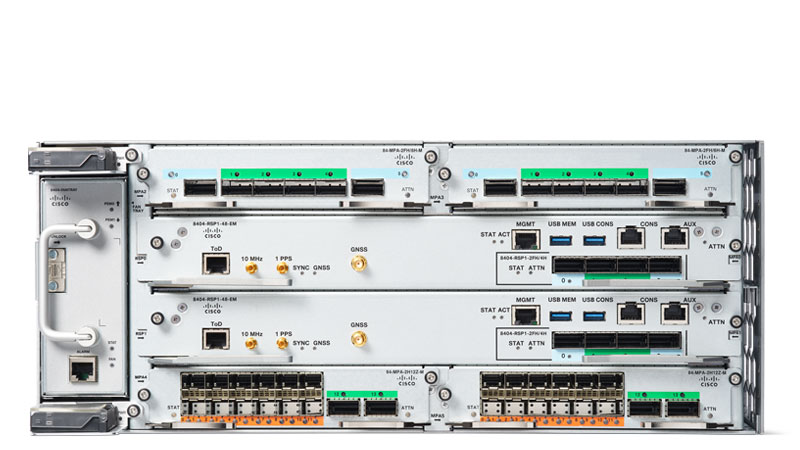 Guides
Cisco 7606-S EoL: Migrating to the Catalyst 8500 (C8500-12X)
The Cisco 7606-S (CISCO7606-S) passed Last Day of Support on July 31, 2021. Here is why the chassis must come out and how to migrate its WAN-edge roles cleanly to the IOS XE-based Catalyst 8500 (C8500-12X).
May 7, 2026 · 7 min read Guides
Cisco Nexus 9396PX EoL: Migrate to Nexus 93180YC-FX3
The Nexus 9396PX (N9K-C9396PX) passed Last Day of Support on February 19, 2023, here is why this original 9300 leaf has to come out and how to refresh cleanly to the Cloud Scale 93180YC-FX3.
April 2, 2026 · 10 min read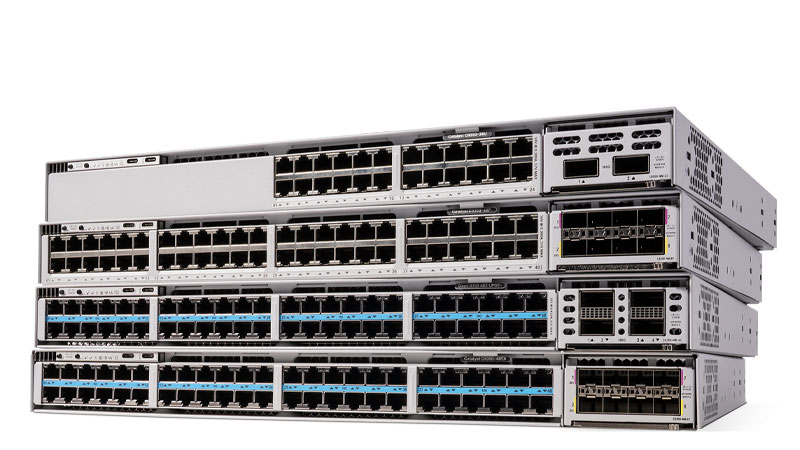 Guides
Meraki MS390 4x10GE Module EoL: Refresh to C9300-NM-8X
The MA-MOD-4X10G uplink module hits Last Day of Support on November 1, 2026. Here is what that means for an MS390 stack and how to refresh cleanly to the Catalyst 9300 with the native C9300-NM-8X 10G network module.
February 27, 2026 · 8 min read Guides
UCS-E180D-M3/K9 vSAN EoL: Migrate to UCS-E1100D-M6
The UCS E-Series vSAN module (UCS-E180D-M3/K9) hits Last Day of Support on November 30, 2026. Here's why branch hyperconverged compute on ISR 4000 must move to the UCS-E1100D-M6 on Catalyst 8000, specs, licensing, and a clean cutover plan.
February 25, 2026 · 10 min readGuidesNexus 5672UP-16G EoL: Migration to Nexus 9300 93180YC-FX
The Nexus 5672UP-16G reaches Last Day of Support on May 31, 2026, here's why it has to come out and how to migrate cleanly to the 25G/100G Nexus 9300 (N9K-C93180YC-FX).
February 5, 2026 · 10 min readGuidesCisco Nexus 2248TP EoL: Migrate to the 2248TP-E FEX
The Nexus 2248TP (N2K-C2248TP-1GE) passed Last Day of Support on November 30, 2021. Here is why it must come out of the rack and how to refresh cleanly to the enhanced Nexus 2248TP-E Fabric Extender.
January 27, 2026 · 9 min read