
Cisco MDS 9124 End of Life: Migrating to the MDS 9148T 32G
The Cisco MDS 9124 (DS-C9124-K9) hit Last Day of Support in 2019, no TAC, RMA, or security patches. Here is what its lifecycle dates mean and how to migrate your Fibre Channel fabric to the 32G MDS 9148T with zero downtime.
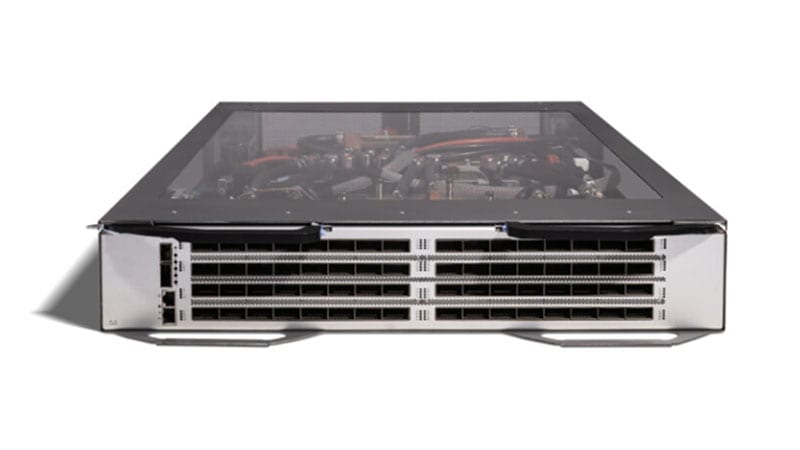
If you still have a Cisco MDS 9124 Multilayer Fabric Switch (DS-C9124-K9) carrying production Fibre Channel traffic, it is running well past every support boundary Cisco defines. This 24-port, 4-Gbps FC switch was a workhorse of entry and midrange SANs a decade ago, but it reached End of Sale on January 24, 2014 and its Last Day of Support arrived on January 31, 2019. As of today it has been more than six years since Cisco TAC, RMA, or PSIRT coverage ended. For a storage fabric, the layer your databases, hypervisors, and backups all depend on, that is an unusually concentrated risk. This guide explains what each milestone means for the 9124 specifically, why the Cisco MDS 9148T 32G is the right refresh target, and how to plan a low-risk fabric migration.
Where the MDS 9124 stands in its lifecycle
Cisco publishes a fixed sequence of lifecycle dates, and the 9124 has passed all of them. Understanding what each one actually withdraws is the difference between an informed risk decision and an accidental one.
What the milestone dates mean
- End of Sale (Jan 24, 2014): Cisco stopped selling new DS-C9124-K9 units and on-demand port-activation licenses through normal channels. Any 9124 in service after this date is, by definition, aging hardware with no factory-fresh supply.
- End of Software Maintenance (n/a for this platform): the 9124 ran SAN-OS / early NX-OS trains that stopped receiving maintenance rebuilds; there is no current, patched firmware image to deploy. The code on the box is the code you are stuck with.
- Last Day of Support / LDoS (Jan 31, 2019): the hard cliff. After this date Cisco TAC will not open cases, Cisco will not RMA a failed switch or power supply, and PSIRT will not issue or fix advisories for the platform. There is no paid extension past LDoS for this product.
Why acting now is not optional: A post-LDoS storage switch fails three ways at once: no replacement hardware when a PSU or ASIC dies (your SAN runs degraded or down until you scavenge a used unit), no patch path for any new Fibre Channel or management-plane vulnerability, and a documented audit finding. FedRAMP, CMMC, HIPAA, and PCI assessors all flag unsupported infrastructure as an unmanaged risk, and a SAN switch sits directly in the data path for regulated workloads.
The recommended replacement: Cisco MDS 9148T 32G
Cisco's direct successor for entry/midrange fabrics is the MDS 9148T 32G Multilayer Fabric Switch (DS-C9148T-24PETK9). It keeps the familiar 1RU, fixed-port form factor and NX-OS operating model of the 9100 family but moves the entire platform forward by several generations. The headline change is raw speed and capacity, and for a storage fabric that translates directly into fewer ISLs, lower latency, and headroom for NVMe over Fibre Channel.
Concretely what is better for this fabric
- Port speed: 32-Gbps Fibre Channel per port versus 4-Gbps on the 9124, an 8x per-port jump, with auto-negotiation down to 8/16G so existing 8G and 16G HBAs and arrays keep working during transition.
- Port count and density: 48 line-rate 32G ports in 1RU versus 24 ports of 4G, double the ports at eight times the speed, in the same rack footprint, with no oversubscription at full line rate.
- On-demand to base licensing: the 24-port base/expansion ordering model (the -24PETK9 SKU ships 24 ports active with a 24-port expansion license to reach 48) replaces the 9124's older per-port on-demand scheme, and Smart Licensing handles entitlement centrally instead of node-locked PAK keys.
- NVMe/FC ready: the 9148T supports NVMe over Fibre Channel natively, so the same fabric can carry both classic SCSI/FCP and modern NVMe arrays, something the 4G 9124 architecture cannot do.
- Modern fabric services: built-in analytics hardware (32G SAN Analytics with streaming telemetry), slow-drain detection and automatic recovery, and richer diagnostics that the SAN-OS-era 9124 never had.
- Operations: current NX-OS with DCNM / Nexus Dashboard Fabric Controller management, ongoing PSIRT coverage, and a supported TAC/RMA path, the entire point of the refresh.
A practical migration plan
Storage fabrics tolerate change poorly, so treat this as a dual-fabric, phased cutover rather than a forklift. The good news: most SANs are already built as two independent fabrics (A and B), which gives you a natural way to migrate one side at a time with no application downtime.
1. Assess and inventory
- Pull the full zoning database, VSAN layout, FC aliases, and active/licensed port count from each 9124 (show running-config, show zoneset active, show flogi database).
- Map every attached device: HBA WWPNs, array target ports, current negotiated speeds, and which hosts are single- vs dual-attached so you know what is at risk during a fabric swing.
- Record optics: the 9124 used 4G SFPs; the 9148T uses 32G SFP+ optics (which step down to 16/8G). Plan a one-for-one optic refresh, old 4G SFPs do not carry forward.
2. License and config parity
- Confirm port-count licensing on the 9148T matches or exceeds your active 9124 ports; order the 24-port expansion license if you need more than 24 active ports per switch.
- Recreate VSANs, zonesets, and device aliases on the new switch. NX-OS lets you export the zoning DB and import it, but validate name lengths and any legacy default-zone behavior rather than assuming a clean import.
- Decide on enhanced zoning, smart zoning, and port-channel/ISL design up front, the 9148T can collapse multiple 4G ISLs into far fewer 32G links.
3. Physical, cutover, and decommission
- Rack and stage: the 9148T is 1RU with redundant hot-swap PSUs and front-to-back airflow; confirm power (it draws more than the 9124 at full load) and airflow direction matches your hot/cold aisle before install.
- Phased cutover: bring the new switch up as a new fabric or as an ISL'd extension of the existing fabric, migrate device cabling one HBA/array port at a time keeping each host's redundant path live, validate FLOGI and zoning after each move, then retire the 9124 side.
- Repeat for the second fabric only after the first is stable for a full business cycle including a backup window.
- Secure decommission: wipe the configuration (zoning DBs can contain WWPN topology data), remove from monitoring/NDFC, and dispose through a process that meets your data-handling and asset-disposal policy.
Procurement notes for regulated buyers
For US federal, DoD, and SLED buyers, source the 9148T as new, TAA-compliant hardware through an authorized Cisco partner so it is eligible for GPC/credit-card purchase, Simplified Acquisition, or a FAR-based purchase order, and carries a genuine Cisco warranty and SmartNet entitlement. Avoid gray-market 32G optics, counterfeit SFPs are a common failure and support-eligibility problem. Lead times on MDS switches and 32G optics can run several weeks, so confirm availability and licensing before you set a cutover date. As an authorized partner, uniqcli can validate the exact 9148T SKU, optic, and license bundle against your current 9124 fabric and quote TAA-compliant stock.
Browse other affected platforms in the Cisco End-of-Life library, or check current MDS 9148T and 32G optic availability in our catalog. When you are ready to scope the refresh, get a quote and we will build a TAA-compliant 9148T migration BOM matched to your existing fabric.
Frequently asked questions
Is the Cisco MDS 9124 still supported in 2026?
No. The MDS 9124 (DS-C9124-K9) reached End of Sale on January 24, 2014 and Last Day of Support (LDoS) on January 31, 2019. Since LDoS, Cisco TAC will not open cases, Cisco will not RMA failed hardware, and PSIRT will not issue or fix security advisories for the platform. There is no paid support extension available past LDoS for this switch.
What is the recommended replacement for the MDS 9124?
Cisco's direct successor is the MDS 9148T 32G Multilayer Fabric Switch (DS-C9148T-24PETK9). It keeps the same 1RU fixed-port form factor and NX-OS model but moves from 24 ports of 4-Gbps Fibre Channel to up to 48 ports of line-rate 32-Gbps FC, adds native NVMe/FC support, built-in SAN Analytics, and Smart Licensing.
Can I migrate from the 9124 to the 9148T without downtime?
Yes, in almost all cases. Most SANs are built as redundant A/B fabrics, so you migrate one fabric at a time while each host keeps its other path live. You stage the 9148T, recreate VSANs and zoning, then move HBA and array cabling one port at a time, validating FLOGI and zoning after each move before retiring the 9124 side.
Will my existing 8G and 16G HBAs and arrays work with the MDS 9148T?
Yes. The 9148T's 32G ports auto-negotiate down to 16G and 8G, so existing 16G and 8G devices connect and run during and after migration. Note that 4G SFPs from the 9124 do not carry forward, you will need 32G SFP+ optics (which step down to 16/8G) on the new switch.
Why does an unsupported SAN switch matter for compliance?
A Fibre Channel switch sits directly in the data path for regulated workloads. FedRAMP, CMMC, HIPAA, and PCI assessors treat unsupported, unpatchable infrastructure as an unmanaged risk and routinely flag it as an audit finding. With no PSIRT coverage, any newly discovered vulnerability on the 9124 can never be remediated, which is difficult to justify in any security assessment.
Uniqcli Team
The Uniqcli Team is an authorized Cisco partner specializing in Catalyst wireless, switching, datacenter fabric, licensing, and managed services for U.S. federal, state, local, and education customers. We scope Cisco bills of materials, validate procurement paths (TAA, FIPS, contract vehicles), and deliver design, deployment, and managed operations.
Ready to scope your Cisco build?
Build a quoteRelated reading
View all → Guides
Cisco MDS 9148 (DS-C9148-K9) Replacement & Migration Guide
The MDS 9148 8G fabric switch is past last day of support, here is why moving to the 16G MDS 9148S now protects your SAN, your TAC coverage, and your audit posture.
December 17, 2025 · 8 min readGuidesCisco MDS 9506 EoL: Migrating Your SAN Core to the MDS 9706
The MDS 9506 director passed Last Day of Support on April 30, 2022, here is why it must come out of your SAN core and how to migrate cleanly to the 16/32/64-Gbps MDS 9706.
April 15, 2026 · 9 min readGuidesCisco Nexus 9396TX EoL: Migrate to the 93180YC-FX3
The Nexus 9396TX (N9K-C9396TX) passed its Last Day of Support on April 30, 2023. Here is a practical, spec-driven plan to refresh this 10GBASE-T leaf onto the Nexus 93180YC-FX3, covering the milestone dates, what is concretely better, and a phased migration that keeps your fabric supported and audit-clean.
April 1, 2026 · 8 min readGuidesCisco MDS 9222i (DS-C9222I-K9) to MDS 9250i Migration Guide
The MDS 9222i is years past last day of support. Here is why an unsupported FCIP switch is a real risk and how to refresh cleanly to the MDS 9250i Multiservice Fabric Switch.
May 29, 2026 · 9 min readGuidesCisco Nexus 5548P EoL: Migrate to Nexus 9300 (93180YC-FX3)
The Nexus 5548P passed Last Day of Support on September 30, 2020, no patches, no TAC, no RMA. Here is why it must come out of the rack and how to migrate cleanly to the Nexus 9300 (N9K-C93180YC-FX3).
May 27, 2026 · 8 min read Guides
Cisco Meraki MX90 End-of-Life: Migrating to the MX85
The Meraki MX90 hit Last Day of Support on April 26, 2021, no firmware, no PSIRT fixes, no RMA. Here is a concrete, partner-built plan to refresh mid-size branches to the cloud-managed Meraki MX85, with throughput, licensing, and cutover specifics.
May 24, 2026 · 6 min read