
Meraki MR24 (MR24-HW) End of Life: Migrate to Catalyst CW9164I
The Meraki MR24 reached Last Day of Support in May 2021, which means no PSIRT patches, firmware, or TAC. Here is what the milestone dates mean and a practical plan to refresh to the Wi-Fi 6E Catalyst CW9164I (CW9164I-MR) under the same Meraki dashboard.
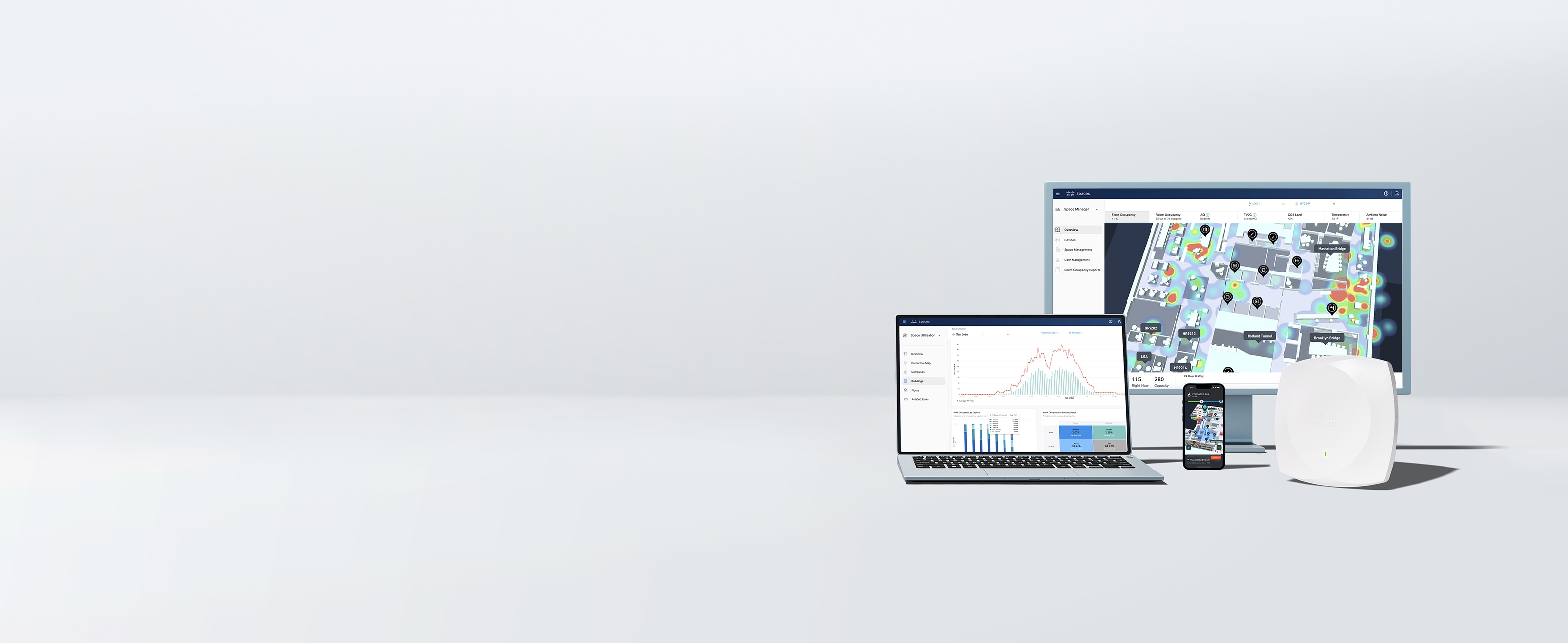
If you still have Cisco Meraki MR24 access points (PID MR24-HW) bridging users to your network, they are now running on borrowed time in the most literal sense. The MR24 went End of Sale on May 9, 2016, and crossed its Last Day of Support (LDoS) on May 31, 2021. As of today every MR24 in your environment is unsupported hardware: it receives no firmware updates, no security fixes, and no TAC or RMA coverage. This guide explains exactly what each of those milestones means for a Meraki-managed wireless estate, why the gap matters more than it might appear, and how to execute a clean refresh to the recommended replacement, the Catalyst CW9164I in its Meraki dashboard variant (CW9164I-MR).
What the MR24 actually is, and why it is the floor of your network now
The MR24 was a premium-tier 802.11n (Wi-Fi 4) cloud-managed indoor access point. It ran dual-concurrent 2.4 GHz and 5 GHz radios with 3x3 MIMO and three spatial streams, which in its day made it the high-density choice over the 2x2 MR16, delivering roughly 450 Mbps per radio and about 900 Mbps of aggregate PHY rate. It took a single 10/100/1000 (1G) Ethernet uplink and drew power over 802.3af PoE. That was a strong spec in 2012. In 2026 it is a hard ceiling: 802.11n has no OFDMA, no MU-MIMO, no 6 GHz band, and its real-world goodput for a room full of modern phones, laptops, and medical or IoT endpoints is a fraction of what those clients can consume. Every device that associates to an MR24 is being dragged back to a 14-year-old air interface.
What each end-of-life milestone means in practice
End of Sale (May 9, 2016)
After EoS, Cisco no longer manufactures or sells the MR24 through authorized channels. Any unit you buy after that date is used, refurbished, or gray-market, with no factory warranty and, critically, no guarantee that it can claim a current Meraki license. EoS is the starting gun on the support clock, not the end of usability.
End of Software Maintenance
For most Cisco platforms this is the date after which no new maintenance or feature firmware ships. Meraki MR hardware is cloud-managed, so firmware is delivered centrally from the dashboard rather than downloaded per device; for the MR24 the practical effect is that the model stopped receiving new firmware trains well before LDoS and is now frozen. It will run whatever build it last pulled, with no path to current MR firmware features or fixes.
Last Day of Support (May 31, 2021)
This is the milestone that should drive your timeline. After LDoS there are no PSIRT security patches for the MR24, no bug fixes, and no Cisco TAC support or hardware RMA. If a vulnerability is disclosed in the firmware these units run, it will never be remediated on this hardware. If an MR24 dies, there is no warranty replacement. From a lifecycle standpoint the MR24 is now a static, unsupported attack surface sitting inside your trusted network.
Why acting now is not optional for regulated buyers: For federal, DoD, SLED, and healthcare environments, running hardware past LDoS is an audit and accreditation problem, not just an IT preference. Frameworks such as NIST 800-53 (SI-2, flaw remediation), CMMC, FedRAMP continuous monitoring, and HIPAA Security Rule controls all assume a vendor-supported patch path. An access point that cannot receive security updates is a documented finding waiting to happen and a clean justification for refresh budget.
The recommended replacement: Catalyst CW9164I (CW9164I-MR)
Cisco's recommended successor is the Catalyst CW9164I, ordered as CW9164I-MR for Meraki dashboard management. This is the key point for MR24 shops: you do not have to abandon the Meraki cloud or retrain your team. The CW9164I-MR is managed from the same Meraki dashboard you already use, so SSIDs, group policies, RF profiles, and templates carry forward conceptually even as the radio hardware leaps two Wi-Fi generations ahead.
What concretely gets better
- Wi-Fi generation: from 802.11n (Wi-Fi 4) to 802.11ax (Wi-Fi 6E). The CW9164I is tri-band, adding the clean 6 GHz band on top of 2.4 and 5 GHz, where the MR24 had no 6 GHz at all.
- Radio architecture: 2x2 on 2.4 GHz, 4x4 on 5 GHz, and 4x4 on 6 GHz, versus the MR24's single 3x3 stream count per band. Aggregate data rate rises from roughly 900 Mbps to up to 7.49 Gbps, on the order of 8x.
- Airtime efficiency: OFDMA and MU-MIMO (both uplink and downlink) let the CW9164I serve many small-frame clients in parallel, the exact density problem 802.11n handles poorly. This is the single biggest real-world gain for high-occupancy rooms.
- Uplink: from a 1G port to Multigigabit (100/1000/2.5G BASE-T), so a single AP can actually push more than a gigabit of aggregate Wi-Fi without the wired port becoming the bottleneck.
- Power: 802.3at/bt PoE+ instead of 802.3af. This is a planning item, not just an upgrade, covered below.
- IoT and location: an integrated IoT radio (Bluetooth Low Energy) for telemetry and location services, which the MR24 lacked entirely.
You can review the full side-by-side on the MR24-HW end-of-life page, and browse current Catalyst Wireless and Meraki MR options in our catalog to confirm the right model and antenna form factor for each space (the CW9164I is an internal-antenna indoor unit; high-ceiling, warehouse, or directional-coverage sites may map better to a CW9166 or CW9164D1).
A practical migration plan
1. Assessment and inventory
Export your AP list from the Meraki dashboard and filter for MR24-HW. Capture, per site: AP count and placement, the access switch each one homes to, the current PoE class drawn, and the SSID/policy set applied. Pull a recent RF heatmap or run a quick survey, because Wi-Fi 6E and 6 GHz coverage characteristics differ from 802.11n; you may consolidate AP count in some rooms and need denser placement in others. Confirm whether each closet switch can supply 802.3at/bt to every replacement port simultaneously, not just on paper but within the switch's total PoE budget.
2. License transition
The CW9164I-MR requires current Meraki licensing (per-device or per-device co-termination/subscription, depending on your account model). Plan license procurement alongside hardware so APs can claim into your dashboard and come online the moment they are mounted. Decommissioned MR24 licenses do not transfer to new hardware; treat the new APs as net-new licensed devices and reconcile your co-termination date or subscription term during the project.
3. Configuration and feature parity
Because both platforms live in the Meraki dashboard, most configuration is reusable. Validate that RF profiles are rebuilt to actually use 6 GHz and Wi-Fi 6 features (enable OFDMA-friendly settings, set minimum bitrates, and define 6 GHz SSIDs with WPA3, which 6 GHz mandates). Confirm any 802.11n-era device support: very old clients that only do 2.4 GHz still work, but lean on band steering and modern minimum data rates so they do not depress the cell.
4. Physical: rack, power, PoE, uplinks, optics
This is where MR24 refreshes most often stall. The MR24 ran on 802.3af; the CW9164I needs 802.3at/bt to reach full radio and IoT capability. Audit each access switch: total PoE budget, per-port class, and uplink capacity. To get full value from the CW9164I's Multigigabit port, the closet switch should ideally offer mGig (2.5G) downlinks; a 1G access port will work but caps the AP. Verify ceiling mount compatibility (the CW9164I uses current Catalyst mounting brackets, not the legacy MR mount) and that uplinks from the closet back to the core have headroom for the higher aggregate throughput.
5. Phased cutover
Replace AP-for-AP in waves, one closet or floor at a time, rather than a flash cut. Mount the CW9164I, let it claim its license and pull current firmware, validate client association and roaming, then decommission the co-located MR24. Run old and new in parallel only briefly to confirm coverage; do not leave unsupported MR24 units online as permanent overlap. Keep a small bench stock during the project since there is no RMA path for any MR24 that fails mid-migration.
6. Secure decommission
Remove retired MR24s from the dashboard network so they cannot rejoin, factory reset each unit to clear stored configuration and any cached credentials, and dispose through an asset-disposition process appropriate to your sector. For federal and healthcare environments, document the removal of unsupported hardware for your audit trail; that record is part of the compliance value of the refresh, not an afterthought.
Procurement notes for regulated buyers
Source the CW9164I-MR through an authorized Cisco partner so units arrive with valid warranty, claimable Meraki licensing, and clean provenance. For US federal and DoD work, confirm TAA compliance; uniqcli holds no GSA Schedule or other contract vehicle today, so orders run through GPC card purchases or simplified acquisition (FAR Part 13) rather than a Schedule. Wi-Fi 6E Catalyst APs and the matching Meraki licenses can carry real lead times, so order against your phased rollout schedule rather than all at once at the end. See the full lifecycle context on our end-of-life resource hub.
Get a refresh quote scoped to your sites: Share your MR24-HW count, the switches they home to, and your sites, and we will scope a CW9164I-MR migration with the right license term, PoE/mGig validation, and TAA-compliant procurement. Start at Get a Quote.
Frequently asked questions
Is the Cisco Meraki MR24 (MR24-HW) still supported?
No. The MR24 reached End of Sale on May 9, 2016, and Last Day of Support on May 31, 2021. It no longer receives firmware updates, PSIRT security patches, or Cisco TAC and RMA coverage, so it is now unsupported hardware on your network.
What is the recommended replacement for the Meraki MR24?
The Catalyst CW9164I, ordered as CW9164I-MR for Meraki dashboard management. It is a tri-band Wi-Fi 6E access point managed from the same Meraki cloud you already use, with up to 7.49 Gbps aggregate, OFDMA/MU-MIMO, a Multigigabit uplink, 802.3at/bt PoE, and an integrated IoT radio.
Will the CW9164I-MR work in my existing Meraki dashboard?
Yes. The CW9164I-MR is Meraki dashboard managed, so it claims into the same organization and networks as your MR24s. Most SSIDs, group policies, and templates carry forward, though you should rebuild RF profiles to enable 6 GHz, WPA3, and Wi-Fi 6 features the MR24 could not support.
Do I need to upgrade my switches or PoE to deploy the CW9164I?
Likely yes. The MR24 ran on 802.3af, while the CW9164I needs 802.3at/bt PoE+ for full radio and IoT capability. To use its Multigigabit port fully, mGig (2.5G) access ports are ideal, and you should verify each closet switch's total PoE budget before cutover.
Why should regulated buyers replace the MR24 now rather than wait?
Because there are no further security patches for the MR24, running it past LDoS is an audit and accreditation exposure under frameworks like NIST 800-53 flaw-remediation controls, CMMC, FedRAMP, and HIPAA. Unsupported hardware that cannot be patched is a documented finding, which makes the refresh a compliance requirement, not just a performance upgrade.
Uniqcli Team
The Uniqcli Team is an authorized Cisco partner specializing in Catalyst wireless, switching, datacenter fabric, licensing, and managed services for U.S. federal, state, local, and education customers. We scope Cisco bills of materials, validate procurement paths (TAA, FIPS, contract vehicles), and deliver design, deployment, and managed operations.
Ready to scope your Cisco build?
Build a quoteRelated reading
View all → Guides
Cisco Meraki MR26 EoL: Migrate to Catalyst CW9164I
The Meraki MR26 passed Last Day of Support on May 9, 2023, it gets no PSIRT fixes, no firmware, and no RMA. Here is what that means for an 802.11n fleet still in your ceilings and how to refresh cleanly to the Wi-Fi 6E Catalyst CW9164I on the Meraki dashboard.
March 30, 2026 · 9 min readGuidesMeraki MR12 End-of-Life: Migrate to Catalyst CW9164I
The Meraki MR12 reached Last Day of Support on October 24, 2022, no firmware, no PSIRT fixes, no RMA. Here is a practical, partner-built plan to refresh single-radio 802.11n coverage onto the Wi-Fi 6E Catalyst CW9164I without re-architecting your dashboard.
April 6, 2026 · 8 min readGuidesCisco Meraki MR34 (MR34-HW) EoL: Migration to the MR44
The Meraki MR34 hit Last Day of Support in October 2023 and now runs unpatchable firmware. Here is what the milestones mean, how the Wi-Fi 6 MR44 improves on it, and how to migrate cleanly in a regulated environment.
March 24, 2026 · 9 min readGuidesCisco Meraki MR72 EoL: Migrating Outdoor Wi-Fi to the MR76
The Meraki MR72 passed Last Day of Support on April 30, 2024. Here's exactly what that means for your outdoor network and how to migrate cleanly to the Wi-Fi 6 Meraki MR76 without leaving the dashboard.
March 19, 2026 · 7 min readGuidesCisco Meraki MR62 End-of-Life: Migrate to MR36 (Wi-Fi 6)
The Meraki MR62 hit Last Day of Support on November 15, 2024. Here is what each milestone means for an 802.11n cloud AP and a concrete plan to refresh onto the Wi-Fi 6 MR36.
March 10, 2026 · 9 min readGuidesMeraki MR53E EoL: Migration to the Catalyst CW9166I
The Meraki MR53E hits Last Day of Support on July 21, 2026, here's why it must come out and how to migrate cleanly to the Wi-Fi 6E Catalyst CW9166I while staying in the Meraki dashboard.
February 28, 2026 · 8 min read