
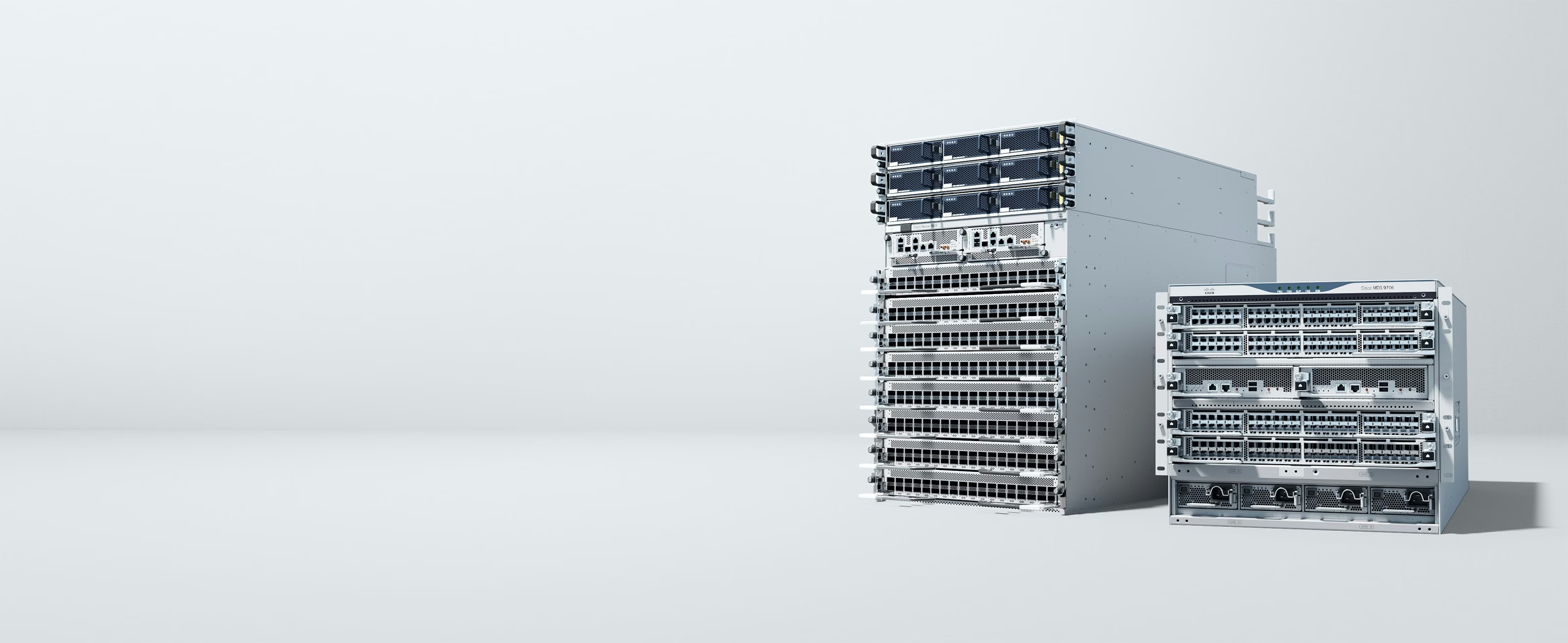
Cisco vs juniper switches is a comparison that changed shape in 2025, when HPE closed its acquisition of Juniper Networks and folded the EX (campus) and QFX (data center) switch lines into HPE Networking alongside Aruba. What didn't change is Junos: a single operating system running across Juniper's routing and switching portfolio, with service-provider roots that show up as protocol depth and operational consistency few campus-first vendors match. Cisco's Catalyst and Nexus lines don't share one OS the way Junos does, but they cover more ground, campus, data center, security, wireless, and collaboration under one Smart Account and one TAC, with a materially deeper bench of TAA-compliant SKUs for federal and public-sector buyers. If you're choosing between Junos consistency and Cisco's architectural breadth, the right call depends on whether your team is already fluent in one ecosystem and how much weight TAA compliance carries in your procurement.
At a glance
EX and QFX switches (now under HPE) and Cisco's Catalyst/Nexus lines solve overlapping problems with different operating philosophies. Here's the shape of the trade-off before the detail below.
| Dimension | Juniper EX / QFX (HPE) | Cisco Catalyst / Nexus |
|---|---|---|
| Platform positioning | EX = campus access/aggregation, QFX = data center spine-leaf | Catalyst = campus/branch, Nexus = data center, same split, different vendor |
| Operating system | Junos, one OS across routing and switching, service-provider heritage | IOS XE (campus) and NX-OS (data center), two purpose-built code bases |
| Management | Mist AI (cloud, AI-driven assurance) plus Juniper Apstra for data-center fabric automation | Catalyst Center for campus, Nexus Dashboard / APIC for data center |
| Licensing | Juniper subscription and perpetual software tiers, confirm current terms in a quote | Cisco Smart Licensing, Network Essentials/Advantage and NX-OS Essentials/Advantage tiers |
| Stacking / fabric | Virtual Chassis (campus) and EVPN-VXLAN fabric (QFX data center) | StackWise plus SD-Access (Catalyst); vPC/VXLAN-EVPN (Nexus) |
| Typical role | Service-provider-heritage networks, AI-driven wired/wireless assurance | Broad enterprise and federal campus plus data center, TAA-compliant depth |
Junos: one operating system, service-provider roots
Junos is Juniper's biggest structural advantage and the reason service-provider and carrier-adjacent networks have stayed loyal to the brand for two decades. The same OS, the same modular software architecture, and largely the same configuration philosophy run across EX campus switches, QFX data-center switches, and Juniper's routing portfolio, which cuts down on the cross-platform relearning that Cisco's IOS XE/NX-OS split requires. That consistency pays off hardest in networks with deep protocol requirements, heavy MPLS, BGP-heavy edge designs, or teams who came up through service-provider operations, where Junos's command structure and configuration-commit model feel native. It's a genuine strength, not a marketing line, and it's the single biggest reason a Juniper-experienced network team resists a Cisco migration even when the hardware comparison is close.
Mist AI and the HPE-Juniper integration in 2026
HPE closed its acquisition of Juniper Networks in July 2025, combining Juniper's Mist AI-driven networking, EX switches, and SRX firewalls with HPE's existing Aruba networking business under a new HPE Networking division. Mist AI's natural-language assurance and self-driving RF and wired troubleshooting are genuinely strong, and Juniper Apstra brings intent-based data-center fabric automation that competes directly with Cisco ACI. The integration is still settling: expect roadmap consolidation, SKU rationalization, and support-model changes to continue through 2026 and beyond as HPE reconciles the Juniper and Aruba networking lines under one roof. If procurement stability and a settled roadmap matter as much as feature checkboxes, that ongoing consolidation is worth weighing before you standardize a multi-year refresh on the combined portfolio.
Cisco's edge: TAA-compliant breadth and one architecture
Cisco's counter isn't a single better switch, it's fewer vendors to manage. Catalyst and Nexus share a Smart Account, a TAC relationship, and increasingly converged automation tooling with ISE-based identity and Secure Firewall policy, so a campus-to-data-center design stays inside one support and licensing structure. Cisco also fields TAA-compliant SKUs across a far broader slice of its catalog than most competitors, which matters directly for federal, DoD, and SLED buyers who need Trade Agreements Act documentation on the exact PID they're purchasing, not just somewhere in the vendor's lineup. For an organization without existing Junos expertise, or one that already runs Cisco security and wireless, the architectural and procurement simplicity of staying on Catalyst/Nexus often outweighs Junos's technical elegance, especially once you price in retraining a team on a second CLI and a second automation stack.
Fabric automation: Apstra vs ACI vs SD-Access
Both vendors now sell intent-based fabric automation, and it's worth comparing directly rather than assuming either wins by default. Juniper Apstra takes a vendor-agnostic, blueprint-driven approach to data-center fabric design and validation, which appeals to teams that want the automation layer decoupled from the switch vendor underneath it. Cisco's ACI (on Nexus) and SD-Access (on Catalyst) are more tightly coupled to Cisco hardware but integrate more deeply with Cisco's identity and security stack out of the box. If fabric-automation vendor-independence is a strategic requirement, Apstra deserves a real evaluation; if you want automation that already speaks to your identity and segmentation policy without extra integration work, ACI or SD-Access is the more direct path. Run both through a proof-of-concept against your own topology rather than a vendor-supplied demo fabric, automation tooling looks equally polished in a slide deck, and the real differences show up during day-two change management, not day-one setup.
Don't skip the wireless side of the comparison
Because Mist AI now sits alongside Aruba inside HPE, a Juniper switching evaluation frequently turns into a wireless evaluation too. If your refresh includes access points as well as switches, compare Mist AI's RF assurance against Meraki or Catalyst 9800-based wireless as a combined wired-plus-wireless decision rather than scoring the switches in isolation, the management-plane story changes meaningfully once wireless is in scope on either side.
Which should you choose?
Weigh existing team expertise as heavily as the spec sheet:
- Service-provider or carrier-adjacent heritage team, already standardized on Junos, EX/QFX is a natural fit, especially for MPLS/BGP-heavy designs.
- Need Wi-Fi, wired, WAN, and security under one TAA-compliant federal-ready catalog, Cisco Catalyst and Nexus.
- Data-center fabric automation is the strategic priority, benchmark Juniper Apstra against ACI/Nexus Dashboard directly rather than assuming either wins.
- Standardizing for the long term, watch how the HPE-Juniper roadmap settles before committing a multi-year refresh to the combined portfolio.
Frequently asked questions
Is Juniper still a separate company from HPE?
Not fully. HPE closed its acquisition of Juniper Networks in July 2025, and Juniper's EX switches, QFX switches, SRX firewalls, and Mist AI now sit inside HPE Networking alongside HPE's existing Aruba business. Juniper products continue to ship and receive support, but the corporate structure and roadmap now run through HPE.
What's the difference between EX and QFX switches?
EX-series switches are Juniper's campus and branch access/aggregation line, roughly the equivalent of Cisco Catalyst. QFX-series switches are built for data-center spine-leaf fabrics with EVPN-VXLAN, roughly the equivalent of Cisco Nexus. The split mirrors Cisco's own campus-versus-data-center product division.
Does Juniper offer TAA-compliant switches for federal buyers?
Juniper fields TAA-compliant options within parts of its EX and QFX lineup, and Cisco fields TAA-compliant options across a broader share of its catalog. TAA status is set per part number and lot for both vendors, so confirm country-of-origin documentation on the specific PID before assuming coverage on either side.
Is Junos easier to learn than IOS XE?
Engineers with service-provider or routing backgrounds often find Junos's commit-based configuration model and consistent syntax across the portfolio easier to reason about. Teams already fluent in Cisco IOS/IOS XE typically find the opposite true, since Junos uses a different configuration philosophy that takes deliberate time to learn.
Can I mix Juniper and Cisco switches in the same network?
Yes, and many networks do, especially at the boundary between a service-provider-style WAN edge on Juniper and an enterprise campus on Cisco. The practical requirement is a clearly defined routing and management boundary between the two, since neither Mist AI nor Catalyst Center manages the other vendor's hardware natively.
What is Juniper Apstra?
Apstra is Juniper's intent-based data-center fabric automation platform, designed to be vendor-agnostic for the underlying switch hardware. It competes with Cisco's ACI on Nexus for automating fabric design, validation, and change management, and is worth evaluating directly against ACI or SD-Access if fabric automation is a primary driver of your platform decision.
Uniqcli Team
The Uniqcli Team is an authorized Cisco partner specializing in Catalyst wireless, switching, datacenter fabric, licensing, and managed services for U.S. federal, state, local, and education customers. We scope Cisco bills of materials, validate procurement paths (TAA, FIPS, contract vehicles), and deliver design, deployment, and managed operations.
Ready to scope your Cisco build?
Build a quoteRelated reading
View all →GuidesCisco Nexus vs Catalyst: Data Center vs Campus Switching
Cisco catalyst vs nexus isn't a single winner: Nexus runs NX-OS for the data center fabric, Catalyst runs IOS XE for the campus and branch. Here's how the two lines actually divide a network.
July 11, 2026 · 5 min readGuidesMeraki MS vs Catalyst Switches: Cloud-Managed or IOS XE?
Meraki ms vs catalyst is really a management-philosophy question: full cloud-dashboard simplicity versus on-box IOS XE control, and Cisco now blurs the line by cloud-managing Catalyst hardware.
July 11, 2026 · 5 min readGuidesCisco vs Aruba (HPE) Switches: Catalyst vs CX Compared
Cisco vs aruba switches is a genuine campus-value contest: Aruba CX's AOS-CX and Aruba Central often win on simplicity and price, while Catalyst counters with deeper ISE/TrustSec segmentation.
July 11, 2026 · 5 min read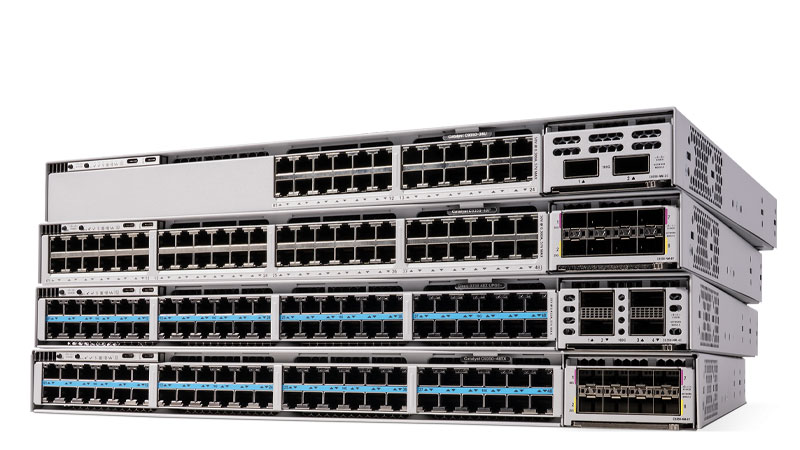 Guides
Do Third-Party SFPs Work in Cisco Catalyst Switches?
Yes, third-party SFPs can work in Cisco Catalyst switches via the service unsupported-transceiver command, but it affects warranty and TAC support. When genuine optics matter.
June 23, 2026 · 6 min read Guides
How to budget a Cisco Catalyst 9300 refresh: ports, PoE, licensing, and services
A line-item approach to scoping a Catalyst 9300 refresh, so the number you bring to finance survives the year it has to live in.
May 12, 2026 · 10 min read Guides
Cisco Catalyst 9200 vs 9300 vs 9500: How to Choose
The Catalyst 9000 family spans the wiring closet to the campus core. Here is how the 9200, 9300, and 9500 actually differ, and a decision framework that keeps your refresh from being over- or under-built.
May 8, 2026 · 13 min read