
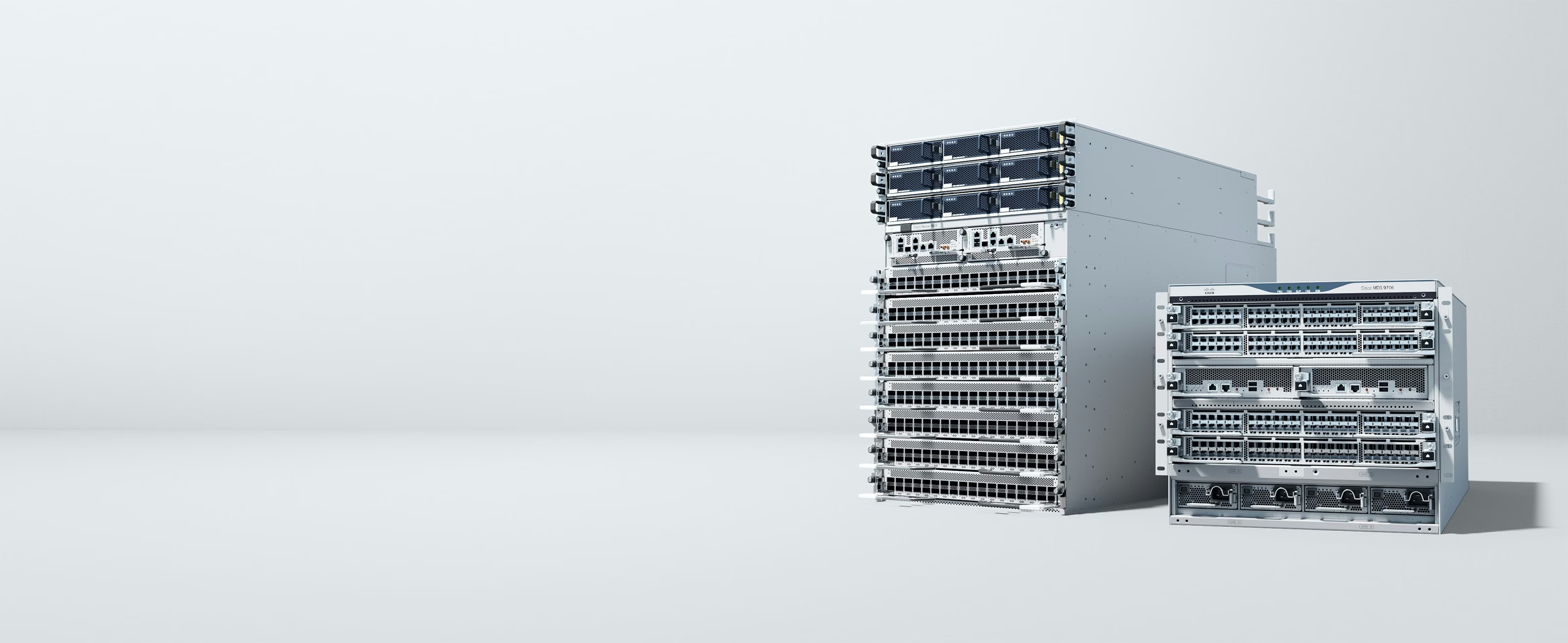
Meraki ms vs catalyst used to be a clean binary, cloud dashboard or on-box CLI, and now it isn't, which is the most useful thing to understand before you buy either one. Meraki MS switches are licensed and managed entirely through the Meraki cloud dashboard: zero-touch provisioning, one pane of glass across switching, wireless, and security cameras, and no meaningful local configuration surface. Catalyst switches run IOS XE locally, giving you the deepest CLI, the richest feature set, and full function with no cloud dependency, managed through Catalyst Center, SNMP, or plain SSH. The twist: current Catalyst 9200/9300 software lets you onboard standard IOS XE hardware into the Meraki dashboard itself, in either a fully cloud-configured mode or a hybrid mode that keeps local IOS XE config authoritative while adding cloud visibility on top, and Cisco also sells the Catalyst 9300-M, factory-built for native Meraki management. The real choice is less about hardware and more about how much of your operation you want to live in the cloud.
At a glance
The MS390 and the Catalyst 9300-M share Catalyst 9300 hardware, but the two lines have very different operating philosophies. Here's the comparison before the nuance below.
| Dimension | Meraki MS | Catalyst (IOS XE) |
|---|---|---|
| Platform positioning | Pure cloud-managed switching for multi-site, lean-IT organizations | Full-featured on-box switching for complex or large campus deployments |
| Operating system | Meraki cloud-managed switch OS, dashboard-configured | IOS XE, local CLI, Catalyst Center, or Meraki cloud/hybrid mode on supported models |
| Management | Meraki dashboard only, single pane across switching, wireless, cameras | Catalyst Center, CLI/SSH, SNMP, or Meraki dashboard cloud/hybrid onboarding |
| Licensing | Per-device Meraki subscription, required for the switch to operate at all | Perpetual Network Essentials/Advantage plus a Cisco DNA subscription at purchase; base switching keeps working after the subscription ends |
| Stacking / upgrade path | Physical stacking on select MS models, dashboard-managed as one logical group | StackWise-160/480/Virtual hardware stacking, plus SD-Access fabric |
| Typical role | Distributed retail, K-12, and branch sites with lean IT staff | Large campus, data-center-adjacent core, deep segmentation/SD-Access needs |
Cloud dashboard vs CLI: the real operational trade-off
Meraki's dashboard is the product, not just a management add-on, every switch feature is designed to be configured, templated, and audited from one cloud console, and that discipline is why organizations running dozens or hundreds of small sites standardize on it. A junior technician can rack a Meraki switch, plug in the uplink, and have it claim its configuration automatically with zero local commands. Catalyst's IOS XE trades that simplicity for depth: granular QoS policy-maps, detailed routing protocol control, platform-specific hardware tuning, and troubleshooting commands that expose exactly what the ASIC is doing, none of which the Meraki dashboard surfaces to the same level even in cloud mode. Neither approach is wrong; they're optimized for different failure modes. Meraki optimizes for consistent configuration across many similar sites with limited local staff. Catalyst optimizes for deep control at a smaller number of complex sites where an experienced engineer needs to reach into the weeds.
Licensing: Meraki's mandatory subscription vs Catalyst's optional tiers
This is the sharpest philosophical difference between the two lines. A Meraki MS switch is inert without an active license, the subscription isn't an add-on, it's the operating requirement, licensed per device and tracked across your dashboard organization. Let a Meraki license lapse and the organization enters a 30-day grace period in which nothing changes for clients or admins; once that window closes, the organization is shut down, dashboard access is restricted to the license page, and the switches become non-operational until licensing is restored. A Catalyst switch ships with a perpetual Network Essentials or Network Advantage license that never expires; the Cisco DNA subscription bought alongside it (three, five, or seven years) gates the software-defined features, with DNA Advantage on top of Network Advantage required for SD-Access fabric roles and richer telemetry, but base switching keeps working after the subscription term ends. That distinction matters most in a budget crunch or a subscription-renewal gap: a Catalyst switch degrades gracefully in that scenario, and a Meraki switch does not.
The convergence: Catalyst hardware you can manage from the Meraki dashboard
Cisco has spent the last few software cycles narrowing the gap deliberately. Current Catalyst 9200, 9300, and 9500 switches on IOS XE 17.15.3 or later can be onboarded directly into the Meraki dashboard, either as configuration source: cloud, where the dashboard fully manages the device and adds a read-only Cloud CLI terminal for show commands and troubleshooting, or as configuration source: device, where the switch keeps its local IOS XE configuration as authoritative while the dashboard layers on centralized monitoring and a Cloud CLI that can also run configuration commands when the admin role allows it. On top of that, Cisco sells the Catalyst 9300-M, 9300L-M, and 9300X-M outright, the same Catalyst 9300 hardware, factory-positioned for native Meraki cloud management with their own Enterprise and Advanced license tiers in 1, 3, 5, 7, and 10 year terms. In practice this means you're no longer locked into choosing an OS at purchase time the way you were a few years ago: you can buy Catalyst hardware today and decide the management model, local IOS XE, hybrid, or full Meraki cloud, based on how the site actually operates.
SD-Access, deep QoS, and edge cases Meraki doesn't chase
Even with the convergence above, there's a ceiling on how far Meraki cloud management goes. SD-Access fabric roles, the most granular QoS and queuing tuning, complex multicast designs, and some platform-specific hardware features remain IOS XE-native capabilities that the Meraki dashboard doesn't expose in either cloud or hybrid mode. If your target architecture is a full SD-Access fabric with identity-based micro-segmentation across campus, plan on standard Catalyst hardware under Catalyst Center rather than Meraki-managed mode. If your requirement is consistent, auditable switching across many sites with a security-camera and wireless story bundled in, Meraki's dashboard-first approach, whether on classic MS hardware or a cloud-onboarded Catalyst, is built exactly for that job.
Offline and air-gapped environments
Meraki's architecture assumes a cloud connection is reachable at least periodically; sites that must run fully air-gapped or in classified/DoD enclaves are generally not a fit for Meraki-managed switching regardless of hardware. Standard Catalyst under local IOS XE, with Smart Licensing Using Policy's fully offline mode (usage reports saved to a file and uploaded from a connected machine), remains the correct choice whenever the network cannot phone home to a vendor cloud at all, not just intermittently.
Which should you choose?
Let site count and team depth decide, not hardware nostalgia:
- Many small or mid-size sites, lean IT staff, want one dashboard for switching, wireless, and cameras, Meraki MS.
- Large, complex campus needing SD-Access fabric, deep CLI control, or fully offline/air-gapped operation, standard Catalyst under Catalyst Center.
- Want Cisco hardware today with the option to move to Meraki cloud management later without a forklift, Catalyst 9200/9300 onboarded into cloud or hybrid mode, or the factory Catalyst 9300-M.
- Standardizing a mixed estate, decide site by site which management model fits, and keep license terms aligned so renewals don't fragment across the Smart Account.
Frequently asked questions
Can a Catalyst switch be managed from the Meraki dashboard?
Yes. Current Catalyst 9200 and 9300 switches on supported IOS XE releases can be onboarded into the Meraki dashboard either in a fully cloud-configured mode or a hybrid mode that keeps local IOS XE configuration authoritative while adding cloud monitoring and a Cloud CLI. Cisco also sells the Catalyst 9300-M, built specifically for native Meraki management.
Does Meraki MS require an internet connection to keep switching?
No, the data plane keeps forwarding traffic locally if cloud connectivity drops, since switching decisions don't depend on a live connection to the dashboard. What you lose during an outage is the ability to make configuration changes or pull live monitoring from the dashboard until connectivity returns.
What is the Catalyst 9300-M?
The Catalyst 9300-M is Cisco's Catalyst 9300 switch hardware sold specifically for native Meraki dashboard management, with its own Enterprise and Advanced license tiers available in multiple term lengths. It's the same underlying switch family as standard Catalyst 9300 hardware, positioned for buyers who want Catalyst-class switching with Meraki's cloud-first operating model from day one.
Is Meraki MS licensing mandatory for the switch to function?
Yes. A Meraki MS switch requires an active license to be claimed, configured, and to keep functioning after the 30-day grace period, this is different from Catalyst, where the perpetual Network license keeps base switching running after the DNA subscription ends. Budget the Meraki subscription as a hard operating cost, not an optional add-on.
Which is better for a large campus, Meraki MS or Catalyst?
Standard Catalyst under Catalyst Center is generally the stronger fit for large, complex campuses that need SD-Access fabric, deep CLI control, or advanced routing and QoS. Meraki MS is built for consistent, easy-to-audit switching across many similar sites rather than deep feature control at a single large site.
Can I migrate from Catalyst to Meraki management later without buying new hardware?
Often yes, if the hardware is a supported Catalyst 9200 or 9300 model on a current IOS XE release, you can onboard it into the Meraki dashboard in cloud or hybrid mode rather than replacing the switch. Confirm your exact model and software version against Cisco's current supported list before planning a fleet-wide transition.
Uniqcli Team
The Uniqcli Team is an authorized Cisco partner specializing in Catalyst wireless, switching, datacenter fabric, licensing, and managed services for U.S. federal, state, local, and education customers. We scope Cisco bills of materials, validate procurement paths (TAA, FIPS, contract vehicles), and deliver design, deployment, and managed operations.
Ready to scope your Cisco build?
Build a quoteRelated reading
View all → Guides
Cisco Meraki MR45 EoL: Migrate to Catalyst CW9166I
The Meraki MR45 reaches Last Day of Support on July 21, 2026, after that, no PSIRT fixes, no firmware, no RMA. Here is what changes and how to refresh cleanly to the Wi-Fi 6E Catalyst CW9166I on the Meraki dashboard.
March 2, 2026 · 9 min read Guides
Meraki vs UniFi: Cloud-Managed Networking Compared
Meraki vs UniFi compared for IT teams weighing a cloud-managed refresh: licensing, support posture, and real total cost, where UniFi wins on price and where Meraki earns its premium.
July 11, 2026 · 5 min read Guides
Meraki MX vs Palo Alto: Cloud-Managed vs Full NGFW
Meraki MX vs Palo Alto usually isn't a head-to-head fight, it's cloud-managed branch simplicity against deep, security-engineer-operated NGFW, and deciding which layer you're actually solving for.
July 11, 2026 · 5 min read Guides
Cisco Meraki MS22 EoL: Migration to the MS130-24P
The Meraki MS22 passed Last Day of Support on April 30, 2021, no patches, no TAC, no RMA. Here is why it has to come out and how to migrate cleanly to the cloud-managed MS130-24P.
May 20, 2026 · 7 min readGuidesCisco Meraki MX60 (MX60-HW) Replacement & MX67 Migration
The Meraki MX60 hit Last Day of Support on 2022-10-24, no firmware, no PSIRT fixes, no RMA. Here is exactly what that means and how to migrate a small branch to the MX67 cleanly.
April 8, 2026 · 7 min readGuidesCisco Meraki MR34 (MR34-HW) EoL: Migration to the MR44
The Meraki MR34 hit Last Day of Support in October 2023 and now runs unpatchable firmware. Here is what the milestones mean, how the Wi-Fi 6 MR44 improves on it, and how to migrate cleanly in a regulated environment.
March 24, 2026 · 9 min read