
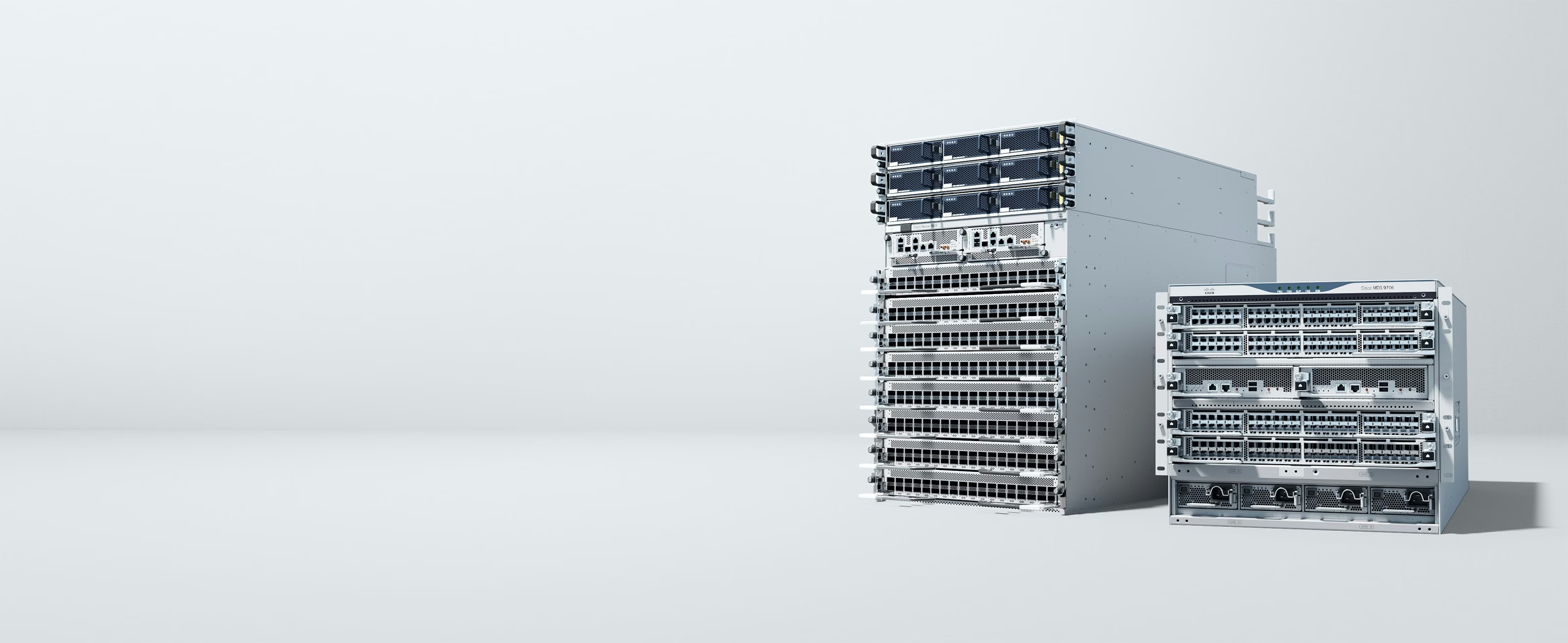
Cisco vs aruba switches is one of the closer calls in enterprise campus switching, and pretending otherwise would be dishonest. HPE Aruba Networking's CX line runs AOS-CX, a single database-driven, microservices operating system across campus, branch, and data-center-adjacent switches, managed through the cloud-based Aruba Central, a genuinely strong, often lower-cost story for straightforward campus refreshes. Cisco Catalyst answers with deeper security integration: native ISE and TrustSec segmentation, the most mature SD-Access fabric on the market, and a materially broader TAA-compliant SKU catalog for federal, DoD, and SLED buyers. Neither switch is the wrong choice in isolation. The decision usually comes down to whether your organization needs Cisco's identity and segmentation depth badly enough to justify its added operational complexity, or whether Aruba CX's simpler, often cheaper campus story is enough for what you're actually running.
At a glance
Both lines target the same campus and branch switching budget, but the operating philosophy and ecosystem fit differ enough to change the right answer by use case.
| Dimension | Aruba CX | Cisco Catalyst |
|---|---|---|
| Platform positioning | Campus/branch value leader, with an emerging data-center CX line | Enterprise campus standard, deep SD-Access fabric and security integration |
| Operating system | AOS-CX, single database-driven, microservices OS across campus, branch, and DC-adjacent switches | IOS XE across the current Catalyst 9000 family |
| Management | Aruba Central (cloud) for lifecycle management; NetEdit for on-prem config | Catalyst Center (formerly DNA Center), or Meraki cloud/hybrid mode on supported models |
| Licensing | Aruba Central subscription tiers, confirm current terms in a quote | Cisco Smart Licensing, Network Essentials/Advantage subscription tiers |
| Stacking / fabric | Aruba VSX and VSF for resiliency and stacking | StackWise-160/480/Virtual, plus SD-Access fabric for identity-based segmentation |
| Typical role | Cost-conscious campus refreshes, HPE-standardized shops | Security-heavy, federal, and TAA-compliant campus deployments |
AOS-CX's one-OS story vs Catalyst's install base
Aruba's pitch is architectural elegance: AOS-CX is a single, modern, database-centric operating system built from the ground up rather than accreted over decades, and Aruba runs it across campus access, aggregation, and its growing CX data-center line. Every piece of switch state, configuration, feature status, analytics, lives in one queryable database, which genuinely simplifies automation and troubleshooting compared with older, more fragmented OS designs. Cisco's counter isn't a cleaner OS story; IOS XE carries more legacy structure than AOS-CX. What Cisco offers instead is scale: the largest campus switching install base in the industry, the deepest bench of trained engineers, and more third-party tooling built against Cisco's APIs than any single competitor can match. If operational elegance on a clean-sheet OS matters most, Aruba's architecture is genuinely newer; if hiring, documentation, and ecosystem depth matter most, Cisco's install base is hard to beat.
Where Aruba often wins: campus value and Central's simplicity
For a straightforward campus or branch refresh, no deep segmentation ambition, no SD-Access fabric requirement, Aruba CX managed through Aruba Central is a genuinely competitive, often lower-cost option. Central's zero-touch provisioning and unified dashboard cover switching alongside Aruba's wireless line, which is a natural fit for organizations already standardized on Aruba access points. Independent buyers frequently report lower multi-year subscription costs on Aruba versus equivalent Cisco DNA/Catalyst subscription tiers, though the exact gap depends heavily on the tier and term you compare, so validate it with quotes on your actual configuration rather than a rule of thumb. The value case is strongest for mid-market organizations and distributed sites with lean IT teams who want simple, cloud-managed switching without paying for fabric-level segmentation capability they won't use.
Where Cisco holds the line: ISE, TrustSec, and SD-Access depth
Cisco's advantage sharpens the moment segmentation, identity, and compliance become first-class requirements instead of nice-to-haves. Catalyst's native integration with Cisco ISE and TrustSec gives you policy-based segmentation using security group tags that travel with the user or device across the fabric, not just a VLAN assignment at the access port. SD-Access builds on that same identity fabric to automate provisioning and micro-segmentation at a scale and maturity that Aruba's dynamic segmentation features are still catching up to. Aruba CX can integrate with Cisco ISE and other third-party NAC platforms via standard RADIUS and Change of Authorization, but the tightest, most automated policy experience stays inside the Cisco stack end to end. For a regulated environment, healthcare, finance, federal, where segmentation isn't optional, that depth is frequently the deciding factor even when Aruba's sticker price is lower.
TAA compliance and federal procurement
Cisco's TAA-compliant catalog spans a much wider slice of its hardware lineup than Aruba's, a byproduct of Cisco's long federal and DoD sales history. Aruba does offer TAA-compliant switch options, and HPE overall has real federal experience through its broader public-sector business, but buyers should confirm country-of-origin documentation on the specific CX SKU rather than assume it mirrors Cisco's coverage. If your purchase is funded through a federal, state, or education budget with Trade Agreements Act obligations, build that documentation check into the shortlist stage, not after you've already priced the refresh.
Stacking and resiliency: VSX/VSF vs StackWise
Aruba's resiliency model splits into two pieces: VSF (Virtual Switching Framework) stacks access-layer switches into one logical unit similar in spirit to Cisco's StackWise, while VSX (Virtual Switching Extension) pairs two switches at the aggregation or core layer for active-active resiliency without a proprietary stacking backplane. Cisco's StackWise-160/480 and StackWise Virtual cover similar ground across the Catalyst 9000 family, with the stacking generation tied to the specific switch tier the same way it is on Aruba. Neither approach is categorically more resilient; the practical difference shows up in how each integrates with the rest of the fabric, StackWise ties cleanly into SD-Access, while VSX ties cleanly into Aruba's own fabric and Central-based automation. Evaluate this alongside whichever ecosystem you're already committed to rather than in isolation.
Which should you choose?
Match the platform to what you actually need to enforce, not just which one switches packets faster on a spec sheet:
- Straightforward campus/branch refresh, cost-sensitive, no deep NAC ambition, comfortable with cloud management, Aruba CX and Aruba Central.
- Already standardized on Cisco ISE/TrustSec, or planning an SD-Access fabric rollout, Cisco Catalyst.
- Wireless-heavy site already running Aruba access points, pairing Aruba CX wired switching keeps switching and Wi-Fi in one dashboard.
- Federal, DoD, or SLED procurement with TAA obligations, confirm SKU-level compliance early; Cisco's catalog breadth generally simplifies this step.
Frequently asked questions
Is Aruba CX cheaper than Cisco Catalyst?
Often, on a multi-year subscription basis for comparable campus tiers, though the exact gap depends on the specific models and license terms you compare. Get validated quotes on your exact configuration from both vendors rather than assuming a fixed percentage difference, port count, PoE budget, and license tier all move the number.
What is AOS-CX?
AOS-CX is HPE Aruba Networking's switch operating system, a single, database-driven, microservices-based OS that runs across Aruba's campus, branch, and data-center-adjacent CX switches. It stores configuration, feature state, and analytics in one queryable database, which simplifies automation compared with older, more fragmented switch operating systems.
Does Aruba offer TAA-compliant switches?
Yes, within parts of the CX lineup, though the breadth is narrower than Cisco's TAA-compliant catalog. Confirm country-of-origin documentation on the specific SKU before assuming coverage, especially for federal, DoD, or SLED procurement with Trade Agreements Act obligations.
Can Aruba CX integrate with Cisco ISE?
Yes. Aruba CX switches support standard RADIUS authentication and Change of Authorization (CoA), so they can enforce policy decisions from Cisco ISE or other third-party NAC platforms. The integration works at the protocol level, but it isn't as tightly automated as Cisco Catalyst's native ISE/TrustSec/SD-Access integration end to end.
Is HPE Aruba the same company as Juniper now?
They're both under the HPE umbrella after HPE's 2025 acquisition of Juniper Networks, but Aruba Networking and Juniper remain distinct product lines within HPE Networking, each with its own switch, wireless, and management ecosystem. Expect continued consolidation between the two over the next few years, but they aren't merged into a single product line today.
Which is better for a large, dense campus, Aruba CX or Cisco Catalyst?
Both scale to large campus deployments; the deciding factor is usually what you need to enforce rather than raw switch capacity. If deep identity-based segmentation, SD-Access fabric automation, or TAA-compliant federal procurement drive the requirement, Catalyst is the stronger fit. If the priority is straightforward, cost-efficient campus switching with simple cloud management, Aruba CX is a strong, defensible choice.
Uniqcli Team
The Uniqcli Team is an authorized Cisco partner specializing in Catalyst wireless, switching, datacenter fabric, licensing, and managed services for U.S. federal, state, local, and education customers. We scope Cisco bills of materials, validate procurement paths (TAA, FIPS, contract vehicles), and deliver design, deployment, and managed operations.
Ready to scope your Cisco build?
Build a quoteRelated reading
View all → Guides
Cisco Catalyst 9200 vs 9300 vs 9500: How to Choose
The Catalyst 9000 family spans the wiring closet to the campus core. Here is how the 9200, 9300, and 9500 actually differ, and a decision framework that keeps your refresh from being over- or under-built.
May 8, 2026 · 13 min read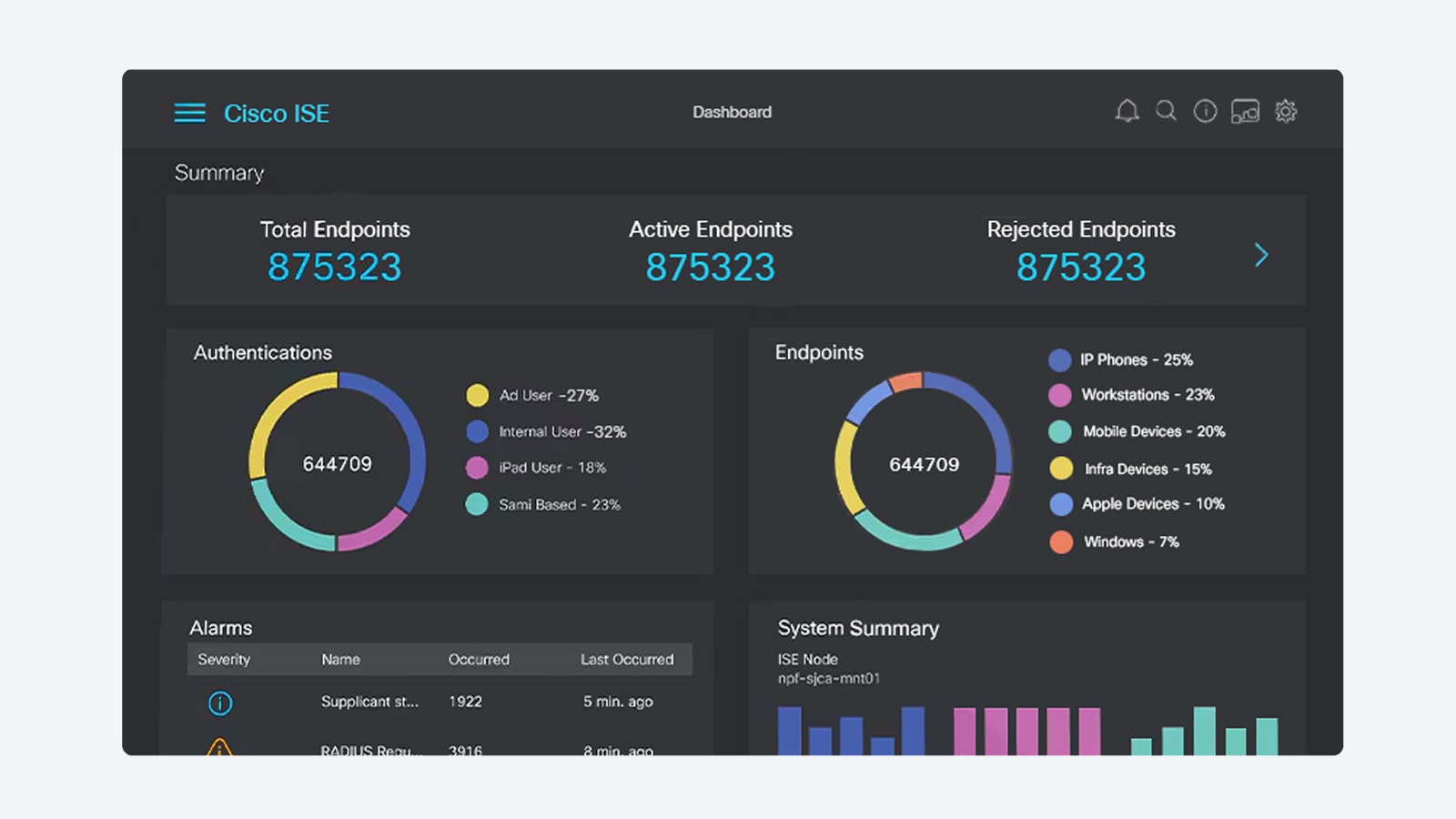 Insights
Cisco ISE Alternatives Compared: When to Stay, When to Switch, and the NAC Trade-offs
An honest Cisco ISE alternative comparison against Aruba ClearPass, FortiNAC, Forescout, NPS, and cloud-native NAC, plus a clear framework for when to stay on ISE and when to switch.
June 9, 2026 · 10 min readGuidesArista SDN vs Cisco ACI: Data Center Fabric Automation Compared
Cisco ACI and Arista CloudVision automate the data center from opposite directions, one is a policy fabric that enforces intent in hardware, the other is a management overlay on a standards-based underlay. Here's how the philosophies, lock-in, and team skills actually differ.
July 12, 2026 · 6 min read Guides
Meraki vs Aruba: Cloud Networking Portfolios Compared
Meraki vs Aruba compared at the enterprise level: cloud-only versus cloud-or-on-prem deployment, licensing, and NAC ecosystem, how to pick between two legitimate wireless portfolios.
July 11, 2026 · 5 min readGuidesMeraki MS vs Catalyst Switches: Cloud-Managed or IOS XE?
Meraki ms vs catalyst is really a management-philosophy question: full cloud-dashboard simplicity versus on-box IOS XE control, and Cisco now blurs the line by cloud-managing Catalyst hardware.
July 11, 2026 · 5 min readGuidesCisco vs Juniper Switches: Catalyst/Nexus vs EX/QFX
Cisco vs juniper switches comes down to Junos's one-OS consistency and service-provider roots versus Catalyst and Nexus's campus-to-data-center breadth, complicated by Juniper's 2025 move under HPE.
July 11, 2026 · 5 min read