
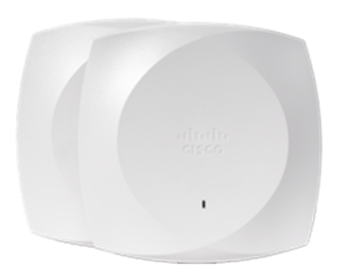
Meraki and Aruba (HPE Aruba Networking) both field genuine enterprise-grade cloud networking portfolios, and either can win a given RFP on paper. The decision rarely comes down to raw feature count, it comes down to deployment posture and which identity ecosystem you're already standardized on. Aruba gives you a choice Meraki does not: run policy enforcement in the cloud or keep it on-premises. Meraki gives you a simplicity Aruba does not force: one architecture, cloud-only, with nothing to decide.
If your environment is air-gapped, latency-sensitive, or bound by a policy that keeps authentication local, that single architectural difference decides the comparison before you evaluate a single spec sheet. If it doesn't apply to you, the choice comes down to licensing mechanics, support experience, and whichever NAC platform (ClearPass or ISE) your security team already runs.
At a glance
| Factor | Cisco Meraki | Aruba (HPE Aruba Networking) |
|---|---|---|
| Deployment model | Cloud dashboard only, no on-premises controller option | Aruba Central (cloud) or Mobility Conductor / controller-based (on-prem), your choice |
| Licensing | Mandatory per-device subscription tied to a term | Subscription-based cloud tier; on-prem path has more traditional licensing options |
| NAC / identity | Integrates with Cisco's identity and security stack (ISE) | ClearPass, Aruba's own standalone NAC, a direct ISE competitor |
| RF management heritage | Simplicity-first automated RF, minimal tuning exposed | Deep RF tuning and AI-driven optimization heritage, more knobs exposed |
| Support model | Cisco TAC-backed, formal SLAs | HPE/Aruba TAC-backed, formal SLAs |
| Best fit | Distributed multi-site orgs that want zero on-prem infrastructure | Orgs needing on-prem policy enforcement or already running ClearPass |
Deployment posture: the one real architectural difference
Meraki has exactly one deployment model: cloud dashboard, full stop. There is no on-premises controller, no offline mode for management, and no variant that keeps policy decisions local. That is a deliberate simplicity trade, it removes an entire category of design decisions and support tickets, but it is non-negotiable if a site's compliance posture requires authentication and policy enforcement to stay on local infrastructure.
Aruba gives you both paths under one product family. Aruba Central is the cloud-managed option, architecturally similar to Meraki's dashboard and priced on a comparable subscription model. Mobility Conductor and traditional controller-based deployment keep policy enforcement on-premises, which matters for air-gapped networks, latency-sensitive real-time environments, and regulated buyers who cannot depend on an external cloud service being reachable for the network to enforce policy. That flexibility is Aruba's single strongest argument against Meraki in a competitive bid.
Licensing: two different subscription philosophies
Meraki licensing is uniform and mandatory: every device needs an active subscription tied to a term, and that subscription is what keeps it on the dashboard and covered by Cisco support. There is no way to run Meraki hardware outside that model, the simplicity of one licensing path is also its rigidity.
Aruba's cloud tier through Central runs on its own subscription structure, broadly comparable to Meraki's in mechanics. The on-premises controller path has historically offered more traditional licensing options alongside a support contract, though, like most of the industry, Aruba has been shifting more of its portfolio toward subscription and software-defined licensing over time. Because licensing terms move faster than any blog post, confirm the current structure for your exact hardware and deployment model with a validated quote before you build a five-year budget around either platform.
NAC and identity: ClearPass vs. ISE decides more than it should
A large share of Meraki-vs-Aruba decisions are actually decided one layer up the stack, in network access control. Aruba ClearPass is a mature, standalone NAC platform that many security teams already run independent of which AP vendor sits on the ceiling. Cisco's answer is Identity Services Engine (ISE), and Meraki's wireless integrates into Cisco's broader identity and security ecosystem rather than standing alone. If your organization has already invested years of policy work into one NAC platform, that sunk investment is often the deciding factor, more so than any wireless-specific feature.
RF management philosophy
Both vendors automate RF (channel, power, and band steering) out of the box, and either will perform well in a properly designed deployment. The philosophical difference is exposure: Meraki leans toward hiding RF complexity behind automation and a clean dashboard, which suits IT-generalist teams. Aruba's heritage includes deep RF tuning and AI-assisted optimization tooling that exposes more manual control for teams with dedicated wireless engineers who want to intervene. Neither approach is objectively better, it depends on whether your team wants RF decisions made for them or wants the levers available.
That same philosophy carries into troubleshooting. When a Meraki network has an RF problem, the dashboard's health and analytics views are built to point you at a likely cause quickly, with less manual packet-level digging expected. Aruba's tooling assumes a more hands-on engineer who wants to pull spectrum and client data directly and reach their own conclusion. Neither is wrong, but hiring and staffing plans should account for which posture your team is actually built for before either platform gets locked in.
Guest access and BYOD onboarding
Both platforms handle guest Wi-Fi and BYOD reasonably well, but the shape of that experience differs. Meraki's splash-page and self-registration flows are intuitive and fast to stand up from the dashboard, which suits organizations that want a good-enough guest experience without a separate onboarding project. Aruba's guest and BYOD framework becomes more configurable once paired with ClearPass, supporting more elaborate sponsor-approval and device-onboarding workflows for organizations that need them, hospitals, campuses, and large hospitality operations, for instance.
Neither approach is universally better. If guest access is a checkbox requirement, Meraki gets there faster with less configuration. If guest and BYOD onboarding is itself a compliance-relevant process with sponsor approvals and device posture checks, Aruba's ClearPass-backed depth is built for that level of policy control in a way Meraki's simpler flows are not.
Which should you choose?
- Air-gapped, regulated, or latency-sensitive site that needs local policy enforcement: Aruba's on-prem controller option is available; Meraki's is not.
- Distributed multi-site organization that wants zero on-premises infrastructure anywhere: Meraki's cloud-only model is purpose-built for exactly this.
- Already running Aruba ClearPass for NAC: staying inside the Aruba ecosystem usually simplifies policy management more than switching wireless vendors would save.
- Already standardized on Cisco ISE or the broader Cisco security stack: Meraki's native fit inside that ecosystem is a real, ongoing operational advantage.
- Team wants RF automated and out of sight: Meraki's simplicity-first approach fits; a dedicated wireless engineer who wants tuning control may prefer Aruba.
Frequently asked questions
Can Aruba be deployed fully on-premises with no cloud dependency?
Yes. Aruba's Mobility Conductor and traditional controller-based architecture keep policy enforcement on local infrastructure, which is the main reason regulated and air-gapped organizations choose Aruba over Meraki. Meraki has no on-premises controller option at all, it is cloud-managed only.
Is Meraki or Aruba easier to manage day to day?
Both offer modern, clean dashboards. Meraki generally automates more RF and policy decisions out of the box, which suits IT-generalist teams. Aruba exposes more manual tuning, which suits organizations with a dedicated wireless engineer who wants that control rather than having it hidden behind automation.
Do I need ClearPass to use Aruba wireless, or ISE to use Meraki?
No, neither NAC platform is mandatory. But most organizations that have already invested in ClearPass or ISE find it simplifies policy management to stay inside that vendor's wireless ecosystem too, which is why the NAC decision often drives the wireless vendor decision rather than the other way around.
Which platform has a lower total cost of ownership?
Both run on subscription-based licensing for their cloud tiers, and the mechanics are broadly comparable. Aruba's on-premises controller path can offer different licensing structure than its cloud tier. Because licensing terms change, get a validated quote against your actual device count and deployment model rather than assuming either platform is categorically cheaper.
Can Meraki and Aruba access points be managed together?
No. Each platform requires its own management plane, Meraki's cloud dashboard or Aruba Central / Mobility Conductor, with no shared console between them. A mixed fleet is workable during a phased migration but is not a long-term management strategy.
Which vendor wins more competitive enterprise RFPs?
Neither wins categorically; it depends on the requirement set. Meraki tends to win when the buyer wants pure cloud simplicity and zero on-premises infrastructure. Aruba tends to win when the requirement includes on-premises policy enforcement or when the buyer already standardized on ClearPass for NAC.
Uniqcli Team
The Uniqcli Team is an authorized Cisco partner specializing in Catalyst wireless, switching, datacenter fabric, licensing, and managed services for U.S. federal, state, local, and education customers. We scope Cisco bills of materials, validate procurement paths (TAA, FIPS, contract vehicles), and deliver design, deployment, and managed operations.
Ready to scope your Cisco build?
Build a quoteRelated reading
View all →GuidesMeraki vs UniFi: Cloud-Managed Networking Compared
Meraki vs UniFi compared for IT teams weighing a cloud-managed refresh: licensing, support posture, and real total cost, where UniFi wins on price and where Meraki earns its premium.
July 11, 2026 · 5 min readGuidesMeraki Go vs UniFi: The Real Small Business Wi-Fi Matchup
Meraki Go vs UniFi for small business Wi-Fi comes down to who runs the network: an app-first, zero-IT cloud model or a self-hosted controller with deeper control and one-time hardware economics.
July 12, 2026 · 5 min read Guides
Webex Calling vs Teams Phone: Cloud PBX Compared
Webex Calling vs. Teams Phone compared on PSTN connectivity, CUCM migration paths, and desk phone compatibility, a practical cloud PBX guide for IT buyers.
July 11, 2026 · 5 min read Guides
Meraki MX vs Palo Alto: Cloud-Managed vs Full NGFW
Meraki MX vs Palo Alto usually isn't a head-to-head fight, it's cloud-managed branch simplicity against deep, security-engineer-operated NGFW, and deciding which layer you're actually solving for.
July 11, 2026 · 5 min readGuidesMeraki MX vs FortiGate: SD-WAN Security Appliances Compared
Meraki MX vs FortiGate weighs Meraki's cloud-managed, zero-touch simplicity for distributed branches against FortiGate's deep FortiOS control and respected, ASIC-accelerated SD-WAN.
July 11, 2026 · 5 min read Guides
Meraki MS vs Catalyst Switches: Cloud-Managed or IOS XE?
Meraki ms vs catalyst is really a management-philosophy question: full cloud-dashboard simplicity versus on-box IOS XE control, and Cisco now blurs the line by cloud-managing Catalyst hardware.
July 11, 2026 · 5 min read