
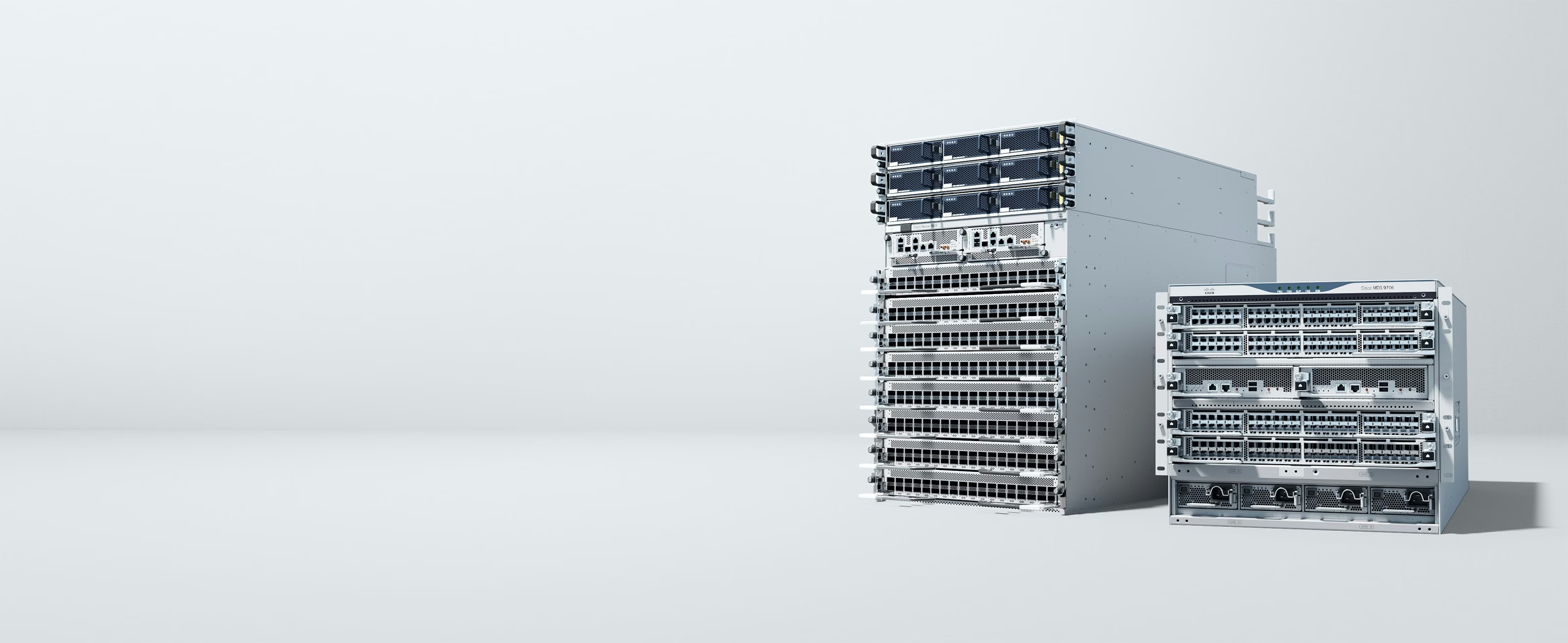
The short version: Catalyst 1000 was Cisco's simple, fixed-configuration access switch for small offices and branch closets that need reliable Layer 2 access, PoE, and basic management with minimal licensing overhead. Cisco stopped selling it new on April 30, 2025 (support runs to April 30, 2030) and named the Catalyst 1300 as its successor, so fresh Catalyst 1000 units now come from remaining channel stock or Cisco Refresh. Catalyst 9200 (and its lighter 9200L variant) is the entry rung of the Catalyst 9000 enterprise family. It brings StackWise stacking, richer Layer 3, tiered Network Essentials/Advantage feature licensing, and a path into Cisco's enterprise management and automation stack. If the site is small, the requirements are static, and nobody will ever ask for advanced telemetry, a Catalyst 1000 you already own or can still source does the job for less, and the Catalyst 1300 fills the same slot for a new small-site purchase. If the network is growing, standardized, or managed as part of a larger campus, the 9200 family is the safer default and the one you can still expand two budget cycles from now.
At a glance
| Factor | Catalyst 1000 | Catalyst 9200 / 9200L |
|---|---|---|
| Positioning | Entry access for small sites and branches | Entry tier of the enterprise Catalyst 9000 family |
| Operating system | IOS-based, fixed feature set | IOS XE with model-based programmability |
| Licensing | Right-to-use, no required subscription tiers | Network Essentials or Network Advantage, plus a mandatory 3, 5, or 7 year Cisco DNA or Catalyst software subscription on the initial order (renewal optional) |
| Stacking | Gigabit models stack up to 8 units over the uplink ports under one management IP | StackWise stacking on 9200/9200L for growth and resilience |
| Layer 3 | Basic routing features | Fuller enterprise Layer 3 feature set by license tier |
| Management | CLI, web UI, simple tools | CLI, web UI, plus Catalyst Center / enterprise tooling |
| Typical buyer | Small office, retail site, lab, cost-driven closet | Campus access standard, growing mid-market, public sector |
Licensing: the real cost difference
The Catalyst 1000's appeal is that what you buy is what you run: the feature set ships with the switch, there are no mandatory subscription tiers, and lifecycle cost tracking is simple. The 9200 family uses the Catalyst 9000 licensing model: you choose Network Essentials or Network Advantage at purchase, and Cisco requires a 3, 5, or 7 year Cisco DNA or Catalyst software subscription on the initial order. That subscription covers Catalyst Center automation and assurance, and you can let it lapse at renewal if you never use it. For a five-switch office that will never touch automation, that difference is real money and real administrative overhead. For a fleet managed centrally, the licensing buys capabilities the Catalyst 1000 simply doesn't have. Exact tier contents evolve, so confirm current inclusions in a validated quote.
Growth and resilience: stacking changes the math
The single biggest operational difference is stacking. A 9200 or 9200L closet can be built as a StackWise stack with one management plane, cross-switch link aggregation, and the ability to add a member when the port count runs out. The Catalyst 1000 offers a lighter version on its Gigabit models, up to eight units linked over the uplink ports and managed from one IP, but that consumes the uplinks and delivers a fraction of the stack bandwidth and resilience StackWise gives you. Small sites tolerate that fine. Anything that expects to add ports, add PoE load, or survive a switch failure without a truck roll leans strongly toward the 9200 family. If you are refreshing an old 2960 estate, the same logic applies, see our 2960-X to 9200 refresh guide for that specific path.
Features and security posture
Both lines cover the access-layer table stakes: VLANs, PoE/PoE+ options for phones, cameras, and APs, storm control, DHCP snooping, and port security. The 9200 family adds the enterprise dimension, richer QoS, more sophisticated Layer 3 by tier, model-driven telemetry, and integration into Cisco's enterprise security architecture (identity-based segmentation with Cisco ISE, for example, is a 9000-family conversation). The Catalyst 1000 can authenticate users with 802.1X like any managed Cisco switch, but if network segmentation, posture, or software-defined access are on your roadmap, the 9200 is the entry point that actually connects to those systems.
Where each one is the wrong answer
The Catalyst 1000 is the wrong answer when it becomes the standard for a growing organization: the per-site savings get eaten by inconsistent operations, limited stacking, a feature ceiling you hit at the worst time, and a platform Cisco no longer sells new. The 9200 is the wrong answer when you're paying for licensing tiers and enterprise capabilities that a four-person branch office will never use, or when the budget genuinely cannot stretch and the alternative is unmanaged gear. An honest rule of thumb: standardize on 9200/9200L wherever the network is an asset you operate, and use Catalyst 1000 where the network is an appliance you install.
Which should you choose?
- Choose Catalyst 1000 if the site is small and static, licensing simplicity matters, automation will never be a requirement, and you can accept an end-of-sale platform with support to April 2030 (or step up to its Catalyst 1300 successor).
- Choose Catalyst 9200L if you want the 9000-family baseline (stacking, IOS XE, tiered licensing) at the sharpest price and can live with fixed uplinks.
- Choose Catalyst 9200 if you also want modular uplink flexibility and the fullest entry-tier feature set for a growing campus.
- Standardizing across many sites? Pick one 9200-family SKU per closet size and keep Catalyst 1000 (or its Catalyst 1300 successor) for true micro-sites, because mixed fleets age badly.
- Either way, ask for TAA-compliant options by part number in a validated quote so stock, lead time, and licensing land correctly the first time.
One last planning note: the entry access layer is where undersizing hurts the longest, because these switches routinely stay in service for seven to ten years. Whichever line you choose, size PoE budget and uplink bandwidth for the devices you'll hang off the closet in year five, because Wi-Fi upgrades and camera densities have a habit of arriving before the refresh budget does. Browse current Catalyst switching in the catalog, check the broader switching overview, and if an older closet is driving this decision, run the models through the Cisco EoL lookup to confirm support timelines before you commit the budget.
Frequently asked questions
Is the Catalyst 1000 being replaced?
Yes. Cisco announced end-of-sale for the whole Catalyst 1000 line on April 30, 2024; the last order date was April 30, 2025 and the last date of support is April 30, 2030. The Catalyst 1300 is the named migration path for most models. Remaining new stock and Cisco Refresh units are still sold, so verify the specific model's status in our EoL lookup and confirm support options in a validated quote.
Does the Catalyst 1000 require a DNA subscription?
No. The Catalyst 1000 ships with its feature set and does not require the subscription tiers used by the Catalyst 9000 family, one of its main attractions for small, static sites.
What's the difference between 9200 and 9200L?
The 9200L is the fixed-uplink variant at a lower price; the 9200 adds modular uplink slots and the fuller entry-tier capabilities. Both stack and run IOS XE. See our dedicated 9200L vs 9200 guide for the details.
Can Catalyst 1000 and 9200 switches be mixed in one network?
Yes, they interoperate over standard protocols. They cannot stack together, though, and they are managed differently, so most organizations standardize per site size rather than mixing lines within a closet.
Which one is better for a school or small government office?
If the site is small and budget-driven with static needs, the Catalyst 1000 is defensible. If the organization manages multiple sites, expects growth, or plans identity-based access control, the 9200 family is the safer standard. We quote TAA-compliant options for both lines, with GPC and FAR-based purchase paths supported.
Do both lines support PoE for phones, cameras, and access points?
Yes, both offer PoE/PoE+ models, with the 9200 family generally offering higher PoE budgets and more headroom for dense deployments. Match the PoE budget to your five-year device plan, not today's count.
Uniqcli Team
The Uniqcli Team is an authorized Cisco partner specializing in Catalyst wireless, switching, datacenter fabric, licensing, and managed services for U.S. federal, state, local, and education customers. We scope Cisco bills of materials, validate procurement paths (TAA, FIPS, contract vehicles), and deliver design, deployment, and managed operations.
Ready to scope your Cisco build?
Build a quoteRelated reading
View all → Guides
Cisco 2960-48TC-L EoL: Migrate to Catalyst 9200L 48-Port
The Catalyst 2960-48TC-L (WS-C2960-48TC-L) passed Last Day of Support on October 31, 2019. Here is why this Fast Ethernet LAN Base switch has to come out of the wiring closet, and how to refresh cleanly to the Catalyst 9200L 48-port C9200L-48T-4X-A.
June 9, 2026 · 8 min readGuidesCisco 2960-24TC-L EoL: Migrate to Catalyst 9200L Guide
The original Catalyst 2960-24TC-L (WS-C2960-24TC-L) passed Last Day of Support on October 31, 2019. Here's why this Fast Ethernet LAN Base switch must come out, and how to refresh cleanly to the Gigabit, PoE+ Catalyst 9200L-24P-4X.
June 7, 2026 · 7 min read Guides
Cisco Catalyst 9200 vs 9300 vs 9500: How to Choose
The Catalyst 9000 family spans the wiring closet to the campus core. Here is how the 9200, 9300, and 9500 actually differ, and a decision framework that keeps your refresh from being over- or under-built.
May 8, 2026 · 13 min read Guides
Cisco WS-C2960X-48FPD-L EoL: Migrating to Catalyst 9200L
The Cisco Catalyst 2960-X 48-port full-PoE switch (WS-C2960X-48FPD-L) is end-of-sale with support ending October 31, 2027, here is a concrete plan to migrate to the Catalyst 9200L (C9200L-48P-4X).
October 22, 2025 · 9 min readGuidesWS-C2960X-24PS-L EoL: Migrate to Catalyst 9200L Guide
A practical, partner-built plan for replacing the end-of-sale Catalyst 2960-X 24-port PoE switch (WS-C2960X-24PS-L) with the Catalyst 9200L-24P-4G before the October 2027 last day of support.
October 20, 2025 · 7 min readGuidesWS-C2960S-48TS-L End of Life: Migration Guide to the 2960-X
The Catalyst 2960-S 48-port LAN Base hit Last Day of Support in November 2020, here is exactly why to refresh now and how to migrate cleanly to its successor.
October 18, 2025 · 9 min read