
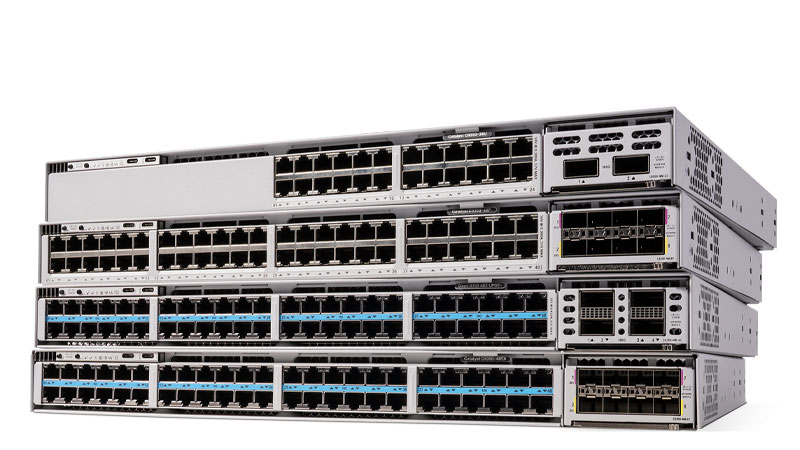
If you still have Cisco Catalyst 3850 48-port UPOE multigigabit switches (PID WS-C3850-12X48U-S) carrying production access traffic, they are now operating past every lifecycle milestone Cisco published for the platform. This was a purpose-built switch: 48 access ports with a 12-port multigigabit block for high-bandwidth Wi-Fi access points, Universal PoE (UPOE, up to 60W per port) to power dual-radio APs and pan-tilt cameras, and the IP Base feature set. It did its job well for a decade. That decade is over, and this guide lays out exactly what the end-of-life dates mean for this PID and how to refresh cleanly to its designated successor, the Catalyst 9300-48UXM (C9300-48UXM-A).
The EoL situation for the WS-C3850-12X48U-S, and why it is urgent now
This is not a future planning exercise. The WS-C3850-12X48U-S passed End-of-Sale on October 30, 2020, stopped receiving software maintenance on October 30, 2021, and reached Last Day of Support (LDoS) on October 31, 2025. Every protective service Cisco offered for this hardware has now lapsed. You can review the full milestone breakdown on the WS-C3850-12X48U-S EoL detail page.
The operational consequences are concrete. Cisco PSIRT no longer issues security fixes for the IOS XE images that run on this platform, so any newly disclosed vulnerability affecting the 3850 code base will remain unpatched on your fleet permanently. Cisco TAC will not open cases for it, and SmartNet hardware replacement (RMA) is gone, so a dead supervisor or a failed UPOE power path means scavenging the gray market for a unit that is itself unsupported. For high-density wiring closets feeding 60W APs, a single failed switch can dark an entire floor with no contractual path to recovery.
What each milestone date actually means
- End-of-Sale (Oct 30, 2020): Cisco stopped selling the WS-C3850-12X48U-S new. Anything labeled new after this date is old stock or relabeled; the clock to LDoS was already running.
- End of Software Maintenance (Oct 30, 2021): the last bug-fix and maintenance IOS XE releases for the 3850 shipped. After this, the code froze, including its security posture.
- Last Day of Support / LDoS (Oct 31, 2025): the hard wall. No TAC, no RMA, no PSIRT fixes, no entitlement to any Cisco service for this PID. Support contracts cannot be renewed against it.
The replacement: Catalyst 9300-48UXM (C9300-48UXM-A)
Cisco's bulletin maps the multigigabit 3850-12X48U-S to the multigigabit Catalyst 9300, specifically the C9300-48UXM-A. The port geometry is matched to your use case: 48 multigigabit downlinks, with 12 ports capable of 100M/1G/2.5G/5G/10G and the remaining 36 ports running up to 2.5G, all UPOE-capable. That is a deliberate upgrade over the 3850-12X48U-S, where the bulk of the 48 ports were 1G-only with a 12-port mGig block; on the 9300-48UXM, every access port is multigigabit, so any current Wi-Fi 6/6E AP gets a non-blocking 2.5G or faster uplink instead of being capped at 1G.
What is concretely better
- Multigigabit everywhere: all 48 ports are mGig (12 at up to 10G, 36 at up to 2.5G) versus the 3850's mostly-1G layout, eliminating the 1G bottleneck on modern APs.
- PoE/UPOE headroom: UPOE delivers up to 60W per port for dense AP and PTZ-camera closets; the 9300's higher-capacity power supplies give more usable system PoE budget so you can power more ports at full UPOE without de-rating.
- Stacking and throughput: StackWise-480 (480 Gbps stack bandwidth) and StackPower for shared power resiliency across the stack, with modular uplink network modules (4x10G, 8x10G, 2x40G, or 2x25G options) instead of fixed uplinks.
- Faster forwarding plane: the 9300 runs the multicore x86 UADP-based architecture with substantially more CPU and memory than the 3850, which is what makes IOS XE programmability, encrypted traffic analytics, and on-box telemetry practical.
- Modern software lifecycle: current IOS XE with active PSIRT coverage, plus support for SD-Access fabric, so the switch can join a campus fabric later without another hardware change.
The licensing change you must plan for
This is the single biggest difference between the two platforms and the most common source of migration surprises. The 3850 used the older right-to-use model with IP Base, IP Services, and LAN Base tiers baked to the box. The Catalyst 9300 moves entirely to Cisco Smart Licensing with two base tiers, Network Essentials and Network Advantage, plus optional Cisco DNA add-on subscriptions managed in your Smart Account. The -A in C9300-48UXM-A denotes Network Advantage, the higher tier, which is a functional superset of the 3850's IP Base/IP Services and covers advanced routing, flexible NetFlow, SGT/SXP segmentation, and more. Practically: your 3850 licenses do not transfer, you provision new entitlements in a Smart Account, and the DNA subscription term (3, 5, or 7 years) should be priced into the refresh, not bolted on after.
A practical migration plan
1. Assessment and inventory
Pull the running config and a 'show inventory' / 'show power inline' from every 3850-12X48U-S in scope. Capture per-closet PoE draw at peak, the number of UPOE (60W) endpoints, uplink optics in use, VLAN and SVI footprint, and any IP Services features (OSPF/EIGRP, PBR, multicast). This inventory drives how many 9300-48UXM units you need, the power-supply rating to spec, and whether Network Advantage is required everywhere or only at routing-capable closets.
2. License and Smart Account setup
Stand up or confirm your Cisco Smart Account and Virtual Account before hardware lands. Decide Network Advantage versus Essentials per role, choose your DNA subscription term, and confirm whether you will run Smart Licensing Using Policy connected to Cisco Smart Software Manager or via an on-prem SSM satellite for air-gapped or restricted networks, which is common in DoD environments.
3. Config and feature parity
Most 3850 IOS XE configuration translates directly to 9300 IOS XE, but do not blind-paste. Re-validate interface ranges against the new mGig port map, confirm UPOE power policy and LLDP power negotiation for your AP model, rebuild any IP Base/IP Services features under the Network Advantage feature set, and test 802.1X/MAB, SGT propagation, and QoS policy on a bench unit before touching production.
4. Physical: rack, power, PoE, uplinks, optics, stacking
The 9300-48UXM is a 1RU switch like the 3850, so rack space maps one-to-one, but verify your power feed: a fully loaded UPOE closet may need dual high-wattage supplies, and the receptacle/circuit rating should be checked, not assumed. Reuse SFP/SFP+ optics only after confirming compatibility; the 9300 uses modular network modules for uplinks, so order the matching module (for example a 4x10G or 2x40G) rather than expecting fixed uplinks. Important: Catalyst 9300 StackWise-480 does not interoperate with 3850 StackWise-480, so build the 9300 stack separately.
5. Phased cutover
Migrate closet by closet in maintenance windows. Pre-stage each 9300 stack with its config and licenses, rack it alongside the 3850, then move uplinks and access patches in a planned cut. Keep the old 3850 powered and reachable for a short rollback window before you decommission. For high-density AP floors, schedule around clinical or operational hours; a brief AP re-association is far less disruptive than an unplanned failure on dead-end hardware.
6. Secure decommission
Once a 3850 is retired, wipe it: erase startup-config and VLAN database, clear any stored credentials and certificates, and for government and healthcare assets follow your NIST 800-88 media-sanitization and property-disposal process. Document serial numbers and disposition for your audit trail. Do not resell or redeploy a unit that is past LDoS into another production role.
Procurement notes for government and enterprise buyers
Source the C9300-48UXM-A from an authorized Cisco partner so the units carry valid Cisco warranty and are entitlement-eligible in your Smart Account, gray-market 9300s can be locked out of licensing and support. For federal and SLED buyers, we confirm TAA-compliant country of origin per unit and provide the documentation contracting needs. We accept the Government Purchase Card (GPC) for micro-purchase-threshold orders. Because the mGig 9300 SKUs and matching UPOE power supplies move quickly, confirm current lead times early and lock allocation before your maintenance window; you can browse the replacement in our catalog or review the broader retirement list on the Cisco EoL hub.
Frequently asked questions
When does the Cisco WS-C3850-12X48U-S officially reach Last Day of Support?
Last Day of Support (LDoS) is October 31, 2025. End-of-Sale was October 30, 2020, and the last software maintenance releases shipped on October 30, 2021. After LDoS, Cisco TAC, hardware RMA under SmartNet, and PSIRT security fixes for this PID all end. If you are reading this in 2026, the platform is fully unsupported and should be treated as a remediation priority, not a planned upgrade.
What is the direct replacement for the WS-C3850-12X48U-S, and why?
Cisco maps it to the C9300-48UXM-A: a Catalyst 9300 with 48 multigigabit ports (12 ports up to 10G/5G/2.5G/1G/100M and 36 ports up to 2.5G), UPOE, and a Network Advantage license. It preserves the exact value of the 3850-12X48U-S, dense mGig plus UPOE for high-end Wi-Fi 6/6E access points, while adding a faster CPU, more PoE budget capability, StackWise-480, modular uplinks, and current IOS XE with continued security patching.
Can I stack a new Catalyst 9300 with my existing 3850 switches during migration?
No. StackWise-480 on the Catalyst 9300 is not stack-compatible with StackWise-480 on the Catalyst 3850; the platforms cannot form a single data stack with each other despite the shared name. Plan the 9300s as their own stack and migrate stack members switch-by-switch, moving uplinks and access-port patching over in a maintenance window rather than attempting a mixed ring.
Do my Catalyst 3850 IP Base features and licenses carry over to the 9300?
Functionally yes, but the licensing model is different. The 3850 used right-to-use IP Base/IP Services/LAN Base tiers. The 9300 uses Smart Licensing with Network Essentials or Network Advantage, plus optional DNA add-on subscriptions. The -A SKU bundles Network Advantage, which is a superset of IP Base/IP Services capabilities, so features like SVIs, dynamic routing, and SXP are retained or improved. Licenses are not transferable from the 3850; they are new entitlements on the 9300.
Is the C9300-48UXM-A TAA compliant and payable on a Government Purchase Card?
TAA-compliant configurations of the Catalyst 9300 family are available for federal, DoD, and SLED buyers, and we accept the Government Purchase Card (GPC) for transactions within the micro-purchase threshold. TAA status is confirmed per part number and lot at quote time, and we supply the documentation your contracting office needs.
Uniqcli Team
The Uniqcli Team is an authorized Cisco partner specializing in Catalyst wireless, switching, datacenter fabric, licensing, and managed services for U.S. federal, state, local, and education customers. We scope Cisco bills of materials, validate procurement paths (TAA, FIPS, contract vehicles), and deliver design, deployment, and managed operations.
Ready to scope your Cisco build?
Build a quoteRelated reading
View all →GuidesCisco WS-C3850-48P-S EoL: Migrate to Catalyst 9300 (C9300-48P-A)
The Catalyst 3850 48-port PoE IP Base reached last day of support on October 31, 2025, here is a concrete plan to refresh to the Catalyst 9300 C9300-48P-A.
November 14, 2025 · 8 min readGuidesCisco WS-C3850-24P-S Migration Guide: Upgrade to C9300-24P-A
The Catalyst 3850 24-Port PoE IP Base (WS-C3850-24P-S) reached Last Day of Support on October 31, 2025, here is how to plan a clean refresh to the Catalyst 9300 24-port PoE+ (C9300-24P-A).
November 13, 2025 · 7 min readGuidesWS-C3750X-12S-S End of Life: Catalyst 3850 12S Migration
The Catalyst 3750-X 12-port SFP (WS-C3750X-12S-S) is years past last day of support, here is how to migrate cleanly to the Catalyst 3850 12S and what changes in licensing, stacking, and security.
November 7, 2025 · 8 min read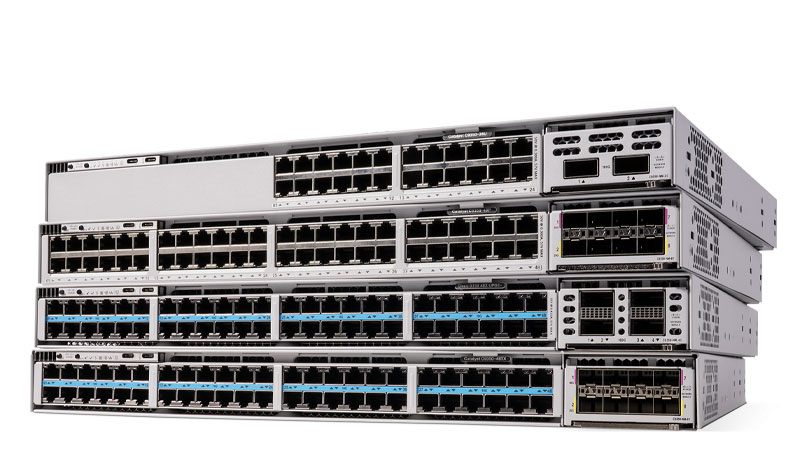 Guides
WS-C3750V2-48PS-S to Catalyst 9300 Migration Guide
The Catalyst 3750V2-48PS-S hit Last Day of Support in 2021. Here is a practical, architect-level plan to refresh it to the stackable Catalyst 9300 (C9300-48P-A) with no security, compliance, or operational gaps.
May 14, 2026 · 6 min read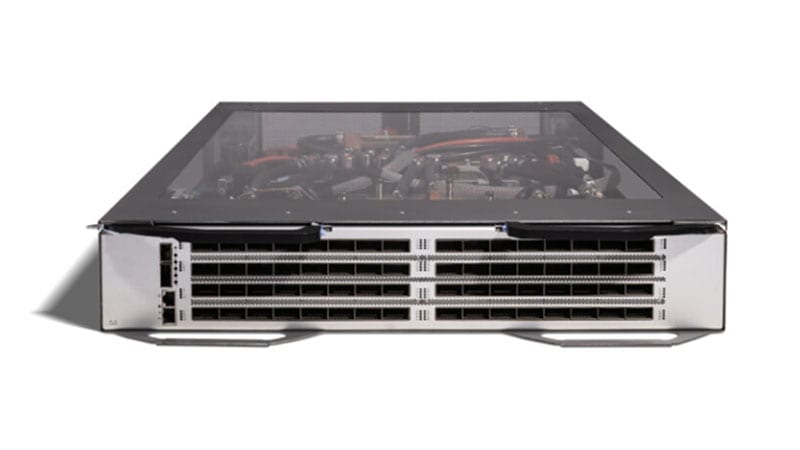 Guides
Cisco Catalyst 4900M EoL: Migrate to Nexus 9300 (93180YC-FX3)
The Catalyst 4900M (WS-C4900M) passed Last Day of Support on October 5, 2021. Here's why it has to leave the rack and how to migrate cleanly to the Nexus 9300 N9K-C93180YC-FX3 top-of-rack switch.
May 5, 2026 · 8 min readGuidesWS-C3750X-48P-S End of Life: Migration to Catalyst 3850
A practical refresh guide for replacing the fully end-of-support Cisco Catalyst 3750-X 48-port PoE switch (WS-C3750X-48P-S) with the Catalyst 3850, including specs, licensing, and a phased cutover plan.
November 11, 2025 · 7 min read