
WS-C3750V2-48PS-S to Catalyst 9300 Migration Guide
The Catalyst 3750V2-48PS-S hit Last Day of Support in 2021. Here is a practical, architect-level plan to refresh it to the stackable Catalyst 9300 (C9300-48P-A) with no security, compliance, or operational gaps.
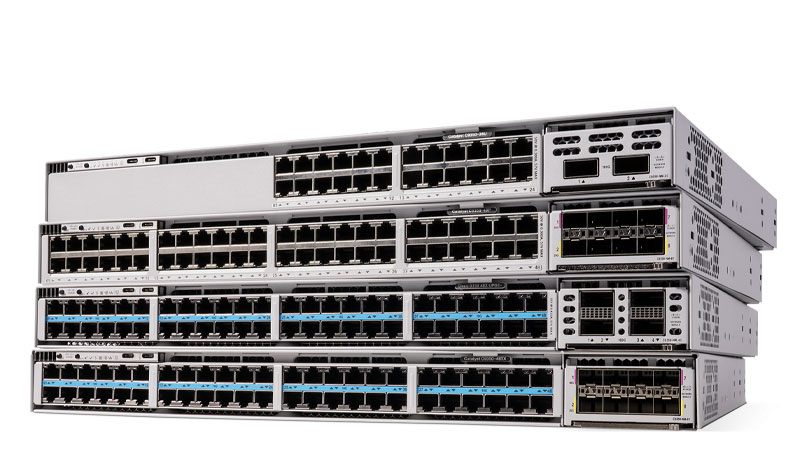
If you still have WS-C3750V2-48PS-S switches energizing a wiring closet, they are now running years past their final support boundary. Cisco ended sales of the Catalyst 3750V2 line on May 31, 2016, and the platform reached its Last Day of Support (LDoS) on May 31, 2021. Everything Cisco does to keep a switch safe and serviceable, software fixes, PSIRT security patches, TAC cases, and hardware RMAs, stopped at that date. This guide explains exactly what that means for a 3750V2-48PS-S deployment and lays out a concrete migration to the stackable Catalyst 9300 (C9300-48P-A).
Why the 3750V2-48PS-S is a liability today
The WS-C3750V2-48PS-S is a 48-port 10/100 (Fast Ethernet) Layer 3 access switch with PoE on every port, four SFP uplinks, and Cisco StackWise (32 Gbps stack ring) for joining up to nine units into one logical switch. It was an excellent closet workhorse a decade ago. The problem is not that it stopped working, it is that the platform is frozen in time while threat and compliance requirements have not.
- No security patches: Any vulnerability disclosed against the IOS 12.2/15.0 trains it runs (Smart Install abuse, SNMP, web UI, and CDP-class issues) will never be fixed. The switch is permanently exposed.
- No TAC or RMA: A failed unit or stack member cannot be replaced under contract. Your only recourse is the gray/used market with no warranty or firmware assurance.
- Audit and compliance exposure: Frameworks that govern federal/DoD (RMF, STIG, FIPS 140-2 crypto), healthcare (HIPAA security rule), and SLED procurement all flag unsupported, unpatchable infrastructure as a finding. An LDoS switch in the data path is a documented risk you have to remediate or accept in writing.
- Performance ceiling: 10/100 access ports cannot feed Wi-Fi 6/6E access points, modern IP phones, or PoE+ cameras at the rates they expect. The 3750V2 also lacks UPOE and modern QoS/telemetry.
You can confirm the exact milestone dates and the official replacement mapping for your PID on our WS-C3750V2-48PS-S end-of-life page, and browse the full library of affected SKUs in the Cisco EoL index.
What each milestone date actually means
- End of Sale (2016-05-31): Cisco stopped taking new orders for the 3750V2. From here, the support clock runs down on a fixed schedule.
- End of SW Maintenance (n/a for this PID): No further maintenance software rebuilds; you are limited to whatever final image exists.
- Last Day of Support / LDoS (2021-05-31): The hard cutoff. After this date Cisco provides zero engineering, security, or hardware support. There is no extension and no exceptions.
The replacement: Catalyst 9300 (C9300-48P-A)
Cisco's direct successor to the stackable 3750/3650/3850 access family is the Catalyst 9300 Series, built on IOS XE and the UADP 2.0 ASIC. The C9300-48P-A is the natural one-for-one swap for a 3750V2-48PS-S: 48 access ports, PoE+ on every port, and StackWise as the resiliency model, but every dimension is dramatically upgraded.
- Ports and speed: 48 ports of 1G (vs. 10/100 on the 3750V2), a 10x to 100x jump in per-port access bandwidth for modern endpoints.
- PoE: 437W of PoE+ (802.3at, up to 30W/port) standard, with higher-budget and UPOE/UPOE+ siblings (e.g. C9300-48U/48H) available if you drive 60W/90W devices like multi-radio APs and PTZ cameras.
- StackWise-480: 480 Gbps stacking backplane versus 32 Gbps StackWise on the 3750V2, that is 15x the stack bandwidth, with StackPower for shared, redundant power across the stack.
- Modular uplinks: Pluggable network modules supporting 1G, 10G, 25G, and 40G optics, so the same switch can carry mGig-fed APs to a 10/25G aggregation layer instead of being stuck at 1G SFP.
- Switching capacity and forwarding: Hundreds of Gbps of switching capacity and millions of pps, with full Layer 3 (OSPF/EIGRP/BGP), where the 3750V2 was a fraction of that.
- Security and telemetry: TrustSec/SGT, MACsec encryption, Encrypted Traffic Analytics, model-driven telemetry, and programmability (NETCONF/YANG, Python on-box) that the IOS-era 3750V2 simply does not have.
Licensing changes you must plan for
This is the single biggest conceptual shift. The 3750V2 used perpetual feature sets (IP Base / IP Services) burned into the image. The Catalyst 9300 uses Cisco DNA / Smart Licensing with a Network stack and an optional DNA subscription. The '-A' suffix on C9300-48P-A denotes Network Advantage (the higher Network tier, above Network Essentials). Plan for two things: (1) a Network Essentials or Network Advantage perpetual entitlement per switch, and (2) a DNA Essentials or DNA Advantage subscription term (3, 5, or 7 years) if you want Catalyst Center / DNA Center automation and assurance. Budget the DNA term as a recurring line item, and stand up Smart Licensing Using Policy (SLUP) with a Smart Account so entitlements are tracked centrally rather than per-box.
A practical migration plan
1. Assessment and inventory
Pull the running config and 'show inventory' / 'show version' from every 3750V2 stack. Capture: port count actually in use, PoE draw per closet, uplink optics in service (SX/LX SFP), VLAN/SVI layout, routing protocols, ACLs, QoS policy, and any Smart Install or legacy management exposure. Map each physical stack to the right 9300 quantity, remembering one C9300-48P often replaces multiple lightly-used 3750V2 units thanks to higher density and PoE budget.
2. License transition
Create or confirm a Cisco Smart Account and Virtual Account before hardware lands. Decide Network Essentials vs. Advantage per closet (Advantage if you need SGT/TrustSec, full routing, or flexible NetFlow). Choose a DNA term that matches your refresh cycle so it co-terminates with the hardware's useful life.
3. Config and feature parity
Most 3750V2 IOS config translates cleanly to IOS XE, but validate the deltas: interface ranges, 'switchport' macros, EtherChannel, HSRP/VRRP SVIs, DHCP snooping, and QoS (the 9300 uses MQC consistently). Rebuild ACLs as needed and retire Smart Install entirely. Pre-stage the IOS XE image and SLUP registration on the bench so each unit boots production-ready.
4. Physical: rack, power, PoE, uplinks, stacking
Confirm 1RU space and PDU capacity, the 9300 PoE+ supplies (the C9300-48P ships with a 715W AC PSU; UPOE models use 1100W) draw more than the old 3750V2, so verify circuit headroom in the closet. Order StackWise-480 stacking cables (50cm/1m/3m) and the correct uplink network module plus optics. If you are introducing 10G uplinks, plan fiber and SFP-10G optics now. You cannot stack a 9300 with a 3750V2, so the stack is migrated as a unit, not member by member.
5. Phased cutover
Work closet by closet during a maintenance window. Build the new 9300 stack, mirror the config, move uplinks, then migrate access cabling in batches, validating PoE, voice VLAN, and 802.1X as you go. Keep the old stack powered and reachable as a rollback until the new switch is verified.
6. Secure decommission
Before the 3750V2 leaves the rack, erase the startup config and VLAN database ('write erase', delete vlan.dat), and for federal/DoD assets follow your sanitization standard (NIST SP 800-88) and asset-disposal chain of custody. Capture serials for property records.
Procurement notes for regulated buyers
- TAA compliance: Confirm country-of-origin for C9300 hardware against your contract's Trade Agreements Act requirements before ordering.
- Lead times: 9300 lead times move with demand and optic availability, place orders with buffer, especially for specific uplink modules and DNA terms.
- Authorized source: Buy through an authorized Cisco partner so Smart Licensing, warranty, and TAC entitlement attach correctly, gray-market 9300s can carry licensing and support headaches.
- GPC/contract vehicles: For SLED and federal, align the buy to your purchasing card thresholds and contract vehicles up front.
You can spec quantities, uplink modules, optics, and DNA terms against current availability in our Catalyst catalog. When you are ready for a TAA-compliant, partner-backed quote on C9300-48P-A hardware and licensing, request a quote from uniqcli and we will size the refresh to your closet count, PoE load, and compliance requirements.
Frequently asked questions
Is the WS-C3750V2-48PS-S still safe to run after 2021?
No. It passed Last Day of Support on May 31, 2021. Cisco no longer issues security patches, so any new vulnerability against its IOS image stays unpatched, and there is no TAC or RMA coverage. In regulated environments it is typically flagged as an audit finding.
What is the direct replacement for the 3750V2-48PS-S?
The Catalyst 9300 C9300-48P-A: 48 ports of 1G with 437W PoE+, StackWise-480 (480 Gbps) stacking, modular 1/10/25/40G uplinks, and IOS XE with TrustSec, MACsec, and telemetry. It is a one-for-one closet swap with far higher density and bandwidth.
How is licensing different on the Catalyst 9300?
The 3750V2 used perpetual IOS feature sets. The 9300 uses Smart Licensing with a Network tier (Essentials or Advantage, the '-A' means Network Advantage) plus an optional DNA subscription (3/5/7-year) for Catalyst Center automation and assurance. You manage entitlements in a Smart Account via Smart Licensing Using Policy.
Can I stack a new Catalyst 9300 with my existing 3750V2 switches?
No. StackWise-480 on the 9300 is not interoperable with the older 32 Gbps StackWise on the 3750V2. You migrate each closet as a complete stack swap, keeping the old stack as rollback until the new one is validated.
Will my existing PoE and uplink optics carry over?
PoE endpoints work fine and benefit from the 9300's larger PoE+ budget. SFP uplink optics may carry over for 1G, but the 9300 uses pluggable network modules, so confirm the module and verify closet power headroom, since 9300 PoE supplies draw more than the 3750V2.
Uniqcli Team
The Uniqcli Team is an authorized Cisco partner specializing in Catalyst wireless, switching, datacenter fabric, licensing, and managed services for U.S. federal, state, local, and education customers. We scope Cisco bills of materials, validate procurement paths (TAA, FIPS, contract vehicles), and deliver design, deployment, and managed operations.
Ready to scope your Cisco build?
Build a quoteRelated reading
View all →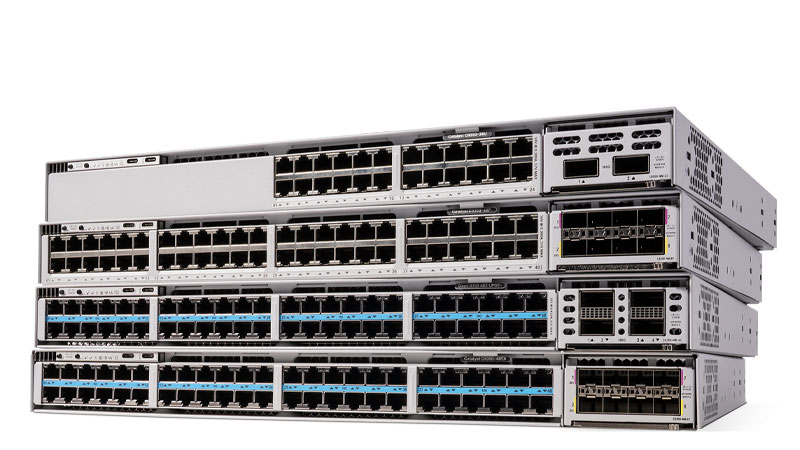 Guides
Cisco WS-C3850-48P-S EoL: Migrate to Catalyst 9300 (C9300-48P-A)
The Catalyst 3850 48-port PoE IP Base reached last day of support on October 31, 2025, here is a concrete plan to refresh to the Catalyst 9300 C9300-48P-A.
November 14, 2025 · 8 min readGuidesWS-C3750X-48P-S End of Life: Migration to Catalyst 3850
A practical refresh guide for replacing the fully end-of-support Cisco Catalyst 3750-X 48-port PoE switch (WS-C3750X-48P-S) with the Catalyst 3850, including specs, licensing, and a phased cutover plan.
November 11, 2025 · 7 min readGuidesCisco WS-C3850-24P-S Migration Guide: Upgrade to C9300-24P-A
The Catalyst 3850 24-Port PoE IP Base (WS-C3850-24P-S) reached Last Day of Support on October 31, 2025, here is how to plan a clean refresh to the Catalyst 9300 24-port PoE+ (C9300-24P-A).
November 13, 2025 · 7 min readGuidesMeraki MS390 4x10GE Module EoL: Refresh to C9300-NM-8X
The MA-MOD-4X10G uplink module hits Last Day of Support on November 1, 2026. Here is what that means for an MS390 stack and how to refresh cleanly to the Catalyst 9300 with the native C9300-NM-8X 10G network module.
February 27, 2026 · 8 min read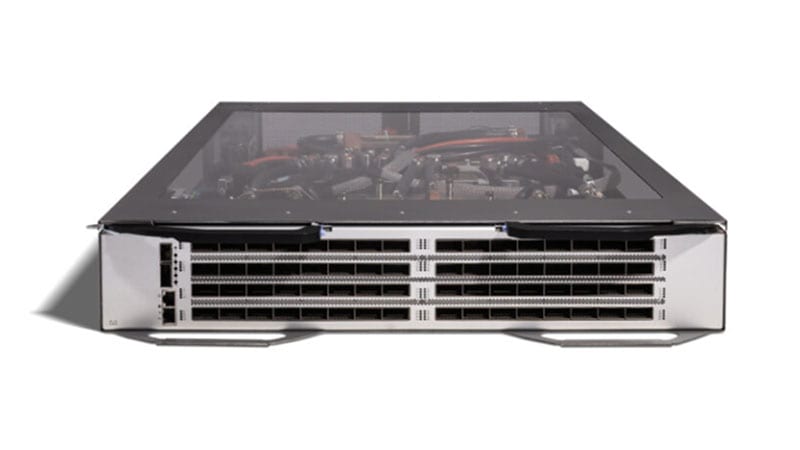 Guides
Cisco Nexus 9396PX EoL: Migrate to Nexus 93180YC-FX3
The Nexus 9396PX (N9K-C9396PX) passed Last Day of Support on February 19, 2023, here is why this original 9300 leaf has to come out and how to refresh cleanly to the Cloud Scale 93180YC-FX3.
April 2, 2026 · 10 min readGuidesNexus 5672UP-16G EoL: Migration to Nexus 9300 93180YC-FX
The Nexus 5672UP-16G reaches Last Day of Support on May 31, 2026, here's why it has to come out and how to migrate cleanly to the 25G/100G Nexus 9300 (N9K-C93180YC-FX).
February 5, 2026 · 10 min read