
Cisco Nexus 3048 (N3K-C3048TP-1GE) to Nexus 9200 Migration
The Nexus 3048TP-1GE reached Last Day of Support on August 31, 2025. Here is a practical, NX-OS-grounded plan to refresh to the Nexus 9200 (N9K-C92348GC-X), including 25G/100G uplinks, optics, licensing, and a phased cutover for federal and enterprise data centers.
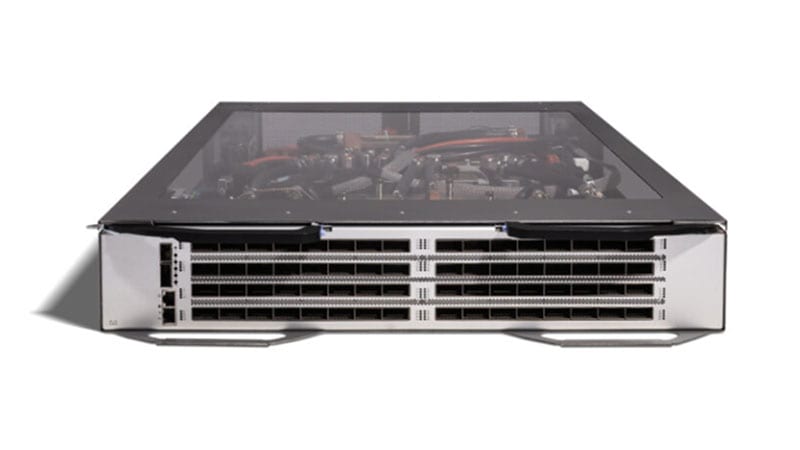
If you still have Cisco Nexus 3048TP-1GE switches (PID N3K-C3048TP-1GE) carrying production traffic, the clock has already run out. This 1RU, 48-port Gigabit Ethernet top-of-rack switch hit its Last Day of Support (LDoS) on August 31, 2025. After that date Cisco TAC will not open new cases, RMA hardware replacement ends, and Cisco PSIRT issues no further NX-OS security fixes for the platform. For data center, server-access, and out-of-band management roles, exactly where the 3048 was deployed, running unsupported, unpatched switching is now an active risk, not a deferred one.
What the Nexus 3048TP-1GE was, and why it aged out
The Nexus 3048 was Cisco's low-latency, low-cost 1GbE aggregation and ToR switch: 48 fixed 100M/1000BASE-T (RJ45) host ports plus 4 SFP+ uplinks (1/10G), in a compact 1RU chassis with front-to-back or back-to-front airflow options for hot/cold-aisle data centers. It ran NX-OS and was popular for 1G server access, lab fabrics, and management networks. The problem is architectural: it tops out at 1G on the access ports and 10G on the uplinks, with merchant silicon and a buffer/feature set from the early-2010s Nexus 3000 generation. It cannot do 25G server attach, 100G spine uplinks, VXLAN EVPN at modern scale, or current telemetry, all of which are now table stakes in the data center.
What each milestone date actually means
- End of Sale (Aug 3, 2020): Cisco stopped taking new orders for the N3K-C3048TP-1GE. Any unit deployed after this came from existing channel stock or the secondary market.
- End of SW Maintenance (Aug 3, 2021): the last date Cisco delivered NX-OS maintenance releases and routine bug fixes. From here, only critical/security fixes were considered, under contract.
- Last Day of Support, LDoS (Aug 31, 2025): the hard cliff. No TAC, no RMA, no PSIRT patches, no entitlement to software. The hardware can keep forwarding packets, but it is now unsupported and unpatchable.
The compliance angle is what makes inaction expensive. Frameworks that federal, DoD, SLED, and healthcare buyers live under, FISMA/RMF, FedRAMP, CMMC, HIPAA, and PCI-DSS, all require that infrastructure receive vendor security updates and remain on a supported lifecycle. An unsupported switch in scope is a documented finding waiting to happen at the next audit or ATO renewal. See the full lifecycle record on our Nexus 3048TP-1GE end-of-life page.
The recommended replacement: Nexus 9200 (N9K-C92348GC-X)
Cisco maps the 3048 forward to the Nexus 9200 series, specifically the N9K-C92348GC-X. This is the natural successor because it keeps the same role, high-density copper host access in 1RU, while moving the whole platform a generation forward on speed, silicon, and software.
Concretely better, port by port
- Host density and speed: 48 ports of 100M/1G copper (RJ45), same cabling and host attach as the 3048, so existing Cat5e/Cat6 server runs land directly. No re-cabling of the access layer.
- Real uplink headroom: 4 ports of 1/10/25G SFP28 plus 2 ports of 40/100G QSFP28. The 3048 capped at 4x10G; the 92348GC-X gives you 25G leaf uplinks and 100G spine attach in the same 1RU. That is the difference between a dead-end ToR and one that fits a modern VXLAN EVPN leaf-spine fabric.
- Cloud Scale ASIC: the 9200 runs on Cisco's Cloud Scale silicon (the same family behind the 9300-EX/FX), bringing larger forwarding tables, intelligent buffering, and line-rate Layer 2/Layer 3.
- VXLAN BGP EVPN: native overlay support for spine-leaf, multi-tenancy, and stretched Layer 2, something the original Nexus 3000 generation could not do at this scale.
- Streaming telemetry and programmability: model-driven telemetry, NX-API, gRPC/gNMI, and Python/Ansible-friendly NX-OS, replacing SNMP-era polling on the 3048.
- ACI-ready: the 9200 can run standalone NX-OS today and be converted to ACI spine/leaf mode later if you adopt Application Centric Infrastructure, protecting the investment.
Licensing: from feature-locked to NX-OS tiers
This is the single most common migration surprise, so plan for it. The Nexus 9000 family uses Cisco's tiered NX-OS subscription model (Essentials, Advantage, and add-ons such as the Day-2 Operations / Nexus Dashboard Insights package) under Smart Licensing Using Policy (SLUP). Base Layer 2/Layer 3 functions are covered by the lower tier; VXLAN EVPN, advanced segmentation, and telemetry-driven assurance pull in higher tiers. Unlike the perpetual, feature-on-box model of the 3048 era, you size a subscription term (typically 3 or 5 years) up front. Match the tier to the features you actually intend to enable, paying for Advantage on a switch you only use as a flat Layer 2 ToR is wasted budget, and under-licensing will block the EVPN config you planned for.
A practical migration plan
1. Assess and inventory
Pull show inventory, show module, and show running-config from every 3048. Capture serial numbers, NX-OS version, port maps, VLAN/STP topology, port-channels, and any features in use (e.g., FEX, if these were acting as a parent or were paired with a 2000-series fabric extender). Confirm contract status and document which switches are in an audited/regulated scope. Map physical placement, airflow direction, and PDU/circuit per rack.
2. Config and feature parity
Most Layer 2/Layer 3 config translates cleanly NX-OS to NX-OS, but do not assume a copy/paste. Validate interface naming (Ethernet1/x persists), STP mode, VRFs, and any spanning-tree/port-channel hashing differences. If you are adopting VXLAN EVPN as part of the refresh, treat that as a redesign step, not a parity step, build the overlay deliberately rather than lifting the old flat design. Re-baseline your NX-OS version against Cisco's current recommended release for the 9200 before cutover.
3. Physical: rack, power, optics, uplinks
- Airflow: order the 92348GC-X in the airflow direction matching your aisle layout (port-side exhaust vs. intake). A mismatched fan/PSU SKU will fight your cooling.
- Power: budget for dual PSUs and confirm circuit capacity; the 9200 draws more than the 1G-era 3048 under load.
- Copper host ports: existing RJ45 server cabling reuses directly, no optics needed on the access side.
- Uplink optics: this is the real change. Plan SFP28 (25G) for leaf uplinks and QSFP28 (100G) for spine, SR/LR or DAC/AOC per distance. Your old 10G SFP+ optics do not satisfy the new 25G/100G uplink design; budget new transceivers explicitly. Browse compatible Nexus optics and switches on our catalog.
4. Phased cutover
Avoid a forklift. Stage the 9200 alongside the 3048, build and validate config out-of-band, then migrate rack-by-rack or server-group-by-server-group during change windows. For dual-homed servers, move one NIC at a time. Keep the old switch powered and reachable until the new path is proven, so rollback is a cable move, not a re-config.
5. Secure decommission
Once retired, wipe configuration and credentials from each 3048 (clear startup-config, remove keys/certs), record serials for asset/CMDB closure, and dispose through a process that meets your data-handling policy, NIST 800-88 media sanitization for regulated environments. Do not let decommissioned switches with live configs and SNMP/TACACS secrets sit on a shelf.
Procurement notes for regulated buyers
For federal, DoD, and SLED purchases, confirm TAA compliance and country-of-origin on the 92348GC-X and optics, and route the buy through GPC or your established contract vehicle. New-generation Nexus and 25G/100G optics can carry real lead times, so place orders ahead of your change windows rather than after. Buying through an authorized Cisco partner protects warranty, Smart Licensing entitlement, and the upgrade path to ACI or Nexus Dashboard later. uniqcli can scope the exact SKU mix, switch, airflow, PSU, optics, and NX-OS tier, to your topology and compliance posture. Compare other retired platforms on our Cisco end-of-life hub.
Frequently asked questions
When did the Cisco Nexus 3048TP-1GE reach end of support?
Last Day of Support (LDoS) for the N3K-C3048TP-1GE was August 31, 2025. End of Sale was August 3, 2020 and end of software maintenance was August 3, 2021. After LDoS there is no Cisco TAC, no RMA, and no further NX-OS security (PSIRT) patches for the platform.
What is the direct replacement for the Nexus 3048TP-1GE?
Cisco maps it to the Nexus 9200 series, specifically the N9K-C92348GC-X: 48 ports of 100M/1G copper (matching the 3048's host attach), plus 4x 1/10/25G SFP28 uplinks and 2x 40/100G QSFP28, running NX-OS on Cloud Scale silicon and ACI-capable.
Will my existing cabling and server connections still work on the Nexus 9200?
Yes for the access side. The 92348GC-X keeps 48 RJ45 copper ports, so existing Cat5e/Cat6 server runs land directly with no re-cabling. The change is on the uplinks: you will need new 25G SFP28 and/or 100G QSFP28 optics, your old 10G SFP+ transceivers from the 3048 do not satisfy the new uplink speeds.
How does Nexus 9000 licensing differ from the Nexus 3048?
The 9200 uses Cisco's tiered NX-OS subscription model (Essentials/Advantage plus optional Day-2 operations add-ons) under Smart Licensing Using Policy, sized as a 3- or 5-year term. Base Layer 2/3 sits in the lower tier; VXLAN EVPN, advanced segmentation, and telemetry assurance require higher tiers. Match the tier to features you will actually enable.
Why does running an end-of-life Nexus 3048 create a compliance problem?
Frameworks such as FISMA/RMF, FedRAMP, CMMC, HIPAA, and PCI-DSS require infrastructure to remain on a supported lifecycle and receive vendor security updates. After LDoS the 3048 gets no PSIRT patches and no TAC/RMA, so any unit in audit scope becomes a documented finding and can jeopardize an ATO or audit renewal.
Uniqcli Team
The Uniqcli Team is an authorized Cisco partner specializing in Catalyst wireless, switching, datacenter fabric, licensing, and managed services for U.S. federal, state, local, and education customers. We scope Cisco bills of materials, validate procurement paths (TAA, FIPS, contract vehicles), and deliver design, deployment, and managed operations.
Ready to scope your Cisco build?
Build a quoteRelated reading
View all →GuidesNexus 93128TX EoL: Migration to the Nexus 93108TC-FX3
The Nexus 93128TX (N9K-C93128TX) passed Last Day of Support on October 31, 2022. Here is what each milestone means, why the 93108TC-FX3 is the right copper-leaf successor, and a concrete, low-risk migration plan for federal, healthcare, and enterprise data centers.
April 4, 2026 · 9 min read Guides
Cisco Nexus 5548P EoL: Migrate to Nexus 9300 (93180YC-FX3)
The Nexus 5548P passed Last Day of Support on September 30, 2020, no patches, no TAC, no RMA. Here is why it must come out of the rack and how to migrate cleanly to the Nexus 9300 (N9K-C93180YC-FX3).
May 27, 2026 · 8 min readGuidesCisco Nexus 6001-64T EoL: Migrate to Nexus 93180YC-FX3
The Nexus 6001-64T (N6K-C6001-64T) passed Last Day of Support on April 30, 2022. Here is what each milestone means, why the 10GBASE-T top-of-rack switch has to come out, and how to refresh cleanly to the Cloud Scale Nexus 93180YC-FX3.
April 19, 2026 · 7 min readGuidesCisco Nexus 56128P EoL: Migrate to Nexus 9300 93360YC-FX2
The Nexus 56128P (N5K-C56128P) hit Last Day of Support on September 30, 2025. Here's what each lifecycle date means and how to refresh cleanly to the Nexus 9300 93360YC-FX2 with 25G/100G and MACsec.
February 3, 2026 · 8 min readGuidesNexus 3064 EoL: Migration to Nexus 9300 (93180YC-FX3)
The Nexus 3064 (N3K-C3064PQ-10GE) passed Last Day of Support on June 30, 2021. Here's why it must come out and how to migrate cleanly to the Nexus 9300 (N9K-C93180YC-FX3), 25G access, 100G uplinks, VXLAN/EVPN, and MACsec.
May 9, 2026 · 8 min readGuidesCisco Nexus 9396TX EoL: Migrate to the 93180YC-FX3
The Nexus 9396TX (N9K-C9396TX) passed its Last Day of Support on April 30, 2023. Here is a practical, spec-driven plan to refresh this 10GBASE-T leaf onto the Nexus 93180YC-FX3, covering the milestone dates, what is concretely better, and a phased migration that keeps your fabric supported and audit-clean.
April 1, 2026 · 8 min read