
Cisco 2911 (CISCO2911/K9) End of Life: ISR 4331 Refresh Guide
The Cisco 2911 ISR G2 reached last day of support on December 31, 2022; here is a practical, partner-vetted plan to migrate it to the Cisco ISR 4331 (and Catalyst 8300) without breaking your branch.
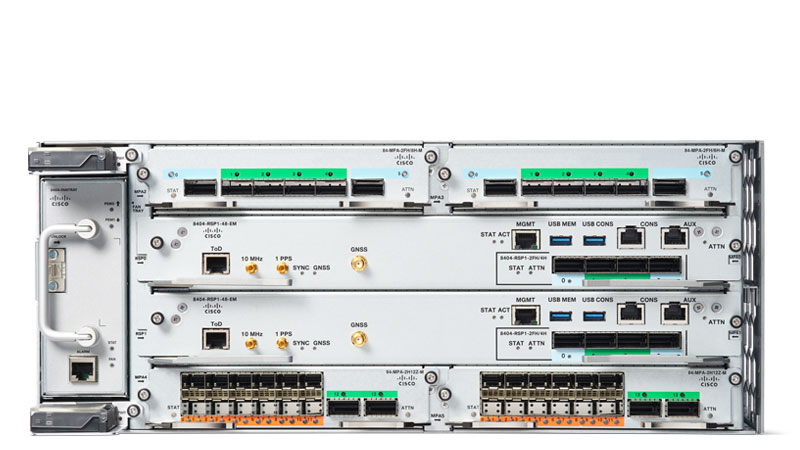
The Cisco 2911 Integrated Services Router (PID CISCO2911/K9) was one of the most widely deployed branch routers Cisco ever shipped. A 2RU member of the ISR Generation 2 (ISR G2) 2900 family, it gave mid-size sites three onboard GigabitEthernet ports, four EHWIC slots, two onboard PVDM (DSP) sockets, one internal service-module bay, and an internal services-ready power supply, all driven by Cisco IOS 15.x and a universal image unlocked by feature licenses. It was a workhorse: it terminated WAN circuits, ran zone-based firewall and IPsec VPN, served as a CUBE session border controller, and hosted SRE and voice modules. That versatility is exactly why so many of these chassis are still racked and forwarding traffic years after they should have been retired. If you are reading this, you almost certainly still have at least one CISCO2911/K9 carrying production traffic, and it is now well past its support horizon.
Where the Cisco 2911 stands today: fully end-of-life
The CISCO2911/K9 has passed every milestone in Cisco's product lifecycle. There is no remaining support runway. The dates that matter:
- End of Sale: December 9, 2017, Cisco stopped selling the 2911 through normal channels. Any new-in-box unit after this date is residual or gray-market inventory.
- End of Software Maintenance: December 9, 2020, the last date Cisco released maintenance and bug-fix IOS 15.x rebuilds for the platform. After this, no new software images, including security-related rebuilds, are produced for the 2900 series.
- Last Day of Support (LDoS): December 31, 2022, the final day Cisco TAC will take a case, honor an RMA, or provide any engineering assistance for the 2911. After LDoS the platform is, for support purposes, scrap.
For DoD, federal civilian, and SLED operators this is a compliance problem before it is a technical one. Auditors increasingly cross-reference asset inventories against vendor end-of-support lists; an unpatchable, out-of-support router in the data path is a documented control gap (NIST 800-53 SA-22, unsupported system components). You can review the full milestone record for this specific PID on our Cisco 2911 end-of-life detail page, and see the broader 2900-series and ISR G2 picture on the Cisco EoL hub.
The recommended replacement: Cisco ISR 4331
Cisco's bulletin maps the 2911 to the ISR 4331 (PID ISR4331/K9), the closest one-for-one successor in the ISR 4000 family. On paper the form factor is familiar, 1RU, three GigabitEthernet ports (one combo SFP), two NIM slots, and one SM-X service-module slot, but underneath it is a generationally different machine. The 4331 runs Cisco IOS XE, a Linux-based, modular operating system, not the monolithic IOS 15.x train of the 2911. That single change is the heart of the migration.
What is concretely better than a 2911
- Throughput and a licensing-defined performance ceiling: the 4331 ships with a default 100 Mbps aggregate throughput and is upgradeable to 300 Mbps via a performance (boost) license, a multiple of what a 2911 realistically pushed with services enabled. The CPU is a multi-core x86 SoC, so crypto, NBAR2, and AVC run without the DSP-and-ASIC juggling the 2911 required.
- IOS XE software architecture: services run as separate processes with In-Service Software Upgrade (ISSU) potential and far better fault isolation than IOS 15.x. Container/application hosting (IOx) lets you run third-party agents on-box, impossible on the 2911.
- SD-WAN ready: the same ISR4331/K9 chassis runs Cisco Catalyst SD-WAN (formerly Viptela) controller-managed mode. The 2911 was never a first-class SD-WAN platform. If a software-defined WAN is anywhere on your roadmap, the 4331 gets you there without another hardware swap.
- Modern licensing: the 4331 uses Smart Licensing with technology-package levels (Network Essentials / Advantage, historically IP Base / Security / AppX / UC). Entitlements live in your Cisco Smart Account rather than being burned to a specific chassis via PAK, so licenses are portable and centrally auditable, a major operational and compliance win over the 2911's node-locked feature licenses.
- Power and density: a single-RU 4331 replacing a 2RU 2911 frees rack space and cuts power draw while increasing capacity.
A practical migration plan
1. Assessment and inventory
Pull a current configuration and 'show version' / 'show inventory' from every 2911. Record installed EHWIC, PVDM, and SM modules; you will need to map each to a 4000-series equivalent (EHWIC → NIM, SM → SM-X). T1/E1, serial, and DSL EHWICs all have NIM counterparts; voice DSP resources move from PVDM2/PVDM3 to PVDM4 modules. Catalog feature licenses in use (Security for ZBFW/IPsec, UC for CUBE/voice) so you can size the right IOS XE technology package.
2. License transition
Set up or confirm a Cisco Smart Account and Virtual Account before hardware arrives. The 2911's PAK-based feature licenses do not transfer; you purchase new Smart Licenses sized to the 4331 (Network Advantage plus a performance/boost license if you need the 300 Mbps tier, plus a Security/UC entitlement as required). Have your partner register the new entitlements to your Smart Account so the device authorizes on first boot.
3. Config and feature parity
Do not paste a 2911 config into a 4331. IOS XE syntax overlaps but differs in crypto, NAT, QoS, and interface naming, and some IOS 15.x constructs are deprecated. Rebuild the config in a lab or staging 4331, validate ZBFW policy, IPsec/FlexVPN, routing (OSPF/BGP/EIGRP), QoS service-policies, and any CUBE dial-peers, then snapshot a known-good template per site profile.
4. Physical, power, and connectivity
Confirm rack units (2RU → 1RU), power (the 4331 uses a different internal PSU; verify your PDU outlets and any redundant-power needs), and uplinks. Reuse copper RJ-45 where possible; for the combo SFP port, order the correct optic. Pre-stage NIM/SM-X modules in the chassis before shipping to the branch.
5. Phased cutover
Cut over one site or site-class at a time. Schedule a maintenance window, swap the chassis, verify WAN circuit reachability and routing convergence, then validate VPN tunnels, firewall logging, and voice before declaring success. Keep the old 2911 on-site, powered off, until the new unit has run clean for a defined burn-in period so you can roll back.
6. Secure decommission
Wipe each retired 2911: 'write erase', clear the startup config, and zeroize crypto keys and any stored credentials. For DoD/federal disposal follow your sanitization SOP (NIST 800-88) and retain a certificate of destruction or asset-disposition record for the audit trail.
Procurement notes for government and enterprise
Source replacement routers from an authorized Cisco partner to guarantee genuine hardware, a clean Smart Account hand-off, and a valid warranty/TAC entitlement, gray-market ISR 4331 or Catalyst 8300 units routinely arrive with no license rights and no support. For federal buyers, confirm TAA (Trade Agreements Act) compliance and country-of-origin documentation up front; both the 4331 and Catalyst 8300 are available in TAA-compliant configurations. We accept Government Purchase Card (GPC/SmartPay) for in-threshold orders and can structure larger buys as Simplified Acquisition (FAR Part 13) purchase orders. Build lead time into your timeline, current-gen routing platforms can carry multi-week lead times, so order ahead of any audit or fiscal-year deadline. Browse replacement routing hardware in our catalog.
If you still have CISCO2911/K9 units in production, the safest move is to scope the refresh now, while you can still plan it on your schedule instead of reacting to an outage or an audit finding. Tell us your site count, the modules in your current 2911s, and your compliance requirements, and we will return a like-for-like ISR 4331 or Catalyst 8300 design with licensing and lead times, get a refresh quote.
Frequently asked questions
Is the Cisco 2911 (CISCO2911/K9) still supported by Cisco?
No. The 2911 passed its Last Day of Support on December 31, 2022. Cisco TAC will not open cases or process RMAs for it, software maintenance ended December 9, 2020, and no new PSIRT security fixes are produced for the IOS 15.x images that run on the 2900 family. Operationally and for compliance, it should be treated as end-of-life.
What is the direct replacement for the Cisco 2911?
Cisco's bulletin migrates the CISCO2911/K9 to the ISR 4331 (ISR4331/K9), a 1RU IOS XE router with three GigabitEthernet ports, two NIM slots, one SM-X slot, 100 Mbps default throughput upgradeable to 300 Mbps, and Smart Licensing. Because the 4331 is itself now end-of-life, the current platform to buy is the Catalyst 8300 Series, which carries the SD-WAN/SASE roadmap forward.
Can I copy my 2911 IOS configuration directly onto an ISR 4331?
No. The 2911 runs IOS 15.x and the 4331 runs IOS XE. While much of the CLI is similar, crypto, NAT, QoS, interface naming, and several IOS 15.x constructs differ or are deprecated. Rebuild and validate the configuration on a staging 4331, covering routing, ZBFW, IPsec/FlexVPN, QoS, and any CUBE voice, before cutover.
Do my 2911 feature licenses transfer to the ISR 4331?
No. The 2911 used PAK-based, node-locked feature licenses. The 4331 uses Smart Licensing with entitlements held in your Cisco Smart Account. You purchase new Smart Licenses sized to the platform (for example Network Advantage plus a performance/boost license and any Security or UC package). Set up the Smart Account before the hardware arrives.
Will keeping a 2911 in production fail a security audit?
It is a likely finding. Because no security patches are produced for the platform, any new critical IOS vulnerability cannot be remediated, which maps to an unsupported-component control gap under frameworks like NIST 800-53 (SA-22), CMMC, HIPAA, and PCI-DSS. Replacing the hardware is the only path to remediation once a device is past Last Day of Support.
Uniqcli Team
The Uniqcli Team is an authorized Cisco partner specializing in Catalyst wireless, switching, datacenter fabric, licensing, and managed services for U.S. federal, state, local, and education customers. We scope Cisco bills of materials, validate procurement paths (TAA, FIPS, contract vehicles), and deliver design, deployment, and managed operations.
Ready to scope your Cisco build?
Build a quoteRelated reading
View all →GuidesISR 4331 End of Life: Migrating to the Catalyst C8200-1N-4T
A practical, partner-grade guide to replacing the end-of-life Cisco ISR 4331 (ISR4331/K9) with the Catalyst C8200-1N-4T edge platform before Last Day of Support on November 30, 2028.
November 27, 2025 · 8 min readGuidesCisco 2921 (CISCO2921/K9) End of Life: ISR 4331 Migration Guide
The Cisco 2921 ISR G2 is past its last day of support, here is what each EoL milestone means and how to migrate cleanly to the IOS XE-based ISR 4331.
December 10, 2025 · 8 min readGuidesCisco 2951 (CISCO2951/K9) Replacement: ISR 4351 Migration Guide
The Cisco 2951 ISR hit Last Day of Support on December 31, 2022; here is what each end-of-life milestone means and how to plan a clean migration to the ISR 4351.
December 12, 2025 · 8 min read Guides
Cisco 1941W EoL: Migrate to Catalyst 8200 C8200-1N-4T
The Cisco 1941W reached Last Day of Support on December 31, 2021, no patches, no TAC, no RMA. Here is what the EoL milestones mean and how to migrate cleanly to the Catalyst 8200 Edge Platform (C8200-1N-4T), including the licensing and wireless changes that catch teams off guard.
April 22, 2026 · 6 min read Guides
UCS-E180D-M3/K9 vSAN EoL: Migrate to UCS-E1100D-M6
The UCS E-Series vSAN module (UCS-E180D-M3/K9) hits Last Day of Support on November 30, 2026. Here's why branch hyperconverged compute on ISR 4000 must move to the UCS-E1100D-M6 on Catalyst 8000, specs, licensing, and a clean cutover plan.
February 25, 2026 · 10 min readGuidesCisco ISR 4351 (ISR4351/K9) to Catalyst 8300 Migration Guide
A practical, specs-level guide to retiring the end-of-life Cisco ISR 4351 and refreshing to the Catalyst C8300-2N2S-6T Edge Platform.
November 29, 2025 · 7 min read