
Cisco 1941W EoL: Migrate to Catalyst 8200 C8200-1N-4T
The Cisco 1941W reached Last Day of Support on December 31, 2021, no patches, no TAC, no RMA. Here is what the EoL milestones mean and how to migrate cleanly to the Catalyst 8200 Edge Platform (C8200-1N-4T), including the licensing and wireless changes that catch teams off guard.
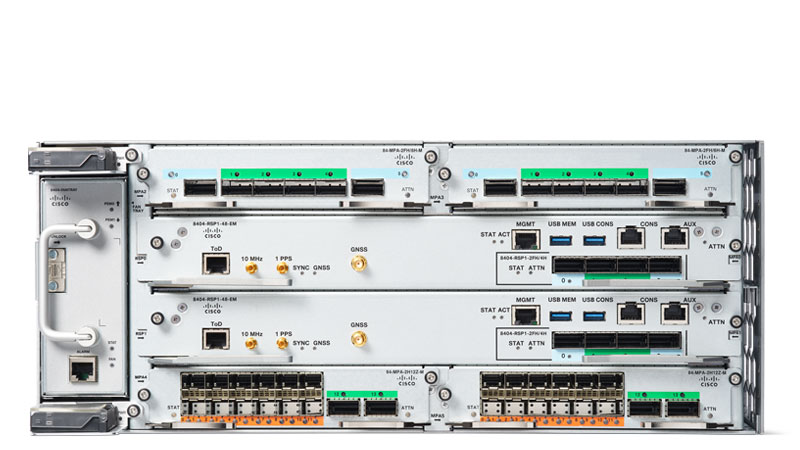
The Cisco 1941W (CISCO1941W-A/K9) was a clever fit for its era: it packed the dual-Gigabit 1941 Integrated Services Router from the ISR G2 generation together with an embedded 802.11n wireless access point, so a small branch, clinic, or remote office could land routing, NAT, VPN, and Wi-Fi in a single 1RU box. That convenience is now a liability. The platform passed its Last Day of Support on December 31, 2021, which means it is fully end-of-life with no path to current software, security fixes, or hardware replacement. If you still have 1941W units carrying production traffic, this guide explains exactly what that status costs you and how to move cleanly to the recommended successor, the Cisco Catalyst 8200 Edge Platform (C8200-1N-4T).
What end-of-life actually means for the 1941W
End-of-life is a sequence of milestones, not a single switch, and each date strips away a different protection. For the 1941W the milestones that matter are End of Sale on December 26, 2016 and Last Day of Support on December 31, 2021. The dates between them governed bug fixes and software maintenance; the LDoS date is the one that should drive your refresh budget, because everything stops there.
- End of Sale (Dec 26, 2016): Cisco stopped selling the 1941W through normal channels. Any new unit from that point is refurbished, gray-market, or old stock, not a basis for a multi-year deployment.
- Last Day of Support (Dec 31, 2021): the hard cutoff. After this date Cisco TAC will not open cases, there are no RMA replacements for failed hardware, and PSIRT issues no new security patches for the platform, including its IOS 15.x image and the embedded 802.11n radio.
- No software maintenance: the 1941W is frozen on legacy IOS 15.x feature-set images. New CVEs affecting that code base will never be fixed on this hardware.
Why acting now matters
The operational risk is concrete. The 1941W's integrated access point runs 802.11n (Wi-Fi 4) on a single radio, a generation of wireless that predates WPA3, lacks the spatial efficiency modern clients expect, and is increasingly refused by security-conscious endpoints and EMM policies. More urgently, an unpatchable router at the network edge is a standing audit finding. Frameworks that federal, DoD, SLED, and healthcare buyers live under, FISMA/NIST 800-53, CMMC, HIPAA, PCI DSS, all treat unsupported, unpatchable infrastructure as an unacceptable control gap. When a new IOS vulnerability lands and there is no fixed release for your hardware, you no longer have a maintenance ticket; you have a procurement decision, and the clock is already running. You can confirm the exact milestone dates for your part number on our 1941W end-of-life page and check the rest of your fleet against our Cisco EoL resource.
The recommended replacement: Catalyst 8200 (C8200-1N-4T)
Cisco's modern branch-edge path replaces the 1900-series ISR G2 with the Catalyst 8200 Edge Platform. The C8200-1N-4T is the direct refresh target for a 1941-class site. It is a 1RU x86-based platform running IOS XE, the same software train across Cisco's enterprise routing portfolio, which means it is SD-WAN ready out of the box and shares one feature set, one CLI, and one upgrade model with the rest of the Catalyst 8000 family.
Routing and throughput
The 1941 was rated around 25 Mbps with services enabled (roughly 50+ Mbps in lighter forwarding modes) on a single-core processor, adequate for a 2010-era T1/DSL branch, not for a site on fiber or a business cable circuit. The C8200-1N-4T uses a multi-core x86 data plane and is engineered for roughly 1 Gbps+ of aggregate forwarding with services such as encryption running, comfortably an order of magnitude beyond the 1941W. Crucially, IPsec and TLS crypto are hardware-accelerated, so VPN throughput no longer collapses the box the way it could on G2 hardware.
Ports and modularity
The naming tells the story: '4T' is four onboard 1-Gigabit Ethernet ports, versus the 1941's two GE interfaces, and '1N' is a single NIM (Network Interface Module) slot. Where the 1941 used the older EHWIC and ISM module formats, the 8200 takes current-generation NIMs and a pluggable module for services, so T1/E1, serial, LTE/5G cellular, and additional Ethernet are added with modern, supported hardware rather than discontinued cards.
Software and licensing, the biggest change
This is where migration planning earns its keep. The 1941W used IOS 15.x universal images with feature-set licenses (IP Base, Security, Data, UC) activated by PAK or right-to-use, node-locked, per-device, perpetual. The Catalyst 8200 moves to Cisco DNA / Smart Licensing: you select a network tier (Network Essentials or Network Advantage) and a subscription term (Cisco DNA Essentials or Advantage), managed in a Smart Account rather than as paper PAKs. Licenses become portable across your account and are tracked centrally, which simplifies audits, but it changes the purchasing math from a one-time capex to a tiered subscription, and that needs to be modeled before you buy.
Wireless: the one feature that does not carry over
The 8200 has no integrated radio: Unlike the 1941W, the Catalyst 8200 is a router only, there is no built-in access point. Cisco's current architecture separates routing from wireless. Plan to add a dedicated Wi-Fi 6/6E access point (Catalyst 9100 series, or Meraki MR for cloud management) at each former 1941W site. The upside is real: you move from single-radio 802.11n to Wi-Fi 6 with OFDMA, WPA3, far higher client density, and either controller-based or cloud management, but it is a separate line item to scope and quote, not an afterthought.
A practical migration plan
Treat the refresh as a project with parity checkpoints, not a like-for-like swap, precisely because the wireless and licensing models differ.
- Assessment and inventory: pull serials and running config from every 1941W, record IOS feature set in use (IP Base vs Security/Data), WAN circuit type and speed, EHWIC/ISM modules installed, and which sites depend on the embedded AP.
- License transition: stand up or confirm a Cisco Smart Account, then map each site to a Network Essentials/Advantage tier plus a DNA subscription term. Do not assume old feature-set entitlements transfer, they do not.
- Config and feature parity: translate IOS 15.x configuration to IOS XE syntax. Most routing, NAT, ACL, and IPsec constructs map closely, but verify zone-based firewall, NetFlow, and QoS behavior. Decide now whether each branch goes traditional IOS XE routing or onboards to Catalyst SD-WAN (vManage/Catalyst Manager), the 8200 supports both, and SD-WAN is the strategic reason many teams choose this platform.
- Physical and power: confirm rack space (both are 1RU), power and grounding, uplink optics/SFPs, and cabling. Order the matching NIMs for any T1/E1, serial, or cellular needs, and procure the separate Wi-Fi 6 APs and any PoE switch or injector they require.
- Phased cutover: pilot one or two representative sites, validate WAN failover, VPN tunnels, and wireless association, then roll out in waves with a tested rollback. Keep an old config archive per site.
- Secure decommission: for federal, DoD, and healthcare environments, sanitize NVRAM and flash, document chain of custody, and dispose through an approved process. Do not let a retired 1941W with live config and keys leave the building unwiped.
Procurement notes for regulated buyers
Because the 1941W can only be bought used at this point, the refresh is also a chance to fix supply-chain compliance. Specify TAA-compliant hardware payable by Government Purchase Card (GPC), sourced through an authorized channel, gray-market 8200s carry counterfeit and warranty risk and can fail acquisition review. Plan for current lead times on the C8200-1N-4T plus the separate access points and NIMs, and bundle the DNA subscription into the same purchase order so licensing is active on day one. As an authorized Cisco partner, uniqcli can validate the configuration, confirm TAA status, and align delivery to your cutover schedule. Browse current edge platforms in our catalog, and when you are ready, get a quote for a TAA-compliant 1941W-to-Catalyst-8200 refresh scoped to your sites.
Frequently asked questions
Is the Cisco 1941W still supported in 2026?
No. The 1941W (CISCO1941W-A/K9) passed its Last Day of Support on December 31, 2021. Cisco no longer issues security patches for its IOS 15.x image or embedded 802.11n radio, TAC will not open cases for it, and there are no RMA replacements for failed hardware. Any units still in production are unsupported and unpatchable, which most compliance frameworks treat as an audit finding.
What replaces the Cisco 1941W?
The recommended successor is the Cisco Catalyst 8200 Edge Platform, specifically the C8200-1N-4T. It is a 1RU IOS XE router with four onboard 1G Ethernet ports, a NIM slot, hardware-accelerated crypto, roughly 1 Gbps+ of forwarding with services, and native Catalyst SD-WAN support, a major step up from the 1941's dual-GE, ~25 Mbps single-core design.
Does the Catalyst 8200 include a wireless access point like the 1941W did?
No. The 1941W had an integrated 802.11n access point, but the Catalyst 8200 is a router only. Cisco's current architecture separates routing from wireless, so you add a dedicated Wi-Fi 6/6E access point, a Catalyst 9100-series or Meraki MR, at each site. You gain OFDMA, WPA3, and much higher client capacity, but it is a separate line item to scope and quote.
How does licensing change moving from the 1941W to the Catalyst 8200?
The 1941W used perpetual, node-locked IOS feature-set licenses (IP Base, Security, Data, UC) activated by PAK or right-to-use. The Catalyst 8200 uses Cisco DNA and Smart Licensing: you choose a network tier (Network Essentials or Advantage) plus a DNA subscription term, all managed in a Smart Account. Old feature-set entitlements do not transfer, so model the subscription cost before purchase.
Can I still buy a Cisco 1941W instead of migrating?
Only as used, refurbished, or gray-market hardware, it went End of Sale on December 26, 2016. Buying unsupported, potentially non-TAA-compliant gear for a multi-year deployment is a poor fit for federal, DoD, SLED, and healthcare buyers and can fail acquisition review. A TAA-compliant Catalyst 8200 refresh through an authorized partner is the sound path; request a quote to scope it.
Uniqcli Team
The Uniqcli Team is an authorized Cisco partner specializing in Catalyst wireless, switching, datacenter fabric, licensing, and managed services for U.S. federal, state, local, and education customers. We scope Cisco bills of materials, validate procurement paths (TAA, FIPS, contract vehicles), and deliver design, deployment, and managed operations.
Ready to scope your Cisco build?
Build a quoteRelated reading
View all → Guides
Cisco 1921 (CISCO1921/K9) EoL: Migrate to the ISR 4221
The Cisco 1921 ISR hit Last Day of Support on September 30, 2023, here is a concrete, branch-tested plan to migrate to the supported ISR 4221.
December 5, 2025 · 7 min readGuidesISR 4331 End of Life: Migrating to the Catalyst C8200-1N-4T
A practical, partner-grade guide to replacing the end-of-life Cisco ISR 4331 (ISR4331/K9) with the Catalyst C8200-1N-4T edge platform before Last Day of Support on November 30, 2028.
November 27, 2025 · 8 min readGuidesCisco ISR 4321 (ISR4321/K9) to Catalyst C8200 Migration Guide
The Cisco ISR 4321 (ISR4321/K9) is end-of-sale and past software maintenance, here is a concrete plan to migrate to the Catalyst C8200-1N-4T before Last Day of Support.
November 25, 2025 · 8 min read Guides
Cisco Nexus 5548P EoL: Migrate to Nexus 9300 (93180YC-FX3)
The Nexus 5548P passed Last Day of Support on September 30, 2020, no patches, no TAC, no RMA. Here is why it must come out of the rack and how to migrate cleanly to the Nexus 9300 (N9K-C93180YC-FX3).
May 27, 2026 · 8 min readGuidesCisco 1941 (CISCO1941/K9) to ISR 4221 Migration Guide
The Cisco 1941 ISR is past Last Day of Support, here is an expert plan to migrate CISCO1941/K9 branch routers to the IOS-XE-based ISR 4221.
December 6, 2025 · 8 min read Guides
WS-C4500X-32SFP+ EOL & Catalyst 9500-48Y4C Migration
The Catalyst 4500-X 32-Port 10G (WS-C4500X-32SFP+) hit Last Day of Support on October 31, 2025, here is a concrete plan to migrate to the higher-density, 25G/100G Catalyst 9500-48Y4C.
November 20, 2025 · 8 min read