
Cisco ASR 1002 End-of-Life: Migration to the ASR1002-X (and What Comes Next)
The ASR 1002 reached Last Day of Support on April 30, 2021; here is how to migrate to the ASR1002-X and plan for its Catalyst 8500 successor without breaking aggregation services or compliance.
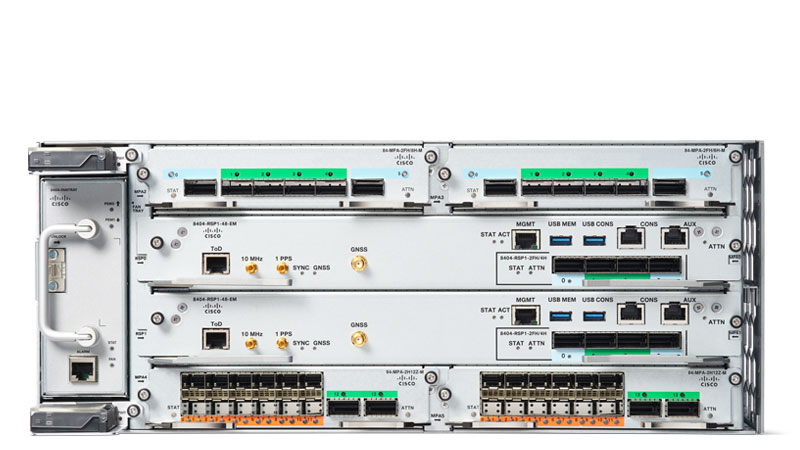
The Cisco ASR 1002 Aggregation Services Router was a workhorse at the WAN edge and service-provider aggregation layer for the better part of a decade. If you still have one carrying internet edge, MPLS PE, IPsec head-end, or aggregation traffic, it is now well past its supported life. End of Sale was April 29, 2016, and the Last Day of Support (LDoS) was April 30, 2021. Cisco's own migration path points at the ASR1002-X, which remains the most direct, lowest-disruption replacement for the chassis you already operate. This guide explains what each milestone means in practice, why the ASR1002-X is a genuine upgrade and not just a like-for-like swap, and how to execute the migration cleanly for federal, healthcare, and enterprise environments.
Where the ASR 1002 stands today
The original ASR 1002 (PID ASR1002) is a 2RU modular platform built around a fixed Route Processor (RP1), an embedded Embedded Services Processor (typically an ESP5 or ESP10), and a single integrated SIP-10 carrier with shared-port-adapter (SPA) bays. That architecture was excellent in its era, but the embedded ESP caps forwarding performance and crypto throughput at levels that modern edge workloads have long outgrown. More importantly for risk and compliance: the platform is fully end-of-life.
In concrete terms, after LDoS there is no TAC case you can open, no advance-replacement RMA if a power supply or ESP fails, and no software fix when a new vulnerability is disclosed against ASR 1000 IOS-XE. Cisco's PSIRT will publish advisories that name affected releases, but for an unsupported platform there is no First Fixed Release to upgrade to. That is the part auditors care about: an unpatchable device sitting in the data path is a finding under FISMA/RMF, HIPAA Security Rule safeguards, PCI DSS, and most SLED security frameworks. You can document a compensating control, but you cannot make the underlying device supported again.
Why acting now matters
The risk is cumulative. Spare ASR 1002 hardware on the gray market is aging and unwarranted, so a single component failure can take an aggregation point offline with no four-hour replacement behind it. Meanwhile, IPsec and control-plane CVEs continue to surface across the ASR 1000 software family. If you are waiting for budget, the honest framing is that you are accepting an open, unbounded window of exposure on a device you cannot patch. You can review the full lifecycle detail for this platform on our ASR 1002 end-of-life page and the broader Cisco End-of-Life hub.
The recommended replacement: ASR1002-X
Cisco's documented successor is the Cisco ASR1002-X (PID ASR1002-X): a fixed 2RU chassis with six built-in Gigabit Ethernet ports, dual power supplies, and 4 GB of DRAM in the base configuration. It is the same form factor and the same operational model, which is exactly why it is the lowest-friction migration for an existing ASR 1002 fleet, but the internals are a significant step up.
What is concretely better
- Integrated, crypto-capable forwarding: the ASR1002-X has an embedded ESP whose system bandwidth is software-activated in tiers from 5 Gbps up to 36 Gbps. You buy the chassis once and unlock throughput with a license instead of swapping an ESP module, which is a major operational simplification over the fixed ESP in the original ASR 1002.
- Hardware-accelerated IPsec and crypto at line rate that the original RP1/ESP5 generation could not match, which matters for VPN head-end, SD-WAN, and encrypted aggregation roles.
- Six built-in GE ports plus SPA bays for flexible interface mixes (channelized, POS, or additional Ethernet via SPAs), so you keep modularity without a separate SIP carrier in the base build.
- Higher route-scale and memory headroom for full internet routing tables and dense BGP/MPLS PE roles, where the older platform was increasingly constrained.
- Modern IOS-XE with the current Smart Licensing model rather than the legacy right-to-use/PAK licensing the ASR 1002 era relied on, simplifying entitlement and audit reporting.
One important planning note: the ASR1002-X has itself now reached end-of-sale. Cisco's go-forward platform for new edge and aggregation designs is the Catalyst 8500 Series (for example the C8500-12X4QC and C8500-12X), which delivers 100G-capable interfaces, an x86 control plane, and native Cisco SD-WAN / SD-Routing on IOS-XE. So you have two valid strategies. If you need a fast, proven, drop-in replacement to retire unsupported hardware immediately, the ASR1002-X is the right move. If your refresh horizon is multi-year and you want the longest support runway and SD-WAN as a first-class capability, go straight to the Catalyst 8500. Many organizations do both: ASR1002-X where they need parity today, Catalyst 8500 where they are redesigning the edge.
A practical migration plan
1. Assessment and inventory
Pull the running config, 'show version', 'show platform', and 'show inventory' from each ASR 1002. Document the installed SPAs and their roles, the IOS-XE release and feature set in use, the licensed throughput you actually consume (peak and 95th percentile), and the routing footprint (BGP table size, MPLS L3VPN/L2VPN VRFs, NAT translations, IPsec tunnel count). This is what sizes the ASR1002-X bandwidth license tier and confirms whether your SPAs carry forward or need Ethernet-native replacements.
2. License transition
The biggest change is moving off legacy PAK/right-to-use entitlement onto Smart Licensing. Stand up (or confirm) your Cisco Smart Account and Virtual Account before the cutover so the new chassis can register and activate its bandwidth and technology-package licenses (IP Base / Advanced IP / Advanced Enterprise equivalents under IOS-XE). Size the ASR1002-X bandwidth tier to your measured throughput plus headroom; over-buying the top tier wastes budget, under-buying throttles aggregation traffic.
3. Config and feature parity
Most ASR 1002 IOS-XE configuration migrates with light editing, but do not assume a clean paste. Validate interface naming for the six built-in GE ports and any SPAs, re-verify QoS policies against the new ESP's queueing model, and confirm every IPsec/IKEv2, BGP, OSPF, MPLS, and NAT feature exists and behaves identically in the target IOS-XE release. Build the new config in a lab or staging chassis and diff it against production behavior before you touch the live path.
4. Physical: rack, power, uplinks, optics
Both platforms are 2RU, so rack space is a wash. Confirm power: the ASR1002-X ships with dual supplies (AC or DC variants) so verify you have matching feeds and PDU capacity, and order the correct AC vs DC SKU for the site. Audit optics carefully. SFP/SFP+ modules from the old chassis may carry over, but confirm compatibility and TAA sourcing for any new transceivers, and reuse or replace fiber/copper uplinks to match the GE port layout. There is no PoE or stacking consideration here; this is a routing aggregation platform, not an access switch.
5. Phased cutover
For aggregation roles, avoid a single big-bang swap. Pre-stage the ASR1002-X with the validated config, bring it up in parallel, and migrate routing in controlled steps: shift one peering or one VRF/service at a time, watch convergence and drops, then proceed. Where the ASR 1002 is a single point of aggregation, schedule a maintenance window and have a documented rollback (the old chassis stays cabled and powered until the new one is proven). Confirm IPsec tunnels re-establish and that traffic counters and QoS behave under real load before declaring success.
6. Secure decommission
Once the ASR1002-X is carrying production traffic, decommission the old box securely. Erase the configuration and any stored keys/certificates, wipe bootflash and removable storage, and remove the device from monitoring, NAC, and asset inventories. For federal and DoD environments, follow your media-sanitization policy (NIST SP 800-88 lines up well here) and retain a certificate of data destruction. Then dispose through an authorized, auditable channel rather than a generic recycler.
Procurement notes for government and enterprise
- TAA compliance: federal, DoD, and many SLED and healthcare buyers require Trade Agreements Act-compliant hardware. Confirm country-of-origin and TAA status on the chassis, SPAs, and optics before you order, not after.
- Authorized sourcing: buy new ASR1002-X (or Catalyst 8500) hardware and licensing through an authorized Cisco partner so entitlement, Smart Licensing, and SmartNet/Success Tracks coverage attach cleanly and your serials are supportable.
- Lead times: end-of-sale and successor platforms can carry variable lead times; place orders early and ask for current availability rather than assuming stock.
- GPC and open-market orders: government cardholders can transact within micro-purchase limits via Government Purchase Card, and larger refreshes can be quoted as FAR-based purchase orders under Simplified Acquisition Procedures. We do not hold a GSA Schedule, SEWP, or other contract vehicle today.
- Support coverage: pair the new hardware with the right SmartNet/Success Tracks tier; for aggregation-class devices, four-hour onsite is usually the appropriate SLA, not next-business-day.
The bottom line: the ASR 1002 has been unsupported since April 2021, and every day it stays in the data path is unpatched risk and an open audit finding. The ASR1002-X gives you a same-form-factor, license-activated upgrade you can deploy fast, while the Catalyst 8500 is the long-runway choice if you are redesigning the edge around SD-WAN. Browse the replacement platforms in our catalog, or skip ahead and let our team size the right tier for your traffic and build a TAA-compliant, contract-ready refresh. Start your refresh quote and we will work from your actual inventory and throughput.
Frequently asked questions
Is the Cisco ASR 1002 still supported?
No. The ASR 1002 reached End of Sale on April 29, 2016, and its Last Day of Support (LDoS) was April 30, 2021. After LDoS there is no Cisco TAC access, no hardware RMA replacement, and no PSIRT security patches. Any vulnerability disclosed against its IOS-XE software will have no fixed release for this platform, which makes it an audit and security exposure if it remains in production.
What is the recommended replacement for the ASR1002?
Cisco's documented migration is to the ASR1002-X (PID ASR1002-X): a 2RU chassis with six built-in GE ports, dual power supplies, 4 GB DRAM, an integrated crypto-capable ESP with software-activated bandwidth from 5 to 36 Gbps, and modern IOS-XE with Smart Licensing. For new long-term designs, the Catalyst 8500 Series is the current successor with 100G interfaces and native Cisco SD-WAN.
How is the ASR1002-X better than the original ASR 1002?
It keeps the same 2RU form factor and operational model but adds hardware-accelerated line-rate IPsec/crypto, software-activated throughput tiers up to 36 Gbps (no ESP module swap), greater route-scale and memory headroom for full internet tables and dense MPLS PE roles, and the modern Smart Licensing model instead of legacy PAK/right-to-use licensing.
Can I reuse my SPAs and optics when migrating to the ASR1002-X?
Often, but verify it. The ASR1002-X has SPA bays, so many shared port adapters carry forward, and SFP/SFP+ optics may be compatible. Always confirm SPA and transceiver compatibility against the target IOS-XE release, and for federal or DoD buyers confirm TAA compliance and country-of-origin on any newly purchased optics or modules before ordering.
The ASR1002-X is itself end-of-sale. Should I buy it or go to the Catalyst 8500?
Both are valid. The ASR1002-X is the fastest, lowest-risk, same-form-factor way to retire unsupported ASR 1002 hardware now. The Catalyst 8500 Series is the better choice when you have a multi-year horizon and want the longest support runway plus native SD-WAN/SD-Routing on a 100G-capable platform. Many organizations deploy the ASR1002-X for immediate parity and standardize on the Catalyst 8500 for edge redesigns.
Uniqcli Team
The Uniqcli Team is an authorized Cisco partner specializing in Catalyst wireless, switching, datacenter fabric, licensing, and managed services for U.S. federal, state, local, and education customers. We scope Cisco bills of materials, validate procurement paths (TAA, FIPS, contract vehicles), and deliver design, deployment, and managed operations.
Ready to scope your Cisco build?
Build a quoteRelated reading
View all →GuidesASR 1002-X End of Life: Catalyst 8500-12X Migration Guide
The ASR1002-X reaches Last Day of Support on July 31, 2027, here is exactly what to migrate to the Catalyst 8500-12X and how to do it cleanly.
October 11, 2025 · 8 min readGuidesCisco ASR 1001 End-of-Life: Migration to ASR1001-X
The Cisco ASR1001 hit Last Day of Support on April 30, 2021, so here is a practical, specs-driven plan to refresh to the ASR1001-X and modern Smart Licensing.
October 5, 2025 · 8 min read Guides
Cisco 1941W EoL: Migrate to Catalyst 8200 C8200-1N-4T
The Cisco 1941W reached Last Day of Support on December 31, 2021, no patches, no TAC, no RMA. Here is what the EoL milestones mean and how to migrate cleanly to the Catalyst 8200 Edge Platform (C8200-1N-4T), including the licensing and wireless changes that catch teams off guard.
April 22, 2026 · 6 min read Guides
Cisco Catalyst 3560V2 (WS-C3560V2-48PS-S) to Catalyst 9200 Migration Guide
The WS-C3560V2-48PS-S reached Last Day of Support on May 31, 2021, no PSIRT patches, no TAC, no RMA. Here is a practical, specs-driven plan to migrate from the Fast Ethernet 3560V2 to the gigabit, IOS-XE Catalyst 9200 (C9200-48P-A).
May 13, 2026 · 7 min readGuidesASR1001-X End of Life: Migrate to Catalyst 8500L
The ASR1001-X is past End of Software Maintenance with Last Day of Support in July 2027, here is how to migrate cleanly to the Catalyst 8500L (C8500L-8S4X).
October 7, 2025 · 7 min read Guides
Cisco ASA 5505 EoL: Migration to the ASA 5506-X (Replacement Guide)
The ASA 5505 (ASA5505-K8) hit Last Day of Support on August 31, 2022, here is a practical, partner-grade plan to migrate to the Cisco ASA 5506-X (and today's Secure Firewall 1000 Series) without losing feature parity or failing an audit.
September 13, 2025 · 7 min read