

The Buy American Act and the Trade Agreements Act are different tests, and usually only one governs a given Cisco order. The Buy American Act (BAA) is a domestic-content test backed by a price preference for products manufactured in the United States. The Trade Agreements Act (TAA) is a country-of-origin test. It waives Buy American for products from designated countries and restricts purchases to those products. It kicks in once a procurement reaches the WTO GPA threshold, currently $174,000 for supplies, or when the order sits under a contract that carries the TAA clause, such as a GSA Schedule.
The practical rule: below $174,000 on an open-market buy, BAA and your agency's own policy decide. At or above it, or on any GSA Schedule order, TAA decides, and for Cisco that usually means asking for the ++ part number.
TAA vs BAA at a glance
| Trade Agreements Act (TAA) | Buy American Act (BAA) | |
|---|---|---|
| Statute | 19 U.S.C. chapter 13, sections 2501 to 2581; FAR subpart 25.4. | The Buy American statute; FAR subpart 25.1. |
| Test | Country of origin: U.S.-made, or substantially transformed in a designated country (FAR 25.003). No percentage. | Manufactured in the U.S. plus a domestic component cost percentage (FAR 25.101); percentage waived for COTS. |
| Threshold where it applies | At or above $174,000 for supplies (FAR 25.402), and at any value under a contract containing FAR 52.225-5, such as a GSA Schedule. | Open-market buys below $174,000. |
| Typical contract types | GSA Schedule orders, open-market awards at or above threshold, DoD buys under DFARS 252.225-7021. | Open-market buys below $174,000, including micro-purchases, outside a TAA-covered contract. |
| Proof you collect | FAR 52.225-6 Trade Agreements Certificate, plus a country-of-origin statement per part number. | Whatever Buy American representation the solicitation calls for; still get the country-of-origin statement. |
| What a ++ Cisco PID does for you | Puts that part number on Cisco's TAA fulfillment route. Same hardware, same license, TAA paperwork. | Nothing on the percentage test; it is a TAA marker, not a domestic-content claim, but it documents origin. |
What the Trade Agreements Act requires
The Trade Agreements Act of 1979 sits at 19 U.S.C. chapter 13. Section 2511 lets the President waive discriminatory purchasing rules, including Buy American, for eligible products of designated countries; section 2512 lets the government prohibit procurement from countries that are not designated. FAR 25.402(a)(1) restates that waiver authority for the FAR.
Designated countries fall into four buckets under FAR 25.003: WTO GPA, Free Trade Agreement, least developed, and Caribbean Basin countries. Taiwan, Japan, Mexico, and Canada are in; China, Vietnam, Malaysia, Thailand, and India are out. The full Yes/No table is in our TAA compliant countries list.
On a covered contract the contractor signs the FAR 52.225-6 Trade Agreements Certificate. It states that each end product is U.S.-made or a designated country end product, with exceptions listed by line item. FAR 52.225-5 then obligates delivery of only those products. For the full mechanics, start with what TAA compliant means.
What does substantially transformed mean?
TAA has no domestic-content percentage. FAR 25.003 defines a U.S.-made end product as an article "mined, produced, or manufactured in the United States or substantially transformed in the United States into a new and different article." For a designated country the test is the same: transformed there "into a new and different article of commerce with a name, character, or use distinct from that of the article or articles from which it was transformed."
A public Cisco example: in CBP final determination HQ H282390 (January 30, 2018), Cisco asked Customs to rule on an Ethernet switch. Its circuit board assembly, including the ASIC, CPU, memory, and flash, was made in China. Final assembly, operating system load, configuration, and testing happened in Mexico. CBP held the switch "will be considered a product of Mexico for purposes of U.S. Government procurement." That is how a switch with Chinese components can be TAA compliant, and why the answer is per part number, not per brand.
What the Buy American Act requires
The Buy American Act is about domestic manufacturing, not trade partners. For a manufactured article to count as a domestic end product, FAR 25.101(a) sets a two-part test: the article must be manufactured in the United States, and the cost of its domestic components must exceed a set percentage of the cost of all components.
What is the Buy American domestic content percentage in 2026?
FAR 25.101 states the base as more than 60 percent, rising on a schedule: 65 percent for items delivered in calendar years 2024 through 2028, and 75 percent for items delivered starting in 2029. For a 2026 delivery that is 65 percent; the 55 percent figure older articles quote is gone. Iron and steel end products use a different test: foreign iron and steel must be less than 5 percent of the cost of all components.
For commercially available off-the-shelf (COTS) items, the domestic-content percentage test is waived; the iron and steel test still applies to COTS items other than fasteners. Networking hardware is normally bought as COTS, so under BAA the question mostly collapses to where the unit was manufactured.
Does the Buy American Act ban foreign products?
No. BAA is a price preference, not a prohibition. Under FAR 25.106 the contracting officer adds 20 percent to a foreign offer when the competing domestic offer is from a large business, and 30 percent when it is from a small business. The "12 percent penalty" in older posts is not the current figure, and FAR 25.106 says these procedures "will no longer apply as of January 1, 2030."
When does BAA apply instead of TAA?
FAR 25.403(c)(1) is the rule. In acquisitions covered by the WTO GPA, agencies acquire only U.S.-made or designated country end products, unless compliant offers are not received or are insufficient. Then it draws the line:
“This purchase restriction does not apply below the WTO GPA threshold for supplies and services, even if the acquisition is covered by an FTA.”
Source: FAR 25.403(c)(1)
The WTO GPA threshold for supply contracts is $174,000, per FAR 25.402(b) Table 1, effective March 13, 2026. The FAR notes that most of these thresholds are revised approximately every two years. Older figures still circulate on other sites; none is current. Three situations decide which rule you are under:
- Open-market buy below $174,000. The TAA purchase restriction does not apply. FAR subpart 25.1 governs, along with your agency's own policy, which can still require TAA compliant products. A micro-purchase under $15,000 on a purchase card requires no provisions or clauses (FAR 13.201(d)), so a cardholder does not collect a Trade Agreements Certificate. Our purchase card guide covers that path.
- Any order under a GSA Schedule. GSA states that products and services awarded under MAS contracts are subject to the TAA, with the exceptions at FAR 25.401(a). The clause lives in the contract, not the order, so a $4,000 Schedule order is still TAA-covered. (Uniqcli does not hold a GSA Schedule; our MAS application is in progress.)
- DoD purchases. DoD uses DFARS 252.225-7021, Trade Agreements (Basic), FEB 2024, which requires only U.S.-made, qualifying country, or designated country end products. "Qualifying country" is a DoD-only list from reciprocal defense procurement agreements. Turkey is on it but is not TAA designated, so a part that is fine for DoD can fail a civilian agency's TAA clause. See our defense procurement page.
Section 889 is a separate rule with no dollar floor, so it applies even to micro-purchases; see TAA vs NDAA Section 889.
Is TAA compliance the same as Made in USA?
No. "Made in USA" is a Federal Trade Commission advertising and labeling standard under 16 C.F.R. Part 323. An unqualified claim requires that "all or virtually all" of the product be made in the United States, including final assembly and all significant processing. It plays no role in federal procurement eligibility.
BAA is a percentage test (65 percent domestic component cost for 2024 through 2028 deliveries, with the COTS waiver). TAA is a country plus substantial transformation test with no percentage; a switch wholly built in Japan or Mexico is as TAA compliant as one built in Ohio. So a Made in USA product is necessarily TAA compliant. A TAA compliant product is usually not Made in USA. A BAA domestic end product can still fall short of "all or virtually all."
What a Cisco buyer should actually do
This is the checklist we run with federal, DoD, and SLED customers; see our government procurement page.
- Work out which rule governs before you build the BOM. Open market under $174,000: BAA plus agency policy. At or above $174,000, or any GSA Schedule order: TAA. DoD: DFARS 252.225-7021. If the solicitation includes FAR 52.225-5, you are under TAA at any value.
- If TAA governs, ask for the ++ part number. Cisco's ++ versions exist to keep certain part numbers available as TAA compliant options; the products are identical except for fulfillment route. A C9200-24P-A++ is the same 24-port PoE+ switch as a C9200-24P-A, with TAA paperwork. Not every TAA-eligible product has a ++ suffix; some qualify at their own part number, such as UCS-SPL-5108-AC2-T. Our ++ part number guide lists the families where it exists.
- Budget lead time. Cisco says ++ part numbers can take up to 8 to 10 weeks. Base part numbers are in our switch catalog.
- Order spares as configured options, not separately. Cisco says many spares ordered on their own carry a different country of origin that may not be TAA compliant. Optics are where this bites, so ask for SFP-10G-LR++= rather than SFP-10G-LR= on a TAA-covered order.
- Get the country-of-origin statement either way. One per part number: PID, description, country, date. Under BAA the ++ suffix proves nothing about domestic content, but the same statement answers where the unit was made. If no TAA version exists, Cisco can issue a TAA Certificate for the contracting officer through the partner. Our verification guide has the RFQ wording. TAA misrepresentation is enforced under the False Claims Act, so get it in writing.
Frequently asked questions
Is TAA compliance the same as Made in USA?
No. Made in USA is an FTC labeling standard under 16 C.F.R. Part 323 that requires all or virtually all of a product to be made in the United States. TAA compliance is a procurement test: U.S.-made or substantially transformed in a designated country, with no domestic-content percentage. A switch built in Japan or Mexico is fully TAA compliant. Made in USA implies TAA compliant; the reverse usually does not hold.
Does BAA or TAA apply to my purchase?
BAA below $174,000 on the open market, TAA at or above it. That figure is the WTO GPA supply threshold in FAR 25.402; under it the TAA purchase restriction does not apply and FAR subpart 25.1 (Buy American) governs. Any GSA Schedule order is TAA-covered at any value. DoD buys use DFARS 252.225-7021. FAR 52.225-5 in the solicitation means TAA.
Can a product be BAA compliant but not TAA compliant?
Rarely. A BAA domestic end product is manufactured in the United States (FAR 25.101), and a U.S.-manufactured article is also a U.S.-made end product under FAR 25.003, so it passes TAA too. The reverse is common: a switch substantially transformed in Mexico is TAA compliant but is not a BAA domestic end product. The DoD outlier: Turkey is a DFARS qualifying country but not TAA designated.
What is the TAA threshold for 2026?
$174,000 for supply and service contracts under the WTO GPA, and $6,683,000 for construction, per FAR 25.402(b) Table 1, effective March 13, 2026. Some Free Trade Agreement thresholds are lower: $105,767 for Australia, Chile, Singapore, and USMCA-Mexico, $100,000 for Korea, and $50,000 for supplies under the Israeli Trade Act. Most are revised roughly every two years, so check the current table.
Does TAA apply to DoD purchases?
Yes, through DFARS 252.225-7021, Trade Agreements (Basic), FEB 2024. It requires only U.S.-made, qualifying country, or designated country end products unless insufficient compliant offers are received or a national-interest waiver is granted. Qualifying countries come from reciprocal defense procurement agreements: Australia, Canada, Germany, Israel, Japan, Turkey, and the United Kingdom, among others. That list has no FAR-side equivalent.
What is substantially transformed?
FAR 25.003 defines it as transformation into a new and different article of commerce with a name, character, or use distinct from the article it was made from. It is a qualitative test, not a percentage. In CBP determination HQ H282390 (2018), a Cisco switch whose main board was built in China became a product of Mexico because final assembly, software loading, configuration, and testing happened there. CBP has held that loading software alone is not enough.
Uniqcli Team
The Uniqcli Team is an authorized Cisco partner specializing in Catalyst wireless, switching, datacenter fabric, licensing, and managed services for U.S. federal, state, local, and education customers. We scope Cisco bills of materials, validate procurement paths (TAA, FIPS, contract vehicles), and deliver design, deployment, and managed operations.
Ready to scope your Cisco build?
Build a quoteRelated reading
View all →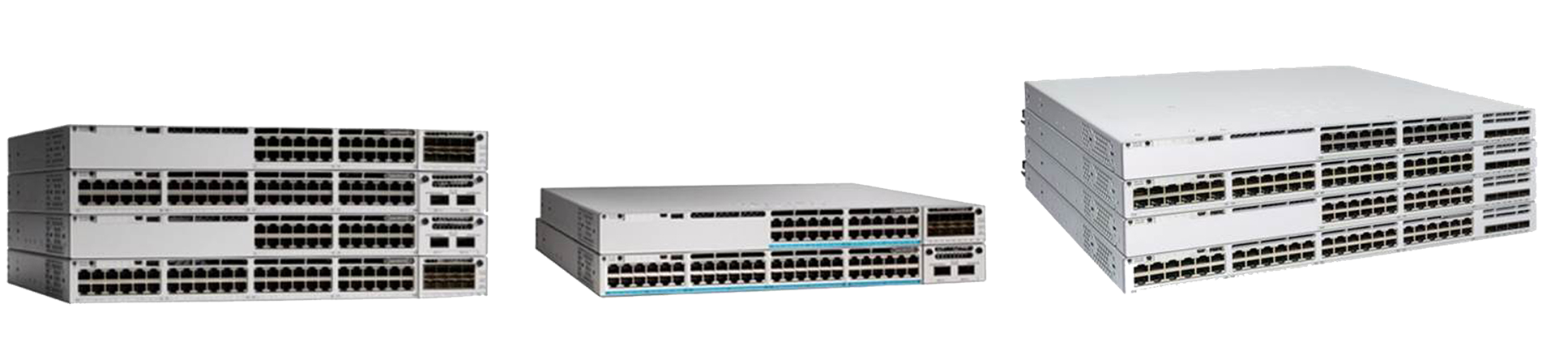 Compliance
What Does TAA Compliant Mean? A Plain-English Guide for Cisco Buyers
TAA compliant means the product was made, or substantially transformed, in the United States or a designated country. Here is what that means for a Cisco order, with the real numbers and real part numbers.
September 12, 2026 · 11 min read Guides
How to Verify TAA Compliance: The Country-of-Origin Letter
No agency issues a TAA certificate you can look up. Here is how a buyer actually proves a Cisco part number is TAA compliant, from the ++ suffix to the country-of-origin letter and FAR 52.225-6.
September 12, 2026 · 11 min read Compliance
TAA-compliant Cisco procurement: a practical buyer's guide for public sector
A field-tested walkthrough of how public sector buyers source Cisco gear that holds up to a Trade Agreements Act audit, from country-of-origin proof to contract vehicles and the paperwork that closes the deal.
May 4, 2026 · 9 min read Compliance
TAA vs NDAA Section 889: What Each Rule Checks on a Cisco Order
Section 889 bans gear from five named companies at any dollar value. TAA checks country of origin, and only above a threshold. How the two rules differ on a Cisco order, and who signs what.
September 12, 2026 · 11 min read Compliance
TAA-compliant AI infrastructure: the procurement path for Cisco GPU networking
An AI cluster is the most expensive and most supply-constrained buy most agencies will make this decade, which makes the procurement path as load-bearing as the architecture. Here is how to keep a Cisco GPU networking build TAA-compliant and award-ready from the first line item.
May 16, 2026 · 12 min read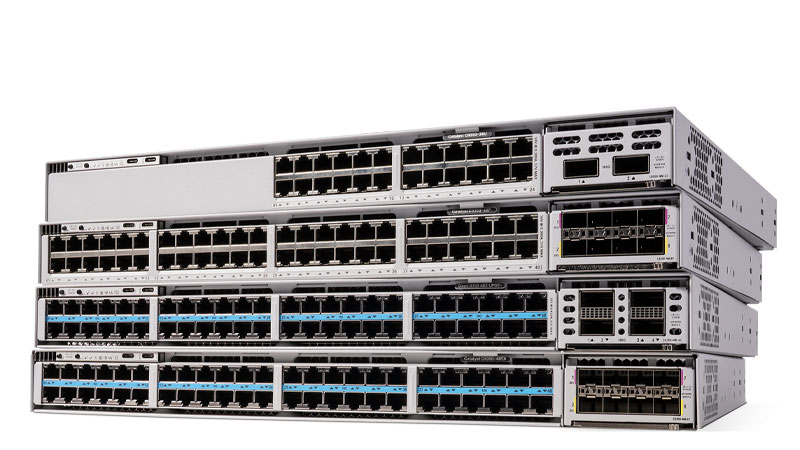 Guides
Cisco Meraki MS220-48LP EoL: Migrate to the MS225-48LP
The Meraki MS220-48LP passed Last Day of Support on July 29, 2024. Here is what that means for an operating fleet and how to refresh cleanly to the stackable MS225-48LP.
January 3, 2026 · 8 min read