
TAA vs NDAA Section 889: What Each Rule Checks on a Cisco Order
Section 889 bans gear from five named companies at any dollar value. TAA checks country of origin, and only above a threshold. How the two rules differ on a Cisco order, and who signs what.
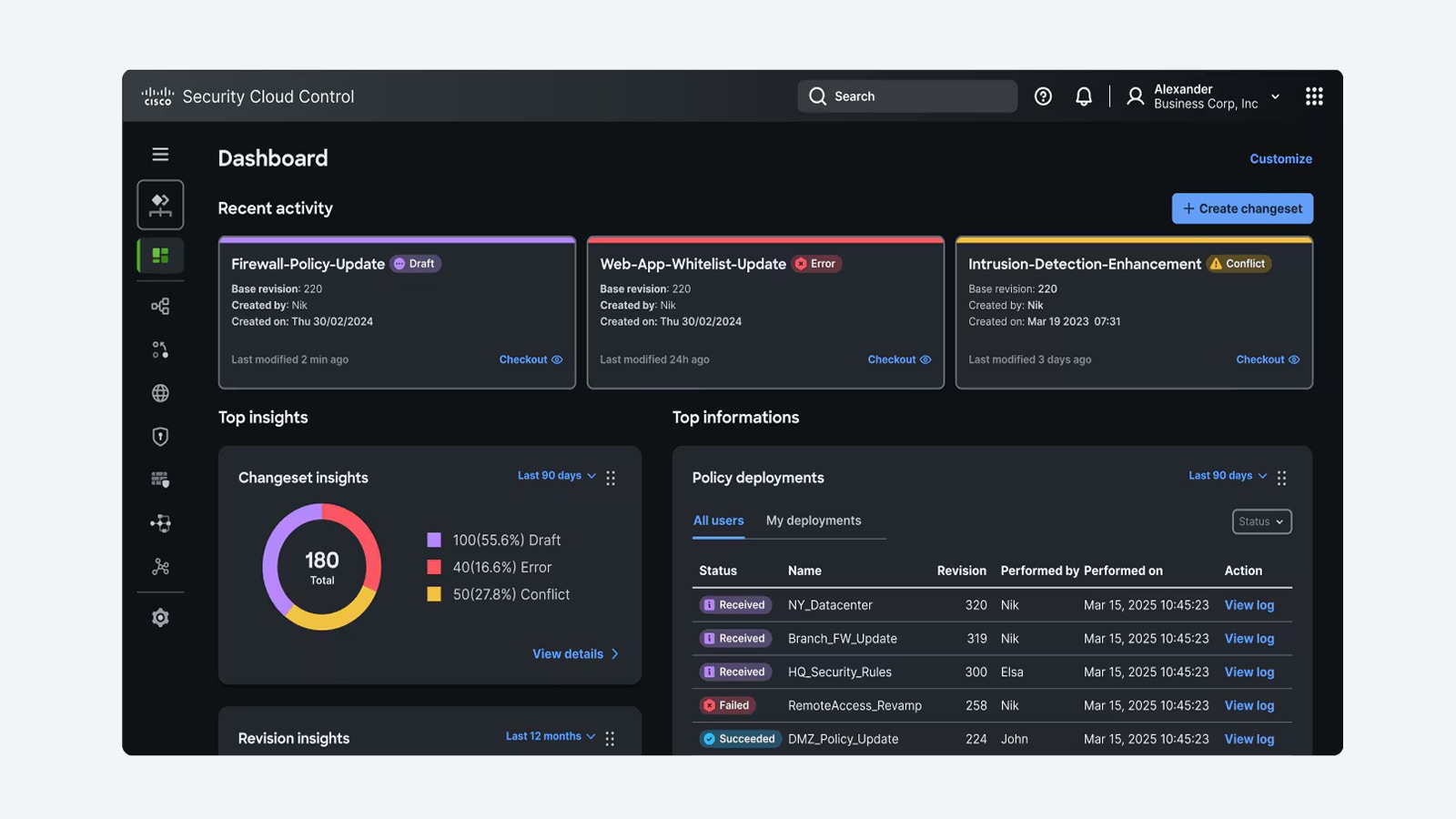
TAA and Section 889 answer two different questions. The Trade Agreements Act asks where a product was made or substantially transformed. Its purchase restriction only applies at or above a threshold: $174,000 for supplies under the WTO GPA, per FAR 25.402. Section 889 of the FY2019 NDAA asks whether the product, or the company selling it, uses telecom or video surveillance equipment from five named companies. It applies at every dollar level, micro-purchases included.
A Cisco switch can satisfy one rule and still need the other checked. A C9200-24P-A++ on a GSA Schedule order is fulfilled as TAA-eligible, because ++ is the part number Cisco routes through its TAA fulfillment process, and the country-of-origin statement for that line is what satisfies the TAA clause. Section 889 is answered separately: Cisco is not a named company, and your vendor still makes the FAR 52.204-24 representation.
What Section 889 actually prohibits
Section 889 is part of the John S. McCain National Defense Authorization Act for Fiscal Year 2019, Public Law 115-232, implemented at FAR subpart 4.21. The rulemaking history is on the acquisition.gov Section 889 policy page.
What is the difference between Part A and Part B?
Part A, section 889(a)(1)(A), stops the federal government from procuring, obtaining, or extending or renewing a contract for "any equipment, system, or service that uses covered telecommunications equipment or services as a substantial or essential component of any system, or as critical technology as part of any system." Part A has applied since August 13, 2019. It is about what the government buys.
Part B, section 889(a)(1)(B), stops agencies from contracting with any entity that itself uses covered equipment or services. It has applied since August 13, 2020. Under FAR 4.2102(a)(2) it reaches that use "regardless of whether that use is in performance of work under a Federal contract." It is about who the government buys from.
Which companies does Section 889 name?
FAR 52.204-25(a) defines covered telecommunications equipment or services by company:
- Huawei Technologies Company, and any subsidiary or affiliate
- ZTE Corporation, and any subsidiary or affiliate
- Hytera Communications Corporation, for public safety, security of government facilities, physical security surveillance of critical infrastructure, and other national security purposes
- Hangzhou Hikvision Digital Technology Company, same purposes
- Dahua Technology Company, same purposes
The definition also reaches telecom or video surveillance equipment from any entity the Secretary of Defense, in consultation with the Director of National Intelligence or the Director of the FBI, reasonably believes is owned or controlled by, or connected to, a covered foreign country's government. The clause text is FAR 52.204-25, NOV 2021.
What TAA checks instead
The Trade Agreements Act of 1979 (19 U.S.C. 2501 and following) lets the President waive the Buy American statute for eligible products from countries with a trade agreement with the United States. In contract terms, FAR 52.225-5 tells a contractor to deliver only U.S.-made or designated country end products, and FAR 25.003 lists the designated countries. Start with what TAA compliant means and the TAA designated countries list.
TAA does not name companies. It asks where the end product was substantially transformed, which FAR 25.003 defines as transformation into "a new and different article of commerce with a name, character, or use distinct from that of the article or articles from which it was transformed." So TAA status is per part number and per production lot, never per brand. That is why Cisco's ++ part numbers exist: C9200-24P-A++ is fulfilled as TAA compliant; C9200-24P-A carries no such assurance. See what ++ means on a Cisco part number.
TAA also has a dollar threshold. FAR 25.402 sets the WTO GPA supply threshold at $174,000, effective March 13, 2026. Below that figure, the FAR 25.403(c)(1) purchase restriction does not apply to an open-market buy. The big exception is a GSA Multiple Award Schedule order, which carries the TAA clause in the contract itself, so a $4,000 Schedule order is still covered. For the handoff to the Buy American Act, see TAA vs the Buy American Act.
TAA vs Section 889 side by side
| TAA (Trade Agreements Act) | Section 889 (FY2019 NDAA) | |
|---|---|---|
| What it regulates | Country of origin of the end product, by substantial transformation | Use of telecom and video surveillance gear from named companies, in what you buy (Part A) and in the vendor's own operations (Part B) |
| Who it names | Countries, in FAR 25.003 | Companies: Huawei, ZTE, Hytera, Hikvision, Dahua, their affiliates, plus entities the Secretary of Defense reasonably believes are tied to a covered foreign country's government |
| Dollar floor | $174,000 WTO GPA supply threshold (FAR 25.402); none on GSA Schedule orders | None. All dollar levels, including micro-purchases (GSA SmartPay Smart Bulletin 029) |
| Where it applies | Covered acquisitions at or above threshold; every GSA MAS order; any solicitation that imposes it | Every federal procurement since August 13, 2019 (Part A); every contractor since August 13, 2020 (Part B) |
| How you comply | Contractor certifies under FAR 52.225-6; buyer keeps a country-of-origin statement per line | Offeror represents under FAR 52.204-24 per offer and FAR 52.204-26 annually in SAM |
| Cisco angle | Per part number: order the ++ PID or a PID Cisco flags as TAA-eligible; separately ordered spares may differ | Cisco is not a named company or an affiliate of one; the representation still comes from your vendor |
The dollar floor is where buyers get caught
Does Section 889 apply to micro-purchases?
Yes. FAR 13.201(d) says micro-purchases do not require provisions or clauses, except as provided at 13.202 and 32.1110. That is why a cardholder buying a $9,000 switch open-market does not collect a FAR 52.225-6 certificate. It does not switch off Section 889.
“This prohibition on acquiring covered telecommunications applies to acquisitions at all dollar levels, including micro-purchases, unless a waiver is granted or an exception applies.”
Source: GSA SmartPay Smart Bulletin 029, August 26, 2019
FAR 13.201 itself prohibits cardholders from procuring covered equipment or services, with the card rule at FAR 13.201(j). The cardholder is not required to obtain the 52.204-24 representation for a micro-purchase, but the prohibition still binds them. Read GSA SmartPay Smart Bulletin 029 in full. If you buy Cisco on a card, our government purchase card guide covers the $15,000 threshold.
TAA runs the other way. An open-market order below $174,000 is not subject to the FAR 25.4 purchase restriction. But a GSA Schedule order is covered at any value, a small-business set-aside is excepted outright, and your agency or the solicitation can impose TAA by its own terms. Ask the contracting officer.
Who signs what, and when
Four documents do the work on a covered order.
- FAR 52.204-24, Representation Regarding Certain Telecommunications and Video Surveillance Services or Equipment. Made by the offeror with each offer.
- FAR 52.204-26, Covered Telecommunications Equipment or Services Representation. The annual representation the vendor maintains in SAM.
- FAR 52.225-6, Trade Agreements Certificate (FEB 2021). The offeror certifies each end product is U.S.-made or a designated country end product and lists any exceptions by line item and country.
- Country-of-origin statement. Not a FAR form, but the document a contracting officer actually reads: part number, description, country, date, signer, one line per PID.
In every case the vendor signs. The contracting officer relies on the vendor's 52.204-26 in SAM (GSA runs a public 889 Representations Search) and the 52.204-24 in the offer. A reseller supplies those two, the 52.225-6 certificate when the clause is in the solicitation, and a country-of-origin statement per line. It cannot sign on your behalf. Our verification guide shows what a clean origin letter looks like.
Where Cisco sits under Section 889
Cisco is not one of the five companies named in FAR 52.204-25, and it is not a subsidiary or affiliate of any of them. Cisco Systems, Inc. is a U.S. company headquartered in San Jose, California. That is the whole Section 889 answer for Cisco: the manufacturer is not a covered entity. That answer has two limits. It does not make any individual Cisco SKU TAA compliant; country of origin is per product. And it is not a Section 889 representation. The FAR puts that on the vendor, not the manufacturer.
Where Section 889 does show up on a Cisco order is the rest of the bill of materials. A Cisco Secure Firewall is not the question. The cameras on the same PO, the guard-force radios, the cellular modem a subcontractor installs: each needs its own answer. Work through the security catalog line by line, not brand by brand, and read zero trust for federal agencies if the order is part of a wider design.
Cameras and video surveillance: where Meraki MV fits
If you are replacing Hikvision or Dahua units, the two companies named specifically for physical security surveillance, Cisco Meraki MV cameras are a common candidate. Meraki is a Cisco brand, and Cisco is not one of the named companies or an affiliate of one. That puts MV on the shortlist; it is not a compliance decision by itself. The agency still runs the same process it would for any camera: the vendor's 52.204-24, a check of the 52.204-26 in SAM, and its own review of surveillance buys. Where TAA applies, Meraki TAA status is per model, confirmed through the country-of-origin process. See Cisco Meraki for government.
Section 5949: the next ban on the calendar
Section 5949 of the FY2023 NDAA reaches past telecom and cameras into the silicon. It prohibits executive agencies from procuring or obtaining electronic products or services that include covered semiconductor products or services from SMIC (Semiconductor Manufacturing International Corporation), YMTC (Yangtze Memory Technologies Corp.), CXMT (ChangXin Memory Technologies), and their affiliates.
The prohibition takes effect December 23, 2027, a date we take from published legal analyses of the statute. The FAR Council issued a proposed rule on February 17, 2026 (FR Doc. 2026-03065), comments due April 20, 2026. As proposed, it covers electronic products and services that include covered semiconductors, and electronic products for use in government-identified critical systems. Nothing is final yet, but start asking manufacturers about semiconductor sourcing now.
Frequently asked questions
Are TAA compliant products automatically 889 compliant?
No. TAA checks the country where the end product was made or substantially transformed. Section 889 checks whether the product uses telecom or video surveillance equipment from Huawei, ZTE, Hytera, Hikvision, Dahua, or their affiliates. A product can pass the country test and still contain covered components. The reverse is also true: a switch from a non-covered manufacturer built in a non-designated country fails TAA. Check both, line by line.
Is Cisco NDAA 889 compliant?
Cisco is not one of the five companies named in FAR 52.204-25, nor a subsidiary or affiliate of any of them, so the manufacturer is not a covered entity. Two cautions. "889 compliant" is a representation your vendor makes about a specific offer under FAR 52.204-24, not a status a manufacturer holds. And a U.S. headquarters does not make any individual SKU TAA compliant.
Does Section 889 apply to purchases under the micro-purchase threshold?
Yes. GSA SmartPay Smart Bulletin 029 says the prohibition applies at all dollar levels, including micro-purchases, unless a waiver is granted or an exception applies. FAR 13.201 prohibits cardholders from procuring covered equipment or services. The cardholder does not have to collect the FAR 52.204-24 representation on a micro-purchase, but the prohibition still binds. The threshold is $15,000 as of October 1, 2025.
Which companies does Section 889 ban?
FAR 52.204-25 names Huawei Technologies Company and ZTE Corporation, plus Hytera Communications Corporation, Hangzhou Hikvision Digital Technology Company, and Dahua Technology Company for public safety, government facility security, surveillance of critical infrastructure, and other national security purposes. Subsidiaries and affiliates are included. So is any entity the Secretary of Defense reasonably believes is owned or controlled by, or connected to, a covered foreign country's government.
What is Section 5949 and when does it start?
Section 5949 of the FY2023 NDAA prohibits executive agencies from procuring electronic products or services that include covered semiconductor products or services from SMIC, YMTC, CXMT, and their affiliates. Legal analyses of the statute put the effective date at December 23, 2027. The FAR Council published a proposed implementing rule on February 17, 2026, with comments due April 20, 2026. It is not yet a final clause.
What do I have to sign for 889?
As a buyer, nothing. The vendor signs: FAR 52.204-24 with each offer, and FAR 52.204-26 annually in SAM. On a purchase-card micro-purchase you are not required to collect the 52.204-24, but the FAR 13.201 prohibition still binds you as the cardholder, so ask for it anyway.
Uniqcli Team
The Uniqcli Team is an authorized Cisco partner specializing in Catalyst wireless, switching, datacenter fabric, licensing, and managed services for U.S. federal, state, local, and education customers. We scope Cisco bills of materials, validate procurement paths (TAA, FIPS, contract vehicles), and deliver design, deployment, and managed operations.
Ready to scope your Cisco build?
Build a quoteRelated reading
View all → Guides
How to Buy Cisco With a Government Purchase Card (GPC)
The micro-purchase threshold is $15,000, and a card-accepting authorized reseller can ship Cisco against a quote. Here are the current numbers, the two rules that still apply, and what we need from you.
September 12, 2026 · 11 min read Guides
What does ++ mean on a Cisco part number?
The ++ suffix marks Cisco's TAA compliant version of a part number. Same hardware, same license, different certified origin and paperwork. Here is how to read it, when you need it, and how to order it.
September 12, 2026 · 11 min read Guides
How to Verify TAA Compliance: The Country-of-Origin Letter
No agency issues a TAA certificate you can look up. Here is how a buyer actually proves a Cisco part number is TAA compliant, from the ++ suffix to the country-of-origin letter and FAR 52.225-6.
September 12, 2026 · 11 min read Compliance
What Does TAA Compliant Mean? A Plain-English Guide for Cisco Buyers
TAA compliant means the product was made, or substantially transformed, in the United States or a designated country. Here is what that means for a Cisco order, with the real numbers and real part numbers.
September 12, 2026 · 11 min read Compliance
TAA vs BAA: Which One Applies to Your Cisco Order?
The Trade Agreements Act and the Buy American Act test different things and apply at different dollar levels. Here is how to tell which one governs a Cisco purchase, and what to ask for.
September 12, 2026 · 11 min read Compliance
TAA Compliant Countries List: Who Qualifies and Who Does Not
The designated-country list from FAR 25.003 and the GSA lookup table: which countries count, which do not, and what a No means when you are ordering Cisco switches, phones or optics.
September 12, 2026 · 11 min read