
Securing the AI data center in the agentic era: a government buyer's guide
AI workloads are not just a faster compute tier. Models, training corpora, inference endpoints, and now autonomous agents form a new high-value attack surface. Here is how a government buyer secures it inside the agency boundary, from the fabric up.
Key takeaways
- An AI data center adds four new asset classes that classic perimeter security never had to defend: model weights, training corpora, inference endpoints, and autonomous agents that can take real actions.
- Agentic AI changes the blast radius. A compromised agent is a compromised actor with credentials and permissions, not just a data leak, so identity and segmentation around the agent matter more, not less.
- For government, the controls have to run inside the agency boundary with on-premises logging and audit evidence. A SaaS-only security stack is a non-starter for classified, CUI, and sovereign workloads.
- Defense begins in the network fabric. Identity-aware segmentation and distributed enforcement keep east-west GPU traffic from becoming a free lateral-movement path.
- Cisco's AI security layer (AI Defense, Hypershield, Secure Firewall, ISE, Talos) extends the stack you already run rather than replacing it, and maps cleanly onto NIST SP 800-53 and DISA STIG requirements.
- Build the security architecture in parallel with the GPU order. Retrofitting controls onto a live AI enclave is slower, riskier, and harder to get through an authority-to-operate review.
The AI data center is a new attack surface, not a faster one
Most security programs were built for a world where the crown jewels sat in a database and the network's job was to keep attackers away from it. An AI data center breaks that model in a quiet but fundamental way. The most valuable assets are no longer just records in a table. They are the model weights an agency spent millions of GPU-hours producing, the training corpus that may contain the most sensitive data the organization holds, the inference endpoints that expose those models as live APIs, and now the autonomous agents that can read, write, and act on behalf of the mission.
Each of those is a distinct target with its own failure mode. Model weights can be exfiltrated or extracted through carefully crafted queries. Training data can be poisoned so the model learns a backdoor that only the attacker knows how to trigger. Inference endpoints can be probed with adversarial prompts or flooded to cause denial of service. And an agent that has been manipulated through prompt injection does not just leak information, it takes action with whatever credentials and permissions you gave it. The discipline of defending all of this has matured fast, and standards bodies like the IEEE have been formalizing the engineering practices around trustworthy and secure AI systems.
For a government buyer, the takeaway is that AI security is not a feature you bolt onto a procurement at the end. It is an architecture decision that belongs in the same conversation as the GPU count and the power budget. Treating it as an afterthought is how agencies end up with a rack of expensive accelerators serving a model that no one can confidently say is contained, monitored, or auditable.
Why agentic AI raises the stakes
The phrase agentic AI describes systems that do more than generate text. They plan, call tools, query databases, open tickets, modify configurations, and chain those steps together toward a goal with minimal human intervention. That autonomy is exactly what makes them useful to a lean federal team, and it is also exactly what makes them dangerous when something goes wrong. A traditional model that hallucinates produces a bad answer. An agent that is manipulated produces a bad action, and it does so with real credentials inside your environment.
Consider the difference in blast radius. If an attacker poisons a static report-generation model, the worst case is misinformation that a human reviewer can catch. If an attacker uses an indirect prompt injection to redirect an agent that has write access to a case-management system or a configuration store, the worst case is unauthorized changes executed at machine speed, logged under the agent's own identity. This is why the right mental model for an agent is not a smarter chatbot. It is a new privileged service account that happens to make its own decisions about what to do next.
Securing that means treating every agent as a first-class identity. It needs its own scoped credentials, least-privilege access to only the tools and data it genuinely requires, and a network position that contains it if it is ever turned against you. The controls that make this work are the same ones that underpin a sound zero trust posture: strong identity, fine-grained segmentation, continuous monitoring, and the ability to revoke access fast. Agents do not let agencies skip zero trust. They make it the price of entry.
Defense starts in the network fabric
Because AI workloads live in the data center, the fabric that connects them is the most natural and most powerful place to enforce policy. AI clusters generate enormous east-west traffic, GPU talking to GPU across a back-end fabric that is built for throughput, not suspicion. Left flat, that fabric is also a frictionless path for lateral movement. An attacker who lands on one node in a poorly segmented cluster can often reach every other node, every storage target, and every management interface without crossing a single inspection point.
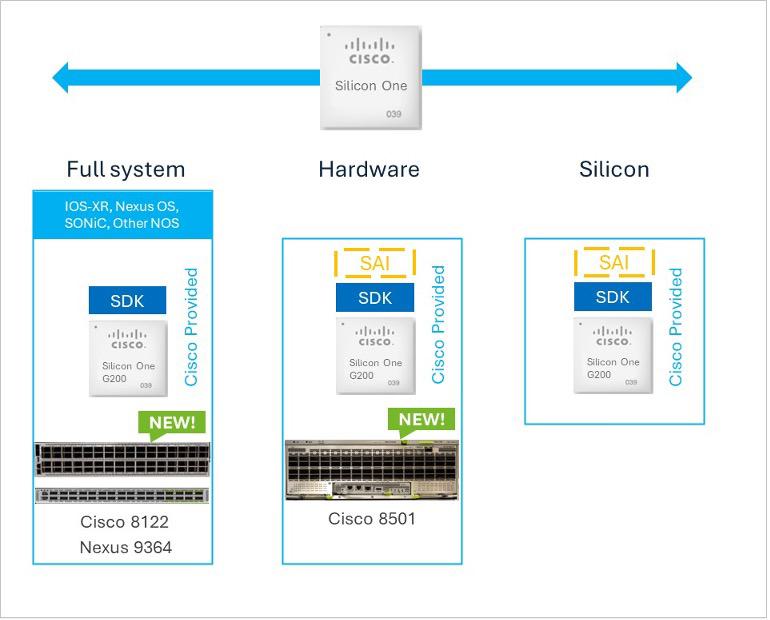
Identity-aware segmentation closes that gap. By tying network policy to workload identity rather than to IP addresses, an agency can isolate the AI enclave from the rest of the environment, separate the back-end GPU fabric from the front-end connectivity to storage and management, and contain any single compromised node. On a Cisco data center fabric built on Nexus 9000 and Silicon One, that enforcement can be distributed to the workload itself rather than relying solely on a chokepoint at the perimeter. The reference architecture and validated designs are documented across Cisco's data center and networking portfolio, which is worth reviewing before locking a topology.
Distributed enforcement matters because AI traffic does not behave like the north-south, user-to-application pattern that classic three-tier networks and a single edge firewall were designed to inspect. You cannot hairpin terabits of GPU-to-GPU traffic through one appliance without crushing the performance you paid for. The answer is to push segmentation and inspection out to where the traffic actually is, so the controls scale with the cluster instead of throttling it.
The Cisco controls that protect AI workloads
Cisco's AI security story is deliberately additive. Rather than asking an agency to rip out the identity, firewall, and segmentation investments it already runs, the AI-specific pieces extend that stack to cover the new asset classes. The result is a layered posture where each control does one job well and the whole is auditable as a system.
The core pieces fit together like this. AI Defense protects AI applications, models, and data across both build and runtime, validating models and guarding inference endpoints against prompt injection and data extraction. Hypershield brings AI-native, distributed segmentation and autonomous runtime patching to the workloads themselves, including AI workloads, so a newly disclosed vulnerability can be compensated for in software before a maintenance window opens. The Secure Firewall family anchors hybrid-mesh policy across the data center, cloud, and workloads, with the hardware throughput an AI enclave demands documented on our Secure Firewall product page. And Cisco Identity Services Engine supplies the identity and access backbone that lets you treat every user, device, and agent as a distinct, policy-governed identity.
Tying it together is Talos threat intelligence, the global telemetry operation that keeps detection current as new AI-specific attack techniques emerge in the wild. The practical advantage for an agency is operational, not just architectural. One identity source, one segmentation model, and one threat-intelligence feed across the traditional and the AI estate means fewer seams for an attacker to slip through and fewer consoles for an understaffed team to watch.
- AI Defense protects models, AI applications, and inference endpoints across build and runtime.
- Hypershield delivers distributed, AI-native segmentation and autonomous runtime patching at the workload.
- Secure Firewall enforces unified hybrid-mesh policy across data center, cloud, and workloads.
- Identity Services Engine governs every user, device, and agent as a scoped, least-privilege identity.
- Talos threat intelligence keeps detection current against emerging AI attack techniques.
What government adds to the requirement
A commercial enterprise can often accept a security stack that phones home to a vendor cloud. A federal, defense, or SLED buyer frequently cannot. Sovereignty and classification mean the controls protecting an AI workload have to run inside the agency boundary, on-premises, with logging and evidence that hold up to a formal audit. That is a materially different design than a SaaS security console managing your environment from someone else's data center, and it has to be specified that way from the first bill of materials.
The compliance scaffolding is concrete, not abstract. Security controls for AI systems map onto the same catalog every other federal information system answers to, the control families in NIST SP 800-53, and DoD systems must additionally meet the hardening baselines published as DISA STIGs. An AI enclave does not get a pass on access control, audit logging, configuration management, or system and communications protection. If anything, the autonomy of agentic workloads makes the audit-logging and accountability families more demanding, because you need to be able to reconstruct not just who accessed what, but which agent took which action and under whose authority.
This is also where the security architecture and the procurement path become inseparable. Controls that have to run on-premises and survive an authority-to-operate review need to be sourced TAA-compliant, and for legacy DoD requirements, checked against the DoDIN APL repository DISA maintains through FY2026 following the program's September 2025 sunset. Folding those requirements into the design from the start is far cheaper than discovering them during accreditation. Our government practice and procurement teams scope this so the security posture and the contract vehicle move together rather than colliding at the finish line.
Monitoring and containment for autonomous workloads
Prevention is necessary but never sufficient, and that is doubly true for systems designed to act on their own. The assumption has to be that an agent will eventually be manipulated, a model will be probed, or a node will be compromised, and the question becomes how fast you see it and how tightly you can contain it. For autonomous workloads, the window between compromise and consequence is measured in seconds, so the monitoring and response have to operate at machine speed too.
That argues for deep, continuous visibility into the AI enclave: full telemetry on agent actions, model query patterns, and east-west flows, correlated in one place rather than scattered across silos. Cisco Nexus Dashboard gives the fabric that operational and assurance layer, and pairing it with our observability and managed operations practices means a lean federal team gets the watch coverage it cannot staff internally. The goal is to catch the anomalous before it becomes the catastrophic, an agent suddenly reaching for data it never touched before, or an inference endpoint seeing a query pattern that looks like extraction.
Containment is the other half. When something does go wrong, the architecture should let you revoke an agent's credentials, quarantine a node, or cut a segment without taking the whole AI environment offline. Distributed enforcement and identity-based segmentation make that surgical rather than blunt. The agencies that fare best are the ones that rehearse this, treating an agent compromise as a drill scenario the same way they would a ransomware tabletop, so the runbook exists before the incident does.
Sequencing the build so security is not a retrofit
The single most expensive mistake in an AI data center program is treating security as a phase that follows the compute. GPUs arrive, the cluster gets stood up to meet a deadline, and the segmentation, identity integration, and monitoring get promised for later. Later is when the workload is already live, the data is already in the building, and every control becomes a change-managed retrofit instead of a design decision. Retrofitting an authority-to-operate onto a running enclave is slow, risky, and the surest way to leave a window open during the gap.
A sound sequence runs the security architecture in parallel with the fabric and the compute order. While the back-end GPU fabric is being sized, the segmentation model, identity integration with ISE, firewall policy, and AI Defense coverage are being designed against the same topology. While the procurement package is being assembled, the TAA position on the security SKUs is being confirmed alongside the switches and optics, with any legacy DoDIN APL history checked against the DISA repository. When the GPUs land, the controls are ready to enforce on day one rather than being scheduled for a future sprint.
This is the same discipline that governs the rest of a defensible Cisco build. Plan the network and the security in lockstep with the compute, source everything award-ready, and validate it against the accreditation requirements before the hardware ships. Our security and defense practices scope the AI enclave end to end, and you can start a sized estimate with the data center option in the instant estimator before we validate the exact design against your data center plan.
Cisco products involved
- Cisco AI Defense
- Cisco Hypershield
- Cisco Secure Firewall
- Cisco Identity Services Engine (ISE)
- Cisco Nexus 9000
- Cisco Silicon One
- Cisco Talos
- Cisco Nexus Dashboard
Bottom line: An AI workload you cannot segment, monitor, and contain is a liability wearing the costume of an asset. Scope the security architecture in parallel with the GPU build, on-premises and award-ready, and request a quote to map your AI data center controls before the hardware ships.
Frequently asked questions
What makes securing an AI data center different from a traditional one?
It adds four new asset classes that classic perimeter security never had to defend: model weights, training data, inference endpoints, and autonomous agents that can take real actions. Each has its own failure mode, from model extraction and data poisoning to prompt injection of an agent, so the controls have to cover the AI workload specifically, not just the network around it.
What is agentic AI security?
It is the practice of securing AI systems that act autonomously rather than only generating text. Because an agent can call tools, write to systems, and chain steps with real credentials, a compromised agent is a compromised actor, not just a data leak. That makes identity, least-privilege access, segmentation, and runtime monitoring around the agent more important, not less.
Can these AI security controls run fully on-premises for classified or sovereign workloads?
Yes. For classified, CUI, and sovereign requirements, AI Defense, Hypershield, Secure Firewall policy, and ISE identity can run inside the agency boundary with on-premises logging and audit evidence. That is a different design than a SaaS security console, and it should be specified that way from the first bill of materials.
How does this fit the security stack we already run?
It extends it rather than replacing it. The identity (ISE), segmentation, and firewalls you already operate gain AI-specific protection and distributed, AI-native enforcement. One identity source, one segmentation model, and one threat-intelligence feed (Talos) span both your traditional and AI estate, which means fewer seams and fewer consoles.
How do AI security controls map to federal compliance frameworks?
They map onto the same control catalog every federal system answers to. AI enclaves still have to satisfy the NIST SP 800-53 control families for access control, audit, configuration management, and system and communications protection, and DoD systems must additionally meet DISA STIG hardening baselines. The autonomy of agents typically raises the bar on audit-logging and accountability.
When in an AI build should we design the security architecture?
At the same time as the GPU order and the fabric, not afterward. Retrofitting segmentation, identity, and monitoring onto a live AI enclave is slow, risky, and hard to push through an authority-to-operate review. Designing the controls in parallel means they enforce on day one and the TAA and DoDIN APL positions are confirmed before the hardware ships.
Uniqcli Team
The Uniqcli Team is an authorized Cisco partner specializing in Catalyst wireless, switching, datacenter fabric, licensing, and managed services for U.S. federal, state, local, and education customers. We scope Cisco bills of materials, validate procurement paths (TAA, FIPS, contract vehicles), and deliver design, deployment, and managed operations.
Ready to scope your Cisco build?
Build a quoteRelated reading
View all → News
NewsDDoS Records Keep Falling: 22+ Tbps Attacks and How to Harden the Edge
Cloudflare says it is now mitigating multi-terabit DDoS attacks that break records in weeks, not years, peaking past 22 Tbps. Here is what changed, who is exposed, and how to harden the network edge with layered Cisco defense, capacity planning, and managed monitoring that Uniqcli scopes, sources, and runs.
June 5, 2026 · 7 min read News
NewsVolt Typhoon and Pre-Positioning in US Infrastructure: A Resilience Checklist
A China-linked group has been sitting quietly inside US electric, water, telecom, and transportation networks, in some cases for more than a year. Federal authorities say this is positioning for disruption, not spying. Here is what changed, who is exposed, and the resilience steps that move the risk down.
June 9, 2026 · 8 min read News
NewsPalo Alto GlobalProtect VPN Auth Bypass Under Active Exploitation: Rethinking Remote Access
A PAN-OS GlobalProtect authentication-override flaw, CVE-2026-0257, went from a medium-severity disclosure to confirmed real-world compromise in days, and it is now a CISA-mandated fix for federal agencies. Here is what happened, who is exposed, and how to move remote access toward identity-aware Zero Trust before the next VPN bug lands.
June 2, 2026 · 8 min read Compliance
Zero Trust for federal agencies: Hypershield, ISE, and Secure Access explained
Federal mandates pushed Zero Trust from buzzword to deadline. Here is how Cisco Hypershield, Identity Services Engine, and Secure Access fit a real agency architecture, and where each one earns its place.
May 22, 2026 · 11 min read Insights
Cisco Secure Firewall and SASE: how to scope branch and remote security
The old hub-and-spoke security model breaks once your users and apps leave the building. Here is a practical way to scope Cisco Secure Firewall and SASE together, sized to where your people actually work.
May 26, 2026 · 11 min read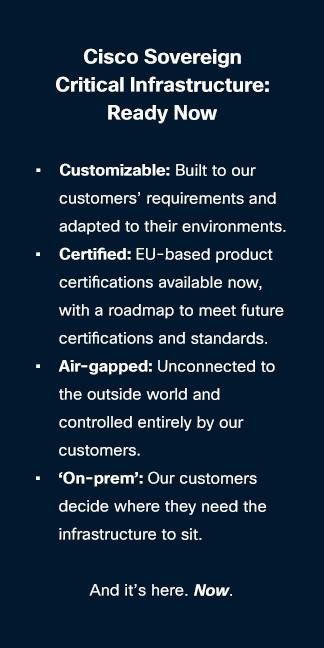 Insights
Sovereign and on-prem AI: keeping government AI workloads in-country with Cisco
Classification rules, data residency law, and the simple question of who holds the keys are pulling government AI out of the public cloud and back behind the agency boundary. Here is what a sovereign, on-premises AI footprint actually demands, and where Cisco hardware and security fit the build.
May 14, 2026 · 11 min read