
Cisco XDR vs Secure Endpoint vs SIEM: Which Detection Layer Do You Actually Need?
Cisco XDR vs Secure Endpoint vs SIEM, decoded: EDR watches the host, a SIEM hoards the logs, and XDR correlates across both. Here is how each layer fits, where each one stops, and how to decide what your team actually needs.
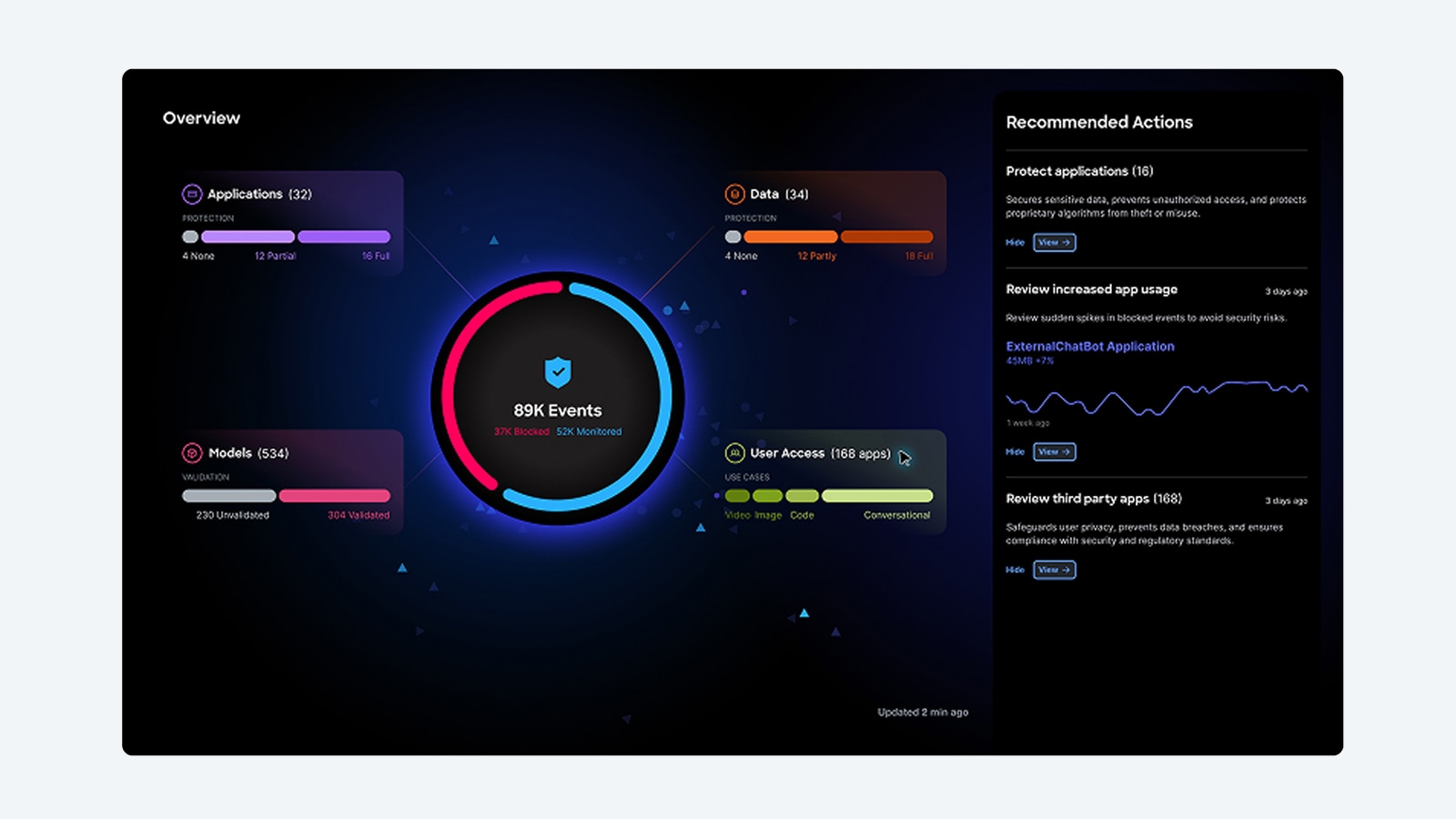
Ask three vendors what the difference is between EDR, XDR, and a SIEM and you will get three answers, all of them flattering to whatever the vendor happens to sell. The confusion is understandable. Cisco Secure Endpoint (the product many teams still call Cisco AMP) is endpoint detection and response. Cisco XDR sits a layer above it as the correlation engine. A SIEM is the log warehouse your compliance team already pays for. They overlap at the edges, the marketing blurs the lines, and the acronyms do not help.
This post draws clean boundaries. We will define what each tool actually does, show where each one runs out of road, and give you a decision matrix you can take into a budget meeting. The short version: these are three layers of one detection stack, not three competing products, and most organizations end up running some combination rather than picking a single winner.
Cisco Secure Endpoint (EDR): what the endpoint actually sees
Endpoint detection and response is exactly what it says. An agent on the laptop, server, or workload watches process execution, file behavior, registry changes, and network connections from that one host, then blocks, quarantines, or rolls back malicious activity. Cisco Secure Endpoint, the platform formerly branded Cisco AMP for Endpoints, is a mature example: continuous behavioral monitoring, retrospective security that re-convicts a file once new intelligence lands, and one-click isolation of a compromised host. It is the difference between antivirus that asks one yes-or-no question at the moment of execution and an agent that keeps watching after the file lands.
For a lot of threats, that is enough. Commodity malware, a malicious macro, a credential-stealing binary, ransomware staging on a workstation, all of it shows up on the endpoint, and a strong EDR catches and contains it there. The reason EDR remains the workhorse of most security programs is simple: the endpoint is where attackers eventually need to execute code, and watching execution closely catches a large share of real attacks.
Where endpoint-only detection runs out of road
The blind spot is in the name. EDR sees the endpoint, and only the endpoint. A multi-stage intrusion rarely stays politely on one monitored host. An attacker who phishes a user, lands a foothold, then pivots across the network to an unmanaged IoT device, a printer, an OT controller, or a server that never got the agent installed, is moving through territory the endpoint agent cannot see. Lateral movement, command-and-control over DNS, a malicious inbound email, an identity-based attack that abuses valid credentials, these often touch the network, the firewall, email, identity, or DNS long before, or instead of, any monitored endpoint. As Cisco frames the gap, EDR sees only the endpoint, while a multi-stage attack that never touches a monitored endpoint slips straight past it. That single sentence is the whole case for the layer above.
Cisco XDR: the correlation layer above Secure Endpoint
Cisco XDR is cloud-native, SaaS-delivered extended detection and response. Its job is not to replace Secure Endpoint but to sit on top of it and everything else. XDR natively analyzes the six telemetry sources SOC operators consider critical: endpoint, network, firewall, email, identity, and DNS. A built-in analytics engine ingests events from Cisco and third-party tools, correlates them over time into a single incident, and plots the activity on a timeline and an attack graph so an analyst sees the who, what, where, and when of an attack in one view instead of stitching it together from five consoles. You can read the full capability breakdown and tier comparison on the Cisco XDR pillar page.
The point is correlation. Secure Endpoint tells you a host did something suspicious. XDR connects that host event to the firewall log, the DNS lookup, the identity sign-in, and the network flow that came before and after it, then decides whether the whole sequence is one incident worth waking someone up for. Every incident is assigned a priority score from 1 to 1000, combining a Detection Risk score built from MITRE ATT&CK technique financial-risk scoring with an Asset Value you assign from 1 to 10, so analysts work the most materially impactful incidents first instead of triaging alerts in the order they happened to arrive.
What XDR adds that an endpoint agent cannot
- Cross-telemetry correlation: network, firewall, email, identity, and DNS evidence joined to endpoint detections, so a multi-stage attack surfaces as one incident rather than five disconnected alerts.
- Instant Attack Verification: agentic AI autonomously verifies whether an alert is a real attack and assembles an Attack Storyboard, compressing hours of manual triage into minutes. It is included in every tier, even Essentials.
- MITRE ATT&CK mapping and coverage assessment, including Secure Endpoint Configuration Insights that flag misconfigurations reducing your detection coverage before an attacker finds the gap.
- Guided, product-agnostic response playbooks on the SANS PICERL model, plus drag-and-drop automation and Automated Ransomware Recovery that restores systems to a last-known-good snapshot through backup partners like Cohesity, Rubrik, and Veeam.
- Cisco Talos threat intelligence enriching every incident, and XDR Forensics (Advantage and Premier tiers) collecting 350-plus endpoint artifacts with remote interactive response for containment.
Crucially, XDR is open. It does not force you to rip out the endpoint tool you already own. Cisco XDR ingests CrowdStrike Falcon, SentinelOne, Microsoft Defender for Endpoint, Palo Alto Cortex XDR, and Trend Vision One as curated third-party EDR sources. So the choice is rarely XDR or Secure Endpoint. It is Secure Endpoint feeding XDR, or your existing EDR feeding XDR. The broader portfolio those integrations belong to is laid out on the Cisco security overview.
SIEM: the log warehouse, not the analyst's workflow
A SIEM (security information and event management) is a different animal. Splunk Enterprise Security, Microsoft Sentinel, Google SecOps, these are log-centric platforms that collect, store, search, and report on event data from across the enterprise. They are built for long-term retention, compliance reporting, custom correlation searches, and the kind of broad historical querying an auditor or a threat hunter wants. A SIEM is genuinely good at being a system of record. What it is not good at, out of the box, is producing a prioritized, ready-to-action incident in minutes.
The honest trade-off is speed versus breadth. A SIEM like Splunk ES is log-centric and frequently measures outcomes in days, because someone has to write the correlation rules, tune them, and investigate the results. Cisco XDR is telemetry-centric, ships with prebuilt correlation, and is designed to deliver detection and response in minutes. They are not mutually exclusive. XDR integrates Splunk Cloud and Splunk Enterprise, Microsoft Sentinel, and Google SecOps as data sources, sitting above the SIEM rather than replacing it. (Worth noting: Splunk is now a Cisco company, so that integration is first-party.)
The one-line distinction: EDR answers 'what did this endpoint do?' A SIEM answers 'what happened across everything, and can I prove it later?' XDR answers 'is this a real attack, how bad is it, and what do I do right now?' Most mature programs run all three, with XDR as the analyst's primary workflow and the SIEM as the system of record beneath it.
The decision matrix: which layer do you actually need?
Stop thinking in terms of buying one. Think in terms of which layers your team can operate today and where the next dollar buys the most risk reduction. Here is how the three map to common situations.
If you have no dedicated SOC or a lean security team
Start with strong EDR on every endpoint, then add Cisco XDR as the correlation and prioritization layer so a small team is not drowning in raw alerts. This is the most common pattern for organizations that want professional-grade detection without staffing a 24x7 desk. Smaller teams use Cisco XDR Essentials to consolidate detection, investigation, and response across vectors into one prioritized queue. If you cannot staff analysts at all, the Premier tier delivers the whole thing as a Cisco-managed (MXDR) service with around-the-clock monitoring run by Cisco SOC experts using Talos intelligence. A SIEM can come later, primarily when compliance or long retention demands it.
If you already run a SIEM
Keep it. Your SIEM is doing the retention and compliance job it was bought for. The gap a SIEM leaves is the analyst workflow: fast, correlated, prioritized incidents. Add Cisco XDR above the SIEM, feed the SIEM's data in as one more source, and let XDR handle the minutes-not-days detection and response while the SIEM remains the long-term system of record. You are extending the investment you already made, not throwing it away.
If you have a multi-vendor mess of security tools
This is exactly the tool-sprawl problem XDR was built to solve. Teams keep their existing CrowdStrike, SentinelOne, Microsoft, Palo Alto, Splunk, or Proofpoint investments and bring that telemetry into Cisco XDR for cross-vendor correlation and one-click or automated response. The endpoint stays where it is. XDR becomes the single pane that turns five vendors' alerts into one prioritized incident, extending the ROI on tools you already own. When you are ready to scope this, you can request a quote and Uniqcli will size the tier and integrations against your actual stack.
If your gap is the network, not the endpoint
This is the case endpoint vendors quietly ignore. If you are worried about lateral movement, encrypted threats, or devices that will never run an agent, you need detection that watches the wire. Cisco XDR ingests NetFlow and IPFIX, SPAN, Network Visibility Module endpoint flow logs, and cloud flow logs to build behavioral baselines and catch blind-spot threats and lateral movement that endpoint-only or log-only tools miss, then correlates them into the incident timeline. That network-led, agent-optional posture is the single biggest architectural difference between Cisco XDR and the endpoint-anchored platforms it competes with.
How Cisco XDR compares to the endpoint-first platforms
Because the 'vs' question usually comes loaded with a specific competitor, here is the vendor-neutral read. Against Palo Alto Cortex XDR, which is endpoint and agent-centric and deepest within the Palo Alto stack, Cisco XDR is telemetry-centric across six native sources including network and DNS, and it integrates Cortex itself as a third-party EDR source. Against CrowdStrike Falcon, which anchors on its endpoint agent and cloud platform, Cisco XDR is network-led and agent-optional, and supports Falcon as a curated integration for teams that want to keep CrowdStrike on the endpoint. Against Microsoft Defender XDR, which is strongest inside the Microsoft 365, Entra, and Azure estate, Cisco XDR leads with built-in network detection and a vendor-neutral, open-integration model rather than favoring one ecosystem.
The pattern across all three comparisons is consistent. The competitors are strongest inside their own ecosystem and on the endpoint. Cisco XDR is strongest as the open, network-aware correlation layer that can sit above any of them. That is not a knock on a good endpoint agent; it is a statement about where each tool belongs in the stack.
What this means for federal, DoD, SLED, and healthcare buyers
For US public-sector and regulated buyers, the layering question carries compliance weight. Cisco XDR's identity, endpoint, network, and DNS correlation maps cleanly to the pillars of the CISA Zero Trust Maturity Model, and its native MITRE ATT&CK mapping supports threat-informed defense. It also supports US Government Community Cloud (GCC) integrations, including Microsoft Defender for Office 365 GCC and Microsoft Defender for Endpoint GCC, which matters for agencies on Microsoft government clouds. FedRAMP authorization status should always be verified per component on the FedRAMP Marketplace at time of purchase rather than assumed, since Cisco XDR relies on Cisco Security Cloud Control for identity data and authorization posture changes over time.
On the procurement side, the practical advantages are TAA (Trade Agreements Act) compliance, Government Purchase Card (GPC) payment, and contract-vehicle eligibility. As an authorized Cisco partner, Uniqcli can scope the compliant SKU, set the data retention tier (90 days by default, with 180- or 365-day options), and size ingestion (a 2 GB per user per month default with add-on GB available). Note that Cisco does not publish a flat list price for XDR; cost is driven by tier, user count, retention, term, and ingestion volume, so the right move is a scoped quote rather than a number off a web page. You can browse compatible hardware and licensing on the catalog and bring your seat count to a quote.
The bottom line: layers, not contenders
Cisco Secure Endpoint catches what happens on the host. Cisco XDR correlates across endpoint, network, firewall, email, identity, and DNS to tell you whether a sequence of events is one real attack and what to do about it. A SIEM keeps the long-term record and serves compliance. The wrong question is which one wins. The right question is which layers you can operate today and where the next investment closes the biggest gap, usually the correlation layer that turns alert noise into prioritized incidents. Compare the tiers on the Cisco XDR page, weigh it against the rest of the Cisco security portfolio, and when you are ready to size it for your environment, request a quote and Uniqcli will return a TAA-compliant, GPC-payable scope built around your endpoint count, retention needs, and the tools you already run.
Frequently asked questions
What is the difference between EDR and XDR?
EDR (endpoint detection and response), such as Cisco Secure Endpoint, watches a single host's processes, files, and behavior and contains threats on that endpoint. XDR (extended detection and response), such as Cisco XDR, correlates telemetry across endpoint, network, firewall, email, identity, and DNS into one prioritized incident. EDR sees the endpoint; XDR connects the endpoint to everything around it so multi-stage attacks that never touch a monitored host are still caught.
Does Cisco XDR replace Cisco Secure Endpoint?
No. Cisco XDR sits as a correlation layer above Cisco Secure Endpoint rather than replacing it. Secure Endpoint provides the endpoint detection and one-click host isolation, and that telemetry feeds Cisco XDR, where it is correlated with network, firewall, email, identity, and DNS evidence. XDR can also ingest third-party EDR like CrowdStrike, SentinelOne, or Microsoft Defender, so you can keep your existing endpoint agent.
Is Cisco XDR a SIEM?
No. A SIEM like Splunk Enterprise Security is a log-centric system of record built for retention, search, and compliance reporting, and it often measures outcomes in days. Cisco XDR is telemetry-centric with prebuilt correlation that delivers prioritized incidents in minutes. They are complementary: XDR integrates Splunk, Microsoft Sentinel, and Google SecOps as data sources and sits above the SIEM rather than replacing it.
Is Cisco Secure Endpoint the same as Cisco AMP?
Yes. Cisco Secure Endpoint is the current name for the product many teams still call Cisco AMP for Endpoints. It is Cisco's endpoint detection and response platform, providing continuous behavioral monitoring, retrospective security, and host isolation, and it integrates as a native telemetry source into Cisco XDR.
How much does Cisco XDR cost compared to EDR and a SIEM?
Cisco does not publish a flat list price for XDR. Cost is driven by the tier (Essentials, Advantage, or Premier), user count, data retention (90, 180, or 365 days), term, and ingestion volume (a 2 GB per user per month default with add-on GB available). Because EDR, XDR, and SIEM are priced on different models, the right approach is a scoped quote. As an authorized Cisco partner, Uniqcli can prepare a TAA-compliant, GPC-payable quote.
Do I need all three layers at once?
Not necessarily. The right sequence depends on what your team can operate today. Lean teams usually start with strong EDR on every endpoint, then add Cisco XDR as the correlation and prioritization layer, and bring in a SIEM later when compliance or long retention demands it. If you already run a SIEM, keep it for retention and feed it into XDR as one more data source. Most mature programs end up running all three, with XDR as the analyst workflow and the SIEM as the system of record.
Uniqcli Team
The Uniqcli Team is an authorized Cisco partner specializing in Catalyst wireless, switching, datacenter fabric, licensing, and managed services for U.S. federal, state, local, and education customers. We scope Cisco bills of materials, validate procurement paths (TAA, FIPS, contract vehicles), and deliver design, deployment, and managed operations.
Ready to scope your Cisco build?
Build a quoteRelated reading
View all → Guides
Cisco XDR vs Splunk: Detection & Response vs SIEM
Cisco XDR vs Splunk is not a rivalry to resolve. XDR is the fast, cross-telemetry detection and response layer; Splunk is the SIEM and system of record, and both now sit inside Cisco.
July 11, 2026 · 5 min read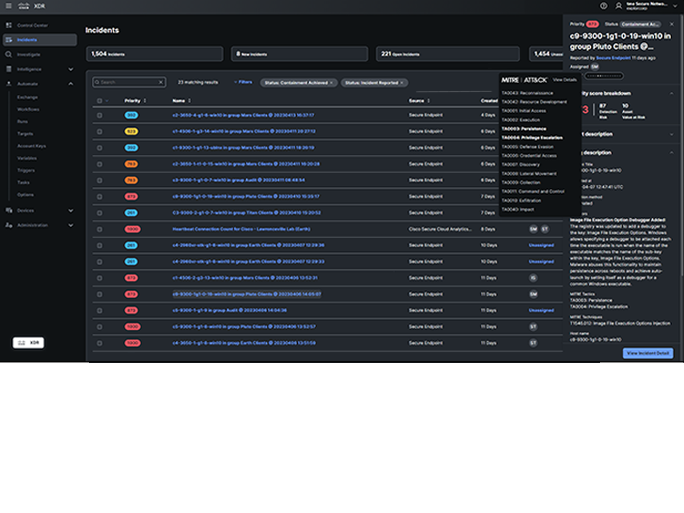 Guides
What Is Cisco XDR? Extended Detection and Response Explained for Security Teams
What is Cisco XDR? It is a cloud-native platform that correlates telemetry from endpoint, network, firewall, identity, email, and DNS into one prioritized incident. Here is how it works and how it differs from SIEM, EDR, and SOAR.
June 16, 2026 · 11 min read Insights
Cisco Secure Firewall, FTD, and XDR: How Firewall Telemetry Powers Better Detection
Cisco Firepower Threat Defense (FTD) running on Cisco Secure Firewall is one of the richest telemetry sources in your stack. Here is how that firewall data feeds Cisco XDR to turn raw events into correlated, prioritized incidents.
May 30, 2026 · 9 min readGuidesCisco Secure Endpoint vs CrowdStrike Falcon
Cisco Secure Endpoint vs CrowdStrike Falcon: an honest look at CrowdStrike's EDR mindshare against Cisco's Talos-backed, network-correlated approach to endpoint defense.
July 11, 2026 · 5 min read Insights
Cisco Secure Firewall and SASE: how to scope branch and remote security
The old hub-and-spoke security model breaks once your users and apps leave the building. Here is a practical way to scope Cisco Secure Firewall and SASE together, sized to where your people actually work.
May 26, 2026 · 11 min read Insights
Securing the AI data center in the agentic era: a government buyer's guide
AI workloads are not just a faster compute tier. Models, training corpora, inference endpoints, and now autonomous agents form a new high-value attack surface. Here is how a government buyer secures it inside the agency boundary, from the fabric up.
May 18, 2026 · 11 min read