
Cisco Nexus 7010 EoL: Migration to the Nexus 9508
The Nexus 7010 (N7K-C7010) hits Last Day of Support on February 28, 2027, and security patching ended in 2023. Here's what the milestones mean and how to migrate to the modular Nexus 9508 without taking your data center fabric down.
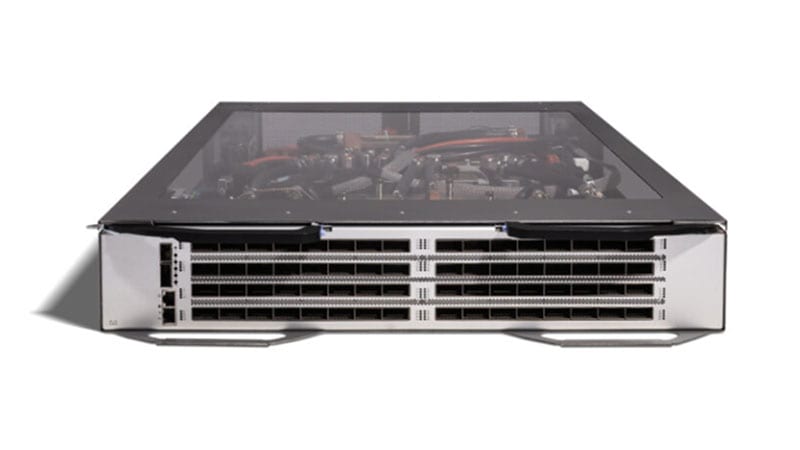
If you still run a Cisco Nexus 7010 (N7K-C7010) at the core or aggregation layer of a data center, the lifecycle clock has already run out and the last support window is closing fast. Cisco stopped selling the 10-slot chassis on February 28, 2022, ended software maintenance on February 28, 2023, and will deliver the Last Day of Support on February 28, 2027. The 7010 was a workhorse, a 10-slot modular chassis carrying dual supervisors and up to eight M-series or F-series I/O modules, with VDCs, vPC, FabricPath, and OTV defining a generation of data center design. But the platform it belongs to is now legacy, and the replacement Cisco points to is the modular Nexus 9508 (N9K-C9508). This guide explains what the milestones mean for this exact chassis, what the 9508 changes architecturally, and how to migrate without taking your fabric down.
Why the Nexus 7010 EoL matters now, not in 2027
The most expensive mistake teams make with end-of-life data center gear is treating the Last Day of Support as a deadline to plan around rather than a cliff that is already eroding under them. The 7010 stopped receiving software maintenance in February 2023. That means NX-OS bug fixes and, critically, PSIRT security patches for this platform effectively ended years ago. Any NX-OS vulnerability disclosed today that touches the 7000-series code path will not be remediated on your 7010. For a core chassis that sits in the path of every north-south and east-west flow in the data center, an unpatched control-plane or management-plane CVE is not a theoretical exposure; it is a standing risk to everything behind it.
After February 28, 2027, the operational situation gets sharper. You lose Cisco TAC entirely: no case for an NX-OS crash, a vPC peer-link failure, or a forwarding anomaly on an aging Fab-2 module. You lose RMA: a failed supervisor, fabric module, or power supply has no replacement path under contract, and the secondary market for genuine 7010 spares is shrinking and increasingly counterfeit. For regulated buyers this is also a compliance finding. FISMA, FedRAMP, HIPAA, PCI DSS, and CMMC assessors all flag unsupported infrastructure, and 'the switch still works' is not an accepted answer when the manufacturer no longer issues fixes for it. The audit exposure typically lands before the hardware failure does.
What each milestone date actually means
- End of Sale, February 28, 2022: Cisco stopped taking new orders for the N7K-C7010 chassis. Everything after this point is about supporting an installed base, not growing it.
- End of Software Maintenance, February 28, 2023: the last date for NX-OS maintenance releases and bug/security fixes for this platform. From here, no new PSIRT remediation reaches the 7010, this is the security-relevant date, and it has already passed.
- Last Day of Support (LDoS), February 28, 2027: the final day Cisco provides any support. After this, no TAC, no RMA, no software, no entitlement renewals. The chassis becomes unsupported hardware on day one of March 2027.
The replacement: Nexus 9508, and what it changes
Cisco maps the 10-slot 7010 to the modular Nexus 9508 (N9K-C9508), an 8-line-card-slot chassis built on the Cisco Cloud Scale ASIC architecture. The slot count drops from ten to eight, but that comparison is misleading: a single modern 9508 line card delivers more usable throughput than a fully loaded 7010, so density per slot, not slot count, is the real metric. The difference is generational.
Throughput, speeds, and feeds
The 7010 was engineered for an era of 1G/10G with 40G as the high end, and its M/F-series modules and Fab-2 fabric reflect that. The 9508 with Cloud Scale line cards is a 25/40/100G platform that scales to 400G, with multi-terabit-per-slot fabric bandwidth and the buffer and table scale (larger MAC, host, and LPM tables) that modern leaf-spine and collapsed-core designs demand. If your 7010 is aggregating 10G server access and 40G uplinks today, the 9508 lets you land 100G uplinks and 25/100G fabric links without re-architecting around port-density limits.
Operating model and feature parity
Both platforms run NX-OS, so the operational muscle memory carries over, show commands, the config model, role-based access, SNMP, and most Layer 2/3 constructs are familiar. The 9508 additionally runs in either standalone NX-OS mode or Cisco ACI mode, giving you a path to intent-based fabric automation that the 7010 never had. The important architectural shift is in overlay technology: FabricPath and OTV, staples of many 7010 designs, are superseded by VXLAN with BGP EVPN on the 9500-series. If your 7010 uses FabricPath for a large Layer 2 fabric or OTV for DCI, plan that translation deliberately; it is a design change, not a config paste. vPC, VRFs, and standard routing protocols map across cleanly.
Licensing: from hardware feature licenses to Smart Licensing
The 7010 used per-feature hardware licenses (Enterprise Services, Advanced Services, Transport Services, MPLS, and so on) tied to the chassis. The 9508 moves to Cisco Smart Licensing using Policy with tiered NX-OS subscriptions (Essentials and Advantage, plus add-ons), managed through your Smart Account rather than PAK files. This is a procurement and operational change as much as a technical one: you size term subscriptions to the platform, register the chassis to your Smart Account, and manage entitlement centrally. Get the Smart Account and subscriptions provisioned before cutover so licensing is ready when the hardware lands.
A practical migration plan
1. Assess and inventory
Start on the live 7010. Capture 'show inventory' and 'show version' for the chassis serial, supervisor type (Sup1/Sup2/Sup2E), installed M/F line cards, fabric modules, and the running NX-OS train. Pull 'show running-config' across all VDCs and document them individually, each VDC on the 7010 is effectively a logical switch and must be reproduced as a VRF/tenant or separate context on the new design. Record real port counts and speeds in use (not licensed capacity), optics types per port, vPC domains and peer-links, FabricPath/OTV topology, and which workloads and uplinks land where. That inventory drives the 9508 line-card and optics bill of materials.
2. Design for parity, then improvement
Build the target 9508 configuration in a lab or staging chassis. Reproduce routing (OSPF/BGP/EIGRP), VRFs, ACLs, QoS, and vPC first for like-for-like behavior, then translate FabricPath/OTV designs to VXLAN EVPN where applicable. Validate that your table scale and buffer requirements are met by the chosen Cloud Scale line cards, and confirm the NX-OS release is one your downstream switches, NICs, and storage are qualified against.
3. Plan the physical: rack, power, optics, uplinks
The 9508 is a different chassis footprint and a different power and airflow profile than the 7010, confirm rack units, PDU capacity, breaker sizing, and front-to-back airflow against your hot/cold aisle before delivery. Re-source optics: 7010-era SFP+/QSFP+ may not match 9508 line-card cages or your new 100/400G uplinks, so build the transceiver list explicitly. Plan uplink and peer-link cabling for the new speeds rather than assuming the old plant carries forward.
4. Phased cutover and secure decommission
Most 7010 cores are deployed as vPC pairs, which is exactly what makes a graceful migration possible: stand the 9508 alongside the existing pair, migrate one side at a time, drain traffic, validate, then move the second side, no full outage required if topology and routing are staged correctly. After cutover, decommission the 7010 securely: wipe configuration and credentials, remove it from monitoring and Smart Licensing, and follow your data-sanitization and asset-disposal process. For federal and DoD environments, handle media and chassis disposition per your sanitization policy and retain the documentation.
Procurement notes for regulated buyers
Source the 9508, line cards, and optics through an authorized Cisco partner so the hardware ships with genuine serials, valid Smart Licensing entitlement, and SMARTnet eligibility, none of which are assured on gray-market chassis. For US federal, DoD, and SLED buyers, confirm TAA compliance and country-of-origin documentation up front for FAR/DFARS, and engage the partner early: modular chassis, supervisors, and Cloud Scale line cards carry longer lead times than fixed switches, and Smart Account provisioning adds time. Government Purchase Card orders, contract vehicles, and quote-to-PO timelines all benefit from starting before your fiscal deadline rather than against it. You can review the full lifecycle record for this chassis on our Nexus 7010 EoL page, browse related data center platforms in our catalog, or see all Cisco end-of-life guidance.
Frequently asked questions
When does the Cisco Nexus 7010 reach end of support?
The N7K-C7010 went End of Sale on February 28, 2022, ended software maintenance on February 28, 2023, and reaches Last Day of Support (LDoS) on February 28, 2027. The software-maintenance date is the security-relevant one: PSIRT fixes for this platform effectively ended in 2023, so any NX-OS vulnerability disclosed since then is not patched on the 7010. After LDoS there is no TAC, no RMA, and no software support at all.
What replaces the Nexus 7010?
Cisco maps the 10-slot 7010 to the modular Nexus 9508 (N9K-C9508), an 8-line-card-slot chassis on the Cloud Scale ASIC architecture. Fewer slots but far higher density per slot, a single modern 9508 line card carries more usable throughput than a fully loaded 7010, and the platform scales from 25/40/100G to 400G versus the 7010's 1/10/40G era design.
Will my Nexus 7010 configuration migrate cleanly to the 9508?
Mostly. Both run NX-OS, so routing (OSPF/BGP/EIGRP), VRFs, vPC, ACLs, QoS, and the operational model carry over with familiar syntax. The real work is the overlay: FabricPath and OTV used in many 7010 designs are superseded by VXLAN with BGP EVPN on the 9500-series, which is a design translation rather than a config paste. Each VDC on the 7010 also needs to be reproduced as a tenant/VRF construct on the new design.
How does licensing change from the 7010 to the 9508?
The 7010 used per-feature hardware licenses (Enterprise, Advanced, Transport Services, MPLS) tied to the chassis via PAK files. The 9508 uses Cisco Smart Licensing using Policy with tiered NX-OS subscriptions (Essentials, Advantage, plus add-ons) managed through your Smart Account. Provision the Smart Account and size term subscriptions before cutover so entitlement is ready when the hardware arrives.
Can I migrate without a full data center outage?
Usually yes. Most 7010 cores run as vPC pairs, so you can stand the 9508 alongside the existing pair, migrate one side at a time, drain and validate traffic, then move the second side. With routing and topology staged correctly in a lab first, a phased cutover avoids a full outage. Source the new chassis through an authorized Cisco partner to ensure genuine hardware, valid Smart Licensing, and TAA documentation for federal and DoD requirements.
Uniqcli Team
The Uniqcli Team is an authorized Cisco partner specializing in Catalyst wireless, switching, datacenter fabric, licensing, and managed services for U.S. federal, state, local, and education customers. We scope Cisco bills of materials, validate procurement paths (TAA, FIPS, contract vehicles), and deliver design, deployment, and managed operations.
Ready to scope your Cisco build?
Build a quoteRelated reading
View all → Guides
Nexus 3064 EoL: Migration to Nexus 9300 (93180YC-FX3)
The Nexus 3064 (N3K-C3064PQ-10GE) passed Last Day of Support on June 30, 2021. Here's why it must come out and how to migrate cleanly to the Nexus 9300 (N9K-C93180YC-FX3), 25G access, 100G uplinks, VXLAN/EVPN, and MACsec.
May 9, 2026 · 8 min readGuidesNexus 93128TX EoL: Migration to the Nexus 93108TC-FX3
The Nexus 93128TX (N9K-C93128TX) passed Last Day of Support on October 31, 2022. Here is what each milestone means, why the 93108TC-FX3 is the right copper-leaf successor, and a concrete, low-risk migration plan for federal, healthcare, and enterprise data centers.
April 4, 2026 · 9 min readGuidesCisco Nexus 9396PX EoL: Migrate to Nexus 93180YC-FX3
The Nexus 9396PX (N9K-C9396PX) passed Last Day of Support on February 19, 2023, here is why this original 9300 leaf has to come out and how to refresh cleanly to the Cloud Scale 93180YC-FX3.
April 2, 2026 · 10 min readGuidesCisco Nexus 5548P EoL: Migrate to Nexus 9300 (93180YC-FX3)
The Nexus 5548P passed Last Day of Support on September 30, 2020, no patches, no TAC, no RMA. Here is why it must come out of the rack and how to migrate cleanly to the Nexus 9300 (N9K-C93180YC-FX3).
May 27, 2026 · 8 min readGuidesCisco Catalyst 4900M EoL: Migrate to Nexus 9300 (93180YC-FX3)
The Catalyst 4900M (WS-C4900M) passed Last Day of Support on October 5, 2021. Here's why it has to leave the rack and how to migrate cleanly to the Nexus 9300 N9K-C93180YC-FX3 top-of-rack switch.
May 5, 2026 · 8 min readGuidesCisco Nexus 3524-X EoL: Migrate to Nexus 93180YC-FX3
The Nexus 3524-X (N3K-C3524P-10GX) hits Last Day of Support on January 31, 2027. Here is why the low-latency leaf has to come out and how to refresh cleanly to the Cloud Scale 93180YC-FX3.
February 23, 2026 · 8 min read