
Cisco Meraki MR45 EoL: Migrate to Catalyst CW9166I
The Meraki MR45 reaches Last Day of Support on July 21, 2026, after that, no PSIRT fixes, no firmware, no RMA. Here is what changes and how to refresh cleanly to the Wi-Fi 6E Catalyst CW9166I on the Meraki dashboard.
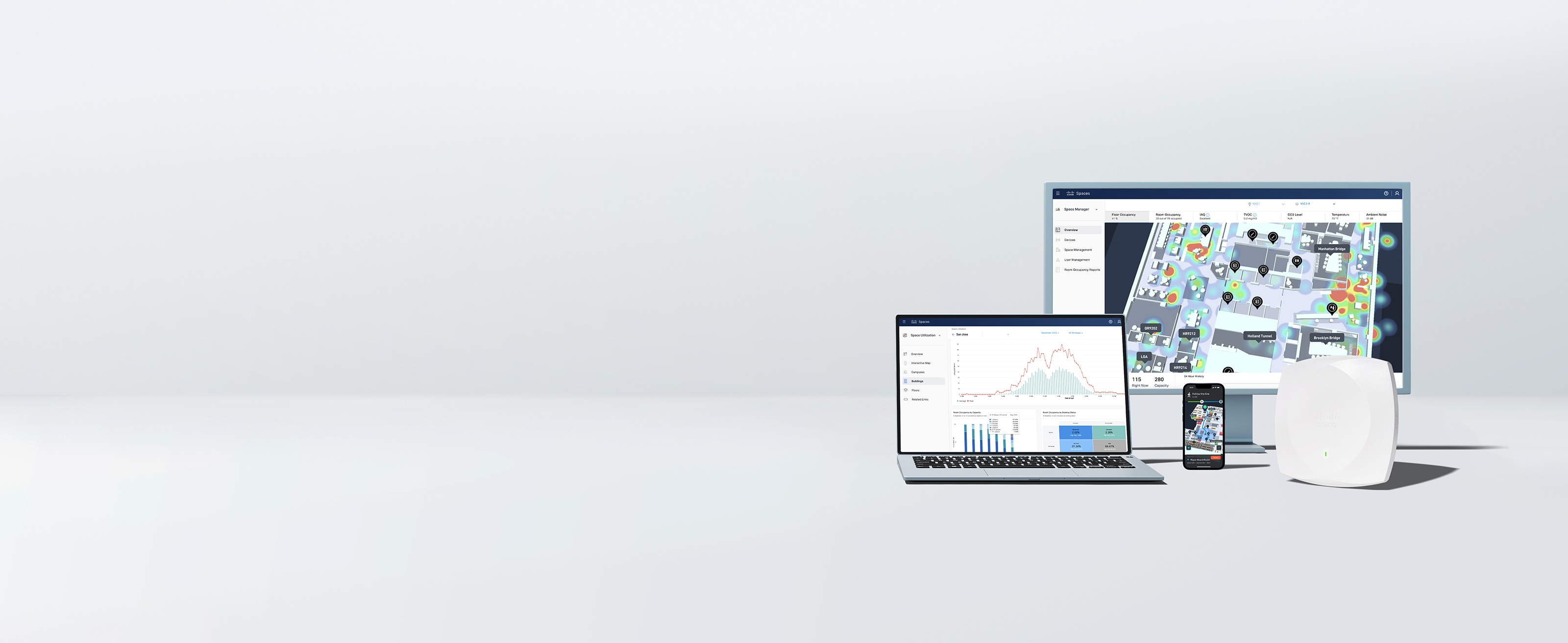
If you still have Cisco Meraki MR45 access points (PID MR45-HW) deployed, the clock on them is nearly out. The MR45 went End of Sale on July 21, 2021, and it reaches its Last Day of Support (LDoS) on July 21, 2026. After that date Cisco provides no further firmware, no PSIRT security fixes, and no TAC support or RMA hardware replacement for this model. The radios keep serving clients, which is exactly why MR45s tend to linger in ceilings long past the point where they should have been retired. This guide explains what each lifecycle milestone actually means for a running fleet, why the recommended Catalyst CW9166I is a genuine generational upgrade rather than a like-for-like swap, and how to plan a clean refresh that keeps your Meraki dashboard operating model intact.
What the MR45 actually was
The MR45 was Meraki's first Wi-Fi 6 (802.11ax) cloud-managed indoor access point, purpose-built for high-density enterprise environments. It is a four-radio design: a 4x4:4 MIMO radio on 2.4 GHz, a 4x4:4 MIMO radio on 5 GHz, a dedicated dual-band scanning/security radio for RF analytics, WIPS, and air-time monitoring, and an integrated Bluetooth Low Energy radio for location and IoT. With 802.11ax it brought OFDMA, downlink and uplink MU-MIMO, BSS coloring, and Target Wake Time to a fleet managed entirely from the Meraki cloud dashboard with no on-premises controller. Crucially, the MR45 was the first Meraki AP to ship a Multigigabit uplink: a single 2.5 Gbps (mGig) Ethernet port that broke past the 1 Gbps ceiling that capped earlier 802.11ac models like the MR42 and MR53. It is powered by 802.3at (PoE+); on 802.3af it runs in a reduced-power mode with degraded radio and USB capability.
For 2019-era client densities the MR45 was an excellent high-density AP. But it is Wi-Fi 6 only, it has no access to the 6 GHz band, and its single 2.5G uplink is the first thing that bottlenecks once you put a modern multi-radio AP behind it.
Why acting now matters
The risk of an EoL access point is not that it fails. It is that it keeps passing traffic while the support floor quietly disappears beneath it. Three concrete exposures stack up the moment LDoS passes on July 21, 2026:
- No PSIRT security fixes. When a new wireless or firmware vulnerability is disclosed against the MR platform, the MR45's firmware branch will be frozen. Any CVE that touches that code path on this hardware becomes permanent, there is no patched build coming.
- No TAC or RMA. A dead unit cannot be opened as a support case or swapped under your license or hardware contract. Your only recovery is a cold spare you bought before LDoS or a secondary-market unit of the same dead-end model.
- Audit and compliance exposure. The frameworks federal, DoD, SLED, and healthcare buyers operate under, FedRAMP, CMMC 2.0, the HIPAA Security Rule, PCI DSS 4.0, and CISA directives, all assume supported, patchable infrastructure. An access point that can no longer receive a security fix is a documented finding, and 'the vendor stopped shipping firmware' is not a defensible remediation plan.
There is also a licensing reality unique to Meraki. The MR45 requires an active Meraki Enterprise or Advanced license to function on the dashboard at all. As those licenses come up for renewal against EoL hardware, you are paying a subscription to keep an unsupported, unpatchable device online, which is the worst of both worlds. Aligning the hardware refresh with the license cycle avoids renewing a subscription on gear that has no support runway left.
What each milestone means in practice
- End of Sale (2021-07-21): the last day Cisco accepted new MR45 orders. Everything after this date is consuming the support tail.
- End of software maintenance (not separately listed): unlike IOS-XE platforms, Meraki cloud APs do not publish a distinct software-maintenance milestone; firmware support effectively runs to LDoS, after which the branch is frozen.
- Last Day of Support / LDoS (2026-07-21): the hard wall. No firmware, no PSIRT fixes, no TAC, no RMA. The AP is on its own from this day forward.
The recommended replacement: Catalyst CW9166I
Cisco's migration path moves the MR45 to a Catalyst CW9166I (PID CW9166I), or the CW9164I for lower-density rooms, managed from the same Meraki dashboard. This is the key point that makes the refresh painless operationally: the Catalyst CW91xx Wi-Fi 6E access points run in cloud-managed mode under Meraki, so you keep the dashboard, the maps, the SSIDs, and the workflows your team already knows while gaining a full radio generation. The hardware jump is real:
- Wi-Fi 6E and the 6 GHz band. The CW9166I is a tri-radio AP (2.4, 5, and 6 GHz) with a fourth dedicated dual-band scanning radio. The MR45 was Wi-Fi 6 only; 6 GHz adds up to 1,200 MHz of fresh, interference-free spectrum and seven additional 160 MHz channels, which is transformational for high-density rooms where the 5 GHz band is already congested.
- Higher uplink ceiling. The CW9166I ships a 5 Gbps (mGig) uplink versus the MR45's 2.5 Gbps port. That doubling matters because a tri-radio 6E AP can genuinely source more than 2.5 Gbps of aggregate client traffic, so the MR45's single 2.5G port would become the choke point behind it.
- More capable radios and antennas. The CW9166I uses 4x4:4 across bands with an integrated intelligent antenna design (Cisco's RF ASIC and self-optimizing antenna), delivering better range, cleaner beamforming, and higher real-world throughput than the MR45's fixed internal antennas.
- Power headroom. The CW9166I delivers all radios at full power on 802.3at (PoE+), with 802.3bt (PoE++/UPOE) unlocking maximum capability including full USB and peripheral power. Confirm your switch PoE budget during planning (see the migration plan below).
Licensing: cloud-managed Catalyst on Meraki
The CW9166I is dual-managed: it can run under Catalyst 9800/Catalyst Center with Smart Licensing, or in cloud-managed mode under the Meraki dashboard. For an MR45 fleet, cloud-managed is the natural path, you continue with Meraki licensing (Enterprise or Advanced tiers) tied to your Meraki organization. Confirm two things before you order: that your dashboard organization and network are on a firmware track that supports CW91xx adoption, and that your license claim/migration is sequenced so new APs come online licensed on day one. This is the single most common thing teams overlook.
A practical migration plan
1. Assessment and inventory
Export an exact count of MR45-HW units from the dashboard and capture, per AP: physical location and mount, switch port and PoE class drawn, VLAN/SSID mappings, RF profile, channel/power plan, and current firmware. Flag any MR45s co-located with other EoL Meraki models (MR42, MR52, MR53) so you size one combined refresh rather than several piecemeal projects. Browse current Catalyst wireless options in our catalog while you scope quantities.
2. License and dashboard transition
Verify your Meraki org firmware supports CW9166I/CW9164I adoption, then sequence license claiming so the new APs license cleanly as they join. Because management stays on Meraki, your network templates, group policies, and SSID configs largely carry forward, but re-validate any settings that reference 6 GHz, since the MR45 had no 6 GHz radio to configure.
3. Config and feature parity
Build a new RF profile that enables the 6 GHz band (WPA3 is mandatory on 6 GHz, plan client support accordingly), and confirm your SSIDs are WPA3-capable or run a transition mode. Map existing 5 GHz channel/power plans onto the new tri-band layout. Re-test any location analytics, BLE beacons, and air-marshal/WIPS policies on the new scanning radio.
4. Physical: PoE, uplinks, and cabling
The CW9166I's 5 Gbps uplink wants a Multigigabit switch port, if your access switches only offer 1G or 2.5G ports, the AP runs but caps below its potential, so factor mGig switch capacity into the project. Confirm the PoE budget: full capability wants 802.3bt, and a switch fully loaded with 6E APs can exceed an older switch's total PoE wattage. Cat6/6A cabling is recommended to sustain 5G over distance. Most CW9166I installs reuse the existing MR45 mount and Cat6 drop, so the swap is physically straightforward where power and switching keep up.
5. Phased cutover and secure decommission
Cut over by zone, not all at once: replace MR45s in one area, validate roaming, throughput, and client onboarding, then move on. Keep a small pool of MR45 spares only until each zone is confirmed. When you remove an MR45 permanently, unclaim it from the dashboard and wipe it from inventory so a decommissioned, unpatchable AP cannot be re-adopted or resold into your environment.
Procurement notes for regulated buyers
For federal, DoD, and SLED purchases, confirm TAA compliance and country-of-origin documentation up front, and use a Government Purchase Card (GPC) or other FAR-based purchase paths where appropriate. Wi-Fi 6E hardware and mGig switching can carry real lead times near refresh deadlines, so order with margin before the July 21, 2026 LDoS rush. Buying through an authorized Cisco partner protects your warranty, license entitlement, and supply-chain integrity, gray-market 6E APs frequently arrive with invalid or unclaimable licenses. As an authorized partner, uniqcli can validate your Meraki license migration, size the mGig and PoE requirements, and quote TAA-compliant CW9166I/CW9164I units with documentation.
Frequently asked questions
When does the Cisco Meraki MR45 reach end of support?
The MR45 (MR45-HW) went End of Sale on July 21, 2021, and reaches its Last Day of Support (LDoS) on July 21, 2026. After LDoS there are no firmware updates, no PSIRT security fixes, and no TAC support or RMA hardware replacement. The AP may still adopt to the dashboard, but it is unsupported and unpatchable.
What is the recommended replacement for the Meraki MR45?
Cisco recommends the Catalyst CW9166I (or the CW9164I for lower-density rooms), a Wi-Fi 6E tri-radio access point that runs in cloud-managed mode on the same Meraki dashboard. It adds the 6 GHz band, a 5 Gbps mGig uplink (up from the MR45's 2.5 Gbps), and stronger radios while keeping your existing dashboard workflows.
Can the Catalyst CW9166I be managed from the Meraki dashboard like my MR45?
Yes. The CW9166I is dual-managed and runs natively in cloud-managed mode under the Meraki dashboard, so your organization, networks, SSIDs, group policies, and maps carry forward. It can alternatively run under Catalyst 9800/Catalyst Center with Smart Licensing if you ever move to controller-based management.
Will my existing switches and PoE support the CW9166I?
The CW9166I has a 5 Gbps Multigigabit uplink and delivers full capability on 802.3bt (PoE++); it runs all radios on 802.3at (PoE+). If your access switches only have 1G ports or a tight PoE budget, the AP works but caps below potential. Plan for mGig ports and verify total switch PoE wattage before cutover.
Why should I replace the MR45 before LDoS instead of running it until it fails?
After July 21, 2026 the MR45 receives no security patches, so any new vulnerability against it is permanent, a direct finding under FedRAMP, CMMC, HIPAA, and PCI DSS. You also lose RMA coverage, and renewing a Meraki license on unsupported hardware wastes spend. Refreshing before LDoS keeps you patchable, supported, and audit-clean.
Uniqcli Team
The Uniqcli Team is an authorized Cisco partner specializing in Catalyst wireless, switching, datacenter fabric, licensing, and managed services for U.S. federal, state, local, and education customers. We scope Cisco bills of materials, validate procurement paths (TAA, FIPS, contract vehicles), and deliver design, deployment, and managed operations.
Ready to scope your Cisco build?
Build a quoteRelated reading
View all → Guides
Meraki MR24 (MR24-HW) End of Life: Migrate to Catalyst CW9164I
The Meraki MR24 reached Last Day of Support in May 2021, which means no PSIRT patches, firmware, or TAC. Here is what the milestone dates mean and a practical plan to refresh to the Wi-Fi 6E Catalyst CW9164I (CW9164I-MR) under the same Meraki dashboard.
May 18, 2026 · 7 min readGuidesMeraki MR12 End-of-Life: Migrate to Catalyst CW9164I
The Meraki MR12 reached Last Day of Support on October 24, 2022, no firmware, no PSIRT fixes, no RMA. Here is a practical, partner-built plan to refresh single-radio 802.11n coverage onto the Wi-Fi 6E Catalyst CW9164I without re-architecting your dashboard.
April 6, 2026 · 8 min readGuidesCisco Meraki MR26 EoL: Migrate to Catalyst CW9164I
The Meraki MR26 passed Last Day of Support on May 9, 2023, it gets no PSIRT fixes, no firmware, and no RMA. Here is what that means for an 802.11n fleet still in your ceilings and how to refresh cleanly to the Wi-Fi 6E Catalyst CW9164I on the Meraki dashboard.
March 30, 2026 · 9 min readGuidesMeraki MR53E EoL: Migration to the Catalyst CW9166I
The Meraki MR53E hits Last Day of Support on July 21, 2026, here's why it must come out and how to migrate cleanly to the Wi-Fi 6E Catalyst CW9166I while staying in the Meraki dashboard.
February 28, 2026 · 8 min readGuidesCisco Meraki MR16 End-of-Life: Migrate to Catalyst CW9164I
The Meraki MR16 has been past its Last Day of Support since 2021, no patches, no TAC, no RMA. Here is why a Wi-Fi 6E Catalyst CW9164I refresh matters now and exactly how to plan the migration.
May 16, 2026 · 6 min readGuidesMeraki MR33 End of Life: Migrating to the Wi-Fi 6 MR36
The Meraki MR33 reaches Last Day of Support on July 21, 2026. Here's why to act now and how to migrate cleanly to the Wi-Fi 6 MR36.
December 21, 2025 · 7 min read