
Meraki MR12 End-of-Life: Migrate to Catalyst CW9164I
The Meraki MR12 reached Last Day of Support on October 24, 2022, no firmware, no PSIRT fixes, no RMA. Here is a practical, partner-built plan to refresh single-radio 802.11n coverage onto the Wi-Fi 6E Catalyst CW9164I without re-architecting your dashboard.
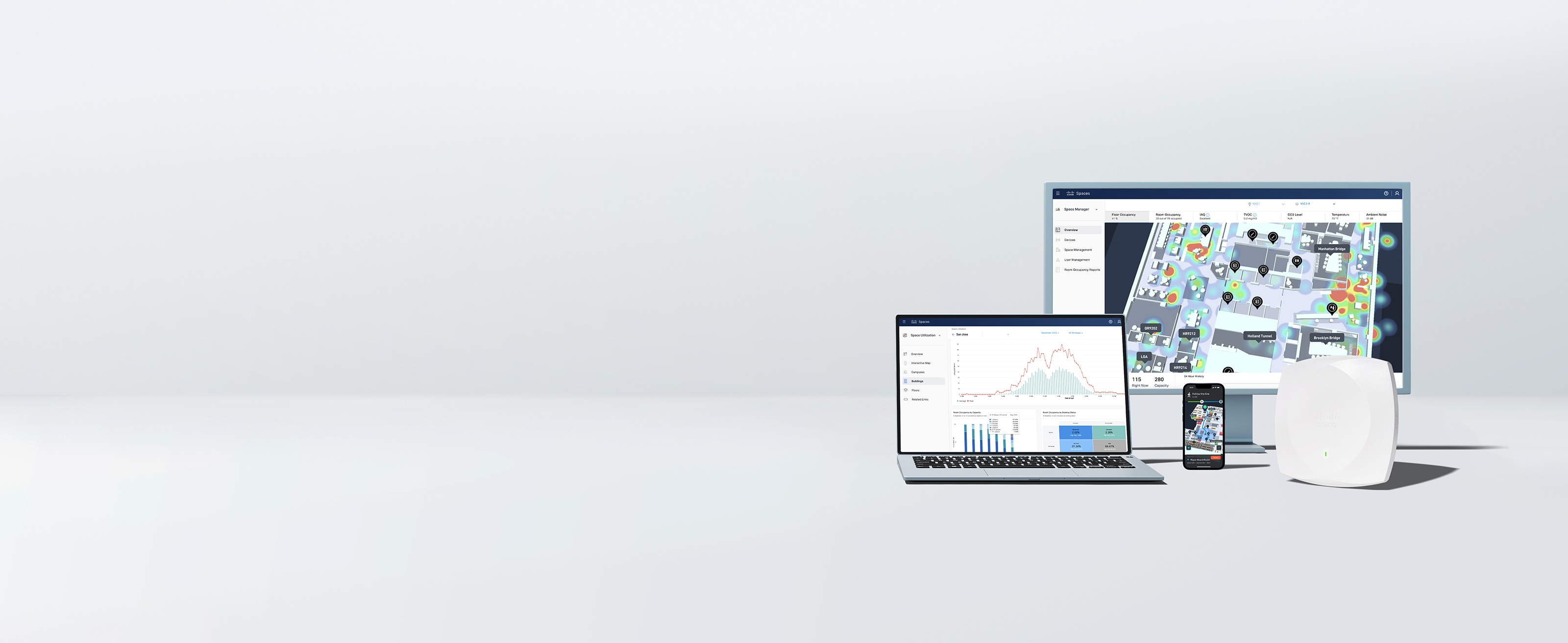
If you still have Cisco Meraki MR12 access points hanging off your ceilings, they are now well past every support boundary Cisco defines. The MR12 (PID MR12-HW) went End of Sale on October 24, 2015, and crossed its Last Day of Support (LDoS) on October 24, 2022. That second date is the one that matters: as of LDoS, Cisco no longer ships firmware updates, no longer issues PSIRT security fixes for the platform, and TAC will not open cases or process RMAs against the hardware. An MR12 on your network today is a single-radio 802.11n radio running code that has not been patched in years.
This guide walks through what the MR12 actually was, why running it now is a compliance and security liability, and how to refresh cleanly onto the recommended replacement, the Cisco Catalyst CW9164I (PID CW9164I-MR), a tri-band Wi-Fi 6E access point that keeps your Meraki dashboard workflow intact while delivering an order-of-magnitude jump in capacity.
What the MR12 was, and why it can't keep up
The MR12 was Meraki's entry-level cloud-managed AP, aimed at low-density indoor coverage in small offices, branches, retail, and hospitality. Its specs tell the whole story of why it is no longer viable for production work:
- Single radio, 2.4 GHz only (802.11b/g/n), no 5 GHz radio at all, so it competes for the same crowded band as microwaves, Bluetooth, and every consumer device in range.
- 2x2:2 MIMO at 802.11n, capped at a theoretical 300 Mbps PHY rate. Real-world throughput per client is a fraction of that, and there is no OFDMA, no MU-MIMO downlink to modern clients, and no 80/160 MHz channels.
- 802.3af PoE (roughly 12.95W at the AP) and a 1000BASE-T plus a separate 10/100BASE-T port for uplink.
- No WPA3, no dedicated security scanning radio, no on-device BLE/IoT radio, and firmware frozen at LDoS.
A modern smartphone or laptop will negotiate a far higher rate than the MR12 can serve, so the AP becomes the bottleneck the moment more than a handful of clients associate. For any environment with WPA3 mandates, mixed IoT, or even ordinary video conferencing, the MR12 is functionally obsolete, not just unsupported.
What each milestone date means for you
End of Sale, October 24, 2015
The last date Cisco would sell a new MR12 through normal channels. Anything in service today is at least a decade into its lifecycle. New-in-box stock from a reseller after this date is old inventory, not current product.
Last Day of Support (LDoS), October 24, 2022
The hard cutoff. After LDoS there are no software maintenance releases, no security/PSIRT remediation, no bug fixes, and no TAC support or hardware RMA. The MR12 had no separate End of Software Maintenance milestone published, support simply ends at LDoS. If an MR12 fails, you replace it out of pocket with no warranty path. If a vulnerability is disclosed against its firmware, it will never be patched.
The recommended replacement: Catalyst CW9164I
Cisco's recommended upgrade for the MR12 is the Catalyst CW9164I (CW9164I-MR), a tri-band Wi-Fi 6E indoor enterprise AP. It is the natural successor because it preserves the cloud-managed experience MR buyers chose in the first place while erasing every architectural limit of the MR12. Concretely, here is what changes:
- Three serving radios instead of one: 2.4 GHz (2x2), 5 GHz (4x4), and a brand-new 6 GHz (4x4) band, roughly 1,200 MHz of fresh, interference-free spectrum the MR12 could never touch.
- Wi-Fi 6E (802.11ax) with OFDMA, downlink and uplink MU-MIMO, 1024-QAM, BSS coloring, and up to 7.49 Gbps aggregate frame rate across the three radios, versus a 300 Mbps single-band ceiling on the MR12.
- A dedicated fourth radio for always-on WIDS/WIPS security scanning and RF optimization, plus an integrated IoT radio for Bluetooth Low Energy beaconing and scanning, neither of which exists on the MR12.
- WPA3 and Enhanced Open support, satisfying modern encryption baselines the MR12 cannot meet.
- A 100/1000/2.5G multigigabit (mGig) uplink so the AP is no longer choked by a 1 Gbps edge port when 6 GHz clients push real traffic.
- Far higher concurrent client density, the CW9164I is built for dozens of active clients per AP where the MR12 strained past a handful.
Dual management, keep your dashboard, or move to a controller
The CW9164I is the same hardware whether you run it from the Meraki dashboard or from a Catalyst 9800 wireless LAN controller on IOS-XE. You can deploy it in cloud mode today to mirror your existing MR workflow, then convert the very same unit to controller-based management later without buying new hardware. That flexibility is the single biggest reason to choose the CW916x line over a like-for-like cloud-only swap.
Licensing and power
Plan for two things the MR12 did not require. First, licensing: dashboard mode uses a Meraki wireless subscription (Enterprise or Advanced) per AP; controller mode uses Cisco DNA/Smart Licensing tiers (DNA Essentials or Advantage) bound to your Smart Account. Budget the term and tier up front. Second, power: the CW9164I draws PoE+ (802.3at), about 25.5W, rising toward 30.5W with USB enabled, not the 802.3af the MR12 sipped. Verify your switch ports and PoE budget before you mount anything.
A practical migration plan
1. Assess and inventory
Pull every MR12 from your Meraki dashboard inventory and map each one to its physical location, switch port, VLAN, and current SSIDs. Note coverage gaps you already live with, a 2.4 GHz-only AP under-serves, so a one-for-one count may leave you short on capacity even if it covers the floor. A quick predictive or walkthrough survey at this stage prevents under-provisioning. You can review your full end-of-life exposure on the MR12 EoL page and across the rest of your fleet on the Cisco EoL hub.
2. Plan the license transition
Decide cloud vs. controller before ordering. If you stay on the dashboard, size Meraki wireless licenses to match AP count and co-terminate or use per-device terms to align renewal dates. If you move to a 9800 controller, set up the Smart Account and DNA license pool. Either way, claim the new CW9164I units into the correct organization or Smart Account early so day-one provisioning is not blocked by entitlement.
3. Establish config and feature parity
Recreate SSIDs, RADIUS/identity policy, group policies, VLAN tagging, and traffic shaping on the new APs. This is also the moment to add what the MR12 could not do: enable WPA3 (or WPA2/WPA3 transition mode), turn on band steering toward 5/6 GHz, and configure 6 GHz with WPA3-only as the spec requires. Keep the old MR12 SSIDs broadcasting during overlap so clients roam without a coverage gap.
4. Handle the physical refresh
Confirm each edge switch port supplies 802.3at and that the aggregate PoE budget covers the heavier draw of Wi-Fi 6E APs. Where you want full 6 GHz throughput, plan mGig (2.5G) uplinks; a legacy 1G port still works but caps the AP. Reuse existing Cat5e/Cat6 cabling where it tests clean. The CW9164I mounts to standard ceiling brackets, but verify the mounting hardware, the MR12's bracket is not guaranteed to fit.
5. Cut over in phases
Replace in zones, not all at once. Stand up CW9164I units alongside live MR12s in a pilot area, validate authentication, roaming, throughput, and any IoT/BLE use cases, then expand floor by floor. Running both generations in parallel during overlap means no coverage outage and an easy rollback if a zone needs tuning.
6. Securely decommission the MR12s
Once a zone is cut over, unclaim each MR12 from the dashboard so it can no longer broadcast or hold configuration, then wipe and physically remove it. For federal, DoD, and healthcare environments, follow your media-sanitization policy for any device that held network credentials and document the disposal for audit. Do not leave a powered, unsupported AP on the network as a 'spare.'
Procurement notes for regulated buyers
For US federal, DoD, and SLED buyers, source CW9164I-MR units that are TAA-compliant and confirm country of origin in writing, relevant for GPC card purchases and DFARS. Wi-Fi 6E APs have seen variable lead times, so order ahead of your cutover window and reserve license terms in the same PO to lock pricing. Buying through an authorized Cisco partner protects warranty, entitlement, and Smart Account registration, gray-market APs frequently arrive unable to claim into your organization. Browse current options in our catalog, and when you are ready to scope quantities, licensing tier, and lead time, get a quote and we will build the bill of materials around your existing dashboard.
Frequently asked questions
Is the Cisco Meraki MR12 still safe to use after October 2022?
No. The MR12 passed its Last Day of Support on October 24, 2022, which means no more firmware updates and no PSIRT security patches. Any vulnerability disclosed against its software will never be fixed, and it cannot run WPA3, both of which are flagged in HIPAA, PCI-DSS, and CMMC audits. It should be replaced, not kept in production.
Why is the Catalyst CW9164I the recommended replacement for the MR12?
The CW9164I is a tri-band Wi-Fi 6E AP that directly addresses every MR12 limitation: it adds 5 GHz and 6 GHz radios (the MR12 was 2.4 GHz only), jumps from a 300 Mbps single-band ceiling to 7.49 Gbps aggregate, adds OFDMA, MU-MIMO, WPA3, a dedicated security-scanning radio, and BLE/IoT. Critically, it runs from the same Meraki dashboard you already use, so the operational model stays familiar.
Can I keep managing the new APs from the Meraki dashboard?
Yes. The CW9164I-MR is dual-mode hardware. You can run it from the Meraki cloud dashboard to match your existing MR workflow, or convert the identical unit to a Catalyst 9800 controller on IOS-XE later, no hardware swap required. You choose the management model and can change it down the road.
What changes in licensing and power when moving from MR12 to CW9164I?
The MR12 used basic 802.3af PoE and a simple per-AP Meraki license. The CW9164I needs 802.3at PoE+ (about 25.5W, up to 30.5W with USB) and either a Meraki wireless subscription (dashboard mode) or Cisco DNA/Smart Licensing (controller mode). Confirm your switch PoE budget and plan mGig uplinks before deployment.
Do I need a one-for-one replacement of my MR12 access points?
Not necessarily, and a straight count can leave you short. Because the MR12 was 2.4 GHz only, many sites tolerated coverage and capacity gaps. A quick site survey before ordering ensures the higher-capacity CW9164I units are placed for proper coverage rather than simply matching the old AP positions one-to-one.
Uniqcli Team
The Uniqcli Team is an authorized Cisco partner specializing in Catalyst wireless, switching, datacenter fabric, licensing, and managed services for U.S. federal, state, local, and education customers. We scope Cisco bills of materials, validate procurement paths (TAA, FIPS, contract vehicles), and deliver design, deployment, and managed operations.
Ready to scope your Cisco build?
Build a quoteRelated reading
View all →GuidesCisco Meraki MR26 EoL: Migrate to Catalyst CW9164I
The Meraki MR26 passed Last Day of Support on May 9, 2023, it gets no PSIRT fixes, no firmware, and no RMA. Here is what that means for an 802.11n fleet still in your ceilings and how to refresh cleanly to the Wi-Fi 6E Catalyst CW9164I on the Meraki dashboard.
March 30, 2026 · 9 min read Guides
Meraki MR24 (MR24-HW) End of Life: Migrate to Catalyst CW9164I
The Meraki MR24 reached Last Day of Support in May 2021, which means no PSIRT patches, firmware, or TAC. Here is what the milestone dates mean and a practical plan to refresh to the Wi-Fi 6E Catalyst CW9164I (CW9164I-MR) under the same Meraki dashboard.
May 18, 2026 · 7 min readGuidesCisco Meraki MR62 End-of-Life: Migrate to MR36 (Wi-Fi 6)
The Meraki MR62 hit Last Day of Support on November 15, 2024. Here is what each milestone means for an 802.11n cloud AP and a concrete plan to refresh onto the Wi-Fi 6 MR36.
March 10, 2026 · 9 min readGuidesMeraki MR53E EoL: Migration to the Catalyst CW9166I
The Meraki MR53E hits Last Day of Support on July 21, 2026, here's why it must come out and how to migrate cleanly to the Wi-Fi 6E Catalyst CW9166I while staying in the Meraki dashboard.
February 28, 2026 · 8 min readGuidesCisco Meraki MR16 End-of-Life: Migrate to Catalyst CW9164I
The Meraki MR16 has been past its Last Day of Support since 2021, no patches, no TAC, no RMA. Here is why a Wi-Fi 6E Catalyst CW9164I refresh matters now and exactly how to plan the migration.
May 16, 2026 · 6 min readGuidesCisco Meraki MR45 EoL: Migrate to Catalyst CW9166I
The Meraki MR45 reaches Last Day of Support on July 21, 2026, after that, no PSIRT fixes, no firmware, no RMA. Here is what changes and how to refresh cleanly to the Wi-Fi 6E Catalyst CW9166I on the Meraki dashboard.
March 2, 2026 · 9 min read