
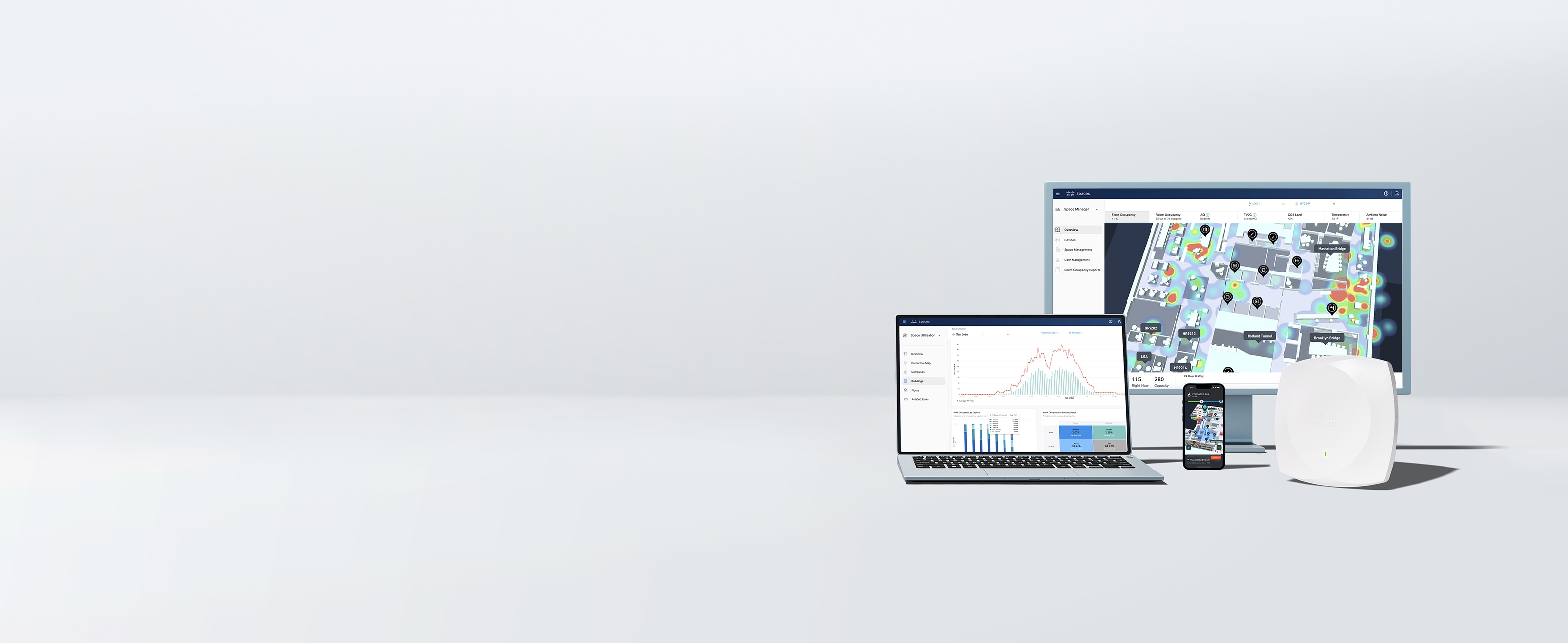
The Cisco Meraki MR16 (PID MR16-HW) was one of the first cloud-managed access points many organizations ever deployed. It is a 2x2:2 dual-band 802.11n radio capping out around 300 Mbps per band under ideal conditions, single-Gigabit uplink, no MU-MIMO, no OFDMA, and no support for the modern security and roaming features that current clients expect. Cisco set its End of Sale on May 9, 2016, and the Last Day of Support arrived on May 31, 2021. Every MR16 in production today is running entirely outside its support lifecycle. The practical successor for an indoor, high-performance refresh is the Cisco Catalyst CW9164I (CW9164I-MR), a tri-radio Wi-Fi 6E access point that you can run on the same Meraki dashboard you already know.
What the MR16 milestone dates actually mean for you
End-of-life is a sequence of dates, and each one removes a different protection. Understanding the sequence is the difference between a planned refresh and an emergency one.
- End of Sale (2016-05-09): Cisco stopped selling new MR16 hardware. Any unit available since then is refurbished or gray-market, with no manufacturer warranty path on new orders.
- Last Day of Support / LDoS (2021-05-31): the decisive date. After this, Cisco PSIRT no longer issues security fixes for the platform, Meraki firmware no longer adds features or vulnerability remediation for MR16, and TAC will not open cases or process RMA hardware replacements. The device is frozen in time.
- No software-maintenance milestone was published separately for the MR16 because, as a Meraki cloud-managed product, its firmware lifecycle is tied to the dashboard and folds into the LDoS date.
You are five-plus years past LDoS: As of mid-2026 the MR16 has been unsupported for over five years. There is no patch coming for any newly disclosed Wi-Fi or driver vulnerability, and no RMA if a unit fails. This is now an active compliance and availability risk, not a future one.
Why acting now matters: security, compliance, and operational risk
The most concrete exposure is the absence of patches. Wireless has seen serious protocol-level disclosures over the MR16's lifetime, including the KRACK WPA2 key-reinstallation class and Wi-Fi fragmentation (FragAttacks) issues. A supported AP receives firmware remediation for these; an LDoS device does not. For regulated buyers this turns into audit findings fast. CMMC and NIST SP 800-171 expect timely flaw remediation (the 3.14 control family), HIPAA Security Rule risk analysis flags unpatchable infrastructure, and PCI DSS treats unsupported systems carrying cardholder traffic as a failing control. An assessor who finds 802.11n hardware that cannot accept a patch will write it up, regardless of how well the rest of the network is run.
There is also a hard operational ceiling. The MR16 cannot do WPA3, Enhanced Open (OWE), or 802.11r/k/v fast roaming the way modern clients negotiate them. Newer laptops, phones, and medical or OT devices increasingly assume those capabilities, and a 2x2 802.11n cell becomes the bottleneck in any room with more than a handful of active clients. You can review the full lifecycle record for this unit on our MR16 end-of-life page, and browse other affected platforms on the Cisco EoL hub.
The recommended replacement: Cisco Catalyst CW9164I
The CW9164I (CW9164I-MR) is a generational leap, not an incremental bump. The most important point for an existing Meraki shop: the -MR variant is built to be managed from the Meraki dashboard, so your team keeps the same cloud workflow, SSIDs, group policies, and network topology view. Catalyst Wireless hardware is convergent, so the same platform can alternatively run in Catalyst/IOS-XE mode under a 9800 controller or Catalyst Center if your strategy shifts later. You are not locked into one management plane the way the MR16 was.
What is concretely better
- Wi-Fi standard: Wi-Fi 6E (802.11ax) across three bands, 2.4 GHz, 5 GHz, and the clean 6 GHz spectrum, versus the MR16's 802.11n on two bands. Real-world per-AP throughput moves from hundreds of Mbps to multi-Gigabit.
- Radio architecture: 4x4:4 MIMO with OFDMA and uplink/downlink MU-MIMO. OFDMA lets one transmission serve many small-packet clients at once, which is exactly the dense-client scenario where the MR16's single-user 802.11n radio collapses.
- Client capacity and roaming: dramatically higher concurrent client counts per AP, plus WPA3, Enhanced Open, and modern fast-roaming so VoWiFi and roaming clinical or warehouse devices hand off cleanly.
- Uplink: multigigabit (mGig) Ethernet that negotiates 2.5G/1G, so a single Cat 6 run can carry the AP's higher throughput without re-cabling. The MR16 was capped at 1G.
- Power: the CW9164I wants 802.3at (PoE+) to light up all radios at full performance, where the MR16 ran on 802.3af. Confirm switch PoE budget during planning, this is the single most common refresh surprise.
- Built-in IoT: integrated BLE and an IoT radio for location and sensor use cases the MR16 never had.
A practical migration plan
1. Assessment and inventory
Pull a dashboard export of every MR16 (and any MR24/MR18 siblings, which share the same 2016 EoS and 2021 LDoS dates). Capture each AP's location, mounting, switch port, PoE class drawn, current channel plan, and peak client count. Run a wireless survey or at least review existing heatmaps: Wi-Fi 6E at 6 GHz propagates differently, and because the CW9164I serves far more clients per radio, many sites can refresh at a lower AP count than a like-for-like swap would suggest. Size the new design on coverage and capacity, not on the legacy AP count.
2. Licensing transition
Meraki APs require an active per-AP Enterprise (or Advanced) license tied to the dashboard org. Plan license term and quantity for the CW9164I units up front and align renewal dates so you are not tracking staggered expirations. If any sites move to Catalyst/IOS-XE management, that path uses Cisco Smart Licensing (DNA/Catalyst tiers) instead, decide the management model before you buy, because it changes the license SKU.
3. Configuration and feature parity
Because the CW9164I-MR rides the same dashboard, most SSIDs, group policies, VLAN tags, and traffic-shaping rules carry forward by adding the new APs to the existing network. Use the cutover to modernize: enable WPA3 (or WPA3 transition mode while older clients age out), turn on 6 GHz SSIDs for capable devices, and validate RADIUS/802.1X and NAC integration against the new radios before going wide.
4. Physical, power, and cabling
Verify each switch port can deliver 802.3at and that the switch's total PoE budget covers the new APs at full draw, an older access switch that comfortably fed 802.3af MR16s may run short on a PoE+ fleet. Confirm mount and ceiling-tile compatibility, plan mGig uplinks where you want headroom above 1G, and re-test cable runs that will carry 2.5G. Stage and claim the new APs in the dashboard before the truck roll so field techs just mount, cable, and confirm join.
5. Phased cutover and secure decommission
Migrate by zone, not all at once. Bring CW9164I APs online alongside the MR16s in a pilot area, validate roaming, throughput, and authentication, then sweep building by building. Once a zone is confirmed, remove the MR16s from the dashboard, factory-reset each unit to clear any stored configuration and PSK material, and dispose through an asset-recovery or e-waste process that gives you a certificate of destruction, important for federal and healthcare chain-of-custody requirements.
Procurement notes for regulated buyers
For US federal, DoD, and SLED purchases, specify TAA-compliant CW9164I units and confirm country of origin on the quote; this matters for GSA and micro-purchase (GPC) card buys. Source through an authorized Cisco partner so warranty, Meraki licensing, and support entitlement attach correctly from day one, gray-market APs frequently arrive with no valid license or support path. Wi-Fi 6E Catalyst hardware and licensing can carry real lead times, so place orders ahead of your cutover window. Browse current models and configurations in our catalog, and when you are ready for sizing and pricing, get a quote and our team will scope the AP count, PoE and licensing for your sites.
Frequently asked questions
Is the Cisco Meraki MR16 still supported?
No. The MR16 (MR16-HW) reached End of Sale on May 9, 2016 and its Last Day of Support on May 31, 2021. Since that date Cisco issues no firmware or security patches for it, Meraki adds no features, and TAC will not open support cases or process RMA replacements. Every MR16 in service today is unsupported.
What is the recommended replacement for the MR16?
Cisco recommends the Catalyst CW9164I, and the CW9164I-MR variant is purpose-built for the Meraki dashboard so you keep your existing cloud management. It is a tri-radio Wi-Fi 6E access point (2.4/5/6 GHz) with 4x4:4 MIMO, OFDMA, WPA3, multigigabit uplink, and far higher client capacity than the MR16's 2x2 802.11n radios.
Will the CW9164I work with my existing Meraki dashboard?
Yes. The CW9164I-MR is managed from the same Meraki dashboard, so your SSIDs, group policies, VLANs, and network views carry forward. The same Catalyst Wireless hardware can alternatively run in IOS-XE mode under a Catalyst 9800 controller or Catalyst Center if you later move to controller-based management.
Do I need new cabling or switch upgrades to move from MR16 to CW9164I?
Often a PoE check is the main item. The MR16 ran on 802.3af; the CW9164I wants 802.3at (PoE+) to power all radios at full performance, so confirm both per-port class and total switch PoE budget. Existing 1G cabling works, but adding multigigabit (2.5G) uplinks where you want headroom may require re-testing those runs.
What compliance risk does keeping the MR16 create?
Running hardware that cannot receive security patches is a common audit finding. NIST SP 800-171 and CMMC expect timely flaw remediation, HIPAA risk analysis flags unpatchable infrastructure, and PCI DSS treats unsupported systems in scope as a failing control. An unpatchable 802.11n AP that cannot do WPA3 is difficult to defend in any assessment.
Uniqcli Team
The Uniqcli Team is an authorized Cisco partner specializing in Catalyst wireless, switching, datacenter fabric, licensing, and managed services for U.S. federal, state, local, and education customers. We scope Cisco bills of materials, validate procurement paths (TAA, FIPS, contract vehicles), and deliver design, deployment, and managed operations.
Ready to scope your Cisco build?
Build a quoteRelated reading
View all →GuidesMeraki MR24 (MR24-HW) End of Life: Migrate to Catalyst CW9164I
The Meraki MR24 reached Last Day of Support in May 2021, which means no PSIRT patches, firmware, or TAC. Here is what the milestone dates mean and a practical plan to refresh to the Wi-Fi 6E Catalyst CW9164I (CW9164I-MR) under the same Meraki dashboard.
May 18, 2026 · 7 min read Guides
Meraki MR12 End-of-Life: Migrate to Catalyst CW9164I
The Meraki MR12 reached Last Day of Support on October 24, 2022, no firmware, no PSIRT fixes, no RMA. Here is a practical, partner-built plan to refresh single-radio 802.11n coverage onto the Wi-Fi 6E Catalyst CW9164I without re-architecting your dashboard.
April 6, 2026 · 8 min readGuidesCisco Meraki MR26 EoL: Migrate to Catalyst CW9164I
The Meraki MR26 passed Last Day of Support on May 9, 2023, it gets no PSIRT fixes, no firmware, and no RMA. Here is what that means for an 802.11n fleet still in your ceilings and how to refresh cleanly to the Wi-Fi 6E Catalyst CW9164I on the Meraki dashboard.
March 30, 2026 · 9 min readGuidesCisco Meraki MR45 EoL: Migrate to Catalyst CW9166I
The Meraki MR45 reaches Last Day of Support on July 21, 2026, after that, no PSIRT fixes, no firmware, no RMA. Here is what changes and how to refresh cleanly to the Wi-Fi 6E Catalyst CW9166I on the Meraki dashboard.
March 2, 2026 · 9 min readGuidesCisco Meraki MR32 EoL: Migrate to MR36 Wi-Fi 6 Guide
The MR32 hit Last Day of Support on March 31, 2024. Here is what each milestone means, why the Wi-Fi 6 MR36 is the right refresh, and how to plan the cutover.
March 21, 2026 · 6 min readGuidesCisco Meraki MR62 End-of-Life: Migrate to MR36 (Wi-Fi 6)
The Meraki MR62 hit Last Day of Support on November 15, 2024. Here is what each milestone means for an 802.11n cloud AP and a concrete plan to refresh onto the Wi-Fi 6 MR36.
March 10, 2026 · 9 min read