
Cisco Unified Communications Manager (CUCM), still widely called Call Manager, is Cisco's on-premises call-control platform for enterprise voice, video, messaging, and mobility, the system that registers phones, routes calls, and enforces dial plans. It's no longer sold as a perpetual license: since Cisco retired User Connect Licensing (UCL/CUCL) and legacy CUWL bundles, CUCM is purchased as a subscription under the Cisco Collaboration Flex Plan, deployed either on customer-owned UCS hardware/appliances or as Webex Calling Dedicated Instance in Cisco's cloud.
What is Cisco Unified Communications Manager (CUCM)?
CUCM is Cisco's flagship IP telephony and call-control software, the successor to the original CallManager product line that has anchored Cisco voice deployments since the late 1990s. It handles call routing, extension mobility, hunt groups, conferencing control, device registration for phones and soft clients, and integration with voicemail (Cisco Unity Connection), contact center (UCCX/Webex Contact Center), and SIP trunking. CUCM runs as a cluster of virtual machines, a publisher node plus one or more subscribers, for redundancy and scale, and it remains the call-control engine behind most large Cisco voice deployments even as Cisco pushes customers toward cloud-first Webex Calling.
The naming is a common source of confusion: CUCM, Unified CM, and Call Manager all refer to the same product. It's distinct from Webex Calling (Cisco's multi-tenant cloud PBX) and from Webex Calling Dedicated Instance (a single-tenant, cloud-hosted version of actual CUCM software, more below).
What version of CUCM should you buy?
Release 15 is the current major version and the only one Cisco is actively developing; it ships through periodic Service Updates (SUs) rather than the old dot-release model. As of mid-2026, 15SU4/15SU4a is the latest SU, adding NFVIS-for-UC and Cisco Compute Hyperconverged with Nutanix as supported virtualization platforms alongside VMware vSphere ESXi, plus a move from Exchange Web Services to Microsoft Graph APIs for Outlook presence. Release 14 is still supported for organizations mid-contract, but new deployments should start on 15 to maximize runway on a supported train, Cisco's UC releases follow fixed end-of-support windows. Anything on Release 12.x or earlier is past its support boundary and should be treated as an urgent upgrade, not a someday project.
How is CUCM licensed today? What happened to UCL/CUCL?
Perpetual User Connect Licensing (UCL) and the old CUCL/CUWL bundles are end-of-sale, Cisco stopped selling new perpetual CUCM licenses, and Software Support Services (SWSS) renewals for perpetual on-prem calling were similarly cut off. If you're still running perpetual UCL under an active SWSS contract, Cisco keeps supporting it until the contract lapses, but any new purchase, additional seats, a new site, a hardware refresh, has to move onto Collaboration Flex Plan subscription licensing.
Flex Plan (currently on its 3.0 revision) is Cisco's umbrella subscription for calling, meetings, and messaging. For CUCM, it's sold two ways:
- Enterprise Agreement (EA), covers all Knowledge Workers org-wide under one agreement, includes a growth allowance, and requires a minimum commitment (typically 250+ seats). This is the model most mid-size and large government/education/enterprise accounts land on.
- Named User (NU), per-user subscription with no org-wide minimum (beyond small per-SKU minimums), useful for smaller deployments or phased rollouts.
Within Flex, calling seats come in tiers rather than a single SKU: Workspace (shared/common-area phones), Access (entry-level, single device, basic call control), Enhanced (task workers on one device with a fuller feature set), and Professional (full-featured, multi-device, what most knowledge workers need). The tier mix is usually the single biggest lever on your quote, worth mapping against actual headcount rather than defaulting everyone to Professional.
| Model | How it's sold | Typical fit | Notes |
|---|---|---|---|
| Flex Plan EA | Org-wide agreement, seat tiers, growth allowance | Mid-size to large orgs, 250+ knowledge workers | One agreement can span on-prem CUCM, Dedicated Instance, and Webex Calling |
| Flex Plan NU | Per-user subscription, small minimums | Smaller or phased deployments | No org-wide floor; scales up incrementally |
| Legacy perpetual UCL/CUCL | One-time purchase + SWSS | End-of-sale, existing contracts only | No new purchases; migrate at next renewal or refresh |
| Webex Calling Dedicated Instance | Subscription, cloud-hosted CUCM | Enterprises wanting cloud economics, on-prem feature parity | Same CUCM software/APIs, Cisco manages the infrastructure |
On-premises CUCM vs. Webex Calling Dedicated Instance: which deployment model fits?
You have three realistic paths, and they aren't mutually exclusive, many large accounts run more than one simultaneously during a phased migration.
On-premises CUCM on UCS or a Business Edition appliance
This is CUCM running as VMs on customer-owned infrastructure: general-purpose Cisco UCS servers for larger or highly customized clusters, or a Business Edition appliance (BE6000 for smaller sites, BE7000 for larger ones, both built on current-generation UCS C-Series hardware) for a turnkey, pre-sized single-box deployment. Choose on-prem when you have hard data-sovereignty requirements, deep custom API integrations, a large existing UCCX footprint that isn't ready to move, or sites where cloud calling paths aren't viable.
Webex Calling Dedicated Instance
Dedicated Instance runs the actual CUCM application, same feature set, same admin experience, same phone firmware, in Cisco-managed cloud infrastructure, single-tenant per customer. It's the migration path Cisco built for existing CUCM shops that want out of hardware refresh cycles without ripping out dial plans, custom scripts, or endpoint fleets. The tradeoff: calling features aren't fully harmonized with native Webex Calling (a Dedicated Instance user can't, for example, sit in a Webex Calling hunt group), so treat it as "CUCM without the servers," not as feature-equivalent to cloud-native Webex Calling.
Native Webex Calling
Cisco's multi-tenant cloud PBX, sold as its own Flex tier, with no CUCM cluster at all. It's the right target for greenfield deployments or straightforward calling needs, but it's a different product with a different feature set, don't assume feature parity when comparing quotes.
Hardware sizing basics for on-premises CUCM
Sizing an on-prem cluster comes down to three inputs: registered device count, busy-hour call attempts, and redundancy needs (a subscriber pair per site, or a centralized cluster with SRST/survivability at branches). Practical starting points:
- Small sites (roughly under ~1,000 users) typically fit a BE6000 appliance, a single 1RU UCS C220-based box that collapses CUCM, Unity Connection, and sometimes UCCX onto one platform.
- Larger or multi-application sites move to BE7000 (2RU, UCS C240-based) or a general-purpose UCS cluster sized independently for headroom and N+1 resilience.
- Multi-site enterprises usually run a centralized CUCM cluster with regional gateways and survivability (SRST or Enhanced Survivability for Dedicated Instance) rather than a cluster per site.
- Always size against your peak, not your average, busy-hour call volume during a shift change or open-enrollment period, not a quiet Tuesday afternoon.
Cisco's sizing tools (partner-access only) turn these inputs into a bill of materials, get the sizing validated by whoever is writing your quote, not estimated off a spec sheet.
Which phones work with CUCM?
Not every Cisco IP phone talks to CUCM out of the box. The dividing line is firmware, not model number:
- Enterprise firmware, required for CUCM registration; the default mode for the current Cisco IP Phone 8800 Series, Desk Phone 9800 Series, and Cisco's collaboration endpoints generally.
- MPP (Multiplatform) firmware, used for third-party call control or hosted ITSPs, and it cannot register to CUCM. Some 7800/8800-series units ship convertible between the two, but an MPP-firmware phone won't show up in CUCM until it's converted back.
- Confirm SKU and firmware state before ordering, an MPP-firmware unit dropped into a CUCM environment is a return, not a quick config fix.
Browse current Enterprise-firmware handsets and endpoints sized for CUCM deployments in our catalog.
How organizations actually buy CUCM
Cisco doesn't sell CUCM directly to end customers for most deployments, it moves through the channel, and for government, education, and larger enterprise buyers that channel relationship matters as much as the product selection. A typical purchase path:
- Sizing and design, device counts, call volume, redundancy, and deployment model get translated into a bill of materials.
- Smart Account and Smart Licensing setup, required before any Flex subscription can activate; fragmented or legacy accounts get consolidated here.
- Quote and procurement paperwork, for public-sector and education buyers this usually includes TAA compliance documentation (Trade Agreements Act, relevant for GSA/federal purchases) and GPC payment handling.
- Fulfillment and license assignment, hardware ships, subscriptions get assigned in Smart Licensing, and support/renewal terms get set for the contract term.
As an authorized Cisco partner, we quote CUCM deployments below list price and handle the Smart Account and TAA paperwork as part of the order, the parts of a CUCM purchase that generate the most delay when done piecemeal. If you're sizing a new cluster, migrating off perpetual UCL, or comparing on-prem against Dedicated Instance, request a CUCM quote and we'll scope it against your actual device count and site topology.
Frequently asked questions
Is Cisco Call Manager the same as CUCM?
Yes. Cisco Unified Communications Manager (CUCM) is the current name for what was originally called Cisco CallManager. Both terms refer to the same call-control software; "Call Manager" is the legacy/informal name still used in job postings, RFPs, and casual conversation.
Can I still buy perpetual CUCM licenses (UCL/CUCL)?
No. Cisco end-of-sold perpetual User Connect Licensing (UCL) and CUCL/CUWL bundles, and stopped accepting new Software Support Services renewals for perpetual on-prem calling. Existing perpetual licenses under active support contracts keep working, but any new seats, sites, or hardware refreshes must move to Collaboration Flex Plan subscription licensing.
What's the difference between CUCM on-premises and Webex Calling Dedicated Instance?
Both run the same CUCM software with the same features and admin experience. On-premises means you own and manage the UCS hardware and VMs; Dedicated Instance means Cisco hosts and manages that infrastructure in the cloud on a single-tenant basis while you keep your existing dial plan, integrations, and phones. Dedicated Instance calling features aren't fully harmonized with native Webex Calling.
Do I need a Smart Account to license CUCM?
Yes. Every current CUCM licensing path, Flex Plan Enterprise Agreement, Flex Plan Named User, or Webex Calling Dedicated Instance, provisions through Cisco Smart Licensing, which requires an active Smart Account. Organizations without one, or with fragmented legacy accounts, need that resolved before licenses can be assigned.
What CUCM version should a new deployment run?
Release 15 on its current Service Update (15SU4/15SU4a as of mid-2026) is the actively developed train and the right target for new deployments. Release 14 remains supported for existing contracts, but anything on Release 12.x or earlier is past its support window and should be treated as an urgent upgrade, not a future project.
Will any Cisco IP phone work with CUCM?
Only phones running Enterprise firmware register to CUCM. Current 8800 Series and Desk Phone 9800 Series units default to Enterprise firmware, but some models can be converted to MPP (Multiplatform) firmware for non-CUCM call control, and an MPP-firmware phone will not register to CUCM until it's converted back. Always confirm firmware state before ordering endpoints.
Uniqcli Team
The Uniqcli Team is an authorized Cisco partner specializing in Catalyst wireless, switching, datacenter fabric, licensing, and managed services for U.S. federal, state, local, and education customers. We scope Cisco bills of materials, validate procurement paths (TAA, FIPS, contract vehicles), and deliver design, deployment, and managed operations.
Ready to scope your Cisco build?
Build a quoteRelated reading
View all → Guides
Webex Calling vs Teams Phone: Cloud PBX Compared
Webex Calling vs. Teams Phone compared on PSTN connectivity, CUCM migration paths, and desk phone compatibility, a practical cloud PBX guide for IT buyers.
July 11, 2026 · 5 min read Guides
Cisco Smart Account & Smart Licensing: The Complete Setup Guide
What a Cisco Smart Account actually is, how Software Central and Virtual Accounts fit together, where licenses land when you buy through a partner, and how Smart Licensing Using Policy changed IOS-XE devices for good.
July 3, 2026 · 8 min read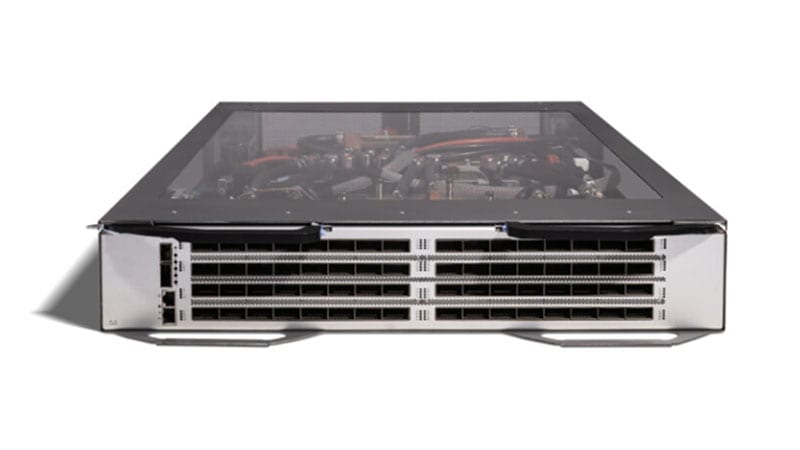 Guides
Cisco Nexus 5548P EoL: Migrate to Nexus 9300 (93180YC-FX3)
The Nexus 5548P passed Last Day of Support on September 30, 2020, no patches, no TAC, no RMA. Here is why it must come out of the rack and how to migrate cleanly to the Nexus 9300 (N9K-C93180YC-FX3).
May 27, 2026 · 8 min read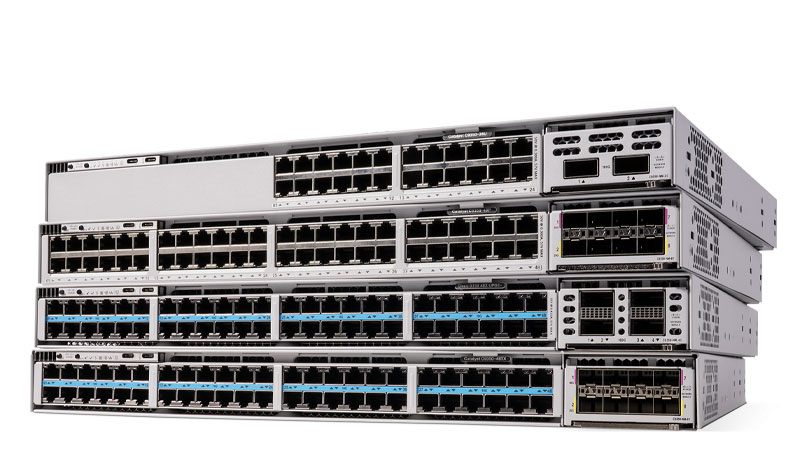 Guides
Catalyst 6509-E EoL: Migrate to the Catalyst 9600
The WS-C6509-E passed Last Day of Support on April 26, 2021. Here is what each milestone means, why an unsupported core is a real risk, and how to migrate cleanly to the Catalyst 9600 (C9606R).
May 22, 2026 · 8 min read Guides
Cisco wireless licensing for Wi-Fi 7 explained
Wi-Fi 7 access points are the easy part. The licensing model behind them, from the Catalyst 9800 controller to per-AP subscriptions and Smart Account hygiene, is where budgets and deployments actually get decided. Here is how Cisco wireless licensing really works for a Wi-Fi 7 refresh, and how to size it before you buy.
May 15, 2026 · 10 min readGuidesCisco Catalyst 3560V2 (WS-C3560V2-48PS-S) to Catalyst 9200 Migration Guide
The WS-C3560V2-48PS-S reached Last Day of Support on May 31, 2021, no PSIRT patches, no TAC, no RMA. Here is a practical, specs-driven plan to migrate from the Fast Ethernet 3560V2 to the gigabit, IOS-XE Catalyst 9200 (C9200-48P-A).
May 13, 2026 · 7 min read