
Cisco Secure Firewall, FTD, and XDR: How Firewall Telemetry Powers Better Detection
Cisco Firepower Threat Defense (FTD) running on Cisco Secure Firewall is one of the richest telemetry sources in your stack. Here is how that firewall data feeds Cisco XDR to turn raw events into correlated, prioritized incidents.
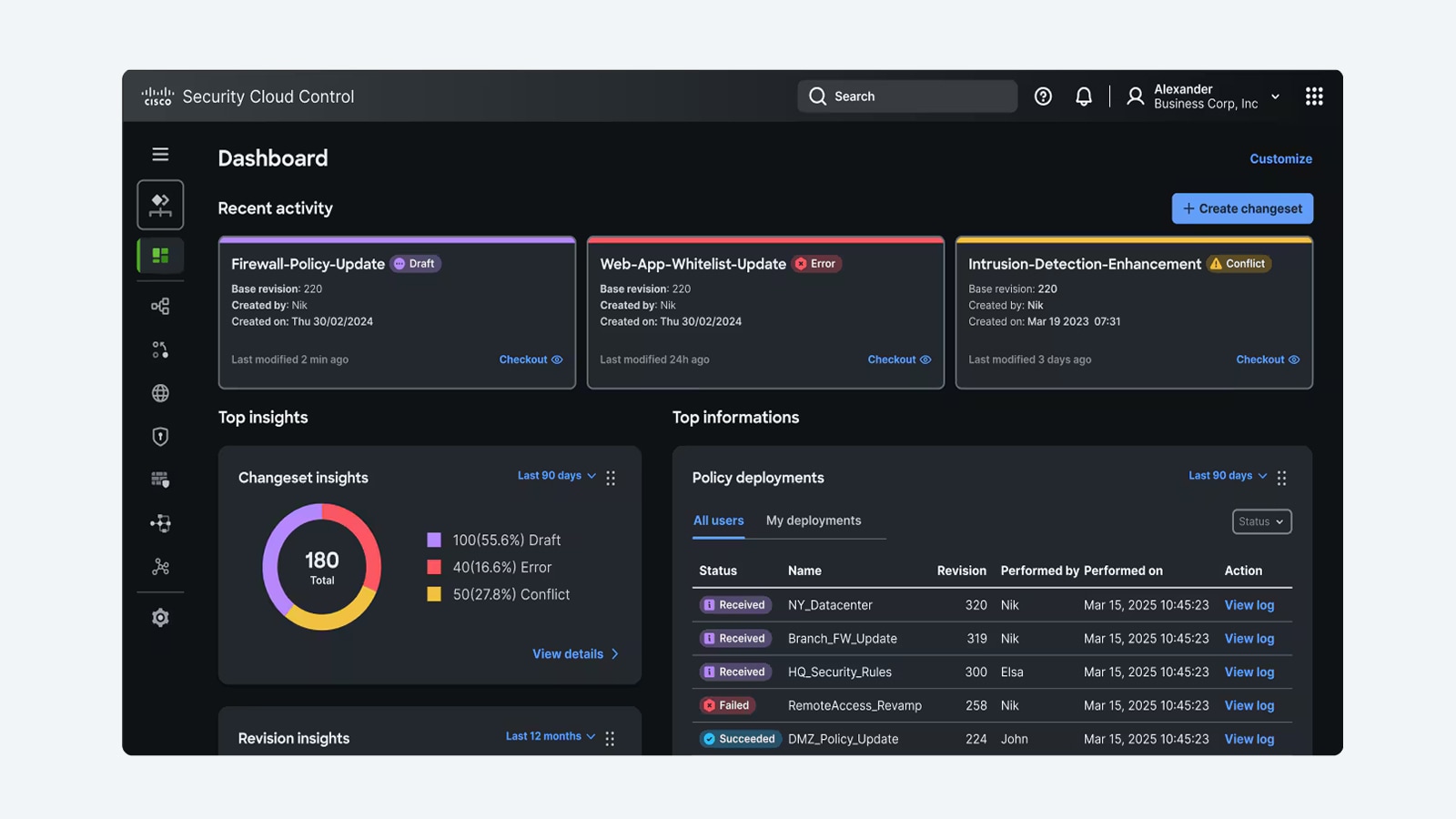
Most teams buy a firewall to block traffic and a detection platform to find threats, then treat the two as separate worlds. That separation is exactly where attackers thrive. Cisco Firepower Threat Defense (FTD), the unified software image that runs on Cisco Secure Firewall appliances, generates connection events, intrusion events, file and malware verdicts, and security intelligence hits that describe network behavior in detail no endpoint agent can match. The question is whether that data sits in a syslog archive nobody reads, or whether it actively drives detection.
This post is about the second path. We will walk through how FTD and the Cisco Secure Firewall Management Center feed telemetry into Cisco XDR, why firewall data is one of the six native sources XDR treats as critical, and what that integration changes for a Security Operations Center (SOC) trying to catch multi-stage attacks. If you are evaluating Cisco firewalls and a detection platform together, understanding this pairing is the difference between two tools and one outcome.
What Cisco Firepower Threat Defense (FTD) actually is
Cisco Firepower Threat Defense is the converged software image that combines classic ASA firewalling with next-generation capabilities: application visibility and control, the Snort intrusion prevention engine, URL filtering, and Advanced Malware Protection. FTD runs on Cisco Secure Firewall hardware (the 1000, 3100, and 4200 Series, plus virtual form factors) and is managed centrally through the Cisco Secure Firewall Management Center (FMC), formerly Firepower Management Center. If you are sizing or sourcing those appliances, our team scopes them as part of a broader Cisco security architecture rather than as a standalone box.
The important point for detection is what FTD sees. As an inline enforcement point, it inspects every flow crossing a security boundary. It records who talked to whom, on what application and port, for how long, how much data moved, and whether the connection tripped an intrusion signature, hit a known-bad reputation list, or carried a malicious file. That is a behavioral record of the network, and behavior is where lateral movement, command-and-control beaconing, and data exfiltration leave fingerprints that endpoint-only tools miss.
FTD and FMC versus the older Firepower naming
Cisco has rationalized the branding over time. Firepower Threat Defense is now positioned under the Cisco Secure Firewall umbrella, and Firepower Management Center became Secure Firewall Management Center. Functionally, FTD is still the threat-defense image and FMC is still the on-premises management and analytics console. When you read older documentation referring to Firepower, assume it maps to today's Secure Firewall and FTD. The telemetry model and the way that data can be exported to a detection platform have only gotten richer.
Why firewall telemetry is one of XDR's six critical sources
Cisco XDR is a cloud-native, SaaS-delivered extended detection and response platform that natively analyzes the six telemetry sources SOC operators consider critical: endpoint, network, firewall, email, identity, and DNS. Firewall is a first-class source, not an afterthought. That matters because the firewall sits at the chokepoints attackers must cross. An endpoint agent can be evaded, disabled, or simply absent on an unmanaged or IoT device. The firewall still logs the connection.
When FTD telemetry flows into XDR, the platform's built-in analytics engine correlates those firewall events with endpoint, identity, email, and DNS signals over time, then plots them on a timeline and an attack graph. A blocked connection to a suspicious domain stops being an isolated log line. It becomes one node in a story that might include a phishing email, a credential anomaly from Cisco Identity Services Engine, and a malware verdict from Cisco Secure Endpoint. You can read the full platform overview on our Cisco XDR page, but the short version is that firewall data supplies the network-layer evidence that ties the other sources together.
The detection gap firewalls close: Standalone endpoint detection sees only the endpoint. Multi-stage attacks that traverse the network but never touch a monitored agent, such as movement between unmanaged servers or IoT devices, can stay invisible. FTD connection and intrusion events give XDR the network-layer visibility to catch lateral movement and command-and-control that endpoint-only tooling would never register.
How FTD and FMC telemetry reaches Cisco XDR
There are several supported paths to get Cisco Secure Firewall data into XDR, and the right one depends on your deployment. Cisco Secure Firewall and the Adaptive Security Appliance are listed among the native Cisco integrations for XDR, so the connection is a built-in capability rather than a custom build.
- Direct integration of Cisco Secure Firewall / FTD as a source, so connection events, intrusion events, and security intelligence data enrich XDR incidents and become available to response actions.
- The XDR Connector (formerly Secure Cloud Analytics Sensor / ONA) or Cisco Telemetry Broker to collect NetFlow / IPFIX, SPAN, and NGFW logs from on-premises and cloud environments and forward them to the cloud platform.
- Flow-based telemetry from the broader network, including endpoint flow logs via the Network Visibility Module in cloud-managed Cisco Secure Client, and agentless flow logs from AWS, Azure, and Google Cloud, which contextualize what the firewall sees at the perimeter with what is happening east-west and in the cloud.
Once connected, FTD events are ingested, normalized, and correlated alongside the other five sources. By default XDR retains data for 90 days, with 180- and 365-day options, and default ingestion is 2 GB per user per month with add-on capacity available. Firewall logging can be voluminous, so ingestion sizing and retention tier are real planning decisions, not afterthoughts. Getting them right is part of scoping the deployment correctly the first time.
What FMC keeps doing after the integration
Feeding XDR does not retire the Secure Firewall Management Center. FMC remains your policy authority for the firewalls: access control rules, intrusion policies, Snort tuning, and the granular packet-level forensics an analyst needs when investigating a specific FTD event. XDR is the correlation and response layer that sits above the firewall and the rest of the stack. Think of FMC as where you manage the firewall and XDR as where you understand what the firewall is telling you in the context of everything else. The two complement each other rather than overlap.
What the integration changes for SOC workflows
The practical payoff shows up in how analysts spend their time. Without correlation, a firewall generates thousands of intrusion and connection events a day, most of them noise, and someone has to triage them. With XDR, those events are folded into a smaller number of correlated incidents, each carrying a priority score from 1 to 1000. That score combines a Detection Risk score (built from MITRE ATT&CK technique financial-risk scoring, the number of techniques observed, and source severity) with an Asset Value you assign to the systems behind the firewall. Analysts work the most materially impactful incidents first instead of chasing the loudest alert.
Cisco XDR also maps native detections to MITRE ATT&CK tactics and techniques and models detection coverage across your integrated tools. That lets you see, concretely, which adversary techniques your firewall plus endpoint plus identity stack actually covers and where the gaps are. For a firewall-heavy environment, this is a useful reality check: a strong perimeter does not equal full coverage, and the coverage view makes that visible.
Investigation and response in minutes, not hours
When an FTD-sourced incident surfaces, XDR's Attack Storyboard uses agentic AI to autonomously verify whether the alert reflects a real attack and assembles the sequence of events, a process that is included across all license tiers, including Essentials. From there, analysts can pivot into the Investigate feature to query every integration for prior sightings and render an artifact relations graph. Response is built in too: guided playbooks follow the SANS PICERL model, and XDR Automation workflows can trigger actions, including instructing the firewall and other tools to contain a threat, via a drag-and-drop editor and one-click content from the Automation Exchange.
Keep the firewall you have, add the brain on top: You do not need to rip and replace to benefit from this model. If you already run Cisco Secure Firewall with FTD, the telemetry path into Cisco XDR is a configuration and licensing exercise, not a forklift. And because XDR is vendor-neutral, teams that also run third-party EDR, SIEM, or email tools can correlate those alongside FTD data rather than choosing one ecosystem.
License tiers and where firewall telemetry fits
Cisco XDR comes in three tiers, and firewall correlation value starts at the entry point. XDR Essentials delivers the full feature set with built-in integrations across the Cisco Security portfolio, which includes Secure Firewall, plus analytics and correlation, Cisco Talos threat intelligence, the 1-to-1000 prioritization, asset and user context, custom automation, and the Attack Storyboard. XDR Advantage adds commercially supported, Cisco-curated integrations with select third-party tools (third-party EDR, email defense, NGFW, NDR, and SIEM) and XDR Forensics, which collects more than 350 endpoint artifacts plus remote interactive response. XDR Premier delivers the Advantage capabilities as a Cisco-managed detection and response (MXDR) service with around-the-clock monitoring and select Talos Incident Response retainer services.
Cisco does not publish a flat list price for XDR, and you should be wary of any source that quotes one. The cost drivers are the tier you choose, the number of users or endpoints, your data retention period, the ingestion volume (firewall logging can push this up), and the subscription term, alongside any firewall hardware refresh. The way to get a real number is to scope those variables against your environment, which is what a quote does.
Public sector and compliance considerations
For federal, DoD, SLED, and healthcare buyers, the FTD-plus-XDR pairing maps cleanly onto zero-trust priorities. XDR's native MITRE ATT&CK mapping supports threat-informed defense, and its correlation across identity, endpoint, network, and DNS aligns with the pillars of the CISA Zero Trust Maturity Model, including the cross-cutting visibility and analytics and automation and orchestration capabilities. Firewall telemetry is a core part of the network-pillar evidence. XDR also supports US Government Community Cloud (GCC) integrations, including Microsoft Defender for Office 365 GCC and Defender for Endpoint GCC, which matters for agencies on government clouds.
A few procurement realities to keep straight. Cisco XDR is a cloud service, so buyers should verify FedRAMP authorization status per component on the FedRAMP Marketplace at time of purchase rather than assuming a particular impact level. XDR relies on Cisco Security Cloud Control for identity data, and several adjacent Cisco cloud services have achieved or are pursuing FedRAMP authorization. On the hardware side, Cisco Secure Firewall appliances need to be sourced through Trade Agreements Act (TAA) compliant channels, and FIPS-validated cryptography on integrated Cisco hardware supports regulated environments. Government Purchase Card (GPC) eligibility and contract-vehicle scoping are things an authorized partner confirms before you buy. As an authorized Cisco partner, Uniqcli can scope the compliant SKU, retention tier, and ingestion sizing so the firewall and the detection platform land on the right contract path together.
Bringing the firewall and the SOC together
Cisco Secure Firewall with FTD is more than a perimeter control. It is one of the six telemetry sources Cisco XDR treats as critical, and when its connection, intrusion, and file events flow into XDR, the network-layer evidence is correlated with endpoint, identity, email, and DNS signals into prioritized incidents your team can actually action. The firewall keeps doing its job while XDR turns its output into faster, more confident detection and response. To plan the integration, size ingestion and retention, and confirm TAA and GPC compliance for the hardware, start with our Cisco XDR overview and request a tailored quote, or browse current Cisco firewall and security pricing in the catalog.
Frequently asked questions
What is the difference between Cisco Firepower Threat Defense (FTD) and Cisco Secure Firewall?
Cisco Secure Firewall is the current product family name for the firewall appliances and software. Firepower Threat Defense (FTD) is the unified software image that runs on those appliances, combining ASA firewalling with next-generation features like the Snort intrusion engine, application control, URL filtering, and malware protection. In short, FTD is the threat-defense software and Secure Firewall is the platform it runs on.
Does Cisco FTD integrate with Cisco XDR?
Yes. Cisco Secure Firewall and the Adaptive Security Appliance are native integrations for Cisco XDR, so FTD connection events, intrusion events, and security intelligence data can feed XDR's correlation engine. You can connect the firewall directly or forward NetFlow, IPFIX, SPAN, and NGFW logs through the XDR Connector or Cisco Telemetry Broker. Once connected, that telemetry is correlated with endpoint, identity, email, and DNS signals into prioritized incidents.
Do I still need Firewall Management Center (FMC) if I have Cisco XDR?
Yes. The Secure Firewall Management Center remains your policy and analytics console for the firewalls themselves, where you manage access control rules, tune intrusion policies, and run packet-level forensics. Cisco XDR sits above the firewall as the cross-source correlation and response layer. They complement each other: FMC manages the firewall, while XDR interprets what it sees in the context of the rest of the stack.
How much does Cisco XDR cost when adding firewall telemetry?
Cisco does not publish a flat list price for XDR. Cost is driven by the license tier (Essentials, Advantage, or Premier), the number of users or endpoints, your data retention period, ingestion volume, and term length. Firewall logging can increase ingestion needs, so sizing matters. As an authorized Cisco partner, Uniqcli scopes those variables and provides a validated quote.
Why is firewall telemetry important for threat detection?
The firewall sits at the chokepoints attackers must cross and logs every flow, including traffic from unmanaged or IoT devices that have no endpoint agent. That makes firewall data essential for catching lateral movement, command-and-control beaconing, and exfiltration that endpoint-only tools miss. Cisco XDR treats firewall as one of its six critical telemetry sources for exactly this reason.
Uniqcli Team
The Uniqcli Team is an authorized Cisco partner specializing in Catalyst wireless, switching, datacenter fabric, licensing, and managed services for U.S. federal, state, local, and education customers. We scope Cisco bills of materials, validate procurement paths (TAA, FIPS, contract vehicles), and deliver design, deployment, and managed operations.
Ready to scope your Cisco build?
Build a quoteRelated reading
View all →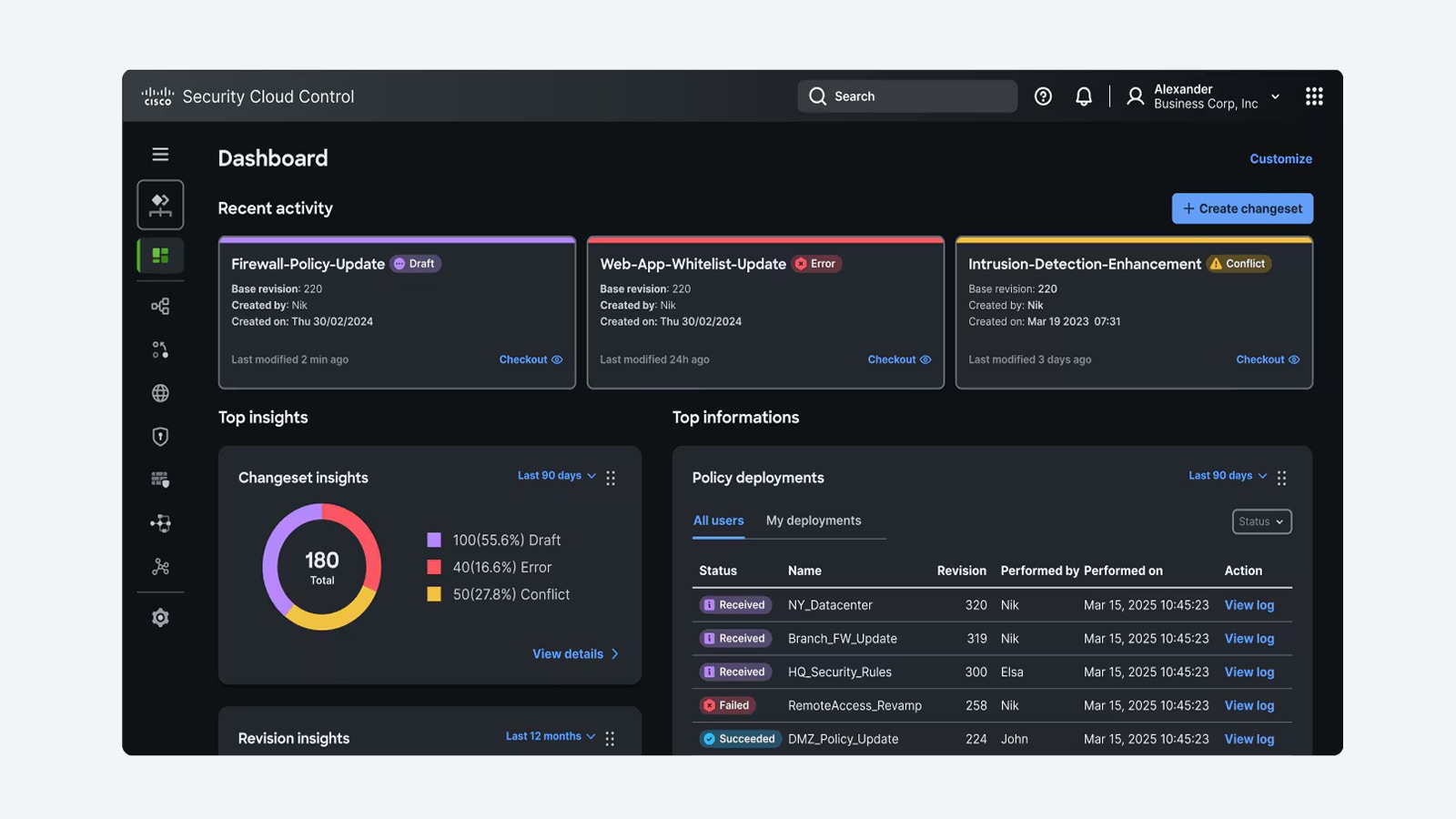 Guides
Cisco Firepower Threat Defense (FTD) Explained: Buyer's Guide 2026
What FTD actually is, how it replaced ASA software, which Secure Firewall hardware runs it today, and how licensing and management options fit together for a real purchase decision.
July 3, 2026 · 7 min read Guides
Cisco FirePOWER 8350 (FP8350-K9) to Firepower 9300 Migration
The FirePOWER 8000 Series hit Last Day of Support on 2024-06-30, here is how to migrate the FP8350-K9 to Cisco's Firepower 9300 Series cleanly and compliantly.
November 24, 2025 · 8 min readGuidesCisco FirePOWER 7120 (FP7120-K9) EoL: Migration Guide
With FirePOWER 7000 Series support ended on June 30, 2024, here is how to plan a clean migration from the FP7120-K9 to the Cisco Secure Firewall platform.
November 22, 2025 · 7 min read Guides
How Much Does a Cisco Secure Firewall Cost?
A Cisco Secure Firewall starts from about $10,000 for an appliance, but the threat-defense subscription, support, and deployment are what set the real number. Here is how the math actually works.
February 22, 2026 · 9 min readGuidesASA 5555-X (ASA5555-K9) Replacement & Migration Guide
Cisco ASA 5555-X support ends 30 September 2025, here is the practical path to a Secure Firewall 3100 refresh, from licensing to phased cutover.
October 3, 2025 · 8 min readGuidesCisco ASA 5525-X (ASA5525-K9) EoL: Migration to Secure Firewall 3100
The ASA 5525-X hit Last Day of Support on September 30, 2025, here is what each milestone means and how to migrate to the Cisco Secure Firewall 3100 (Firepower 2100) replacement.
September 30, 2025 · 7 min read