
Cisco C819HG-4G-G-K9 EoL: Migrate to the Catalyst IR1101
The 819 Hardened ISR (C819HG-4G-G-K9) passed Last Day of Support on December 31, 2021, no patches, no TAC, no RMA, and a cellular modem on bands carriers are sunsetting. Here's how to migrate cleanly to the Catalyst IR1101.
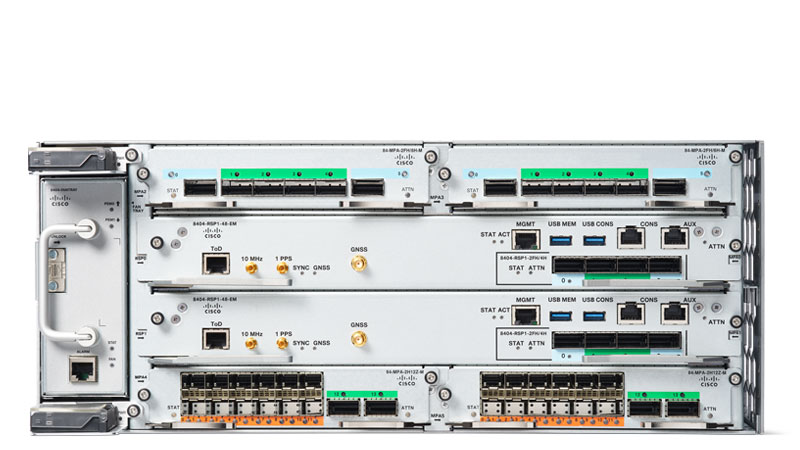
If a Cisco 819 Hardened Integrated Services Router (PID C819HG-4G-G-K9) is still bolted to a pole, a cabinet, or a vehicle somewhere in your fleet, it is now several years past the only Cisco lifecycle milestone that ultimately matters. This compact ruggedized router went End-of-Sale on December 29, 2016, and reached its Last Day of Support (LDoS) on December 31, 2021. As of today it is fully unsupported hardware: no software fixes, no PSIRT security patches, and no Cisco TAC or RMA. The radio still attaches to the carrier, traffic still flows, and that quiet reliability is exactly why these units survive in the field long after they should have been retired. This guide explains what the 819H actually was, why an operating-but-unsupported router is a liability rather than a bargain, and how to migrate cleanly to its named successor, the Cisco Catalyst IR1101 Rugged Series Router (IR1101-K9).
C819HG-4G-G-K9 lifecycle at a glance: End-of-Sale: December 29, 2016. End of Software Maintenance: not separately published for this PID. Last Day of Support (LDoS): December 31, 2021. Every milestone has passed. The full milestone record lives on the EoL detail page for this exact part number.
What the 819 Hardened ISR actually was
The C819HG-4G-G-K9 is the "hardened" member of the 819 family, purpose-built for unattended machine-to-machine and outdoor industrial duty. Its defining trait is the ruggedized chassis: a sealed, fanless metal enclosure with an extended operating temperature range and shock/vibration tolerance suited to roadside cabinets, utility substations, transit vehicles, and remote telemetry sites where a standard branch router would not survive. Inside, it is a fixed-configuration platform running classic Cisco IOS (the 15.x train): a single-core embedded CPU, modest fixed DRAM and flash, a four-port 10/100 managed Layer 2 switch for local devices, and a single WAN interface. The headline feature is the integrated multimode 3.7G/4G cellular WAN, factory-fitted with an internal modem and SIM, so a single small box delivered routing, switching, and primary or backup wireless WAN in one sealed unit.
For its era this was an excellent design, and that is the problem. Everything about it is frozen in 2016: the cellular modem is a legacy multimode generation that carriers are actively sunsetting as they refarm spectrum and decommission older 3G and early-LTE bands; the LAN switch tops out at 10/100; the CPU has no headroom for modern crypto or edge workloads; and the software is classic IOS, which is a dead-end relative to the IOS-XE feature set that the rest of Cisco's portfolio has standardized on. It cannot run Cisco SD-WAN, cannot host containerized edge applications, and will not receive another image of any kind.
Why acting now matters
The danger of an end-of-life router is not that it stops working. It is that it keeps working while every support and security backstop quietly disappears beneath it. After LDoS, three exposures stack up and compound:
- No PSIRT security patches. When a new vulnerability is disclosed in classic IOS, IKE/IPsec, SSH, or the web/management plane, the C819HG-4G-G-K9 will never receive a fixed image. Its last build is frozen permanently, so any qualifying CVE on this hardware is unremediable by design, and on a public cellular WAN, that management plane is reachable.
- No TAC or RMA. A failed unit cannot be opened as a Cisco support case or swapped under contract. Your only recovery is a spare you hoarded before LDoS or a gray-market unit of the same dead-end model, and that secondary-market box is just as unsupported and unpatchable as the one it replaces.
- Audit and compliance exposure. The frameworks federal, DoD, SLED, and healthcare buyers operate under, FedRAMP, CMMC 2.0, the HIPAA Security Rule, PCI DSS, and binding CISA directives, expect supported, patchable infrastructure. An unpatchable router is a finding waiting to be written, and "the vendor stopped shipping fixes in 2021" is not a remediation plan an assessor will accept.
For the 819H there is an additional, hard deadline that does not apply to most EoL gear: the carrier. The integrated multimode modem depends on cellular bands that mobile operators are decommissioning. When a carrier turns down the technology this modem speaks, the router loses its WAN entirely, regardless of how healthy the box is. That makes this refresh time-driven by an external party you do not control, not just by Cisco's calendar.
What each milestone date means in practice
- End-of-Sale (December 29, 2016): the last day Cisco accepted new orders for this PID. Everything since has been drawing down the support tail.
- End of Software Maintenance: Cisco did not publish a separate maintenance-end date for this specific part; in practice, software fixes ceased well before LDoS as the platform wound down.
- Last Day of Support / LDoS (December 31, 2021): the hard wall. No TAC, no RMA, no patches of any kind. From this date the hardware is entirely on its own.
The recommended replacement: Cisco Catalyst IR1101 (IR1101-K9)
Cisco's migration path for the 819 Hardened ISR is the Catalyst IR1101 Rugged Series, with the IR1101-K9 as the direct successor for IoT and edge connectivity. The IR1101 keeps everything that made the 819H field-deployable, a compact, fanless, hardened DIN-rail/wall-mountable chassis rated for the same kind of harsh outdoor and industrial environments, and modernizes the entire internals. It runs IOS-XE on a multicore x86-class processor with far more memory, which is what unlocks the modern feature set. Where it concretely improves on the C819HG-4G-G-K9:
- Modular cellular instead of a soldered-in modem. The IR1101 takes pluggable LTE and 5G modules (and an expansion module for a second pluggable), so you can fit a current-generation modem matched to your carrier's live bands today and swap to 5G later without replacing the router. With dual modules you get dual-radio, dual-SIM active/active or active/standby WAN, a true cellular resilience story the single-modem 819H never had.
- Gigabit LAN and a flexible WAN. Four Gigabit Ethernet LAN ports replace the 819H's 10/100 switch, plus a combo Gigabit/SFP uplink for wired WAN or fiber backhaul, a hard requirement the older 10/100 platform simply could not meet.
- IOS-XE and Cisco SD-WAN. The IR1101 runs IOS-XE and is a first-class Catalyst SD-WAN (vManage) endpoint, bringing centralized zero-touch provisioning, application-aware routing, and policy at scale, none of which classic IOS on the 819H supports.
- Modern licensing. Licensing moves to Cisco Smart Licensing with Network Essentials or Network Advantage tiers plus optional DNA/Catalyst subscription, managed in your Smart Account rather than the static feature-set images of the IOS 15 era.
- Edge compute and stronger security. Cisco IOx lets the IR1101 host containerized edge applications directly on the router. A hardware Trust Anchor module, secure boot, and the full modern VPN stack (FlexVPN, DMVPN, IPsec, plus SD-WAN and Zero Trust integrations) give it a security posture the 2016-era platform cannot approach.
Sizing the move up: If a single IR1101 won't cover a site that has grown since the 819H went in, more LAN ports, more throughput, or richer edge compute, the same rugged family scales up to the Catalyst IR1800 series. Standardizing the whole rugged fleet on IOS-XE and Catalyst SD-WAN is usually worth more than squeezing each site onto the smallest possible box.
A practical migration plan
1. Assessment and inventory
Pull every C819HG-4G-G-K9 from your asset records and map each one: physical site and mounting, power source (PoE vs. external/DC), which carrier and APN it uses, the bands its modem actually rides today, and the config running on it (routing, VPN tunnels, ACLs, ZBFW, QoS, any embedded telemetry). The carrier-band question is the urgent one, confirm whether each site's technology is on a published sunset timeline, because that, not Cisco's LDoS, may set your true deadline.
2. License transition
Stand up (or reuse) a Cisco Smart Account and Virtual Account before hardware lands. Decide Network Essentials vs. Network Advantage per site based on whether you need advanced routing and SD-WAN features, and size any DNA/Catalyst subscription term to your refresh cycle. There is no license carry-over from the 819H's IOS 15 feature-set model; this is a clean re-licensing on the Smart Licensing model.
3. Config and feature parity
Translate, do not copy. Classic IOS configs from the 819H must be rebuilt for IOS-XE, interface and cellular controller syntax, licensing, and crypto stanzas differ. This is the right moment to retire legacy crypto, adopt FlexVPN or move sites under Catalyst SD-WAN, and template the result so every remaining site deploys identically. Build one golden IR1101 template, validate it on the bench, then clone it.
4. Physical, power, and connectivity
Confirm mounting (DIN-rail or wall), power input (the IR1101's DC input range and any PoE-out needs for attached sensors or cameras), antenna placement for the new cellular module, and whether a site now warrants the SFP uplink for wired or fiber WAN. For outdoor and vehicular installs, verify the environmental rating and connector types match the cabinet you are reusing.
5. Phased cutover
Pilot a handful of representative sites first, ideally the ones whose carrier band is sunsetting soonest, and prove the template end to end before scaling. Zero-touch provisioning via Catalyst SD-WAN dramatically reduces truck-roll time across a large rugged fleet, so staging units centrally and shipping pre-claimed devices to the field is usually the fastest path.
6. Secure decommission
A retired 819H still holds VPN keys, certificates, credentials, and APN/SIM details. Wipe configuration and crypto material, remove the SIM, and dispose through a documented, auditable process, for federal and DoD sites, one that satisfies media-sanitization and property-disposal requirements. Do not let a "dead" router walk out the door with live secrets on it.
Procurement notes for regulated buyers
Because the IR1101 is current-generation hardware in steady demand, build lead time into your plan, and if a carrier sunset is driving the date, order early. As an authorized Cisco partner, uniqcli sources IR1101-K9 and the matching pluggable LTE/5G modules through legitimate channels, confirms TAA compliance for federal and DoD requirements, and accepts the Government Purchase Card (GPC) for in-threshold orders. We will scope the right license tier, validate the cellular module against your carrier's live bands, and plan a low-risk phased cutover from your existing 819H footprint. You can browse rugged routing and edge options in our catalog or review the full Cisco EoL migration library for adjacent platforms.
Ready to plan the refresh?: See the milestone detail for this exact part on the C819HG-4G-G-K9 EoL page, then get a quote for a TAA-compliant, GPC-payable Catalyst IR1101 migration scoped to your sites and carrier.
Frequently asked questions
Is the Cisco C819HG-4G-G-K9 still supported?
No. The 819 Hardened ISR went End-of-Sale on December 29, 2016 and reached its Last Day of Support (LDoS) on December 31, 2021. After LDoS, Cisco provides no software or PSIRT security fixes and no TAC support or RMA hardware replacement. Any unit still in service is running entirely unsupported, and any new vulnerability affecting its frozen IOS image is permanent.
What is the recommended replacement for the 819 Hardened ISR?
Cisco's named migration path is the Catalyst IR1101 Rugged Series Router (IR1101-K9). It keeps the compact, fanless, ruggedized form factor for outdoor and industrial sites while modernizing the internals: IOS-XE on a multicore CPU, four Gigabit LAN ports plus a combo GE/SFP uplink, modular pluggable LTE/5G cellular with dual-SIM resilience, Cisco SD-WAN, IOx edge compute, and Smart Licensing.
Why is the cellular sunset a bigger deadline than Cisco's LDoS for this router?
The C819HG-4G-G-K9 has a soldered-in multimode modem tied to older 3G/early-LTE bands. As carriers refarm spectrum and decommission those technologies, the router loses its WAN entirely, no matter how healthy the hardware is. That carrier-driven date, which you don't control, often arrives before or independently of Cisco's support calendar, so confirm each site's band sunset timeline first.
Can I reuse my 819H configuration on the IR1101?
Not directly. The 819H runs classic IOS 15.x while the IR1101 runs IOS-XE, so interface, cellular controller, licensing, and crypto syntax differ. Plan to translate and rebuild configs rather than copy them. This is the right time to retire legacy crypto, adopt FlexVPN or Catalyst SD-WAN, and standardize on one validated golden template you clone across sites.
Is the Catalyst IR1101 TAA-compliant and GPC-payable for federal buyers?
Yes. uniqcli is an authorized Cisco partner and sources the IR1101-K9 and matching pluggable cellular modules through legitimate channels with TAA compliance confirmed for federal and DoD requirements. We accept the Government Purchase Card (GPC) for orders within threshold and can scope the right Smart Licensing tier and carrier-matched module for your deployment.
Uniqcli Team
The Uniqcli Team is an authorized Cisco partner specializing in Catalyst wireless, switching, datacenter fabric, licensing, and managed services for U.S. federal, state, local, and education customers. We scope Cisco bills of materials, validate procurement paths (TAA, FIPS, contract vehicles), and deliver design, deployment, and managed operations.
Ready to scope your Cisco build?
Build a quoteRelated reading
View all →GuidesCisco 1941W EoL: Migrate to Catalyst 8200 C8200-1N-4T
The Cisco 1941W reached Last Day of Support on December 31, 2021, no patches, no TAC, no RMA. Here is what the EoL milestones mean and how to migrate cleanly to the Catalyst 8200 Edge Platform (C8200-1N-4T), including the licensing and wireless changes that catch teams off guard.
April 22, 2026 · 6 min readGuidesCisco RV042 (RV042-G5) End-of-Life: Migrate to the RV340
The RV042 Dual WAN VPN Router passed its Last Day of Support on June 30, 2019. Here is a practical, partner-vetted plan to refresh to the gigabit RV340 without breaking your dual-WAN VPN branch.
June 11, 2026 · 6 min readGuidesCisco 7606-S EoL: Migrating to the Catalyst 8500 (C8500-12X)
The Cisco 7606-S (CISCO7606-S) passed Last Day of Support on July 31, 2021. Here is why the chassis must come out and how to migrate its WAN-edge roles cleanly to the IOS XE-based Catalyst 8500 (C8500-12X).
May 7, 2026 · 7 min read Guides
Cisco 1921 (CISCO1921/K9) EoL: Migrate to the ISR 4221
The Cisco 1921 ISR hit Last Day of Support on September 30, 2023, here is a concrete, branch-tested plan to migrate to the supported ISR 4221.
December 5, 2025 · 7 min readGuidesASR1001-X End of Life: Migrate to Catalyst 8500L
The ASR1001-X is past End of Software Maintenance with Last Day of Support in July 2027, here is how to migrate cleanly to the Catalyst 8500L (C8500L-8S4X).
October 7, 2025 · 7 min readGuidesCisco 891 (CISCO891-K9) EoL: Migrating to the C891F-K9
The Cisco 891 (CISCO891-K9) passed Last Day of Support in 2019, leaving it with no patches, TAC, or RMA, here's how to migrate cleanly to the supported C891F-K9.
December 3, 2025 · 7 min read