
Zero Trust for federal agencies: Hypershield, ISE, and Secure Access explained
Federal mandates pushed Zero Trust from buzzword to deadline. Here is how Cisco Hypershield, Identity Services Engine, and Secure Access fit a real agency architecture, and where each one earns its place.

Key takeaways
- Zero Trust is now a federal deadline, not a philosophy. OMB M-22-09 and the DoD Zero Trust strategy set target dates, and agencies are measured against pillars covering identity, devices, networks, applications, and data, with DoD adding visibility and analytics plus automation and orchestration for seven pillars in total.
- No single product is Zero Trust. Cisco Identity Services Engine handles identity and device posture, Hypershield enforces workload-level segmentation, and Secure Access replaces VPN with cloud-delivered access. They cover different pillars.
- ISE is the policy engine. It authenticates users and devices, profiles what connects, and pushes segmentation policy across wired, wireless, and VPN, which makes it foundational to STIG-compliant builds.
- Hypershield brings enforcement down to the workload and kernel level using eBPF, so east-west traffic inside the data center is segmented and patched without waiting on change windows.
- Secure Access converges ZTNA, secure web gateway, CASB, and firewall-as-a-service into one cloud edge, giving remote and hybrid federal staff identity-based access without backhauling traffic.
- Procurement is part of the architecture. Whether an agency buys through a vehicle like SEWP or a GSA schedule, or directly by purchase card or a FAR Part 13 order, the acquisition path determines how fast it can actually field these tools, so plan acquisition alongside design.
Zero Trust stopped being optional for federal agencies
For years, Zero Trust lived in conference keynotes and vendor slideware. That era is over. Executive Order 14028 and the follow-on Office of Management and Budget memo M-22-09 set explicit target dates for federal civilian agencies, and the Department of Defense published its own Zero Trust strategy with a target architecture and a 2027 horizon. The question facing most agency network teams is no longer whether to adopt Zero Trust. It is which architecture survives an inspector general audit and a STIG review at the same time.
The hard part is that Zero Trust is a model, not a SKU. It assumes breach, verifies every request, and grants the least privilege necessary, across five widely cited pillars: identity, devices, networks, applications and workloads, and data. An agency can buy a firewall and still fail a Zero Trust assessment if identity and segmentation are weak. That is why the federal alignment work maps controls back to frameworks like the NIST SP 800-53 catalog and validates configurations against the DISA STIG library. The framework tells you what good looks like; the products have to make it real.
- Identity: strong authentication and continuous verification of users and service accounts
- Devices: posture checks and inventory before anything touches the network
- Networks: microsegmentation so a breach in one zone does not become a breach everywhere
- Applications and workloads: per-workload enforcement and least-privilege access
- Data: classification and protection that follows the data, not the perimeter
The three Cisco pieces, and what each one actually does
When agencies ask us to map Cisco's portfolio to the Zero Trust pillars, three names come up constantly: Identity Services Engine, Hypershield, and Secure Access. They are frequently mentioned in the same breath, which leads people to assume they overlap. They do not. Each addresses a distinct pillar, and a defensible architecture usually uses all three together rather than picking one.
Think of it as a division of labor. Identity Services Engine answers who and what is allowed on the network. Hypershield answers what a workload is allowed to do once it is inside, down to the kernel. Secure Access answers how a user reaches an application when they are nowhere near the building. Cisco's broader security portfolio is large, but for federal Zero Trust these three carry most of the weight. On our own security practice page we break down how they slot into FISMA-aligned and DoD builds, and our defense team handles the classified and STIG-heavy variants.
Cisco Identity Services Engine: the policy engine for identity
Identity Services Engine, almost always called ISE, is the part most directly tied to the identity and device pillars. It authenticates users and endpoints, profiles every device that asks to connect, and enforces network access policy across wired ports, wireless, and VPN from a single place. In a Zero Trust context, ISE is what turns a vague principle like verify everything into an actual access decision at the switchport. Nothing gets an IP and a path to sensitive systems until ISE has checked identity and posture.
For federal teams, the device side matters as much as the user side. An agency network is full of things that are not people: printers, cameras, building automation, medical devices, industrial controllers. ISE profiles them, assigns them to the right segment, and keeps the unknown and the noncompliant in a quarantine zone. That profiling capability is why ISE shows up so often in STIG-compliant and DoD designs, where an unmanaged device on the wrong VLAN is a finding waiting to happen.
ISE is also the engine behind software-defined segmentation. Instead of hand-editing access lists on dozens of switches, you define group-based policy once and ISE distributes it. That dramatically shrinks the blast radius of a compromised endpoint, which is the entire point of the networks pillar. Our Identity Services Engine page covers the licensing tiers and deployment models, and our lifecycle services team handles the version upgrades that ISE deployments inevitably need.
Cisco Hypershield: enforcement at the workload and kernel
Hypershield is the newest of the three and the one that confuses people most, partly because it does not look like a traditional appliance. It is a distributed security architecture that pushes enforcement directly into the data path of workloads, using eBPF in the Linux kernel and programmable hardware where available. In plain terms, it lets you segment and protect east-west traffic inside the data center at the level of the individual workload, not just at a chokepoint firewall on the way in.
This solves a problem that has dogged federal data centers for a decade. Perimeter controls are strong, but once an attacker is inside, lateral movement between workloads is often wide open. Hypershield enforces least-privilege between workloads and can apply a compensating control or virtual patch the moment a vulnerability is disclosed, without waiting for a maintenance window or a full application owner sign-off cycle. For agencies that take patch latency seriously, that autonomous segmentation and shielding is the headline feature.
Hypershield does not replace ISE, and it does not replace the firewall. It complements both. ISE governs who gets onto the network, the Cisco Secure Firewall family governs north-south traffic at the boundary, and Hypershield governs what happens between workloads once traffic is already inside. We cover where it fits in modern fabric on our data center page, and the firewall side of the story, including the 3100 Series, lives on our Secure Firewall page.
Cisco Secure Access: Zero Trust for the workforce that left the building
The third pillar most agencies struggle with is access for people who are not on the network at all. Remote staff, contractors, and hybrid employees used to ride a VPN that dropped them onto the internal network with broad reach. That model is the opposite of Zero Trust. Cisco Secure Access is the answer here: a cloud-delivered security service edge, or SSE, that converges Zero Trust Network Access, a secure web gateway, a cloud access security broker, and firewall-as-a-service into a single service. Agencies specify the FedRAMP-authorized instance, Cisco Secure Access for Government, rather than the commercial tenant.
The practical difference is that Secure Access grants a user access to a specific application based on identity and device posture, not access to a subnet. A contractor who needs one case-management system gets exactly that, and nothing adjacent. Traffic does not backhaul through a regional data center, which improves performance for a distributed federal workforce while keeping policy consistent whether the user is on-site, at home, or on travel.
Because it is identity-driven, Secure Access pairs naturally with ISE: the same identity that governs in-building access can govern remote access, which keeps your policy story coherent across an audit. It also reduces the legacy VPN attack surface that has produced so many recent advisories. We walk through SSE migration on our security services page, and tie it into broader connectivity decisions on our SD-WAN page for agencies modernizing the branch at the same time.
How the three fit together in one architecture
A common mistake is treating these as competing options and choosing one. In a real federal deployment, they layer. Picture a clinician at a VA facility connecting a tablet on-site: ISE authenticates the device, checks posture, and places it in the correct segment. The same clinician working from home reaches the EHR through Secure Access, which verifies identity and grants access to that one application. Inside the data center, Hypershield ensures the EHR workload can only talk to the database it is supposed to talk to, and nothing else.
That layered model is what auditors want to see, because it covers multiple pillars with overlapping enforcement rather than a single line of defense. It is also why we rarely sell these as standalone purchases. The design work is in the policy: defining the segments, the group-based access rules, and the application mappings so that the three tools reinforce each other instead of creating conflicting rules. Our network and security design service exists specifically for that policy modeling phase, and our managed operations team runs the day-two tuning once it is live.
Healthcare is one example, but the same pattern applies across mission spaces. We document vertical-specific builds on our government industry page, where the constraints around classification, FedRAMP, and continuous monitoring shape which features matter most. The architecture is consistent; the emphasis shifts with the mission.
Procurement and lifecycle: the part that decides your timeline
The fastest way to derail a Zero Trust program is to design it without thinking about acquisition. Federal teams cannot simply buy off a website. The vehicle matters: many agencies field this kind of gear through NASA SEWP or through GSA schedules, and Cisco maintains its own federal contract and funding vehicle resources to map products to those paths. Choosing the contract vehicle early can shave months off a deployment, and choosing it late can blow a fiscal-year deadline.
Lifecycle is the other half. Zero Trust is not a one-time install. ISE needs version maintenance, Secure Access policies evolve as applications move, and the underlying switching and firewall hardware carries its own support and end-of-life timeline you have to track against the Cisco end-of-life policy. Keeping support current through Smart Net Total Care is not optional in a security architecture, because an unsupported control is a control you cannot defend in an audit. Uniqcli does not hold a contract vehicle today, so we quote direct purchases by Government Purchase Card, simplified acquisition under FAR Part 13, and FAR-based purchase orders, with WAWF invoicing for DoD; the details are on our procurement page, and you can start a scoped build with our team through the request a quote form.
- Pick the contract vehicle before final design, not after, so acquisition does not stall delivery
- Track end-of-life dates for switching, firewalls, and ISE nodes against your Zero Trust roadmap
- Keep Smart Net Total Care current; an unsupported security control is an audit liability
- Budget for day-two operations, because policy tuning is continuous, not a launch task
A pragmatic starting point for agency teams
If your agency is early in its Zero Trust program, you do not have to field all three tools at once. Most successful programs sequence the work. Identity tends to come first, because almost every other pillar leans on it, which makes ISE a natural anchor for the first phase. Once identity and device posture are solid, segmentation through Hypershield and remote access through Secure Access become far easier to enforce because the identity foundation is already there.
The sequencing should follow your own risk picture and your mandate deadlines, not a generic playbook. A DoD program racing the September 2027 Target Level deadline will prioritize differently than a civilian agency still closing the gaps left from its M-22-09 milestones, which came due at the end of fiscal 2024. What stays constant is the principle: verify explicitly, enforce least privilege, and assume breach at every layer. The Cisco tools are the means, but the architecture and the policy are what pass the audit. If you want a second set of eyes on where to start, our networking practice and security team regularly run Zero Trust readiness reviews tailored to a single agency's posture and contract vehicle.
Cisco products involved
- Cisco Hypershield
- Cisco Identity Services Engine (ISE)
- Cisco Secure Access (SSE)
- Cisco Secure Firewall
- Cisco Catalyst switching
- Cisco SD-WAN
Bottom line: Zero Trust for federal agencies is a layered build, not a single purchase: ISE for identity, Hypershield for workload segmentation, and Secure Access for the remote workforce, all tied to the right contract vehicle. Request a scoped Zero Trust quote and we will map the architecture to your mandate and acquisition path.
Frequently asked questions
Is Cisco Zero Trust a single product I can buy?
No. Zero Trust is an architecture model spanning identity, devices, networks, applications, and data. Cisco covers it with several products working together. For federal builds the core trio is Identity Services Engine for identity and device control, Hypershield for workload-level segmentation, and Secure Access for cloud-delivered remote access. A defensible deployment layers them rather than relying on any one.
How is Cisco Hypershield different from a firewall like Secure Firewall?
A firewall such as the Secure Firewall family primarily controls north-south traffic at the network boundary. Hypershield enforces policy between workloads inside the data center, down to the kernel using eBPF, so east-west lateral movement is segmented and vulnerabilities can be virtually patched without a maintenance window. They are complementary: the firewall guards the edge, Hypershield guards the interior.
Why does Identity Services Engine come up first in most Zero Trust projects?
Because almost every other pillar depends on knowing who and what is on the network. ISE authenticates users and devices, profiles unmanaged endpoints like printers and medical or industrial gear, and distributes segmentation policy across wired, wireless, and VPN. Establishing that identity and posture foundation makes segmentation and remote access far easier to enforce afterward, which is why teams usually sequence it early.
Does Cisco Secure Access replace our VPN?
In most cases, yes. Secure Access is a security service edge that delivers Zero Trust Network Access, secure web gateway, CASB, and firewall-as-a-service from the cloud. Instead of dropping a user onto a subnet the way a legacy VPN does, it grants access to a specific application based on identity and device posture, which shrinks the attack surface and improves performance for distributed federal staff.
Which contract vehicles can federal agencies use to acquire these tools?
Common vehicles include NASA SEWP and GSA schedules, and Cisco publishes federal contract and funding vehicle resources that map products to them. Choosing the path early is important because it directly affects your timeline. Uniqcli does not currently hold a contract vehicle; we support direct purchases by Government Purchase Card, simplified acquisition under FAR Part 13, and FAR-based purchase orders, with WAWF invoicing for DoD, and our procurement team can tell you which of those fits your order so acquisition does not stall the deployment.
How does this align with NIST and DoD requirements?
The architecture maps to NIST SP 800-53 controls and can be validated against DISA STIGs, and it supports the milestones in OMB M-22-09 and the DoD Zero Trust strategy. The products provide the enforcement; the design and policy work is what satisfies an audit. We run readiness reviews that tie each control back to the relevant framework and your agency's specific mandate deadlines.
Uniqcli Team
The Uniqcli Team is an authorized Cisco partner specializing in Catalyst wireless, switching, datacenter fabric, licensing, and managed services for U.S. federal, state, local, and education customers. We scope Cisco bills of materials, validate procurement paths (TAA, FIPS, contract vehicles), and deliver design, deployment, and managed operations.
Ready to scope your Cisco build?
Build a quoteRelated reading
View all → Guides
Cisco ISE Deployment Checklist: Planning, Personas, 802.1X, Posture, and TrustSec
A field-tested planning sequence for Cisco Identity Services Engine, node personas, 802.1X rollout, posture, and TrustSec segmentation, built for federal, SLED, and healthcare teams who cannot afford a noisy cutover.
June 1, 2026 · 11 min read Compliance
NAC and Network Segmentation for Federal Zero Trust: Meeting CISA and DoD Mandates
How Cisco NAC, TrustSec segmentation, and XDR deliver network access control compliance against the CISA Zero Trust Maturity Model and DoD Zero Trust Strategy, and what federal and SLED buyers should verify before they purchase.
June 2, 2026 · 12 min read Guides
Zero Trust with Cisco ISE: identity-based access, explained
Zero trust falls apart when the network still trusts a switch port. Cisco Identity Services Engine moves the trust decision to who and what is connecting, then carries that decision across wired, wireless, and the firewall as enforceable policy.
May 18, 2026 · 11 min read News
NewsIran-Linked Hackers Targeting US Water and Energy Systems: Hardening OT Networks
US agencies are warning that Iranian government-linked hackers are probing water, energy, and local-government systems through internet-facing industrial controls. Here is what the alert says, who is exposed, and the segmentation, identity, and monitoring work that pulls operational technology back off the open internet.
June 8, 2026 · 7 min read Insights
On-prem vs cloud packet core for private 5G
The packet core is the brain of a private 5G network, and where you run it shapes latency, data residency, and your security accreditation. Here is how on-prem and cloud-hosted core models actually compare for federal, healthcare, and industrial deployments.
June 6, 2026 · 10 min read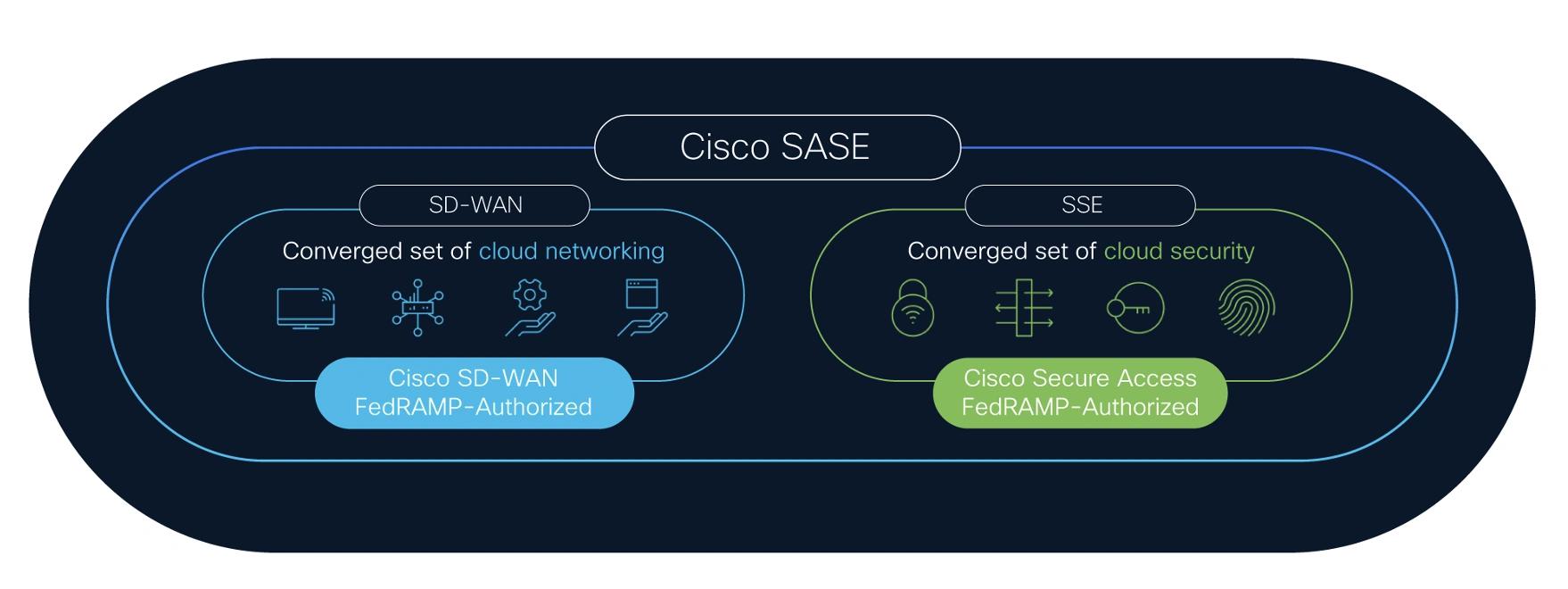 Guides
Multicloud fabric: connecting federal workloads across clouds without losing control
Federal teams run workloads across AWS, Azure, Google Cloud and on-prem at the same time. A multicloud fabric gives you one consistent policy, segmentation, and visibility layer so the mission moves between clouds without the control plane fracturing or the ATO slipping.
June 2, 2026 · 11 min read