
This isn't a vendor fight, both lines are Cisco. The real question is which management philosophy fits your team: Meraki's cloud-only dashboard, or Catalyst's controller-and-CLI tradition. And that question is getting more interesting, not less, because Cisco's newer CW-series hardware is converging the two lines at the physical layer, so the same access point can increasingly run either management plane rather than locking you into hardware built for only one.
If you need zero-touch, distributed-site simplicity, Meraki (MR, and CW hardware provisioned in Meraki mode) is the more direct path. If you need CLI-level control, SD-Access fabric participation, or you're extending an existing IOS-XE investment, Catalyst is the better fit. What's changed is that the hardware decision and the management-plane decision no longer have to be the same decision.
At a glance
| Factor | Meraki (MR / CW in Meraki mode) | Catalyst access points |
|---|---|---|
| Management | Cloud dashboard only, zero on-prem controller | 9800 Series WLC on-prem, or Catalyst Center (on-prem or cloud-monitored) |
| Licensing | Mandatory per-device subscription tied to a term | License tiers gating Catalyst Center automation and assurance features |
| Control depth | Simplified UI, minimal CLI exposure by design | Full IOS-XE CLI access, deep policy and fabric control |
| Hardware | MR line, and CW-series hardware provisioned for Meraki mode | Traditional Catalyst APs, and CW-series hardware provisioned for IOS-XE |
| SD-Access / fabric | Not part of Cisco's SD-Access fabric model | Native SD-Access participation via Security Group Tags and ISE |
| Best fit | Distributed multi-site, thin on-site IT, zero-touch priority | Dedicated network engineering team, CLI control, existing IOS-XE investment |
Two philosophies, one company
Meraki was built cloud-native from the start and joined Cisco through acquisition; its DNA is a single hosted dashboard, zero-touch provisioning, and deliberately minimal exposed complexity. Catalyst carries Cisco's original enterprise networking lineage: IOS-XE, deep CLI control, and a controller model (on-premises 9800 Series WLC, or Catalyst Center for centralized automation) built for network engineers who want to see and adjust every knob. Neither is the "real" Cisco wireless line, they're two answers to different operational questions, sold by the same company because different customers need different answers, and Cisco has kept investing in both rather than sunsetting one in favor of the other.
The CW-series convergence: cloud-ready Catalyst Wireless
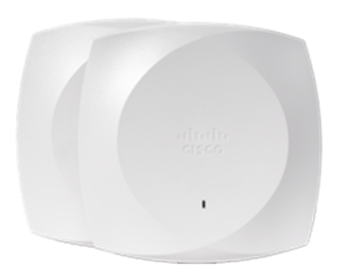
This is the part of the comparison that's actually changing. Cisco has been converging its wireless hardware onto a common physical platform under the CW naming, Catalyst Wireless, so the same access point silicon can be provisioned to run either the Meraki cloud operating system or Catalyst's IOS-XE, instead of Cisco building and stocking fully separate hardware lines forever for each management philosophy. Our own catalog carries an example: CW9166I-MR, where the "MR" suffix marks that specific unit as provisioned for Meraki-mode operation on the converged CW hardware.
Practically, that means the Meraki-vs-Catalyst decision is separating from the hardware-purchase decision. On supported CW models, the management plane becomes more of a provisioning and licensing choice than a permanent hardware commitment, though you should confirm current mode-conversion support for any specific CW model and firmware release with a validated quote before assuming a unit can move between modes after it's deployed, since support varies by model and release. This convergence is also where Cisco is concentrating its newest wireless hardware investment; see our Wi-Fi 7 page for where the CW line is headed next.
Licensing and management: the parts that don't converge
Even on converged hardware, the two management planes keep their own licensing logic. Meraki mode requires an active per-device subscription tied to a term for the dashboard, updates, and Cisco support, that doesn't change based on which physical platform the AP runs on. Catalyst mode uses license tiers that gate Catalyst Center automation and assurance features, layered on top of a controller architecture that has historically allowed continued operation without the same dashboard-tied subscription cliff, though feature access still depends on the license tier you hold. Confirm exact current terms for your deployment with a validated quote rather than assuming either model's older licensing behavior still applies unchanged.
Operational fit: who actually uses each line well
Meraki wins for organizations running many small sites with little or no on-site IT, retail chains, distributed clinics, franchise operations, where zero-touch deployment and one cloud dashboard across switches, APs, and security appliances outweighs the value of deep manual control. Catalyst wins where a dedicated network engineering team wants CLI-level troubleshooting, participation in a Cisco SD-Access fabric with Security Group Tag policy through ISE, or where the site already runs a deep IOS-XE investment that a cloud-only model would fragment rather than simplify. Plenty of large organizations run both at once, deliberately, rather than treating the choice as all-or-nothing across the whole estate.
Migration cost: moving between the two lines today
On traditional, pre-convergence hardware, moving from Catalyst to Meraki (or the reverse) has always meant a real project: different access points, a different controller or cloud relationship, and a licensing model swap that touches procurement as much as engineering. That cost is exactly why so many organizations end up running both lines simultaneously, Meraki at thin-IT branch sites, Catalyst at the flagship campus, rather than migrating the whole estate to one architecture.
CW-series convergence lowers that migration cost for new purchases going forward, but it does not retroactively convert access points you already own. If you're planning a management-plane change, budget it as the project it is: validate mode support on the specific hardware you're buying, plan the licensing transition, and don't assume a firmware update alone will move existing Catalyst APs onto Meraki's dashboard or vice versa.
Which should you choose?
- Many distributed sites, little or no on-site IT staff: Meraki's cloud-only, zero-touch model is the direct answer.
- Dedicated network engineering team that wants CLI access and fabric-level policy control: Catalyst is the better architectural fit.
- Already running Cisco SD-Access with Security Group Tags and ISE: stay on Catalyst, Meraki does not participate in that fabric model.
- Want future flexibility without picking a permanent hardware lane: CW-series hardware narrows the gap, but confirm mode-conversion support per model before counting on it.
- Planning a Wi-Fi 7 refresh: most of Cisco's newest hardware investment runs through the CW line, evaluate Meraki and Catalyst modes on the same physical platform.
Frequently asked questions
What does "CW" mean in Cisco's newer access point names?
CW stands for Catalyst Wireless, Cisco's converged wireless hardware platform. The same physical access point family can be provisioned to run either the Meraki cloud operating system or Catalyst's IOS-XE, rather than Cisco building and stocking entirely separate hardware for each management philosophy.
Can the same CW-series access point switch between Meraki and Catalyst mode after deployment?
Support for mode conversion varies by specific model and firmware release, so confirm current capability for your exact hardware with a validated quote before assuming it's available. Don't plan a deployment around a mode switch you haven't confirmed for that specific unit.
Is Meraki technically worse than Catalyst?
No, they're built for different operational priorities, not different performance tiers. Meraki trades manual control for cloud simplicity and zero-touch deployment; Catalyst trades some deployment simplicity for deep CLI control and SD-Access fabric participation. Neither is a downgrade from the other.
Which line is better for a distributed multi-site retail chain?
Meraki, in most cases. Its cloud-only dashboard and zero-touch provisioning are built specifically for organizations with many small sites and little or no on-site IT staff, which describes most distributed retail and franchise footprints.
Which line is better for a single large campus with a dedicated network team?
Catalyst, in most cases. A dedicated team can use the CLI-level control and SD-Access fabric integration Catalyst offers, which a cloud-only Meraki dashboard deliberately does not expose to the same depth.
Does switching from Catalyst to Meraki require buying new access points?
On traditional, non-CW hardware, yes, the two lines have historically used different physical platforms. On newer CW-series hardware provisioned for the right mode, the gap narrows, but confirm current mode support and licensing implications for your specific model before planning a migration around it.
Uniqcli Team
The Uniqcli Team is an authorized Cisco partner specializing in Catalyst wireless, switching, datacenter fabric, licensing, and managed services for U.S. federal, state, local, and education customers. We scope Cisco bills of materials, validate procurement paths (TAA, FIPS, contract vehicles), and deliver design, deployment, and managed operations.
Ready to scope your Cisco build?
Build a quoteRelated reading
View all → Guides
Cisco Wi-Fi 6E access points: the lineup
A practical, model-by-model guide to Cisco's Wi-Fi 6E access point lineup, what the 6 GHz band actually buys you, and how to choose the right radio for federal, healthcare, and enterprise sites.
May 5, 2026 · 11 min read Guides
Private 5G vs Wi-Fi: when to use which in industrial environments
Private 5G and Wi-Fi 7 are not rivals so much as tools for different jobs. Here is how to decide which radio belongs where on a factory floor, a port, a mine, or a hospital campus, and how the two coexist under one Cisco-managed network.
June 6, 2026 · 11 min read Guides
Outdoor venue Wi-Fi: ruggedized APs, uplinks and event-day resilience
Outdoor venues punish ordinary wireless designs. Here is how to spec ruggedized Cisco access points, harden uplinks, and engineer a network that survives a sold-out event day.
June 6, 2026 · 11 min read Guides
Designing high-density Wi-Fi for stadiums and arenas
A packed stadium is the hardest Wi-Fi environment on earth: tens of thousands of clients in one RF space, all live at the same second. Here is how to design Cisco high-density wireless that holds up at kickoff, not just on a quiet weekday walk-through.
June 6, 2026 · 13 min read Guides
Wi-Fi generations explained: from Wi-Fi 5 to Wi-Fi 7
From Wi-Fi 5 to Wi-Fi 6, 6E, and now Wi-Fi 7, each generation changed what a wireless network can carry. Here is what actually changed under the hood, why the 6 GHz band matters, and how to map the standards to real Cisco hardware before you spec a refresh.
June 5, 2026 · 10 min read Guides
Wi-Fi 7 vs Wi-Fi 6E: what actually changes for enterprise networks
Wi-Fi 7 and Wi-Fi 6E both lean on the 6 GHz band, but the differences that matter to an enterprise are the ones nobody puts on a spec sheet: client mix, switch uplinks, controller versions, and whether your building can actually use 320 MHz channels. Here is what changes, what does not, and how to size a Cisco refresh that earns its budget.
May 20, 2026 · 11 min read